Pothos care guide: watering, pruning, repotting and general care

The pothos , or Epipremnum , appeals to both beginners and experienced gardeners. Its decorative foliage, its twining or cascading stems, and its hardiness make it a reliable choice for dimly lit interiors. However, it's essential to provide it with the necessary conditions to thrive.
Light, watering, potting soil, pruning, or repotting : each element plays a key role in the plant's health. By paying attention to these details, you can limit problems with yellow or brown leaves , promote healthy growth, and prolong the vitality of the foliage throughout the seasons.
Mastering the care of the pothos tree
Pothos plants are not demanding, but they are still sensitive to certain factors. To maintain dense and vibrant foliage, it's best to understand their preferences, especially regarding light, substrate, and humidity .
Understanding lighting needs
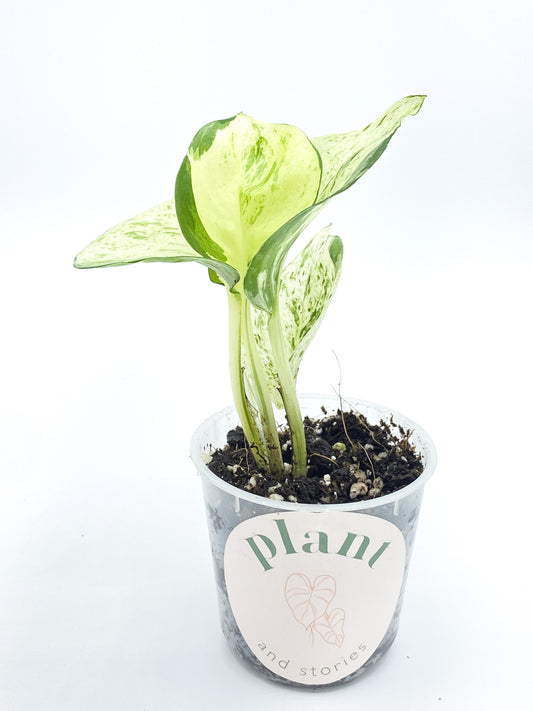
Pothos plants thrive in indirect light, making them an excellent choice for rooms with limited natural light. However, to maintain vibrant green leaves , or even variegated ones (like those of the Marble Queen variety ), bright, indirect light is ideal. Too much shade will slow growth, cause the stems to elongate, and result in a less bushy plant.
To avoid:
- Prolonged direct sunlight, which burns the foliage
- A completely dark room, where the pothos plant languishes
A location near an east- or north-facing window works very well.
Choosing the right potting soil and pot
A light, well-draining mix is essential. Pothos plants don't tolerate having their roots constantly wet. You can use a potting mix for houseplants enriched with:
- A little horticultural perlite to improve drainage
- Coconut fiber or a little sphagnum moss to retain moisture without excess
The pot must have drainage holes to prevent water from accumulating at the bottom. It's also best to choose a pot that isn't too large so that the roots can quickly colonize the substrate.
Assess the ambient humidity
Pothos tolerates moderate humidity , but it appreciates a slightly more humid atmosphere, especially in winter when heating systems dry out the air. A simple tip: grouping several plants together or placing a bowl of water nearby helps recreate a favorable microclimate.

Effective watering techniques
Watering a pothos plant is arguably the most crucial factor in its health. Too much water, and the roots rot. Too little, and the leaves yellow or curl. Here's how to find the right balance.
Recommended watering frequency
As a general rule, pothos plants prefer their potting mix to partially dry out between waterings. This means:
- Once a week in summer or in case of extreme heat
- Every 10 to 15 days in winter
Always check that the surface of the soil is completely dry before watering again.
Identify the signs of water need
Some signs are unmistakable:
- Softened or dull leaves : the plant is thirsty
- Dry leaf edges : the air is too dry or the watering is insufficient
- Soft or drooping stems : possible excess water
Conversely, if the foliage yellows generally or the stems turn black at the base, it is urgent to reduce watering .
Preventing root congestion and rot
Three golden rules:
- Never leave stagnant water in the saucer.
- Use a pot with drainage holes ; it's essential for the water to drain.
- Avoid containers that are too deep or lack drainage
Good drainage, combined with an aerated substrate (mixture of potting soil + perlite ), greatly reduces the risk of root diseases .
Pruning and repotting practices
Even though the pothos is not very demanding, a few well-placed actions can stimulate its growth and keep it in top condition, year after year.
When and how to prune pothos
Pruning pothos is beneficial in several ways: it limits its growth, encourages branching, and maintains a balanced shape. The best time to prune? In spring or summer , when the plant is actively growing.
Simply use clean pruning shears or a pair of sharp scissors to cut just above a node. You can also take cuttings from the pruned stems and root them in water to easily propagate the plant.
Instructions for successful repotting
Pothos plants do not need to be repotted every year, but when you notice that:
- the roots are coming out of the drainage holes
- The potting soil dries out very quickly after watering.
- Growth slows down for no apparent reason.
…this is a sign that it's time to switch to a slightly larger pot. Choose a pot with drainage holes that's 2 to 3 cm wider, fill it with a mixture of light potting soil and perlite or coconut fiber, then gently place your plant inside. Avoid burying the stems too deeply to prevent the base from rotting .
Importance of drainage and drainage holes
This may seem obvious, but too many decorative pots don't allow for proper drainage. For optimal repotting , you must ensure that:
- The container does indeed have holes in the bottom.
- A layer of clay pebbles can be added for improved drainage.
- the substrate used remains light and aerated
Good drainage prevents stagnation, and therefore root problems or browning leaves.
Common health signs and problems

Pothos is resilient, but it's not infallible. Quickly identifying warning signs helps prevent minor imbalances from turning into real problems.
Recognizing the signs of plant stress
Certain symptoms appear very quickly when conditions are not optimal:
- Yellow leaves : often caused by overwatering or insufficient light
- Brown or dry leaves : generally linked to an atmosphere that is too dry or insufficient watering
- Soft or blackened stems : excess moisture can cause the onset of root rot.
Dull foliage or a lack of new shoots can also indicate that the plant is lacking light or nutrients.
Solutions to common problems
Here are a few simple steps to correct the situation:
- Adjust watering according to the season and environment (less frequent in winter)
- Place the plant in a bright location out of direct sunlight
- Check the pot's drainage and the quality of the potting soil.
- Lightly mist if the air is too dry
- Add liquid fertilizer every 15 days during the growing season
When in doubt, it's better to let it dry out a little too much than to overwater.
Tips for maintaining optimal growth
A pothos in excellent condition presents:
- vigorous stems
- bright green leaves (or variegated for some varieties like Marble Queen)
- steady growth, with new leaves unfurling over the weeks
A good maintenance schedule , combined with regular visual monitoring, is enough to keep this plant healthy for many years.
Conclusion
Pothos , whether it's a classic Epipremnum aureum or a more striking variety like Marble Queen , is a robust and generous plant, perfect for undemanding interiors. But its ease of care doesn't mean it should be neglected.
Gentle light, careful watering, proper repotting, and a few strategic prunings are all you need to maintain dense, healthy, and decorative foliage. By following the right techniques, your pothos can climb, cascade, or twine as you wish, all while purifying the air in your home.
FAQ
What kind of light is best for a pothos plant?
Pothos plants prefer indirect but consistent light. Too much shade will slow their growth, while too much direct sunlight will burn their leaves.
Why are the leaves of my pothos turning yellow?
Yellowing leaves are often a sign of overwatering. Check the pot's drainage and reduce watering if necessary.
How to prune a pothos tree effectively?
Use clean pruning shears and cut just above a node. This will encourage new growth and a denser shape.
How often should you water a pothos plant?
Generally, watering every 7 to 10 days is sufficient, but adjust according to the season, ambient temperature and humidity level.
When to repot a pothos?
Pothos plants should be repotted every 1 to 2 years, when the roots become overgrown or growth slows down. Choose a slightly larger, well-draining pot.

Laura Bruneau
Jardinière & autrice