More than 100,00 € missing translation: "t:settings_schema.cart_progress_bar.settings.text_motivation_last.default" is not present in any of the ["en"] schema locale files
0 €
100,00 €
9.9/10 OVER 3121 REVIEWS ⭐⭐⭐⭐⭐
10% OFF YOUR FIRST ORDER WITH CODE "WELCOME10"
FREE DELIVERY TO A PICK-UP POINT ON ORDERS OVER €100
188K ON INSTAGRAM @plantandstories.shop - JOIN US ! :)
Repotting becomes necessary when roots protrude through the drainage holes or are visibly circling the bottom of the pot, usually every 12 to 24 months depending on the growth rate. Spring is still the best time to minimize stress on the plant. After receiving a new plant, always wait 2 to 3 weeks for it to acclimate before repotting it.
How can I tell if my current growing pot is still suitable?
If th'e water runs out almost immediately after watering or if the substrate dries abnormally quickly within a few hours, the pot has probably become too small. Conversely, if the substrate stays dry deep down for several weeks after watering, the pot may be too large for the current root ball. A properly sized pot keeps the substrate moist deep down for about a week before the next watering.
Where can you buy high-quality growing pots for your houseplants?
Plant and Stories offers a carefully curated selection of growing pots chosen for their quality and practicality, suitable for indoor plants of all sizes'. Fast, secure delivery means your pots arrive quickly, so you can repot whenever needed. Browse the full range online.
Everything you need to know about Growing pots
What is the difference between a plant pot and a cachepot?
The growing pot is the perforated container in which the plant grows directly, designed to let excess water drain away. The cachepot, on the other hand, generally has no holes and is used solely to cover the growing pot for a decorative look. The two complement each other: one handles drainage, the other aesthetics.
Why does a grow pot need drainage holes?
Drainage holes allow excess'water to flow out after'watering, preventing the roots from constantly sitting in'water. Without drainage, the growing medium stays saturated for longer, encouraging the'growth of fungi and root rot. This's the most important criterion to check before buying any container.'
What size pot should I choose to repot a plant?
The new pot should be only 2 to 4 centimeters wider than the previous one, never much larger. An overly spacious container retains excess moist substrate around the still underdeveloped roots, slowing growth. It’s better to repot more often with small increases in size than'to pot once in an oversized container.
Growing pots
Nursery Pots: The Practical Foundation for Successful Repotting
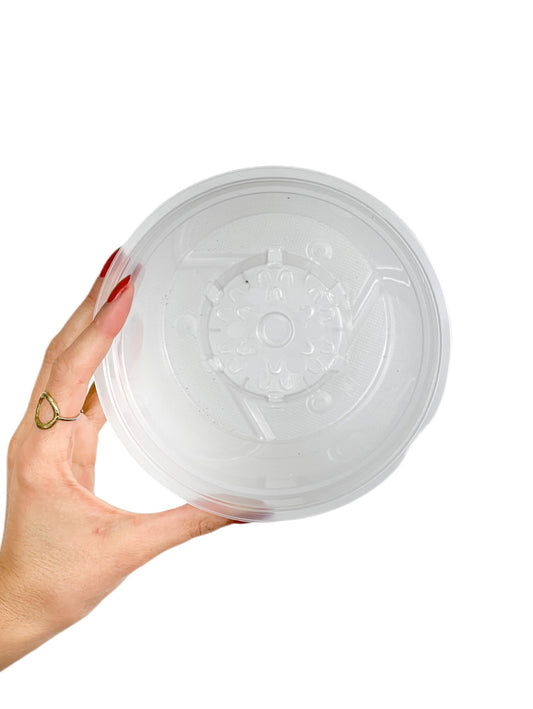
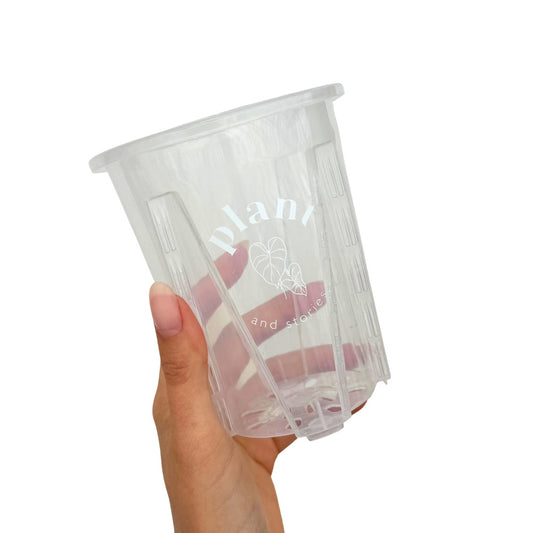
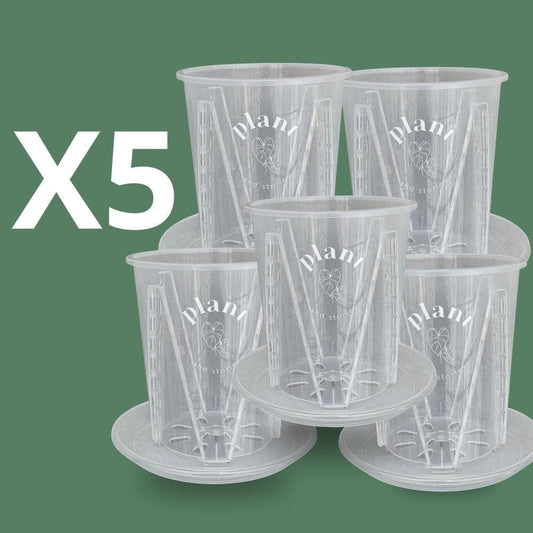
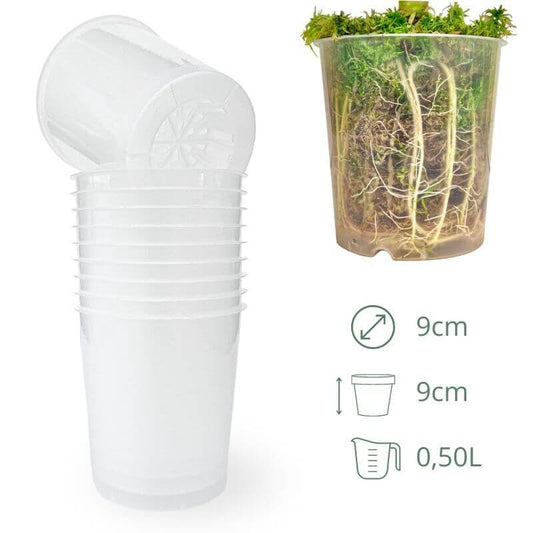
A good nursery pot can make all the difference to root health. Our clear nursery pots with drainage holes are made from lightweight plastic and feature pre-drilled drainage holes to prevent waterlogging, the leading cause of root rot. Available in several sizes, they’re suitable for a young Pothos just as much as a large Monstera or an established Philodendron.
Choosing a Nursery Pot: Material, Size, and Drainage
Plastic remains the go-to material for nursery pots: lightweight, durable, and affordable, it lets roots breathe thanks to its drainage holes. Always choose a pot that is slightly larger than the current root ball, never too large, to prevent excess damp potting mix from surrounding the roots. The transparency of some models also lets you check the roots’ condition without having to repot.
Our Nursery Pots Available Online
Our selection of nursery pots is designed to support every stage of your plants’ growth, from seedlings to mature varieties. We carefully select sizes and styles to meet every repotting need, with fast, secure delivery. Browse our nursery pots now and give your roots the space they need.