Daily care and tips for Rose bushes

When and where should you plant a rose bush in the garden?

Planting is ideally carried out in the fall, between October and November, or in the spring when there is no risk of frost, in warmed soil. Choose a spot in full sun, with at least 6 hours of direct sunlight per day, sheltered from strong winds. Well-drained soil enriched with organic matter encourages rapid root establishment.

Why isn’t my rose bush flowering?

A lack of flowering is most often caused by'too much'shade, improper pruning or soil that is too low in nutrients. Make sure your rose gets enough sunlight and apply a potassium-rich fertilizer in spring to encourage flowering. Pruning too late in the season can also remove future flower buds.

How and when should you prune a rose bush?

The main pruning is done at the end of winter, between February and March, before growth begins, by cutting the stems back to 3 or 5 buds above ground level. Maintenance pruning after each flowering, by removing faded flowers, encourages a new flush of buds. Always use disinfected pruning shears to prevent the spread of diseases.

How can I protect a rose bush from frost in winter?

A rose planted in the ground generally withstands temperatures down to'15 degrees below zero, depending on the variety, but mounding soil or mulch around its base protects the roots from the hardest frosts. For roses grown in pots on a terrace, which are more exposed to the cold, wrapping the container in horticultural fleece is recommended. Avoid applying any'fertilizer after September so as not to encourage tender growth before'winter.

Where can I buy quality rose bushes?

Plant and Stories offers a selection of rose bushes from French and European growers, chosen for their vigorous growth and abundant blooms. Each rose bush is shipped in suitable packaging to protect its roots during transit, with fast, secure delivery. This selection is suitable for planting in the ground as well as growing in pots on a balcony or terrace.'

Everything you need to know about Rose bushes

Which varieties of roses are most commonly planted in gardens?

Among the most sought-after roses are Pierre de Ronsard for its romantic two-tone flowers, Papa Meilland for its intense fragrance, and Iceberg for its continuous white blooms. These varieties differ in their growth habit—bush, climbing, or ground cover—and in their disease resistance. The choice depends mainly on the intended 'use: flower bed, hedge, or pergola.

What is the difference between a bush rose and a climbing rose?

The bush rose forms a compact shrub 60 centimetres to 1.5 metres tall, ideal as a specimen plant in a flower bed or along a border. The climbing rose develops long stems that can reach 3 to 5 metres, perfect for covering a wall, trellis or pergola. The ground-cover rose, which has a more spreading habit, is better suited to covering a bank or edging a path.

Where do the rose bushes grown in the garden come from?

The genus Rosa comprises more than 150 wild species native to 'Asia, 'Europe, and 'North America. Modern roses are the result of crosses carried out since the nineteenth century, particularly between China roses and European roses, to produce repeat flowering. This hybridization explains the wide variety of colors, fragrances, and growth habits 'found in garden centers 'today.

When do rose bushes bloom?

Most repeat-flowering roses bloom from May to October, with successive flushes of flowers every 6 to 8 weeks. Some old varieties bloom only'once, usually in June, but often put on a more spectacular display. Regular pruning after each flush encourages the'development of new buds.

Do rose bushes lose their leaves in winter?

Yes, the vast majority of rose bushes are deciduous and lose their leaves in 'autumn to enter winter dormancy. This resting period is necessary for the plant to replenish its reserves before growth resumes in spring. A few hardy species retain semi-evergreen foliage in regions with a mild climate.

Rose bushes

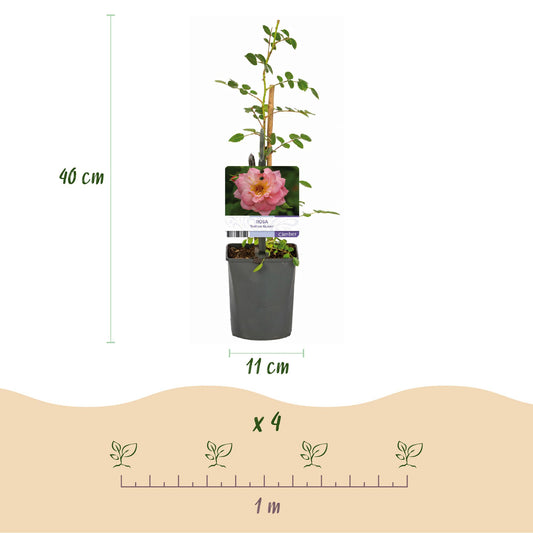
Plant your rose bushes in full sun, with at least six hours of direct sunlight per day, in well-drained soil rich in organic matter, spacing them 60 to 100 cm apart for blooms from spring to fall.

The essentials at a glance:

  • ☀️ Exposure: full sun, at least six hours of direct sunlight
  • 🌸 Blooming: from spring to fall
  • 🌱 Soil: well-drained, rich in organic matter
  • 📅 Planting: fall or spring
  • ↔️ Planting distance: 60 to 100 cm
  • ✂️ Care: regular watering during the first year, annual pruning in late winter

Roses: the queen of the garden for flower beds and flowering hedges

A well-established rose bush transforms an ordinary corner of the garden into a living picture from spring to fall. The Rosa genus includes thousands of cultivars, from bush roses to climbing roses, as well as shrub roses and ground cover roses. Native to Asia and Europe, this botanical genus includes more than 150 wild species, from which all modern cultivated varieties originate. Among the most widely planted are Pierre de Ronsard Rose, Papa Meilland Rose and Iceberg Rose, prized for their abundant blooms and fragrance.

Planting and caring for a rose bush in the garden

Rose bushes thrive in full sun, with at least six hours of direct sunlight per day, and in well-drained soil rich in organic matter. Ideally, plant them in fall or spring, in the ground or in a pot on a patio, spacing them 60 to 100 centimeters apart depending on the variety. Regular watering during the first year and annual pruning in late winter encourage abundant blooms and a balanced shape.

Buy your rose bushes from Plant and Stories

Our rose bushes are selected from French and European growers renowned for the quality of their plants and the richness of their colors. Each plant is carefully packaged to protect its roots during shipping, with fast, secure delivery right to your garden. Whether for a flowering hedge, a flower bed or a pergola, our rose bushes bring structure and fragrance to any outdoor space.

For more information, see our complete guide: Rose Bushes: The Complete Guide to Planting, Pruning and Choosing.

Show moreShow less