


-

 Livraison offerte
Tulipe double en mélange (Tulipa) - fleurs doubles printanières
Regular price From 49,95 €Regular price -
Anémone de Caen en mélange (Anemone coronaria) - fleurs à couper - calibre 5/6
Regular price 39,95 €Regular price -
Scille de Sibérie (Scilla siberica) - petit bulbe bleu naturalisant - calibre 7/8
Regular price 39,95 €Regular price -

 Livraison offerte
Tulipe Triumph rose (Tulipa) - floraison printanière - calibre 11/12
Regular price 39,95 €Regular price -

 Livraison offerte
Narcisse 'Tête-à-Tête' (Narcissus) - narcisse nain à floraison précoce
Regular price From 39,95 €Regular price -

 Livraison offerte Sale
Wood hyacinth (Hyacinthoides) – size 7/8
Regular price From 44,95 €Regular price59,95 €Sale price From 44,95 €Livraison offerte Sale -

 Livraison offerte
Mixed blue hyacinths (Hyacinthus) – spring-flowering – bulb size 14/15
Regular price From 39,95 €Regular price -

 Livraison offerte Sale
Blue mixed crocuses (Crocus) – size 7/8
Regular price From 39,95 €Regular price54,95 €Sale price From 39,95 €Livraison offerte Sale -

 Livraison offerte Sale
Large-flowered mixed crocuses (Crocus) – bulb size 7/8
Regular price From 39,95 €Regular price54,95 €Sale price From 39,95 €Livraison offerte Sale -

 Livraison offerte Sale
Corydale ‘Beth Evans’ (Corydalis) – spring flowering
Regular price From 39,95 €Regular price54,95 €Sale price From 39,95 €Livraison offerte Sale -

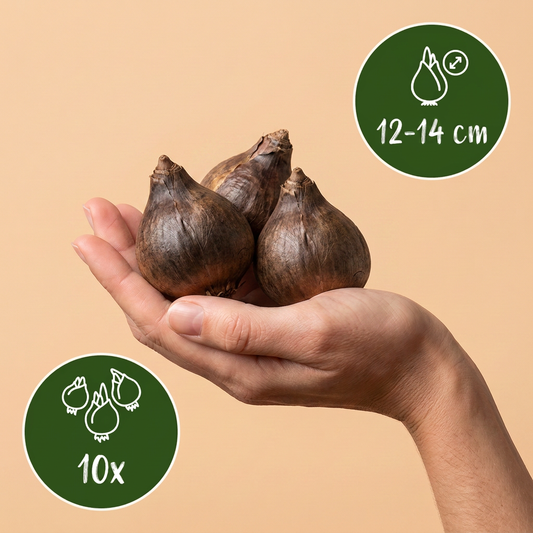
Leichtlin’s camassia mix in blue and white (Camassia) – summer-flowering – size 12/14
Regular price From 39,95 €Regular price -
Ornamental allium 'Purple Sensation' (Allium) - summer flowering - size 10/12
Regular price From 39,95 €Regular price -
Round-headed ornamental onion (Allium) – summer flowering – bulb size 5/6
Regular price From 39,95 €Regular price -

 Livraison offerte
‘Vendée Globe’ tulip (Tulipa) – spring-flowering – bulb size 11/12
Regular price From 39,95 €Regular price -

 Livraison offerte Sale
Red Triumph Tulip (Tulipa) – spring flowering – bulb size 11/12
Regular price From 39,95 €Regular price54,95 €Sale price From 39,95 €Livraison offerte Sale -

 Livraison offerte Sale
Purple Triumph Tulip (Tulipa) – spring flowering – bulb size 11/12
Regular price From 44,95 €Regular price59,95 €Sale price From 44,95 €Livraison offerte Sale -

 Livraison offerte Sale
Triumph Tulips, mixed (Tulipa) – spring flowering
Regular price From 39,95 €Regular price54,95 €Sale price From 39,95 €Livraison offerte Sale -

 Livraison offerte Sale
White Triumph Tulip (Tulipa) – spring-flowering – size 11/12
Regular price From 44,95 €Regular price59,95 €Sale price From 44,95 €Livraison offerte Sale -

 Livraison offerte Sale
Tulip ‘Symbiosa’ mix (Tulipa) – spring flowering – bulb size 11/12
Regular price From 44,95 €Regular price59,95 €Sale price From 44,95 €Livraison offerte Sale -
Tulip ‘Sweet Desire’ mixed colours (Tulipa) – spring flowering – bulb size 11/12
Regular price From 39,95 €Regular price -

 Livraison offerte Sale
‘Sunbath’ Tulip (Tulipa) – spring flowering – bulb size 11/12
Regular price From 39,95 €Regular price54,95 €Sale price From 39,95 €Livraison offerte Sale -

 Livraison offerte
‘Striped Crown’ Tulip (Tulipa) – spring flowering – bulb size 11/12
Regular price From 39,95 €Regular price -

 Livraison offerte
‘Strawberry Lemonade’ Tulip (Tulipa) – spring flowering – size 11/12
Regular price From 39,95 €Regular price -

 Livraison offerte Sale
Tulip ‘Sorbet’ mix (Tulipa) – spring flowering – bulb size 11/12
Regular price From 39,95 €Regular price54,95 €Sale price From 39,95 €Livraison offerte Sale -

 Livraison offerte
Tulip ‘Prince’ Mix (Tulipa) – spring flowering – size 11/16
Regular price From 49,95 €Regular price -

 Livraison offerte Sale
Praestans mixed tulips (Tulipa) – spring flowering – size 8/9
Regular price From 39,95 €Regular price54,95 €Sale price From 39,95 €Livraison offerte Sale -

 Livraison offerte
‘Positive Vibe’ Tulip (Tulipa) – spring flowering – bulb size 11/12
Regular price From 39,95 €Regular price -

 Livraison offerte
‘Persian Pearl’ tulip (Tulipa) – spring-flowering – bulb size 6/7
Regular price From 44,95 €Regular price -

 Livraison offerte
‘Peaches & Kisses’ Tulip (Tulipa) – spring-flowering – bulb size 11/12
Regular price From 39,95 €Regular price -

 Livraison offerte Sale
Pastel Tulip Mix (Tulipa) – spring flowering
Regular price From 39,95 €Regular price54,95 €Sale price From 39,95 €Livraison offerte Sale -

 Livraison offerte
Black tulip (Tulipa) – spring-flowering – bulb size 10/11
Regular price From 44,95 €Regular price -

 Livraison offerte Sale
Tulip 'My Favourite Topping' (Tulipa) – spring-flowering – bulb size 11/12
Regular price From 44,95 €Regular price59,95 €Sale price From 44,95 €Livraison offerte Sale -

 Livraison offerte Sale
‘Mata Hari’ Tulip (Tulipa) – spring flowering – bulb size 11/12
Regular price From 39,95 €Regular price54,95 €Sale price From 39,95 €Livraison offerte Sale -

 Livraison offerte
‘Macaron’ tulip mix (Tulipa) – spring flowering – bulb size 11/12
Regular price From 39,95 €Regular price -

 Livraison offerte
‘Little Beauty’ Tulip (Tulipa) – spring-flowering
Regular price From 39,95 €Regular price -

 Livraison offerte Sale
Double Tulip 'Gudoshnik' (Tulipa) – spring flowering – size 11/12
Regular price From 39,95 €Regular price54,95 €Sale price From 39,95 €Livraison offerte Sale


You might like these collections
-

Our ornamental garlic (alliums) to plant: large, nectar-rich flower heads for borders...


