Daily care and tips for Honeysuckle

Where and when should you plant a climbing honeysuckle?

Plant preferably in autumn or spring, when there is no risk of frost. Choose a spot where the top of the plant will be in full sun or partial shade and the base in shade, in rich, moist but well-drained soil. Dig a wide hole, add compost, water thoroughly, then mulch around the base to keep the roots cool.

What support should I choose for a honeysuckle to climb?

Honeysuckle climbs by twining its flexible stems around slender supports: give it a trellis, wire mesh, taut wires, an arch or a pergola. It won't cling to a smooth wall on its own. Guide and loosely tie the young stems for the first few weeks, until they have something to grip.

How do you prune a climbing honeysuckle?

Prune just after flowering: remove dead wood, open up the centre and shorten overly long stems to keep the plant dense and flowering. For an older plant that has become bare at the base, a more severe rejuvenation prune in late winter encourages new growth. Avoid pruning before flowering, as this risks removing the buds.

Why isn’t my honeysuckle flowering?

Three common causes: a spot that’s too shady (it needs several hours of light), pruning at the wrong time, which removed the buds, or too much nitrogen fertilizer, which encourages leaf growth at the expense of flowers. A plant that’s too dry will also flower less: mulch it and water it in summer. Address these issues to bring back a beautiful display of flowers.

How to choose your honeysuckle at Plant and Stories?

Choose based on the fragrance you’re looking for, the color of the flowers and the flowering period, then on the exposure (sun or partial shade) and the height of the structure to cover. Our honeysuckles are delivered in pots, ready to climb, selected from European growers for their vigor and flowering. Fast, careful delivery throughout France.

Everything you need to know about Honeysuckle

Is climbing honeysuckle really fragrant?

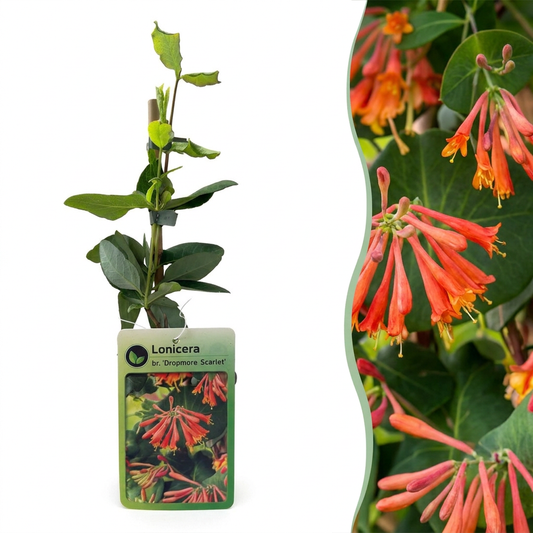
Most climbing honeysuckles are highly fragrant, especially in the evening: woodbine and Hall’s honeysuckle (Lonicera japonica 'Halliana') give off a strong, sweet scent. Some varieties grown for their color, such as 'Dropmore Scarlet', are less fragrant, however. If fragrance is your priority, check the variety: it’s the number-one criterion.

Is climbing honeysuckle hardy?

Yes, most climbing honeysuckles are very hardy and can withstand temperatures down to around -15°C, or even lower for the most common species. They can spend the winter outdoors without protection in the vast majority of French regions. Always check the hardiness rating listed on each product page for the variety you choose.

What are the drawbacks of climbing honeysuckle?

Honeysuckle has few drawbacks, but there are a few things to be aware of: it is a common target for aphids in spring, its ornamental berries are mildly toxic if ingested, and vigorous varieties such as Japanese honeysuckle (Lonicera japonica) can become invasive if not pruned. Nothing deal-breaking: annual pruning after flowering and keeping an eye out for aphids in spring are all it takes to enjoy it with peace of mind.

Does climbing honeysuckle grow quickly, and how tall does it get?

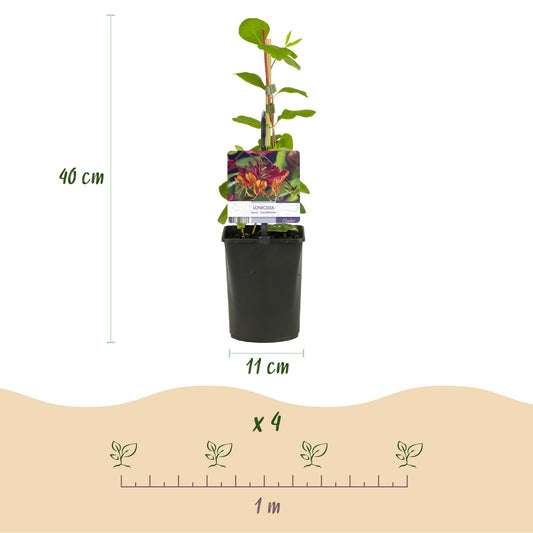
Yes, climbing honeysuckle is vigorous and grows quickly: it covers a fence or pergola in one to two growing seasons. Depending on the variety, it reaches 3 to 6 m tall at maturity as it twines around its support. This fast growth makes it an ideal solution for quickly covering a structure, provided you prune it every year to keep it in check.

Is honeysuckle beneficial to pollinators?

Yes, honeysuckle is an excellent nectar plant: its tubular, nectar-rich flowers are mainly visited by bumblebees and butterflies, including moths (hawk moths), which are drawn by the fragrance at dusk. Bees, on the other hand, have more difficulty reaching the bottom of the long corollas. It is therefore an excellent choice for a biodiversity-friendly garden.

Honeysuckle

Honeysuckle (Lonicera) is a fragrant, easy-to-grow climber, ideal for covering a fence, pergola or trellis. Hardy and generous, it produces sweetly scented flowers from spring to autumn, attracting plenty of butterflies and bumblebees, in both full sun and partial shade.

The essentials at a glance:

  • ☀️ Exposure: sun or partial shade, with cool roots
  • 🌸 Flowering: May to September, depending on the variety
  • 👃 Fragrance: most climbing varieties have highly fragrant flowers
  • 🦋 Bonus: rich in nectar and a favorite with butterflies and bumblebees
  • ❄️ Hardiness: hardy, often down to -15°C and much lower depending on the species
  • 🧗 Uses: fences, pergolas, trellises, wire fences or large pots

Climbing honeysuckle, the quintessential fragrant climber

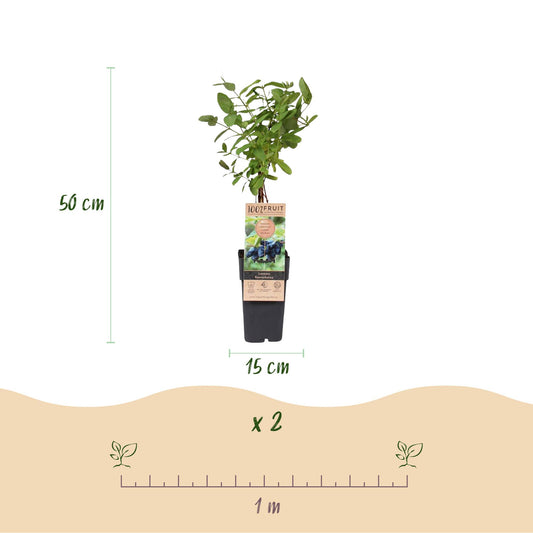
Few climbing plants can rival honeysuckle for filling a patio with fragrance in the evening. The genus Lonicera includes generous varieties such as Hall’s honeysuckle (Lonicera japonica 'Halliana'), the flamboyant 'Dropmore Scarlet' and the bright Lonicera tellmanniana with its orange flowers. Some species, such as Henry’s honeysuckle (Lonicera henryi), keep their evergreen foliage, covering their support all year round, while edible honeysuckle (Lonicera caerulea), or honeyberry, is grown for its small fruits. Its tubular flowers, in white, yellow, red or two-tone, are among the most fragrant in the garden: honeysuckle is one of the fragrant plants most popular for creating a relaxing corner.

Planting and caring for honeysuckle

Honeysuckle likes its head in the sun and its roots cool: plant it in rich, well-drained soil, and mulch around the base to keep the roots cool. Give it a slender support (trellis, wire fence or taut wire) to twine around, and guide young shoots during the first few weeks. A light trim just after flowering is all it takes to keep it looking full. Rich in nectar, it deserves a place among the pollinator-friendly plants that bring a garden to life.

Buy your honeysuckle from Plant and Stories

On a fence, arch or pergola, honeysuckle creates a fragrant, flower-covered screen in a single season. Our honeysuckles, sourced from European growers and delivered in pots ready to climb, are available in several varieties and colors.

For more information, see our complete guide: Climbing Honeysuckle: Planting, Pruning and Care.

Show moreShow less