Daily care and tips for Passionflower

Where and when should you plant a passionflower?

Plant in spring, once all risk of frost has passed, in a warm, sheltered spot in full sun. The soil should be light, rich, and above all well-drained, as passionflower dislikes waterlogged conditions in winter. Dig a wide hole, add compost, put the support in place at planting time, and water regularly during the first year.

What kind of support should I choose for a passionflower?

Passionflower climbs on its own using its tendrils, which wrap around slender supports: trellises, wire mesh, taut wires, or open railings. It does not cling to a smooth wall. Provide a sturdy support, as a mature passionflower becomes heavy and vigorous. Guide the first stems toward the support.

How and when should you prune a passionflower?

Prune in early spring, around March, before growth resumes: remove dead and frost-damaged wood, then shorten the main stems to shape the plant and cut back the side shoots to a few buds. This annual pruning keeps the passionflower’s growth in check and encourages more abundant flowering on the new growth of the year.

How can you protect a passionflower from the cold in winter?

In regions with harsh winters, apply a thick mulch around the base in autumn (leaves, straw) to protect the roots: the plant can regrow even if the above-ground parts freeze. Frost-sensitive varieties are grown in large pots and brought into a conservatory or a frost-free room. Blue passionflower remains the hardiest variety for growing in the ground.

How to Choose Your Passionflower at Plant and Stories?

Choose according to the hardiness suited to your region, the flower color and whether or not you want fruit, then according to the support you wish to cover. For planting in the ground in cool climates, opt for blue passionflower; elsewhere, the full range of varieties is available to you. Our passionflowers are delivered in pots, ready to climb, and selected for their vigor. Fast, careful delivery.

Everything you need to know about Passionflower

Is passionflower hardy?

It depends on the variety: blue passionflower (Passiflora caerulea) is the hardiest and can tolerate brief frosts down to around -10°C if the base is mulched, while most other passionflowers are damaged by frost below -5°C. In colder regions, grow them in pots so you can overwinter them under cover. Check the hardiness listed on each plant profile.

Does passionflower produce edible fruit?

Some passion flowers bear fruit: the blue passion flower produces decorative orange fruits that are edible but rather bland, while the passion fruit sold in stores comes from a more tender species (Passiflora edulis). Good exposure and pollination encourage fruiting. The fruits should only be eaten when fully ripe.

Is passionflower toxic?

The leaves and green (unripe) fruit of passionflower contain compounds that can cause digestive problems if ingested, especially in animals. Fully ripe fruit from edible varieties is not a concern. As a precaution, prevent animals from chewing on the foliage.

How fast and how tall does a passionflower vine grow?

Passionflower is a fast-growing climbing plant: it can grow several metres in a single season and reach 4 to 8 m at maturity, depending on the variety and climate. Its vigour makes it ideal for quickly covering a support, provided it is trained and pruned every year.

What are the downsides of passionflower?

Passionflower has two drawbacks worth knowing about: its vigorous growth, which causes it to sucker and sometimes take over a flower bed if left unchecked, and its sensitivity to frost, with the above-ground parts often killed at temperatures of -5 to -8°C (the mulched rootstock resprouts in spring in the case of blue passionflower). Its unripe fruits and foliage are also mildly toxic. Annual pruning and winter mulching are enough to keep it in check.

Passionflower

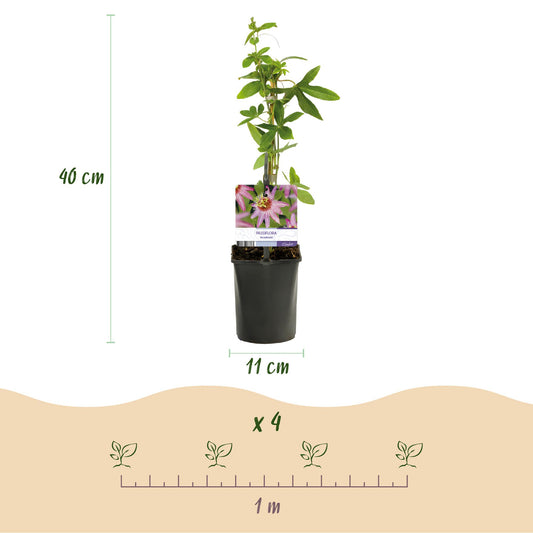
The passionflower (Passiflora), or passion flower, is a spectacular climbing plant with exotic, striking blooms. Vigorous and easy to grow in full sun, it quickly covers a wall, pergola or trellis. The blue passionflower (Passiflora caerulea) is the best-known and hardiest, and its flowers give way to decorative fruits that are edible only when fully ripe.

Key facts at a glance:

  • ☀️ Exposure: full sun, sheltered spot
  • 🌸 Flowering: June to the first frosts, exotic flowers
  • 💙 Star: blue passionflower (Passiflora caerulea), the hardiest
  • 🍈 Fruit: decorative, edible when fully ripe (ornamental varieties)
  • ❄️ Hardiness: varies, often -5 to -10°C; check the variety
  • 🧱 Uses: walls, pergolas, trellises, large pots

Passionflower, the exotic climbing plant with passion flowers

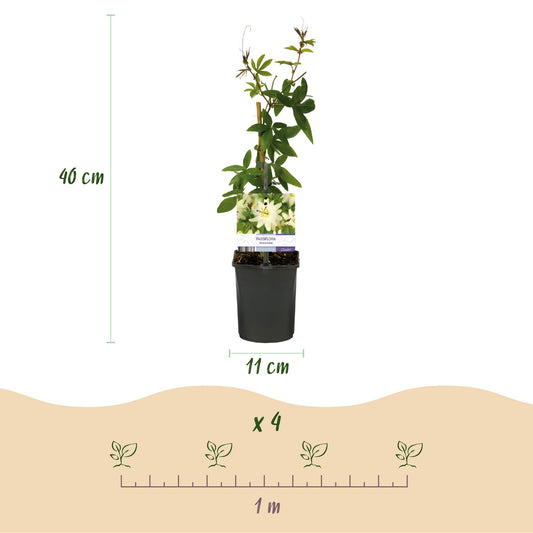
No other flower looks like a passionflower: a crown of colourful filaments at the centre of a star-shaped corolla, with an almost unreal precision. The genus Passiflora includes prolific climbers such as blue passionflower (Passiflora caerulea), the vigorous 'Victoria' and the delicate, pure-white 'Constance Elliott'. Among climbing plants, it is one of the most exotic-looking, and one of the most generous summer flowering plants.

Planting and growing passionflower

Give passionflower a warm, sheltered position in full sun, in light, well-drained soil. It climbs on its own, using tendrils to grip a trellis or wire mesh. Water regularly during the first year, then let the soil dry out between waterings. In cold regions, mulch the base generously in autumn and grow frost-tender varieties in large pots so they can be overwintered under cover. Pruning in early spring encourages abundant flowering.

Buy your passionflower from Plant and Stories

Against a sunny wall, on a pergola or along a balcony railing, passionflower adds an instant exotic touch. Our passionflowers, sourced from European growers and delivered in pots ready to climb, are available in several varieties and colours.

For more information, see our complete guide: Climbing plants: the complete guide to choosing and growing them successfully.

Show moreShow less