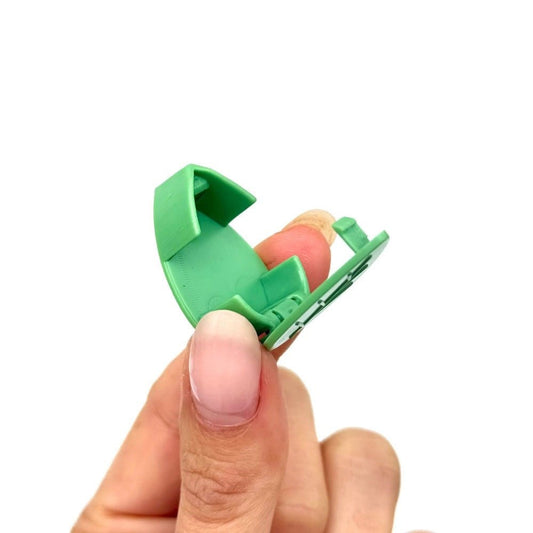
To guide a Monstera, a Pothos or a Philodendron vertically, choose a support that provides sturdy support and, ideally, a moist surface for aerial roots to attach to. At Plant and Stories, the transparent moss pole you can fill with sphagnum moss combines a discreet look with a secure anchor, alongside coco fiber poles, the Hoya hoop, clips and Velcro tape.
The essentials at a glance:
- 🪴 Suitable plants: Monstera, Pothos, Philodendron, Scindapsus, Epipremnum (climbing plants with aerial roots)
- 🔎 Transparent moss pole: nearly invisible, showcases the plant, can be filled with sphagnum moss
- 🌿 Sphagnum moss / coco fiber: a moist, textured surface for aerial roots to attach to
- 🎀 Securing: Velcro tape and soft clips that won't damage the stem
- 📏 Installation: when repotting, insert 3 to 5 cm into the potting mix
- ⏱️ When: as soon as the plant starts climbing or drooping
Which moss pole should you choose for a Monstera or climbing plant?
Plants with aerial roots, such as Monstera, Epipremnum or Scindapsus, benefit from a vertical support that mimics the tree trunks in their natural habitat: they attach their roots to it and develop larger, more deeply lobed leaves. The transparent moss pole you can fill with sphagnum moss is ideal because it stays discreet while providing a moist surface for roots to anchor to. For twining, flowering stems such as those of Hoya, the transparent hoop and clips guide the plant without creating visual clutter.
How and when to install a moss pole
Install the pole when repotting, while the potting mix is still loose, pushing it 3 to 5 cm into the mix (10 to 15 cm for a heavy plant). Secure the stems with Velcro tape in a loose figure eight, leaving 1 cm of slack so the stem isn't compressed as it grows. Mist the sphagnum moss regularly to maintain the moisture that encourages aerial roots to anchor. Check the ties every month on fast-growing species such as Syngonium.
Our moss poles and supports for climbing plants
Our selection includes a stackable transparent moss pole (to fill with sphagnum moss), a coco fiber pole, a transparent hoop for Hoya, plant clips and Velcro tape. Each product is chosen for its sturdiness and discreet design, is in stock and ships quickly throughout France and Europe.
For more information, see our complete guide: Moss poles for climbing plants: how and when to use them.