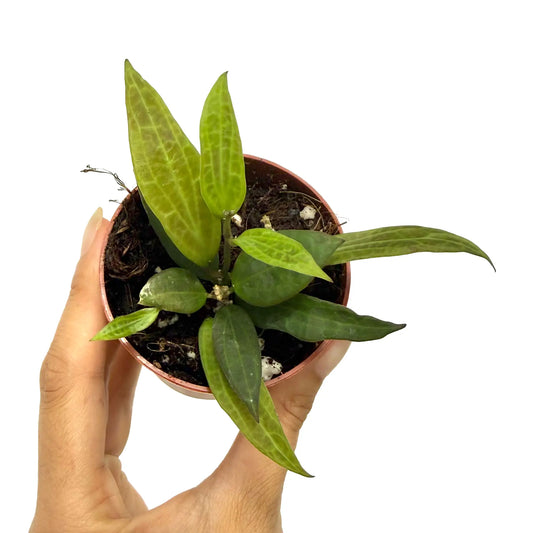
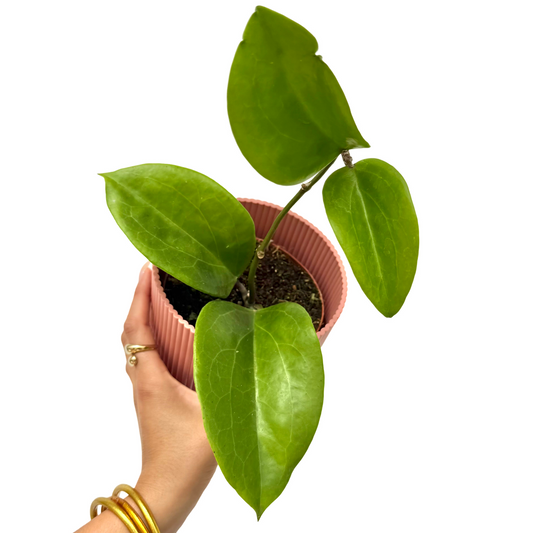
Where can I find the hoya plant?
Feuilles cireuses, fleurs en étoile, parfum discret la nuit… le hoya est l'une des plantes d'intérieur les plus fascinantes qui soient. Pourtant, beaucoup passent à côté de sa floraison faute de connaître ses vraies exigences. Ce guide change ça.

Among the most fascinating houseplants, hoyas occupy a special place. With their waxy leaves, star-shaped flowers with a subtle fragrance, and sometimes incredibly long stems, they decorate an interior without ever overwhelming it.
But with so many species available, rare varieties and specific requirements for some, one question often comes up: where to find the hoya plant that matches your desires, your level of care… and your space?
Before looking for the right shop, it's best to understand what a hoya actually is and what this plant has to offer. We'll guide you.
Discovering Hoyas
Hoyas possess a discreet elegance that appeals to both plant lovers and collectors. But be warned, behind their apparent simplicity lies a surprisingly rich plant world.
Origin and characteristics of hoyas

The hoya is a tropical plant native to Southeast Asia, India, China, and Australia. In the wild, it grows as a vine, clinging to trees without ever suffocating them. Indoors, it is grown in hanging baskets or trained along a support, depending on the variety.
What makes it unique:
- its thick leaves , often dark green, sometimes veined or variegated,
- its star-shaped flowers , reminiscent of porcelain or wax due to their smooth and glossy texture,
- its delicate aroma , which varies depending on the species, but is often expressed at night.
Some varieties can produce white, pink, or reddish flowers in tight clusters. It is a plant that impresses with its shape and flowering , while remaining easy to grow .
Popular species to know
There are over 200 species of hoya, but a few are frequently chosen by enthusiasts:
- Hoya carnosa : the best known. Green leaves, sometimes variegated, pale pink flowers and a subtle fragrance. It is ideal for beginners.
- Hoya pubicalyx : with longer foliage, silvery reflections and dark red to bright pink flowers.
- Hoya bella : more compact, often grown in hanging baskets, with small white and pink star-shaped flowers.
- Hoya linearis : with very fine foliage, falling in a cascade, less common but very graphic.
Some varieties take longer to flower, others are more prolific. The choice will depend on where you place it , the available light, and of course… your preference for foliage or flowers.
Optimal Hoya Care

The hoya is often presented as an easy plant, but it does have a few requirements to meet if you want to enjoy its vigorous growth and star-shaped blooms. The good news is that once established, it requires little intervention.
Light conditions and temperature
To thrive, a hoya needs light. Not direct sunlight, but bright, indirect light , like near an east- or west-facing window. Too much shade slows growth and makes flowering almost impossible.
Some hoyas, such as carnosa or pubicalyx , are quite tolerant, but the more delicate ones need constant light to thrive.
In terms of temperature, it prefers an environment between 18 and 25°C , without cold drafts. Below 15°C, the plant's growth slows down, especially if it is placed in a dark corner.
A healthy hoya, in a well-exposed location, develops long stems and glossy foliage.
Watering and humidity needed
There are no hard and fast rules here either: watering must be adapted to the seasons and ambient humidity .
- In spring and summer: water when the soil is dry on the surface, about once every 7 to 10 days.
- In autumn-winter: reduce to every 15 days, or even less if the room is cool.
Hoya plants hate overwatering. Too much water risks root rot . Soggy soil is dangerous.
This plant thrives in a slightly humid, but not stifling, atmosphere . Daily misting isn't necessary, but a good humidity level (between 50 and 60%) promotes flowering.
Substrate and fertilizer selection
The ideal potting mix for a hoya? Well-draining, light, and slightly aerated. You can use:
- 50% potting soil for indoor plants
- 25% perlite or sand
- 25% coconut husks or fiber
This prevents water stagnation and promotes good root respiration.
To feed it, use a balanced liquid fertilizer (such as 10-10-10 or 6-6-6) once a month, from March to September. An excess of nutrients can harm flowering, so it's best to use it sparingly.
With a well-chosen substrate, suitable light and controlled watering, the hoya becomes a robust plant with thick foliage and surprising flowers.
Hoya plant propagation techniques
Want to propagate your hoya or give a cutting to a loved one? Good news: propagating hoyas is simple, inexpensive, and often very rewarding. However, you need to follow the right steps and know what to look for.
Effective cutting
The easiest way is to propagate cuttings in water or directly in soil. Here's the water method, ideal for beginners:
- Choose a healthy stem , with at least two nodes (small bumps on the stem where the leaves come from).
- Cut cleanly below a knot, with a disinfected tool.
Remove the bottom leaves so they don't get wet.
Place the stem in a glass of water at room temperature, avoiding direct light.
Change the water every 3 to 4 days.
After 2 to 4 weeks , thick, white roots will begin to appear. When they reach 4 to 5 cm, you can plant the cutting in a small pot filled with well-draining potting soil.
Some varieties, such as hoya carnosa , are particularly easy to propagate.
Taking care of young plants

Once potted, the young hoya needs stability. Overwatering to "boost" growth is out of the question: letting it dry out a little between waterings stimulates root development .
Young plants need:
- from a bright spot but without direct sunlight,
- a little more humidity than an adult,
- and above all, time . Growth is often slow at the beginning.
Don't be surprised if the first leaves are small or misshapen: this is normal. The foliage will take on its true shape after a few months.
With a little patience, you will obtain a robust plant, ready to develop its long stems and, with a little luck, its first porcelain flowers .
Common problems and solutions
The hoya is a fairly robust plant, but like all tropical plants grown indoors, it can react to improper care or sudden changes in environment . Fortunately, most problems are easy to correct.
Common diseases and parasites
Hoyas can sometimes be affected by:
- Scale insects : they lodge on the stems or under the leaves, forming small white clusters. Remove them with a cotton ball soaked in soapy water or 70% alcohol.
- Red spider mites : more common when the air is too dry. They can be identified by the discoloration of the foliage and by fine webs.
- Aphids : often attracted to young stems or flower buds. A simple rinse or a natural treatment is sufficient.
Regarding diseases, be especially wary of excessive moisture : waterlogged soil promotes the development of fungi and the blackening of roots .
Tips for healthy and lush foliage
A healthy hoya can be recognized by its foliage: green, firm, slightly waxy, sometimes veined depending on the variety . If you notice:
- Soft or wilted leaves : watering too irregularly.
- Yellowing leaves : too much direct light or excess water.
- Dull or spotted foliage : lack of nutrients or too low humidity.
A few simple reflexes:
- Clean the leaves with a soft cloth once a month.
- Turn the pot regularly for harmonious growth.
- Fertilize lightly in spring to support growth.
And above all, avoid handling the plant too much or moving it unnecessarily. Hoyas like stability. Once established, they grow slowly but surely and can live for many years.
Key takeaways
With its thick leaves , supple stems , and subtly fragrant star-shaped flowers , the hoya ticks all the boxes for a long-lasting houseplant . You don't need to be an expert to enjoy it: all it needs is a little light, good-draining soil, and a little patience .
Some varieties, like carnosa or bella , are perfect for beginners. Others require a little more patience, but all know how to make a statement, even without flowering.
If you are looking to adopt one, or to expand your collection, you can go directly to Our selection of hoyas to grow indoors .
Frequently Asked Questions
Where can I buy a quality hoya plant?
You can find hoyas in garden centers, at specialist nurseries or on sites like Plant and Stories, which offer varieties selected for indoors.
Which variety of hoya is the easiest to grow?
Hoya carnosa is often recommended for beginners. It is robust, flowers easily, and tolerates watering errors.
How to make a hoya flower?
It needs plenty of light, moderate watering, and you should avoid moving the plant too much. Flowering can sometimes take several months, but it's worth the wait.
Can a hoya be grown in a hanging basket?
Yes, some varieties like Hoya bella or linearis are perfect for hanging baskets. This highlights their trailing stems and star-shaped flowers.
Does the hoya grow quickly?
Growth is rather slow, especially in the first few months. But with good conditions (light, warmth, well-draining soil), it can quickly produce long stems.

Laura Bruneau
Jardinière & autrice