

Horticultural Perlite: improves drainage, water retention and growth

When repotting a plant or preparing a seed, we don't always think about the soil texture. And yet, that's often where everything hinges. Too dense? The roots suffocate. Too wet? Hello rot.
This is where horticultural perlite comes in. This simple, white, ultra-light material does a remarkable job: it aerates, drains, retains just the right amount of water… and facilitates the recovery of almost all crops.
If you are looking for an effective way to improve your potting mixes or give your young plants a real boost, this guide will enlighten you.
Horticultural perlite: an indispensable ally
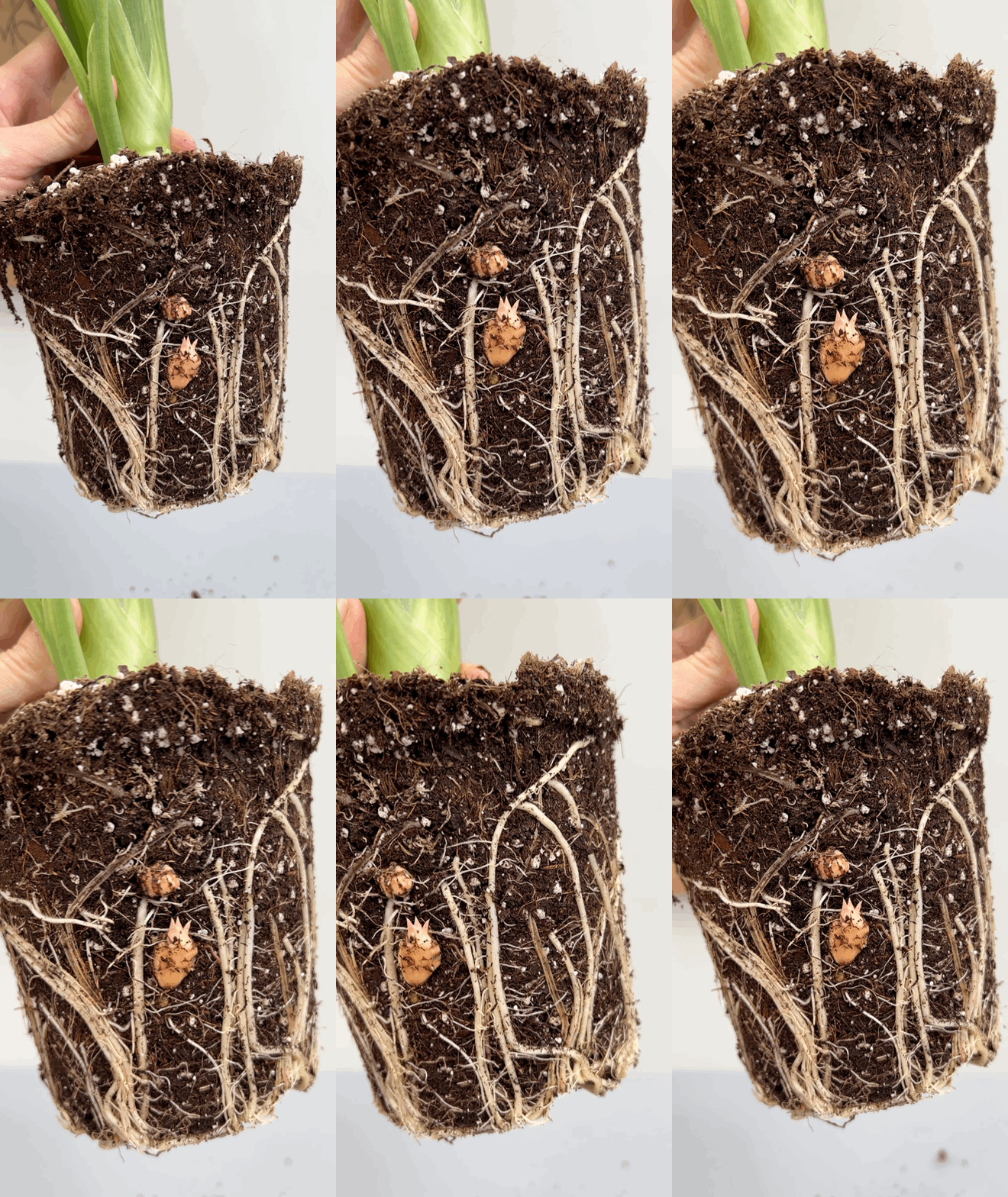
Before pouring it into your pots or growing trays, a quick look at its composition will help you better understand why it works so well.
Definition and origin of perlite
Perlite is a volcanic rock naturally rich in silica. When heated to a high temperature, it bursts like popcorn and becomes the white, granular, ultra-light material found in bags of substrate.
It is primarily used for its drainage and aeration properties , whether in pots, planters, or even soilless cultivation. It does not decompose, does not mold, and remains stable over time.
Physical and chemical characteristics
- It is inert : it does not change the pH of your substrate.
- It is lightweight : perfect for lightening a soil mix.
- It is porous : it absorbs some of the water while allowing air to circulate.
It is this combination that makes it so useful, especially for houseplants sensitive to stagnant moisture or lack of oxygen in the soil.
Use of perlite for different crops
Perlite can easily be incorporated into your gardening routine. But you still need to know how to use it correctly, and which plants it's most beneficial for. Spoiler alert: almost all of them .
Adjust the dosage according to the type of plant
The correct perlite ratio always depends on the plant's water requirements:
- Succulent plants, cacti, aloe : up to 50% perlite in the mix for maximum drainage.
- Tropical plants (Monstera, Pothos, etc.): around 20 to 30% , with a good base soil.
- Outdoor potted plants : 10 to 20% is enough to improve the lightness of the substrate.
- Seedlings and young plants : up to 50%, or even pure (we will come back to this), to promote rapid rooting.
Too little perlite will have almost no effect. Conversely, too much perlite can make the mixture unstable , especially if you are using very light or shallow pots.
Incorporate perlite into potting soil mixes
Perlite is never used alone (except in exceptional cases for cuttings). It is combined with other substrates to create custom mixes .
Examples of mixtures:
- For an aerated substrate: potting soil + perlite + coconut fiber or bark.
- For a more humid substrate: potting soil + perlite + sphagnum moss or compost.
Its light size (generally 2 to 5 mm) allows it to spread well in the soil, without weighing down or compressing the mixture.
It is available in bags of 4 L to 10 L , like horticultural perlite, perfect for occasional or regular use.
Rooting and germination techniques with perlite
It's no coincidence that perlite is prized by nursery growers and cutting enthusiasts. Thanks to its light and sterile texture, it provides an ideal environment for young shoots and roots to start growing without stress.

Promote root development of cuttings
Perlite can be used for propagation by cuttings:
- Used alone , for fragile stems or those sensitive to stagnant moisture.
-
Mixed with sphagnum moss or coconut fiber , for a good moisture/aeration balance.
The advantage is that it retains moisture while allowing air to circulate around the roots. The result: healthier , faster-growing roots that are less prone to rot .
Quick tip: don't hesitate to use a transparent container (like a seedling box or plastic cup) to see the root development , especially if you are testing your first cuttings.
Ensuring optimal cultivation during sowing
For seedlings, perlite plays a dual role:
- It lightens the substrate and makes it more draining.
- It protects the seeds from excess moisture, which is often fatal to young shoots.
You can :
- Use it on the surface , in a thin layer on the seeds to maintain even moisture.
- Incorporate it into a special seed-starting substrate, in a proportion of 30 to 50%.
This is a method extensively detailed in our article on the use of perlite in substrates , with other ideas for mixtures depending on the crops.
Conclusion: a discreet but essential material

Horticultural perlite is n't always the star of the gardening aisle, but it deserves a prominent place in your growing routine. Whether it's to aerate overly compacted potting soil , boost germination , or promote root development in your cuttings , this simple and effective material makes a real difference.
Easy to dose, naturally neutral , compatible with all indoor and outdoor plants, perlite is an invisible but formidable ally for creating a custom-made, balanced and durable substrate.
And to further explore the use of this material, our comprehensive guide to perlite in the garden will give you concrete ideas and tested mixtures.
FAQ
What is the purpose of perlite in a substrate?
It improves drainage and aeration , while maintaining a certain level of moisture. It's one of the best additions for lightening potting soil and preventing root asphyxiation.
What proportion of perlite should be used?
It all depends on the use. For houseplants: 20 to 30%. For seedlings or cuttings: up to 50%, or even pure in some cases.
Does perlite retain water?
Yes, only on the surface. It doesn't absorb water like a sponge, but retains it in its microcavities , preventing excesses while maintaining a good humidity level.
Can perlite be mixed with coconut fiber or peat?
Absolutely. It's even recommended to balance the mix : the coco retains moisture, the perlite ensures aeration.
Is perlite suitable for succulent plants ?
Yes, provided you don't overdo it. 15 to 20% is enough to lighten the substrate without retaining too much moisture, which could harm this type of plant.

Laura Bruneau
Jardinière & autrice


