

Oxalis vulcanicola 'Sunset Velvet': care, light and hardiness

To care for Oxalis Sunset Velvet, give it plenty of light, water when the top of the potting mix has dried out, and bring it indoors before frost: these three steps will keep its foliage orange and dense. Its full name is Oxalis vulcanicola 'Sunset Velvet' (sometimes written as Oxalis spiralis subsp. vulcanicola), an orange oxalis with a spreading habit, very different from the bulbous purple shamrock.
“Velvet” means velvety and “sunset” refers to the setting sun, alluding to its warm colors. For the genus and its most widely grown species, see our Oxalis triangularis (purple shamrock) guide; for its purple-hued cousin, see our Oxalis Plum Crazy profile.
🌿 Why does Oxalis Sunset Velvet foliage change color?
Oxalis Sunset Velvet's color depends on light and the season. According to the RHS (Royal Horticultural Society) profile for 'Sunset Velvet', its leaflets are orangey pink in spring, become greener in summer, then turn deep magenta in autumn, on reddish stems.
For the species, the RHS notes in its Oxalis vulcanicola species profile that the green leaves turn pinkish purple in the sun and that the plant turns its foliage toward the light.
So an Oxalis vulcanicola that looks greener in midsummer is not sick; pale foliage and elongated stems year-round, on the other hand, indicate insufficient light.
| Feature | What it means for you |
|---|---|
| Orange to magenta foliage | A plant that changes color with the seasons, without having to wait for it to flower |
| Spreading, semi-trailing habit | It spills beautifully over a planter, hanging basket, or low wall |
| Yellow flowers in spring and summer | A bright contrast with the warm-toned foliage, according to the RHS |
| Compact size | About 30 cm tall and wide according to the RHS: a windowsill is all it needs |
🔎 Oxalis Sunset Velvet at a glance
According to Plants of the World Online (POWO), the database of the Royal Botanic Gardens, Kew, the accepted name is Oxalis vulcanicola Donn.Sm., published in 1897; Oxalis spiralis subsp. vulcanicola, a combination published by Lourteig in 1981, is a synonym, as is Xanthoxalis vulcanicola.
POWO places its native range from southeastern Mexico (Chiapas) to western Panama, via Guatemala, El Salvador, and Costa Rica, in subtropical habitats, with no mention of South Africa. The RHS lists 'Sunset Velvet' under Oxalis vulcanicola, with Oxalis 'Sunset Velvet' and Oxalis spiralis subsp. vulcanicola 'Sunset Velvet' as synonyms.
We sell it as Sunset Velvet; the RHS also maintains a separate profile for a cultivar named 'Molten Lava', and no source consulted establishes that the two names refer to the same plant.
| Criterion | Verified details |
|---|---|
| 🏷️ Botanical name | Oxalis vulcanicola Donn.Sm. (1897) 'Sunset Velvet'; synonym: Oxalis spiralis subsp. vulcanicola (POWO, RHS) |
| 🧬 Family | Oxalidaceae |
| 🌳 Type | Spreading, semi-trailing perennial (RHS); subshrub according to POWO |
| 🌍 Origin | Southeastern Mexico (Chiapas) to western Panama (POWO) |
| 🍃 Foliage | Three leaflets, orangey pink in spring, greener in summer, magenta in autumn (RHS) |
| 🌸 Flowers | Small yellow flowers in umbels in spring and summer (RHS) |
| 📏 Size | Up to 30 cm tall and wide (RHS) |
| ⚠️ Toxicity | Oxalis species are toxic to dogs, cats, and horses (ASPCA) |
📋 Quick care guide
Essential growing tips, all in one glance.
| Factor | Guideline |
|---|---|
| Light | Full sun or partial shade (RHS); very bright window indoors |
| Watering | Moist but well-drained potting mix (RHS); tolerates slight drying between waterings (Wisconsin) |
| Potting mix | Well-draining, sandy, or rich in humus (RHS) |
| Humidity | Normal household air; no special requirements reported |
| Temperature | H2, minimum 1 to 5 °C (RHS); around 10 to 24 °C (50 to 75 °F) is ideal for the genus (NC State) |
| Repotting | In spring, when the roots fill the pot |
| Fertilizer | Monthly during active growth only (Wisconsin, NC State) |
| Toxicity | Toxic to dogs, cats, and horses (ASPCA) |
| Difficulty | Easy, as long as it gets enough light and is protected from frost |
📍 Where to place Oxalis Sunset Velvet: indoors or outdoors?
Oxalis Sunset Velvet can be grown outdoors in warm weather or indoors, as long as it gets enough light. The RHS recommends full sun or partial shade, with a south-, east-, or west-facing aspect, in well-drained soil, and also suggests growing it in a conservatory or on a windowsill.
Its hardiness rating of H2 (1 to 5 °C) means it tolerates cold but not freezing: in France, grow it in a pot outdoors after the last frost and bring it indoors before the first frost.
Indoors, the University of Wisconsin–Madison horticultural extension recommends a sunny window and relatively cool conditions for Oxalis, with daytime temperatures not exceeding around 24 °C (75 °F).
☀️ Indoors: Bright south-, east-, or west-facing window, a relatively cool room, away from radiators
🌤️ Outdoors: Planter, hanging basket, or patio pot in gentle sun or partial shade, from the end of frost season until autumn
🚫 Avoid: Frost, planting in the ground in a region with cold winters, and dark corners that cause the leaves to turn green and stems to become leggy
🪴 Planting and repotting Oxalis vulcanicola: what potting mix should you use?
Oxalis vulcanicola needs potting mix that never stays waterlogged. The RHS recommends well-drained, sandy, or humus-rich soil and, for growing under cover, an equal-parts mix of loam, leaf mold, and grit.
In practice, a light potting mix amended with a drainage material works well: our all-purpose growing medium enriched with biostimulants makes a good base, and our article on the difference between potting soil and growing medium will help you prepare the mix.
Repot in spring, when the roots fill the pot; Iowa State University Extension notes that Oxalis often does better when slightly pot-bound.
| Step | What to do |
|---|---|
| 1. Choose the right time | In spring, when growth resumes, or when roots emerge through the drainage holes |
| 2. Prepare the pot | A pot with drainage holes, only slightly larger, or a planter or hanging basket to show off its trailing habit |
| 3. Prepare the potting mix | Light, well-draining potting mix; no layer of clay pebbles at the bottom of the pot |
| 4. Position the root ball | At the same depth as before, without burying the stems |
| 5. Water and reposition | Water to settle the mix, then move it back into the light; wait for the surface to dry before watering again |
columns: 4
columns_mobile: 2
-

 Sold out
-

 Sold out
-
Oxalis Trio | Oxalis Triangularis - Oxalis Plum Crazy - Oxalis Sunset Velvet
Regular price 31,05 €Regular price34,50 €Sale price 31,05 €Sold out -

 Sold out
-

 Sold out
Set of 3 Oxalis Triangularis
Regular price 29,99 €Regular price34,50 €Sale price 29,99 €Sold out -

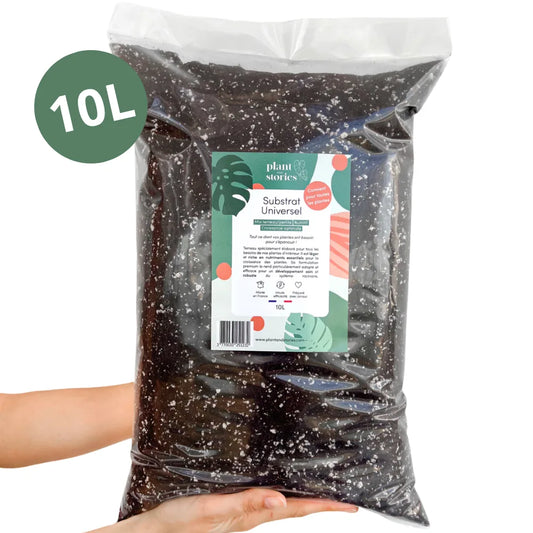
Universal Substrate enriched with Mycorrhizae and Bacillus - Premium Quality - Universal potting mix
Regular price From 9,50 €Regular price23,75 €Sale price From 9,50 €Sale -
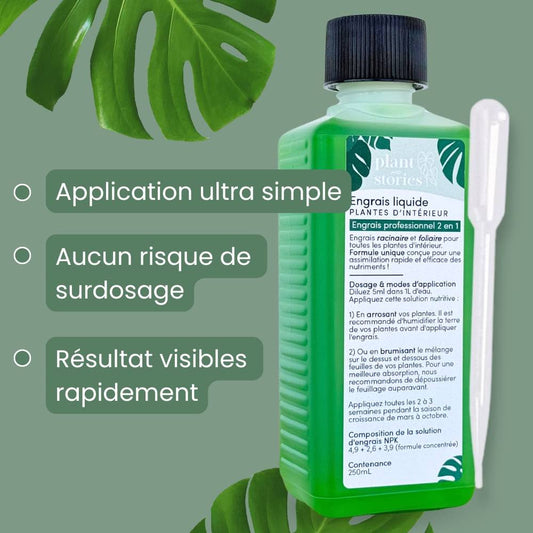
Fertilizer for All Indoor Plants - 250ml Liquid Fertilizer - Root and Foliar Fertilizer + Free Graduated Pipette!
Regular price 18,00 €Regular price20,00 €Sale price 18,00 €Sale


✂️ Oxalis vulcanicola care: watering, fertilizer, and pruning
When watering Oxalis vulcanicola, aim for potting mix that stays moist but well-drained, as the RHS recommends. The University of Wisconsin advises keeping Oxalis soil barely moist, never wet, and allowing it to dry slightly between waterings: check with your finger rather than following a schedule.
As for fertilizer, NC State Extension's Oxalis genus profile (North Carolina State University) and the University of Wisconsin recommend feeding monthly during the growing season only; our liquid fertilizer for houseplants should be applied at a low dose.
The RHS does not require pruning; simply pinch back any overly long stems to keep the plant bushier. There is no need to mist it: see our article on misting.
💧 Watering: Water when the top of the potting mix has dried out; empty the saucer after each watering
🌱 Fertilizer: Once a month from the start of new growth until late summer; none in winter
🔹 Pinching: Cut back leggy stems to encourage denser growth; optional according to the RHS
🔹 Spent flowers: Remove them if you like, to keep the plant looking tidy
👀 Watch for: Aphids and spider mites indoors; slugs and snails outdoors
🍂 Dormancy and winter: why is Oxalis vulcanicola losing its leaves?
Unlike Oxalis triangularis, Oxalis Sunset Velvet does not require a dramatic annual dormancy, but it may slow down and lose some of its leaves. The RHS describes the species as a deciduous perennial with fleshy stems: leaf loss, for example after a cold snap, does not necessarily mean the plant is dying.
For the genus, NC State notes that many species go dormant in summer after flowering, with new growth appearing in 1 to 3 months, while Iowa State advises keeping them cool, in the shade, and almost dry until new shoots appear. In winter, keep it above 5 °C, in a bright spot, and water less often.
📅 Seasonal care calendar
| Season | Key task |
|---|---|
| 🌸 Spring | Growth resumes: repot if needed, fertilize monthly, move the pot outdoors after the last frost |
| ☀️ Summer | Yellow flowers, greener foliage in hot weather; water regularly, give it gentle sun or bright partial shade |
| 🍂 Autumn | Magenta foliage; stop fertilizing and bring indoors before the first frost |
| ❄️ Winter | Bright, cool window above 5 °C; water less often; some leaf loss is possible |
🌱 Propagating Oxalis Sunset Velvet: division and cuttings
The RHS lists two propagation methods for Oxalis Sunset Velvet: division and seed. Division is the easiest method in spring: take the plant out of its pot, split the clump into two or three sections with roots, then pot each one in well-draining mix.
Stem cuttings, often tried with this creeping plant, are not listed by the RHS: take a healthy section in spring, but success is not guaranteed. For help choosing a medium, see our guide to propagating in water or potting mix.
🐛 Common problems: causes and solutions
The main problems affecting Oxalis Sunset Velvet are insufficient light, overwatering, and frost. The RHS lists slugs, snails, vine weevil larvae, and rust as pests and diseases affecting the species; NC State lists aphids, spider mites, whiteflies, leaf spots, and root rot from overwatering for the genus.
If the stems turn black at the base, see our root rot guide.
| Symptom | Likely cause | Solution |
|---|---|---|
| Pale green foliage and lengthening stems | ☀️ Not enough light | Move it closer to a bright window; pinch back leggy stems |
| Greener foliage in midsummer | ⚠️ Normal seasonal variation (RHS) | Nothing to do: warm tones return in spring and autumn |
| Soft, blackened stems at the base and waterlogged potting mix | 🍄 Overwatering, root rot | Remove the plant from the pot, cut away affected parts, and repot in dry, well-draining mix |
| Leaves suddenly blackened after a cold night | ❄️ Frost (hardiness H2) | Bring the plant indoors, cut off frost-damaged parts, and wait for new growth |
| Orange pustules on the undersides of leaves | 🍄 Rust (RHS) | Remove affected leaves, improve airflow, and avoid wetting the foliage |
| Pitted leaves or fine webbing | 🐛 Spider mites or aphids (NC State) | Rinse the foliage with lukewarm water and isolate the plant |


🌸 Our Oxalis varieties
Sunset Velvet is not the only Oxalis vulcanicola in cultivation: the RHS also describes pinkish-purple variegated foliage, yellow flowers and the same H2 hardiness rating in its 'Plum Crazy' profile. Oxalis triangularis, on the other hand, is a different species: a purple shamrock with underground organs and white to pale pink flowers that goes through a true annual dormancy (see our Oxalis triangularis profile). Here are the Oxalis plants in our collection for comparison.
| Variety | What makes it special |
|---|---|
| Oxalis Sunset Velvet | Oxalis vulcanicola sold under the name Sunset Velvet: orange to magenta foliage and a semi-trailing habit |
| Oxalis vulcanicola 'Plum Crazy' | Same species, with pinkish-purple variegated foliage according to the RHS; see our dedicated profile |
| Oxalis Trio (triangularis, Plum Crazy, Sunset Velvet) | All three colors together: orange, pinkish purple and dark purple |
| Oxalis triangularis | A different species: a purple shamrock with bulbs, triangular leaves and an annual dormancy |
| Set of 3 Oxalis triangularis | Three purple shamrocks to fill a planter or give as a gift |
🎨 In a hanging basket or planter: which plants pair well with Oxalis Sunset Velvet?
Its spreading, semi-trailing habit makes Oxalis Sunset Velvet a good choice for the edges of containers: in a hanging basket, window box or at the edge of a planter. The RHS recommends the species for patios, rock gardens, containers and conservatories.
It creates a lovely contrast with dark foliage, such as that of Oxalis triangularis, or with the green leaves and purple centers of Oxalis deppei. For more ideas for cascading greenery, browse our guide to trailing and hanging houseplants.
⚠️ Is Oxalis Sunset Velvet toxic to cats and dogs?
Yes, keep it out of pets' reach. The ASPCA (American Society for the Prevention of Cruelty to Animals) Shamrock Plant profile covers the Oxalis genus (Oxalis spp.), which includes Oxalis vulcanicola. It classifies these plants as toxic to dogs, cats and horses because they contain soluble calcium oxalates.
Signs listed include kidney failure (rare in dogs and cats), tremors and drooling. NC State notes that all parts of the plant have toxic potential, with serious effects generally associated with large amounts.
If you live with a curious pet, place it in a hanging basket, or choose from our list of plants that are non-toxic to cats and our plants that are safe for dogs.
✅ Our expert tips for success
Four simple steps will help your Oxalis Sunset Velvet thrive: give it plenty of light to maintain its orange foliage, water when the top of the potting mix has dried out, feed it monthly while it is growing, and shelter it as soon as frost threatens, as the RHS does not consider it frost-hardy. Expect it to turn green in summer and lose a little foliage in winter.
Keep it out of pets' reach and let it trail from a hanging basket to enjoy its growth habit.
For me, Oxalis Sunset Velvet is the plant that best demonstrates the link between light and color. In the back of a room, it turns green and grows leggy; near a window, it regains its sunset hues. I like to let it trail from a hanging basket, out of the cats' reach. My advice: keep an eye on the weather in fall, because a single frost is enough to turn it black.

Laura Bruneau
Jardinière & autrice


