Skip to product information
1 of 4

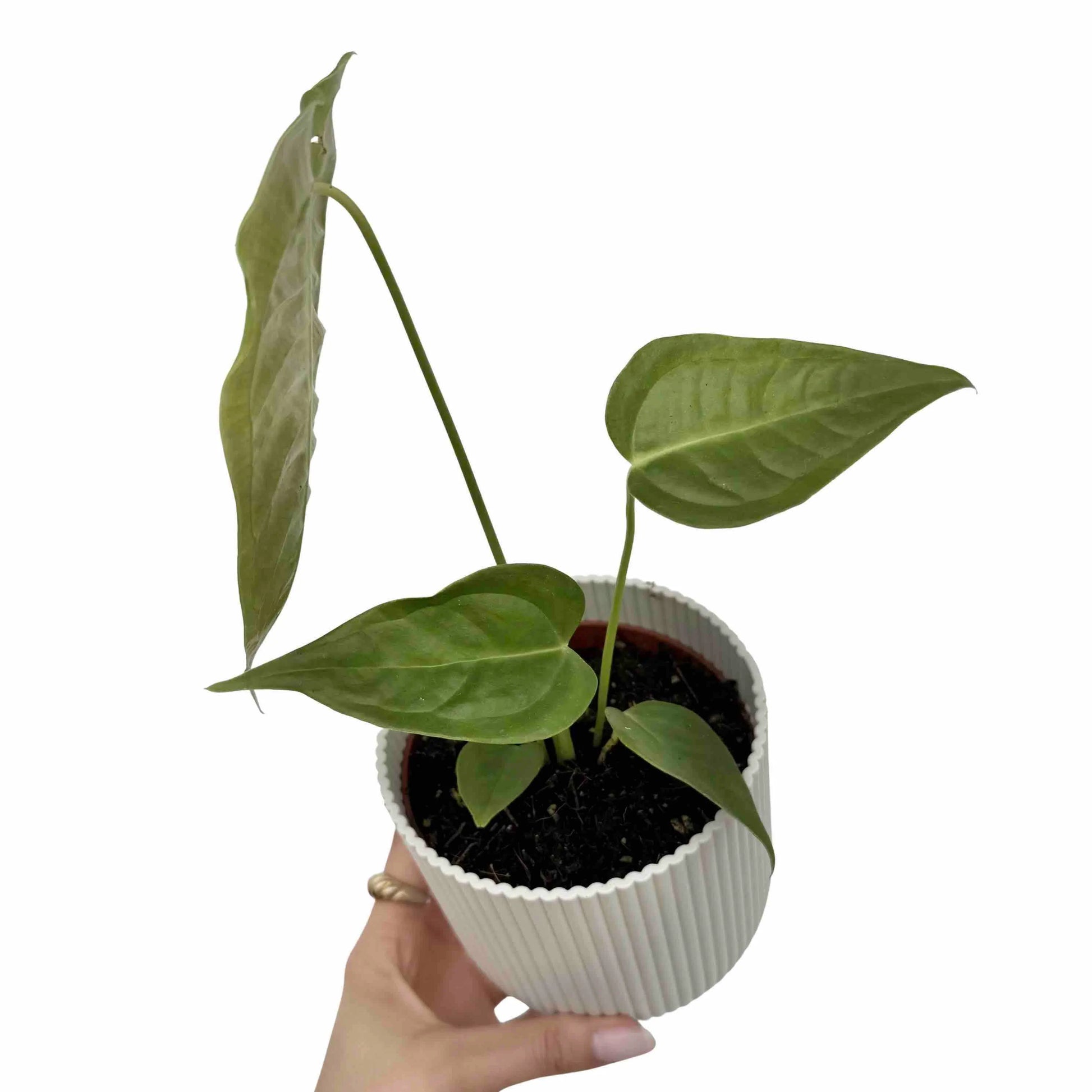
Anthurium Veitchii

Anthurium Veitchii

Royal foliage, majestic bearing

Regular price 12,95 €
Regular price Sale price 12,95 €
Sale Sold out
Taxes included. Shipping calculated at checkout.
Pot diameter
Quantity

Pay in 2, 3 or 4 installments with no fees from €50 with

Low stock: 9 left

  • Livraison soignée avec protection optimale
  • Santé de la plante garantie pendant 30 jours

About

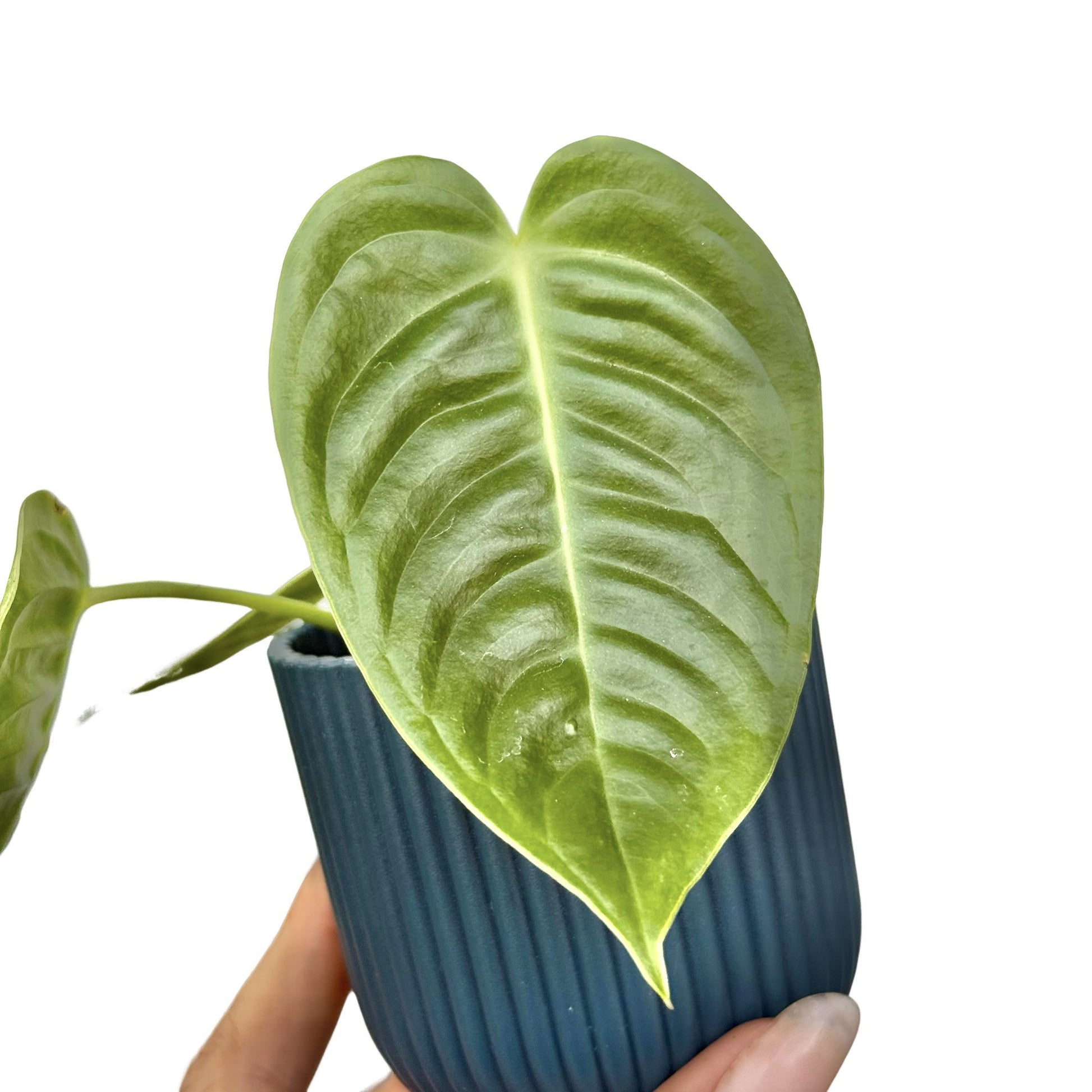
Anthurium Veitchii, the king of Anthuriums with monumental leaves

Anthurium veitchii , nicknamed the King of Anthuriums, originates from the tropical rainforests of Colombia, where it grows naturally as an epiphyte on tree trunks between 1,000 and 2,000 meters above sea level. Belonging to the Araceae family, it can develop leaves reaching up to 150 cm in length at maturity, making it one of the most spectacularly foliaged Anthuriums in the world.

Its pinnate and deeply blistered leaves , a deep green with slightly metallic highlights, have a crinkled texture and very pronounced secondary veins that give it a unique sculptural presence. Each new leaf emerges in a coppery bronze hue before gradually turning to intense green, offering a constant chromatic display throughout the seasons.

Adopt this exceptional Anthurium Veitchii today and bring the majesty of the Colombian forest into your home.

Description

Maintenance tips

Anthurium Veitchii Care

☀️ Light

The Anthurium Veitchii thrives in bright, indirect light, but should never receive direct sunlight on its leaves. Place it about 1 to 2 meters from an east- or west-facing window to replicate the filtered light conditions of the Colombian canopy. In winter, move it slightly closer to the light source. For rooms with insufficient lighting, ourfull spectrum horticultural lampeffectively compensates for the lack of natural light without generating excessive heat.

💧 Watering

Allow the substrate to dry out completely before watering, approximately every 8 to 12 days during the growing season and every 14 to 20 days in winter. Anthurium veitchii is sensitive to overwatering: a constantly soggy substrate quickly weakens its epiphytic roots. Ideally, use filtered or decanted water to prevent limescale buildup.

🪴 Substrate

We recommend oursubstrate specially designed for AnthuriumFormulated to provide optimal aeration, efficient drainage, and balanced nutrients adapted to the epiphytic roots of this species. Its light texture promotes rapid root establishment and healthy long-term growth.

⭐️ Additional tips

The large, blistered leaves of Anthurium Veitchii easily accumulate dust, which hinders photosynthesis. Clean them regularly with oursoft gloves for cleaning foliage without damaging itthe delicate surface of limbo.

To maintain healthy and protected foliage, ournatural care kit for houseplantsIncludes a sprayer, concentrated black soap and microfiber gloves, a complete and plant-friendly routine.

During the active growth period, fertilize every 3 weeks with ourconcentrated liquid fertilizer for tropical plants, easy to dose thanks to its graduated pipette, to support the development of its monumental leaves.

The Anthurium Veitchii is an exceptional plant that generously rewards every bit of care. With the right techniques, it develops increasingly larger leaves and commands a sculptural presence in your home.

Guarantee

Order with complete peace of mind.

At Plant and Stories, the health of our plants and the satisfaction of our customers are our top priorities.

That's why all our indoor plants come with a 30-day guarantee after receipt, so you can order with complete confidence.

Our plants are rigorously selected, in perfect health, acclimatized, and shipped with care using secure packaging designed for their protection.

Despite all our precautions, unforeseen events during transport can sometimes weaken a plant. Don't worry: our team is here to help.

💌 How to claim your warranty?

  • Take a clear photograph of the plant in question.
  • Send the photos to this address: contact@plantandstories.com, specifying your order reference.

We will respond quickly with a solution tailored to your situation 💚

Shipping

Your plants and accessories delivered with care.

At Plant and Stories, every order is prepared with love, whether it's for your houseplants or accessories.

✅ Carefully selected plants.

  • Our plants are rigorously selected, acclimatized and delicately packaged in secure and recyclable packaging.
  • Shipping takes place from Monday to Wednesday only, in order to avoid any prolonged transit over the weekend and to preserve their freshness.

📦 Durable accessories

  • Your accessories are also carefully prepared and shipped from Monday to Friday to ensure fast and secure delivery.
  • They are packaged with the utmost care to avoid any shock or damage during transport.

🚚 Fast and reliable delivery

  • We collaborate with trusted carriers, recognized for their quality of service.
  • Once handed over to the carrier, your order will be delivered within 24 to 72 hours, depending on your geographical area.
  • Delivery available in mainland France and Europe.

🌱 An eco-responsible commitment

  • All our packaging is recyclable, designed to limit environmental impact while ensuring optimal protection for your plants and accessories.

🤝 Customer service that listens to you

A question or a problem upon receipt? Our responsive customer service is there to assist you.

At Plant and Stories, every detail counts to ensure your order arrives in perfect condition… and with a smile 🌿

View full details
  • Order prepared with love

  • Optimal protection

  • Quality plants

  • A team that is always attentive

Help and solutions:

Everything you need to know Anthurium Veitchii

What light exposure is best for my Anthurium Veitchii?

Anthurium Veitchii thrives in bright, indirect light, ideally placed 1.5 to 2 meters from an east or northeast facing window.

In its natural Colombian habitat, this epiphytic plant grows under the dense canopy of high-altitude forests, where light is always filtered by the upper foliage. This light environment must be replicated indoors: bright light without direct sunlight, which would irreparably burn its large, blistered leaves.

In summer, keep it away from south- or west-facing windows, where the light is too intense at midday. In winter, move it slightly closer to the window to compensate for the reduced sunlight, while maintaining a stable temperature above 16°C.

Important tip 🌿Absolutely avoid cold drafts and sudden temperature changes, which are particularly harmful to this tropical highland species with broad, sensitive leaves.For dimly lit interiors, ourgrow light for dimly lit indoor environmentsfaithfully mimics filtered natural light, without harmful UV, and allows the Anthurium Veitchii to maintain regular growth all year round.

Is Anthurium Veitchii toxic to animals and children?

Anthurium Veitchii is toxic to cats, dogs and young children, due to the presence of calcium oxalate crystals in all its vegetative parts.

These microscopic crystals, also called raphides, are contained in the cells of the leaves, stems, and sap. When chewed or ingested, they cause immediate and intense irritation of the mucous membranes of the mouth, tongue, and throat.

If ingested by an animal or child, the most frequently observed symptoms are excessive salivation, difficulty swallowing, vomiting, and skin irritation upon contact with the sap. These symptoms are generally mild and resolve spontaneously, but a veterinarian or doctor should be consulted promptly if any concerns are raised.

What precautions should be taken on a daily basis?

Place the Anthurium Veitchii in a high spot, on a shelf or piece of furniture that is inaccessible to young children and curious pets. Wear gloves when handling the plant, especially when repotting or pruning, to avoid skin contact with the irritating sap.

With these simple precautions, Anthurium Veitchii can absolutely coexist safely in a home with children and animals, simply by remaining out of reach.

Why are the leaves of my Anthurium Veitchii turning yellow?

The leaves of the Anthurium Veitchii most often turn yellow due to overwatering, insufficient light, or a nutrient deficiency.

  • If the leaves turn yellow and become soft, the problem usually comes from an excess of water which causes the beginning of rot in the epiphytic roots, which are particularly sensitive to root asphyxiation.
  • If the leaves gradually turn yellow while remaining firm and dry, the plant often lacks light or fertilizer.
  • If the yellowing is accompanied by small light spots, a dull appearance or fine webbing, it may be a mite infestation, common indoors, especially in dry atmospheres.

Anthurium Veitchii develops exceptionally large leaves which require regular nutrient supply: progressive yellowing of older leaves accompanied by slowed growth is often the first sign of insufficient fertilization which should be resumed quickly.

Important tip 🌿One or two old leaves that turn yellow from time to time is perfectly normal and is part of the plant's natural renewal cycle.On the other hand, if several leaves yellow rapidly or if the phenomenon affects young leaves, the cause must be identified and corrected quickly.

In case of a mite infestation, prioritize ourplant-friendly biological treatments, effective and safe for your home.

When and how should I repot my Anthurium Veitchii?

Anthurium Veitchii is ideally repotted in the spring, between March and May, when growth resumes actively.

Repotting is necessary when:

  • The roots emerge through the drainage holes.
  • Growth is slowing despite favorable conditions.
  • or that the substrate compacts too quickly after watering.

As a general rule, repotting every 2 years is sufficient for an adult plant.

Anthurium Veitchii develops a particularly large and aerial epiphytic root system, which appreciates slightly narrow pots rather than too wide ones: an excessively large container promotes water stagnation and exposes the roots to rot.

Choose a pot 2 to 3 cm wider than the old one, and make sure it has drainage holes. Ourtransparent pots to monitor the rootsare ideal: their transparency allows you to check the condition of the roots after repotting without disturbing the plant.

Prepare a well-draining and aerated substrate, designed for Anthuriums.We recommend ourComplete range of substrates for tropical plantsdesigned to promote drainage and oxygenation of the roots. For Anthurium Veitchii, choose ouraerated and well-draining potting soil for Anthuriumformulated to precisely meet the needs of its epiphytic roots.

  1. Gently remove the plant from its pot by tapping the pot to loosen the root ball without pulling on the stems.
  2. Gently loosen the roots if they are very compacted, without breaking them.
  3. Place a layer of substrate at the bottom of the pot, position the plant upright, then fill with substrate without burying the crown.

Important tip 🌿After repotting, water moderately to help the substrate settle around the roots and eliminate air pockets.Repotting remains a source of stress for Anthurium Veitchii: limit this operation to the bare minimum to preserve its balance.

When and how should I fertilize my Anthurium Veitchii?

Anthurium Veitchii should be fertilized every 2 to 3 weeks from March to October, with a liquid fertilizer diluted in the watering water.

During autumn and winter, from November to February, significantly reduce or stop fertilizing. This is a period of dormancy during which the plant produces few new leaves.

Due to the exceptional size of its leaves, Anthurium Veitchii consumes significant amounts of nutrients during the growing season: regular and well-dosed fertilization is essential to support the development of its monumental blades and maintain their characteristic bubbled texture.

A well-balanced intake promotes:

  • denser foliage with deeper hues,
  • regular growth of new leaves
  • and improved plant resistance to parasites.

👉 For best results, we recommend ourconcentrated fertilizer for houseplantsEasy to dose thanks to its graduated pipette, with results quickly visible on the foliage. Usage instructions are included on the product information sheet.

Important tip 🌿Never fertilize Anthurium Veitchii in a dry substrate: this could burn its already sensitive epiphytic roots.Water normally first, then apply diluted fertilizer 2 to 3 days later, when the soil is slightly moist. Excess fertilizer can cause burns on the edges of its characteristic large leaves.

How do I properly water my Anthurium Veitchii?

Water Anthurium Veitchii when the substrate has dried out completely, approximately every 8 to 12 days in summer and every 14 to 20 days in winter. Use room temperature water, ideally filtered or left to settle, as this Colombian species is particularly sensitive to lime and overly chlorinated water, which can cause brown spots on its large, blistered leaves.

How do I know when to water?

The finger test remains the most reliable method: insert your index finger into the substrate to a depth of 2 to 3 cm. If the substrate is dry, it's time to water. If it's still damp, wait a few more days. Water generously until the water drains freely from the drainage holes, then regularly empty the saucer to prevent waterlogging.

Important advice:When in doubt, it's always better to wait a little longer than to overwater. As an epiphyte, Anthurium Veitchii tolerates a slight, temporary lack of water better than a constantly soggy substrate, which would quickly cause its aerial roots to rot.

How do I propagate my Anthurium Veitchii?

Anthurium Veitchii is mainly multiplied by division of the rhizome or by separation of the basal shoots, ideally in spring, during annual repotting.

Rhizome division or separation of offshootsUnlike many tropical plants, Anthurium veitchii is not easily propagated by single stem cuttings due to its epiphytic growth habit and sparsely branched rhizome. The most effective and least traumatic method is to identify the basal offshoots that naturally form around the main plant, then carefully separate them, keeping at least 2 to 3 well-developed roots on each section. Use ourStainless steel blade pruning shears for a clean cutin order to cleanly cut the rhizome without crushing the plant tissues, which would limit the risk of rot and promote rapid recovery.

  1. Carefully remove the plant from its pot when repotting in the spring and identify the well-formed shoots with their own roots.
  2. Separate each shoot with a clean cut using stainless steel pruning shears, preserving as much of the rootlets as possible.
  3. Install each rejection in atransparent pot to monitor root developmentfilled with ourpremium blend designed for Anthurium rootsslightly moistened.
  4. Place the pot in a warm, bright location, away from direct sunlight, at a stable temperature of at least 20°C.

To encourage rooting, you can coat the base of the shoot withlive sphagnum moss to maintain root moisturearound the emerging roots, thus reproducing the natural epiphytic conditions of this high-altitude Colombian species.

Important tip 🌿Anthurium Veitchii typically recovers after division within 4 to 8 weeks, when a new leaf begins to emerge from the center of the offshoot, indicating that the root system has established itself. Maintain high humidity around the young plant by regularly misting the foliage and avoid drafts during this recovery phase.

The essentials regarding Anthurium Veitchii

Anthurium Veitchii: identity and origin

Anthurium Veitchii (Anthurium veitchiiAnthurium, nicknamed the "King of Anthuriums," is an epiphytic species native to the rainforests of Colombia, where it naturally grows clinging to tree trunks in the understory. Its foliage is among the most spectacular of the genus: large, deeply wavy, drooping leaves with prominent veins and a leathery texture, which can exceed 80 cm in length when grown indoors. This large, climbing epiphyte immediately captivates with the organic architecture of its graphic foliage and its sculptural presence.

Anthurium care: light, watering and substrate

Anthurium Veitchii appreciates abright indirect lightProtect it from direct sunlight, which can scorch its broad leaves. Moderate watering, allowing the top two centimeters of soil to dry out between waterings, prevents root asphyxiation, to which this species is very susceptible. The ideal temperature is between 18 and 26°C, with humidity maintained above 60% to preserve the smooth, glossy appearance of the foliage. OurAnthurium substrate enriched with biostimulantsprovides the drainage and aeration essential to the epiphytic roots of this plant.

Where should you place your Anthurium for healthy and vigorous foliage?

This large epiphyte requires a carefully chosen location to express its full decorative potential.

  • Window is:Soft and stable light, ideal all year round
  • Distance :1 to 2 meters from a sunny window
  • Temperature :between 18 and 26°C, without cold drafts
  • Humidity :Maintain above 60% for intact foliage
  • Dark room:OURfull spectrum horticultural lampcompensates for the lack of natural light
  • Dry air:OURCare pack with spraymaintains the necessary humidity level

Frequently asked question: Why do the leaves of my Anthurium Veitchii barely undulate?

The characteristic undulations of the foliage develop fully with age and under good conditions: sufficient bright, indirect light and stable ambient humidity are the two key factors. Flat or dull foliage often indicates insufficient light or a substrate that is too heavy. After 2 to 3 weeks of acclimatization, if the plant does not recover, consider repotting it in ourtransparent pots with optimized drainagewith a regular supply of ourliquid fertilizer for tropical plantsto support foliage growth.

Buy Anthurium Veitchii at Plant and Stories

Our Anthurium Veitchii is in stock and carefully shipped to ensure it arrives intact. Each plant is selected by our team of rare tropical plant specialists, with healthy foliage and well-developed epiphytic roots. To enhance this magnificent climber, ourtransparent plant supports to be filledto be completed with ourliving sphagnum mossto maintain moisture around the aerial roots, they constitute the ideal support for Anthurium Veitchii.

Show moreShow less