How to care for a Scindapsus pictus argyraeus

MAINTENANCE SHEET: SCINDAPSUS PICTUS 'ARGYRAEUS'

Introduction
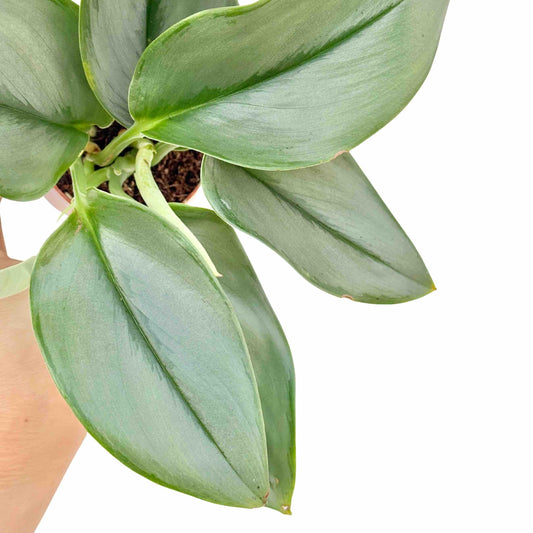
Scindapsus pictus 'Argyraeus' is an elegant variety, renowned for its silvery leaves speckled with green.
This climbing or trailing plant is ideal in a hanging basket, on the edge of a shelf or as a climbing plant along a support.
It is able to adapt to various light conditions , making it an excellent choice for gardeners of all levels.
Easy to care for , Scindapsus pictus argyraeus requires little attention, making it perfect for those new to gardening or looking for a low-maintenance houseplant.
Features
-
Common name: Scindapsus pictus 'Argyraeus'
-
Scientific name: Scindapsus pictus 'Argyraeus'
-
Family: Araceae
-
Origin: Tropical forests of Southeast Asia
-
Nickname: Satin Pothos
-
Leaf color: Dark green with silver spots
-
Flowering period: Rarely indoors
-
Ideal temperature: 18-29°C
-
Humidity: Medium to high
-
Vegetation type: Perennial
-
Foliage type: Evergreen
Did you know that?
Scindapsus pictus 'Argyraeus' is a particularly tolerant plant, capable of surviving in low light conditions, making it an excellent choice for dimly lit rooms.
HOW TO CARE FOR A SCINDAPSUS PICTUS 'ARGYRAEUS'? | IN BRIEF

Light :
Medium to bright indirect light . Tolerates low light conditions, but for optimal growth , place it near a window.
Water :
Water when the soil is dry throughout . Reduce watering in winter.
Temperature :
Ideally between 18°C and 29°C. Avoid cold drafts .
Humidity :
Prefers medium to high humidity but can tolerate average humidity levels.
WHAT TYPE OF SOIL FOR SCINDAPSUS PICTUS 'ARGYRAEUS'?
Well-draining soil is essential.
Use a mixture of potting soil enriched with essential elements, coconut chips , and perlite to retain moisture while allowing good drainage.
Scindapsus prefers a slightly acidic to neutral soil pH.
We recommend our " Araceae Substrate " which perfectly meets the requirements of Scindapsus pictus 'Argyraeus'.
HOW TO WATER A SCINDAPSUS PICTUS 'ARGYRAEUS'?

Watering should be moderate to avoid root rot.
Allow the soil to dry out thoroughly between waterings. In winter, water even less frequently.
Always use water at room temperature to avoid stressing the plant.
TIPS FOR SUCCESSFUL CUTTINGS
Scindapsus pictus 'Argyraeus' propagates very easily by stem cuttings.
Choose a healthy stem with at least two nodes.
Cut below a node and place the cutting in water or directly into suitable potting soil.
We advise you to root the cutting first in water , remember to change the water about once a week.
Keep the cutting in a warm place with indirect light until roots develop, usually within a few weeks.
Once the cuttings have rooted well, plant them in a pot with drainage holes , preferably transparent , with a suitable substrate.
The transparent pot will allow you to observe the development of the root system and easily monitor the moisture of the substrate, thus helping to avoid overwatering or, conversely, excessively long periods of drought.
HOW TO PREVENT AND TREAT PESTS?
Scindapsus plants can be affected by aphids, scale insects, thrips, and spider mites.
Inspect regularly to prevent any signs of infestation.
In case of infestation, treat with natural and biological methods such as black soap.
Find our organic recipe for fighting pests on the product page of our black soap for plants .
For greater effectiveness, we recommend applying the solution with our pair of microfiber plant cleaning gloves .
It will allow you to gently eliminate unwanted elements.
HERE ARE OUR EXPERT ADVICE:
-
Choose a location near a window , avoiding direct sunlight for optimal growth.
-
Water when the soil is dry deep down.
-
Maintain a comfortable room temperature, without exposure to drafts.
-
Increase the humidity around the plant if possible, especially during the summer.
-
Use a well-draining potting mix to avoid excess water.
-
Propagate by cuttings to multiply your collection or share with friends.
-
Inspect the leaves regularly for any signs of pests.
-
Clean the leaves to promote good photosynthesis.

Laura Bruneau
Jardinière & autrice