How to care for an Epipremnum N'joy?

CARE INSTRUCTIONS: EPIPREMNUM N'JOY

Introduction
Epipremnum N'Joy , also known as Pothos N'Joy , is a very popular houseplant for its unique and attractive foliage.
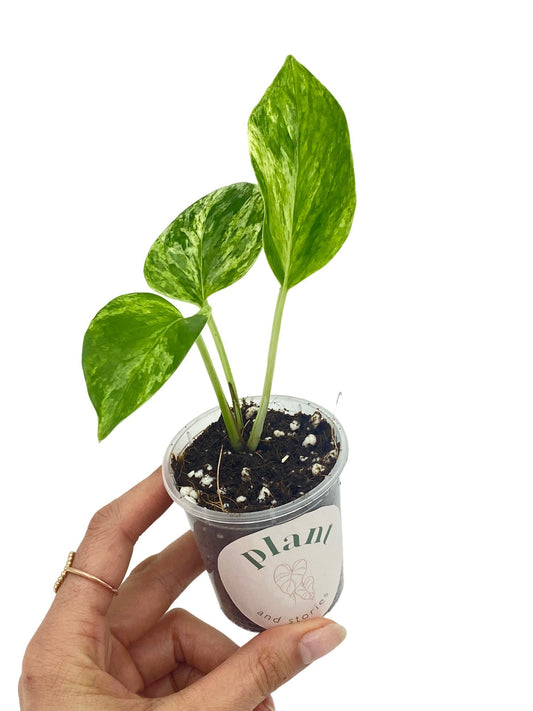
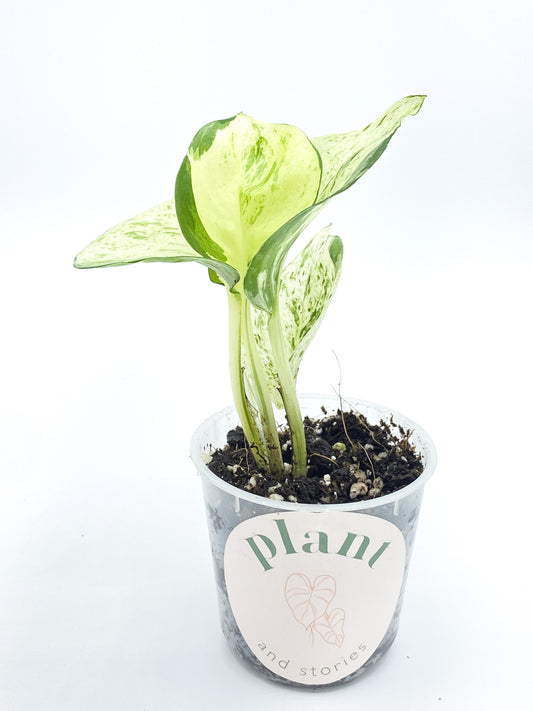
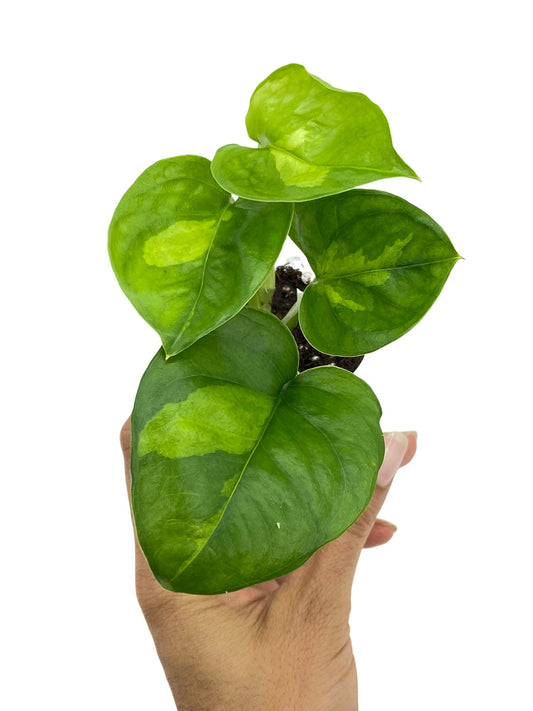
The leaves of Epipremnum N'Joy are medium-sized, heart-shaped, and display a beautiful variegation of green and creamy white .
These varied and contrasting patterns add an exceptional decorative touch to any interior.

This climbing or trailing plant is ideal in a hanging basket , on the edge of a shelf or as a climbing plant along a support .
It is able to adapt to various light conditions , making it an excellent choice for gardeners of all levels.
Easy to care for , the Epipremnum N'Joy requires little attention , making it perfect for those new to gardening or looking for a low-maintenance houseplant.
Features
-
Common name: Pothos N'Joy
-
Scientific name: Epipremnum aureum 'N'Joy'
-
Family: Araceae
-
Origin: Southeast Asia
-
Nickname: Pothos
-
Leaf color: Variegated green and cream white
-
Flowering period: Rare indoors
-
Ideal temperature: 18-24°C
-
Humidity: Moderate
-
Vegetation type: Perennial
-
Foliage type: Evergreen
Did you know that?
The Pothos N'Joy is not only appreciated for its aesthetics , but it is also recognized for its air -purifying capabilities , able to absorb and filter certain toxins present in indoor environments.
HOW TO CARE FOR AN EPIPREMNUM N'JOY? | IN BRIEF

Light :
Prefers bright, indirect light but can tolerate lower light levels. Avoid direct sunlight, which can burn the leaves.
Water :
Water when the soil is dry throughout . Reduce watering in winter.
Temperature :
Ideally between 18°C and 24°C. Avoid temperatures below 10°C.
Humidity :
Tolerates ambient humidity but can benefit from occasional misting ( in summer when the air is very dry).
WHAT TYPE OF SOIL FOR EPIPREMNUM N'JOY?
A light, rich and well-draining potting mix is ideal.
A mixture composed of potting soil , perlite , and pine bark or coconut chips promotes good root aeration and efficient drainage, thus avoiding the risk of rot.
We recommend our " Araceae Substrate " which will perfectly suit the needs of the Pothos N'Joy !
HOW TO WATER AN EPIPREMNUM N'JOY?
Watering should be moderate , allowing the soil to dry out between waterings.
In summer , monitor the soil moisture more frequently and water accordingly.
In winter, space out waterings to allow the soil to dry out more and for several days.
HOW TO PROPAGATE A POTHOS N'JOY?

Epipremnum N'Joy is easily propagated by stem cuttings.
Choose a healthy stem with at least two nodes.
Cut below a node and place the cutting in water or directly into suitable potting soil.
We advise you to root the cutting first in water , remember to change the water about once a week.
Keep the cutting in a warm place with indirect light until roots develop, usually within a few weeks.
Once the cuttings have rooted well, plant them in a pot with drainage holes , preferably transparent , with a suitable substrate.
The transparent pot will allow you to observe the development of the root system and easily monitor the moisture of the substrate, thus helping to avoid overwatering or, conversely, excessively long periods of drought.
HOW TO PREVENT AND TREAT PESTS?
Inspect regularly to prevent any signs of mealybugs, thrips or spider mites.
In case of infestation, treat with natural and biological methods such as black soap.
Find our organic recipe for fighting pests on the product page of our black soap for plants .
For greater effectiveness, we recommend applying the solution with our pair of microfiber plant cleaning gloves .
It will allow you to gently eliminate unwanted elements.
HERE ARE OUR EXPERT ADVICE:
-
Choose a location near a window . Although the N'joy pothos will tolerate a less bright environment, we recommend a sunny spot for better growth.
-
Water after the soil has dried out.
-
Maintain a stable room temperature and avoid cold drafts.
-
Increase the humidity around the plant with misting or a tray of damp pebbles, especially in summer.
-
Choose a well-draining potting mix to prevent waterlogging. We recommend our " Araceae Substrate ".
-
Propagate by stem cuttings to easily obtain new plants.
-
Inspect regularly for signs of pests and act quickly in case of infestation.
-
Clean the leaves for better light absorption and disease prevention.

Laura Bruneau
Jardinière & autrice