Plus que 100,00 € missing translation: "t:settings_schema.cart_progress_bar.settings.text_motivation_last.default" is not present in any of the ["en"] schema locale files
0 €
100,00 €
9.9/10 OVER 2300 REVIEWS ⭐⭐⭐⭐⭐
10% OFF YOUR FIRST ORDER WITH CODE "WELCOME10"
FREE DELIVERY ON ORDERS OVER €100
177K ON INSTAGRAM @plantandstories.shop - JOIN US! :)
Pay in 2, 3 or 4 installments with no fees from €50 with
In stock
Livraison soignée avec protection optimale
Santé de la plante garantie pendant 30 jours
About
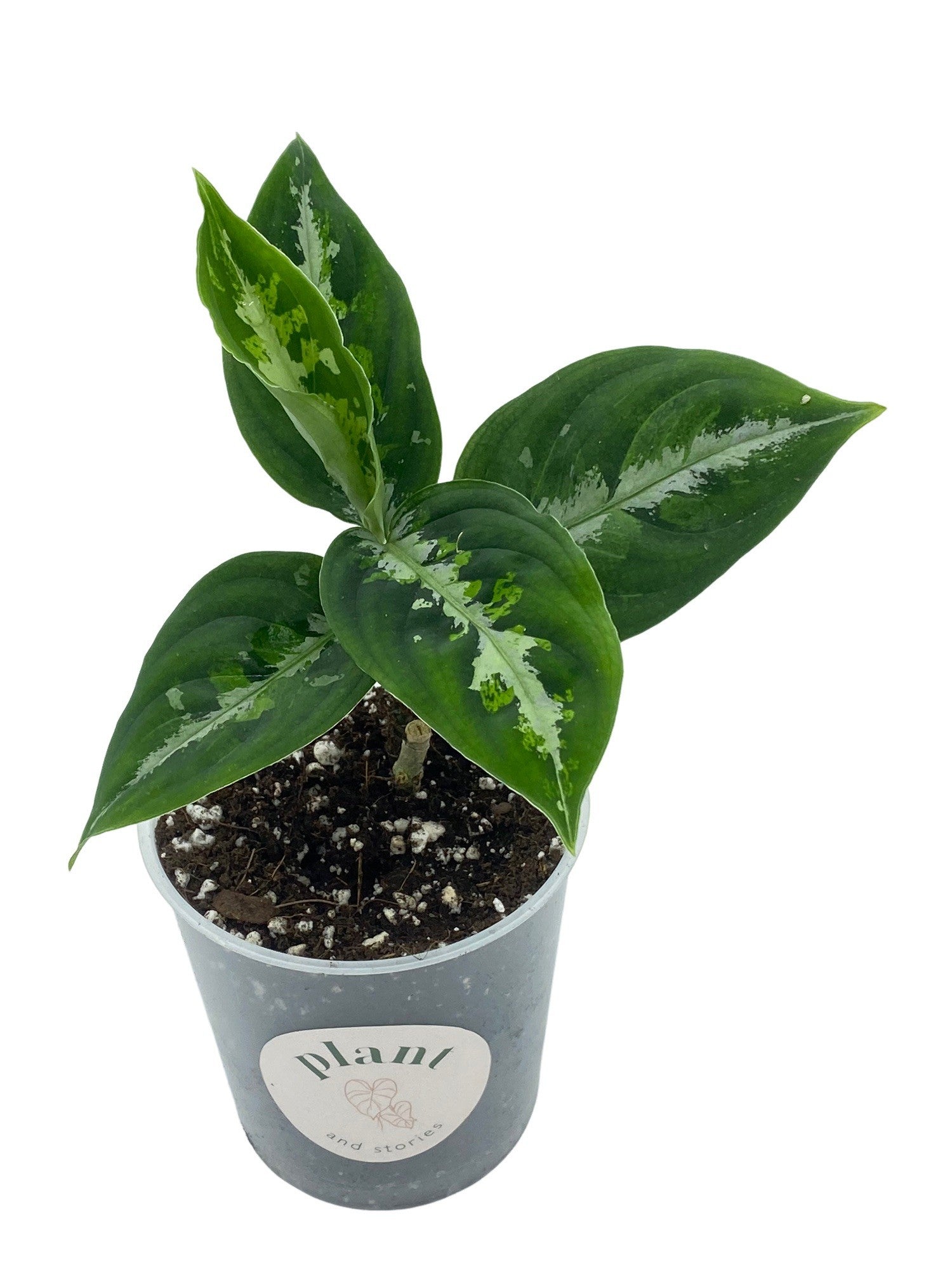
Aglaonema Pictum Tricolor, the camouflage foliage of the rainforest
Aglaonema pictum tricolor is a tropical plant native to the rainforests of Sumatra and Borneo, Indonesia, where it grows naturally under the dense canopy. Belonging to the Araceae family, this species is distinguished by its mature size of 40 to 60 cm, with a bushy habit and fleshy stems bearing remarkably dense foliage. Its growth rate is moderate, with one or two new leaves per month during the active period.
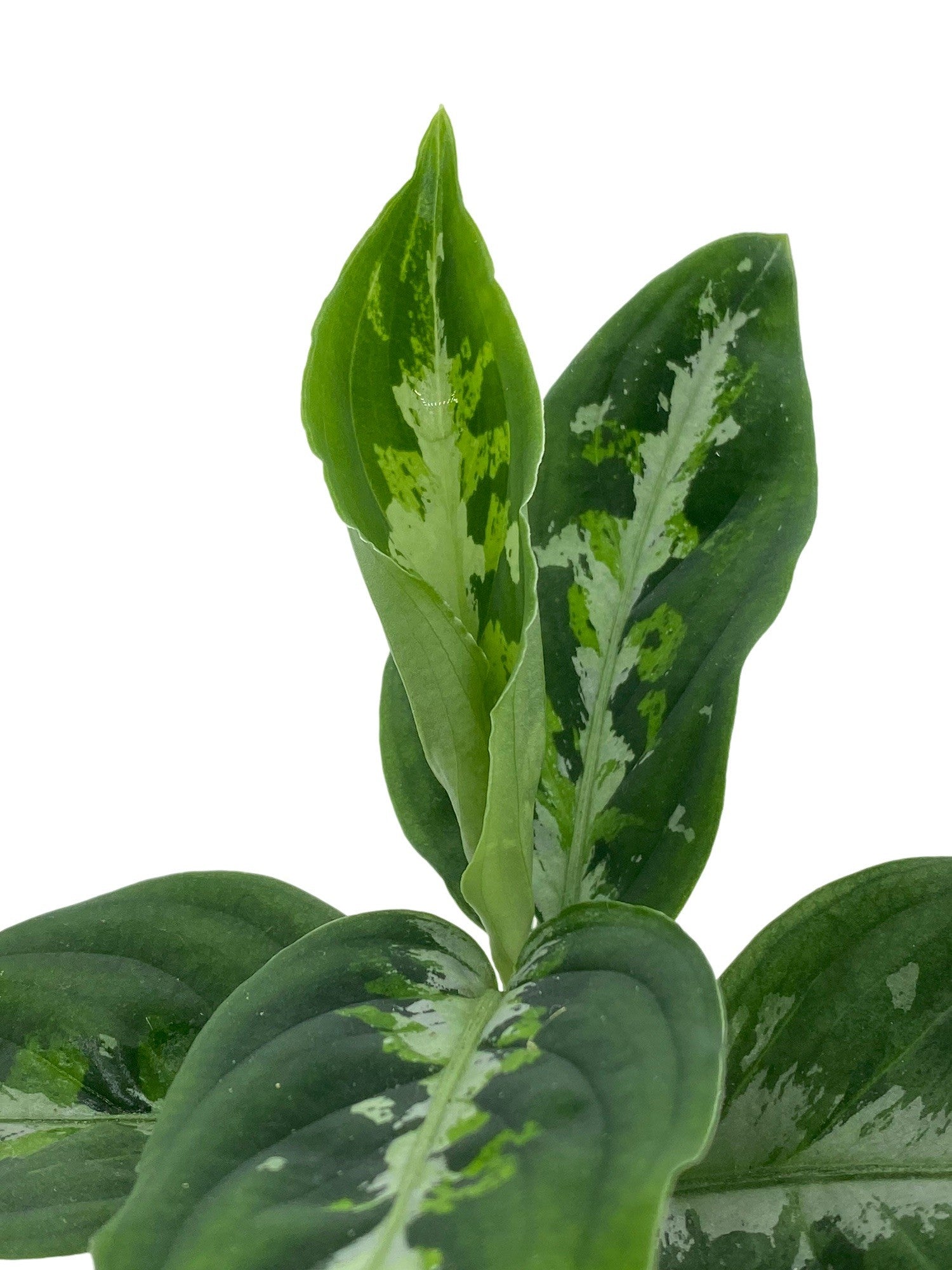
What makes Aglaonema Pictum Tricolor truly unique is its foliage with a military camouflage pattern , blending three shades of green, from the lightest almost white to the darkest almost black, distributed in irregular, organic patches on each oval, leathery leaf. This entirely natural leaf pattern is unlike any other houseplant and creates a powerful, graphic visual presence in any interior space.
Adopt the Aglaonema Pictum Tricolor today and let the rainforest of Sumatra come into your home.
Description
Maintenance tips
Care of Aglaonema Pictum Tricolor
☀️ Light
The Aglaonema Pictum Tricolor thrives in dim to indirect light, ideally placed 1 to 2 meters from an east- or north-facing window. Unlike some other tropical plants, it tolerates low light conditions well, but its camouflage patterns remain more vibrant with good indirect lighting. Absolutely avoid direct sunlight, which quickly scorches its decorative foliage. For dimly lit rooms, ourhorticultural lighting that mimics natural lightis an ideal solution for maintaining beautiful foliage all year round.
💧 Watering
Allow the potting mix to dry out completely before watering, approximately every 10 to 14 days in summer and every 15 to 21 days in winter. Ideally, use filtered or decanted water, as Aglaonema Pictum Tricolor is sensitive to hard water and chlorine. Overwatering will quickly lead to root rot.
🪴 Substrate
We recommend ourwell-draining substrate for Monstera and AraceaePerfectly suited to the needs of Aglaonema Pictum Tricolor. This well-draining, nutrient-rich mix promotes good root oxygenation and healthy growth.
⭐️ Additional tips
Aglaonema Pictum Tricolor thrives in a humid environment. Regularly mist its foliage with ournatural care kit for houseplantswhich includes a sprayer, microfiber gloves and black soap to protect and beautify the foliage for the long term.
To preserve the vibrancy of its camouflage patterns and promote photosynthesis, regularly clean its leaves withour anti-limescale microfiber cleaning gloves, soft and perfectly suited to its tough leaves.
During the active growth period, from March to October, apply a liquid fertilizer every 2 to 3 weeks with ourconcentrated liquid fertilizer for tropical plantsto support the production of new leaves with brilliant camouflage.
With simple, regular care, the Aglaonema Pictum Tricolor reveals its full decorative potential, offering you striking and unique foliage to admire every day. You'll quickly see how rewarding this tropical plant is to grow at home.
Guarantee
Order with complete peace of mind.
At Plant and Stories, the health of our plants and the satisfaction of our customers are our top priorities.
That's why all our indoor plants come with a 30-day guarantee after receipt, so you can order with complete confidence.
Our plants are rigorously selected, in perfect health, acclimatized, and shipped with care using secure packaging designed for their protection.
Despite all our precautions, unforeseen events during transport can sometimes weaken a plant. Don't worry: our team is here to help.
💌 How to claim your warranty?
Take a clear photograph of the plant in question.
Send the photos to this address: contact@plantandstories.com, specifying your order reference.
We will respond quickly with a solution tailored to your situation 💚
Shipping
Your plants and accessories delivered with care.
At Plant and Stories, every order is prepared with love, whether it's for your houseplants or accessories.
✅ Carefully selected plants.
Our plants are rigorously selected, acclimatized and delicately packaged in secure and recyclable packaging.
Shipping takes place from Monday to Wednesday only, in order to avoid any prolonged transit over the weekend and to preserve their freshness.
📦 Durable accessories
Your accessories are also carefully prepared and shipped from Monday to Friday to ensure fast and secure delivery.
They are packaged with the utmost care to avoid any shock or damage during transport.
🚚 Fast and reliable delivery
We collaborate with trusted carriers, recognized for their quality of service.
Once handed over to the carrier, your order will be delivered within 24 to 72 hours, depending on your geographical area.
Delivery available in mainland France and Europe.
🌱 An eco-responsible commitment
All our packaging is recyclable, designed to limit environmental impact while ensuring optimal protection for your plants and accessories.
🤝 Customer service that listens to you
A question or a problem upon receipt? Our responsive customer service is there to assist you.
At Plant and Stories, every detail counts to ensure your order arrives in perfect condition… and with a smile 🌿
Everything you need to know Aglaonema Pictum Tricolor
What light exposure is best for my Aglaonema Pictum Tricolor?
Aglaonema Pictum Tricolor thrives in dim to indirect light, ideally placed 1 to 2 meters from an east or north facing window.
In its natural habitat, beneath the dense canopy of Sumatran forests, this plant never receives direct sunlight. Indoors, it replicates these conditions with excellent tolerance to partial shade, making it one of the few tropical plants with striking foliage capable of adapting to less bright spaces. Its camouflage patterns, however, remain more contrasting and vibrant with good indirect lighting.
In summer, keep it slightly away from south- or west-facing windows to avoid direct sunlight. In winter, you can safely place it near a bright window, as the natural light will be softer.
Important tip 🌿Absolutely avoid direct sunlight: the leaves of Aglaonema Pictum Tricolor, despite their robust appearance, burn quickly under intense exposure, which irreparably stains the camouflage patterns.For dark interiors, ourUV-free horticultural lamp for indoor plantseffectively compensates for the lack of natural light without damaging the foliage.
Is Aglaonema Pictum Tricolor toxic to animals and children?
Aglaonema Pictum Tricolor is toxic to cats, dogs and young children.
Like all plants in the Araceae family, Aglaonema Pictum Tricolor contains insoluble calcium oxalate crystals, present in all parts of the plant, from the leaves and stems to the sap. These needle-like microcrystals cause immediate and painful irritation of the mucous membranes of the mouth, throat, and digestive tract upon contact or ingestion.
If ingested by an animal or young child, the most common symptoms are excessive salivation, difficulty swallowing, lip swelling, and intense local irritation. These reactions are usually mild, but may require veterinary or medical attention if symptoms persist.
What precautions should be taken on a daily basis?
Place the Aglaonema Pictum Tricolor in a high spot or in a room inaccessible to pets and young children. It is also advisable to wear gloves when repotting or pruning to avoid any skin contact with the sap.
With a well-chosen location, the Aglaonema Pictum Tricolor can absolutely coexist safely in a home with children and animals, provided that these simple precautions are applied on a daily basis.
Why are the leaves of my Aglaonema Pictum Tricolor turning yellow?
The leaves of Aglaonema Pictum Tricolor most often turn yellow due to overwatering, insufficient light, or a nutrient deficiency.
If the leaves turn yellow and become limp, the problem usually stems from excess water causing the beginning of root rot.
If the leaves gradually turn yellow while remaining firm and dry, the plant often lacks light or fertilizer.
If the yellowing is accompanied by small light spots, a dull appearance or fine webbing, it may be a mite infestation, common indoors, especially in dry atmospheres.
Aglaonema Pictum Tricolor is particularly sensitive to hard water and chlorine, which can cause the youngest leaves to gradually yellow and the camouflage patterns to fade, thus altering its unique appearance. Always use filtered or decanted water to maintain the vibrancy of its striking foliage.
Important tip 🌿One or two old leaves turning yellow from time to time is perfectly normal: it is part of the plant's natural cycle.On the other hand, there is cause for concern if several leaves turn yellow rapidly, if the phenomenon spreads to young leaves, or if growth slows down significantly.
When and how to repot my Aglaonema Pictum Tricolor?
Aglaonema Pictum Tricolor is ideally repotted in spring, between March and May, when growth resumes actively.
Repotting is necessary when:
The roots emerge through the drainage holes.
Growth is slowing down.
or that the substrate compacts too quickly after watering.
As a general rule, repotting every 2 years is sufficient for an adult plant.
Aglaonema Pictum Tricolor develops a compact and shallow root system, which means it does not need a very wide pot: a pot 2 to 3 cm larger than the old one is more than enough to offer it a comfortable space without risking excess root moisture.
Choose a pot that absolutely must have drainage holes. Ourtransparent pots to monitor the rootsare particularly suitable: their transparency allows you to easily check the condition of the roots and recovery after repotting, without disturbing the plant.
Gently remove the plant from its pot by tapping the pot to loosen the root ball without pulling on the stems.
Gently untangle the roots if they are compacted, without breaking them.
Place a layer of substrate at the bottom of the new pot, position the plant upright, then fill with substrate without burying the crown.
Important tip 🌿After repotting, water the plant to help the substrate settle around the roots and eliminate air pockets. Ensure that excess water drains freely.Repotting every two years is more than enough to keep Aglaonema Pictum Tricolor healthy.
When and how to fertilize my Aglaonema Pictum Tricolor?
Aglaonema Pictum Tricolor should be fertilized every 2 to 3 weeks from March to October, with a liquid fertilizer diluted in the watering water.
During autumn and winter, from November to February, significantly reduce or stop fertilizing. This is a period of dormancy during which the plant produces few or no new leaves.
Aglaonema Pictum Tricolor is a moderately growing plant that responds particularly well to regular but precisely dosed fertilization: an excess of fertilizer quickly manifests itself through burns on the edges of leaves and an imbalance of camouflage patterns, altering its characteristic aesthetic.
A well-balanced intake promotes:
denser foliage with well-contrasted camouflage patterns
steady growth,
and improved plant resistance.
👉 For best results, we recommend ourfast-acting root and foliar fertilizerEasy to dose thanks to its graduated pipette, with quickly visible effects. Practical advice is printed directly on the back of the label and on the product information sheet.
Important tip 🌿Never fertilize Aglaonema Pictum Tricolor in a dry substrate: this could burn the roots.Water normally first, then apply the diluted fertilizer 2 to 3 days later, when the potting mix is slightly moist. Regular but moderate fertilization will keep your Aglaonema Pictum Tricolor vigorous and healthy 💚
How do I properly water my Aglaonema Pictum Tricolor?
Water Aglaonema Pictum Tricolor when the substrate has dried out completely, approximately every 10 to 14 days in summer and every 15 to 21 days in winter. Use room temperature water.
Aglaonema pictum tricolor is particularly sensitive to the lime and chlorine present in tap water, which can cause whitish spots on its foliage and gradually damage its fine roots. It is strongly recommended to use filtered water, rainwater, or tap water that has been left to stand for at least 24 hours before watering.
How do I know when to water?
The finger test remains the most reliable method: insert your index finger into the substrate to a depth of 2 to 3 cm. If the substrate is dry, it's time to water. If it's still damp, wait a few more days.
Important advice:When in doubt, it's always better to wait a little longer than to overwater. The roots of Aglaonema Pictum Tricolor are very sensitive to excess moisture, which quickly leads to root rot that is difficult to reverse.
How do I take cuttings from my Aglaonema Pictum Tricolor?
Aglaonema Pictum Tricolor is propagated by division of the base or by stem cuttings with at least one node, ideally in spring when the plant enters a period of active growth.
Stem cutting with knotSelect a healthy stem with at least one leaf and a clearly visible node. Make a clean cut just below the node withOur stainless steel blade pruner for a clean cutTo limit the risk of infection and promote root development, allow the cutting to air dry for one to two hours before planting.
Prepare the cutting by cutting a stem with a node and at least one leaf. Allow the section to air dry briefly before placing it in the rooting medium.
Keep the cutting in a warm place, at about 22 to 25 °C, in indirect light, with high humidity to promote rooting.
Once the roots are well developed, transplant the cutting into ourdraining and nutritious mix for Araceae, perfectly adapted to the root needs of Aglaonema Pictum Tricolor for vigorous growth.
Division of the plant is a method particularly suited to mature plants of Aglaonema Pictum Tricolor: at the time of spring repotting, gently separate the secondary clumps, ensuring that each division retains its own roots, which guarantees a rapid recovery without excessive stress for the mother plant.
Important tip 🌿Rooting a stem cutting of Aglaonema Pictum Tricolor typically takes 4 to 6 weeks under warm, humid conditions. The first signs of success are the appearance of new leaves and the cutting's slight resistance when gently pulled. Maintain consistent warmth and avoid cold drafts throughout the rooting process.
The essentials regarding Aglaonema Pictum Tricolor
Aglaonema Pictum Tricolor: identity and origin
Aglaonema Pictum Tricolor, from its scientific nameAglaonema pictum'Tricolor' is one of the most fascinating houseplants, thanks to its unique military camouflage foliage, blending three shades of green on each oval, fleshy leaf. Native to the rainforests of Sumatra and Borneo, this member of the Araceae family naturally grows under dense canopy, in the shade of large trees, in conditions of high humidity and filtered light. It has a moderate growth rate, with leaves reaching 15 to 20 cm in length on a mature plant.
Aglaonema care: light, watering and substrate
Aglaonema pictum 'Tricolor' thrives in bright, indirect light, but should never be exposed to direct sunlight, which would scorch its striking foliage. Watering should be moderate: wait until the top two centimeters of soil are dry before watering again, and reduce watering frequency in winter to avoid overwatering. A humidity level above 55% is ideal for maintaining healthy leaves.substrate enriched with biostimulants for Monstera and AraceaeIt is perfectly suited to this species thanks to its excellent aeration and components essential for beautiful leaf growth.
Where should you place your Aglaonema for consistently vibrant foliage?
This botanical chameleon adapts to many interiors, but its colors remain more intense in well-chosen lighting conditions.
Frequently asked questions: Why are the leaves of my Aglaonema Pictum Tricolor losing their colors?
An Aglaonema Pictum Tricolor that loses the intensity of its tricolor camouflage almost always suffers from a lack of bright, indirect light: its colors fade when the light is insufficient over time. Overwatering is the second common cause, leading to a gradual yellowing of the foliage due to root asphyxiation. Also check the ambient humidity: below 50%, the leaves may develop brown tips. After 2 to 3 weeks of acclimatization, repotting in ourtransparent pots suitable for root monitoringallows you to adjust the volume of substrate and avoid chronic excess water.
Buy Aglaonema Pictum Tricolor at Plant and Stories
Our Aglaonema Pictum Tricolor is in stock and carefully shipped to ensure it arrives in perfect condition. Each plant is selected by our expert team for its foliage quality and vigor. Complete your care routine with ourliquid fertilizer for tropical plantsformulated to support the growth and vibrancy of the colours of Aglaonema pictum 'Tricolor' throughout the season.