Plus que 100,00 € missing translation: "t:settings_schema.cart_progress_bar.settings.text_motivation_last.default" is not present in any of the ["en"] schema locale files
0 €
100,00 €
9.9/10 OVER 2300 REVIEWS ⭐⭐⭐⭐⭐
10% OFF YOUR FIRST ORDER WITH CODE "WELCOME10"
FREE DELIVERY ON ORDERS OVER €100
177K ON INSTAGRAM @plantandstories.shop - JOIN US! :)
Pay in 2, 3 or 4 installments with no fees from €50 with
Out of stock
Careful delivery with optimal protection
Plant health guaranteed for 30 days
About
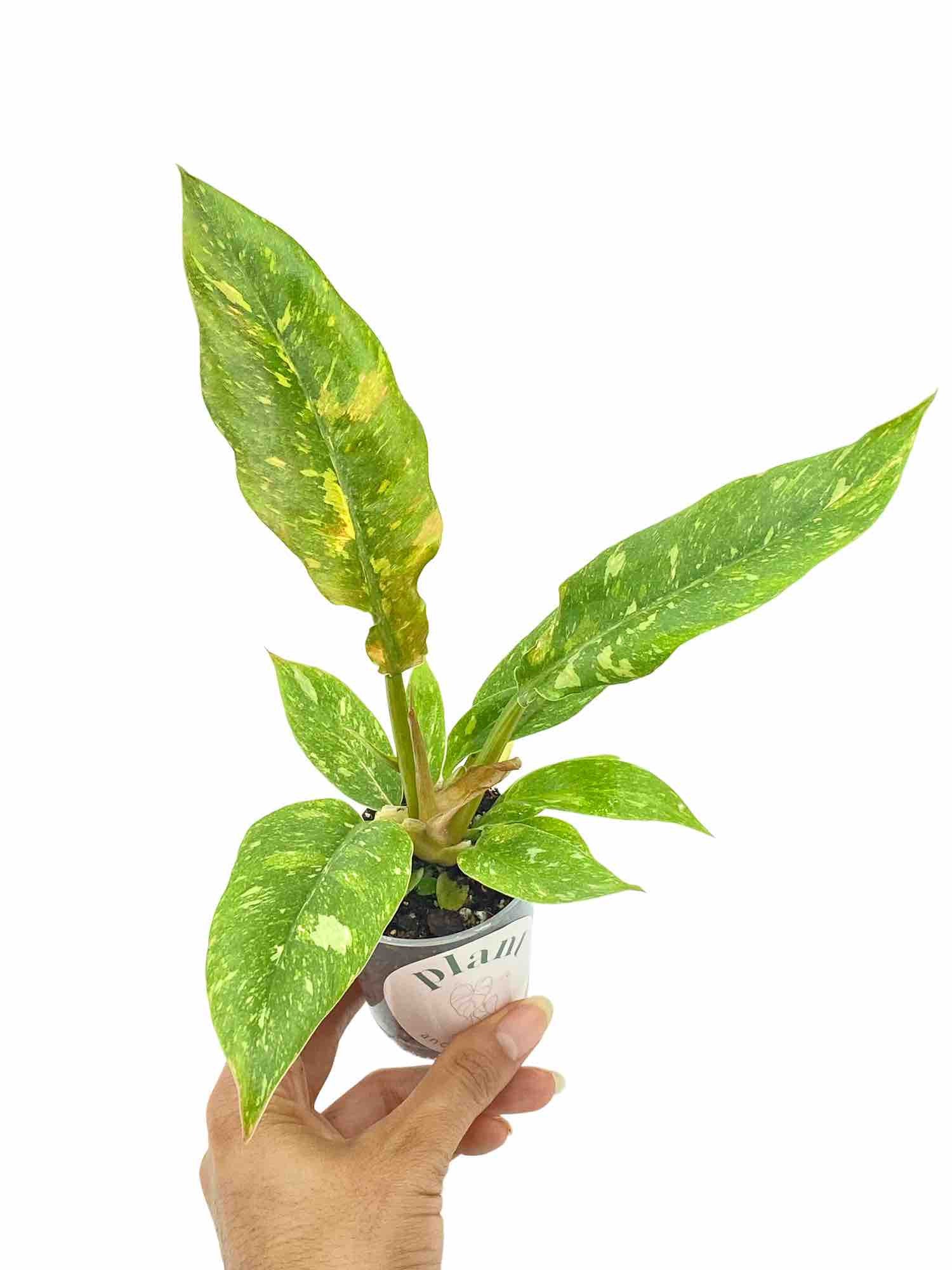
Philodendron Ring of Fire, the philodendron with multicolored leaves
The Philodendron Ring of Fire is a climbing aroid native to the rainforests of South America, particularly prevalent in Colombia and Ecuador. This tropical plant with deeply lobed leaves belongs to the large Araceae family and can reach over a meter in height indoors when given a suitable support. Its naturally epiphytic behavior allows it to cling to supports using its aerial roots, thus mimicking its growth in the forest canopy.
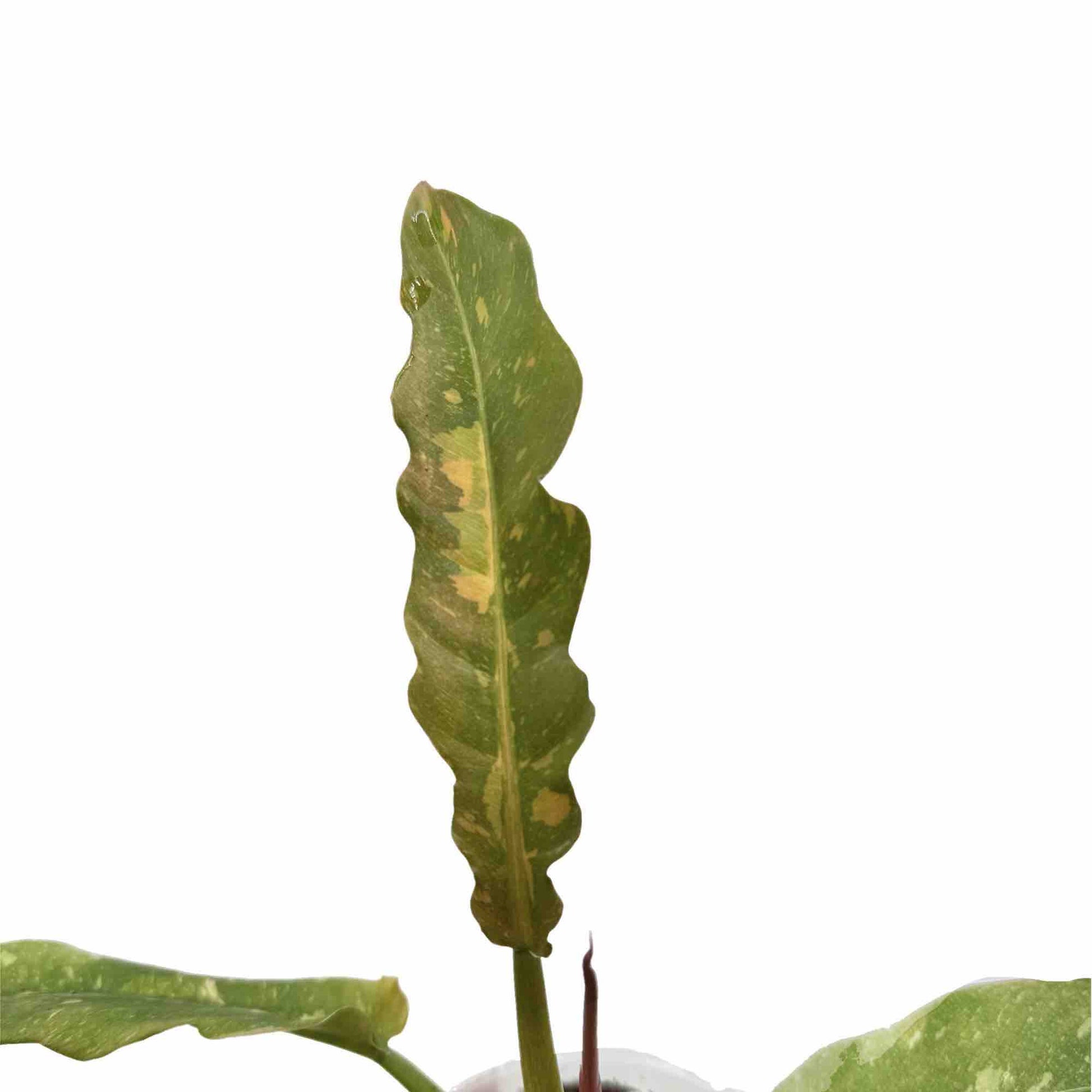
Its striking, multicolored foliage is its absolute signature: each leaf displays a unique blend of green, orange, cream, and sometimes red, creating a vibrant gradient that evolves as the plant develops. Young shoots often appear in coppery or orange hues before settling into deeper shades. This phenomenon of variable coloration makes each specimen truly unique, never identical to another.
Adopt the Philodendron Ring of Fire today and add this exceptional tropical plant to your collection, available for delivery.
Description
Maintenance tips
Philodendron Ring of Fire Interview
☀️ Light
The Philodendron Ring of Fire thrives in bright, indirect light, ideally placed 1 to 2 meters from an east- or west-facing window. Too much direct sunlight dulls the foliage colors, while too little light diminishes the characteristic orange and reddish hues of this plant. For dimly lit interiors, ourgrow light for dimly lit indoor environmentshelps maintain the colour intensity of the foliage throughout the year.
💧 Watering
Wait until the potting mix is completely dry before watering, approximately every 8 to 10 days during the growing season and every 12 to 15 days in winter. Use room temperature water, ideally filtered or decanted, as the Philodendron Ring of Fire is sensitive to hard water. Ensure that excess water drains freely through the drainage holes.
🪴 Substrate
We recommend ourwell-draining substrate for Monstera and Araceae, designed to ensure optimal aeration of the aerial roots and balanced nutrition, essential for the vigorous growth of this climbing plant.
Regularly clean the large leaves to promote photosynthesis and preserve the vibrancy of the colors. Useour anti-limescale microfiber cleaning glovesgentle and effective at removing dust and deposits without damaging delicate leaf surfaces.
For routine foliage maintenance, ournatural care kit for houseplantsIt includes everything you need to clean, protect and care for your plant simply and effectively.
The Philodendron Ring of Fire is a remarkable plant that readily rewards simple, regular care. With a little attention, its multicolored foliage will continue to flourish and surprise you throughout the seasons.
Guarantee
Order with complete peace of mind.
At Plant and Stories, the health of our plants and the satisfaction of our customers are our top priorities.
That's why all our indoor plants come with a 30-day guarantee after receipt, so you can order with complete confidence.
Our plants are rigorously selected, in perfect health, acclimatized, and shipped with care using secure packaging designed for their protection.
Despite all our precautions, unforeseen events during transport can sometimes weaken a plant. Don't worry: our team is here to help.
💌 How to claim your warranty?
Take a clear photograph of the plant in question.
Send the photos to this address: contact@plantandstories.com, specifying your order reference.
We will respond quickly with a solution tailored to your situation 💚
Shipping
Your plants and accessories delivered with care.
At Plant and Stories, every order is prepared with love, whether it's for your houseplants or accessories.
✅ Carefully selected plants.
Our plants are rigorously selected, acclimatized and delicately packaged in secure and recyclable packaging.
Shipping takes place from Monday to Wednesday only, in order to avoid any prolonged transit over the weekend and to preserve their freshness.
📦 Durable accessories
Your accessories are also carefully prepared and shipped from Monday to Friday to ensure fast and secure delivery.
They are packaged with the utmost care to avoid any shock or damage during transport.
🚚 Fast and reliable delivery
We collaborate with trusted carriers, recognized for their quality of service.
Once handed over to the carrier, your order will be delivered within 24 to 72 hours, depending on your geographical area.
Delivery available in mainland France and Europe.
🌱 An eco-responsible commitment
All our packaging is recyclable, designed to limit environmental impact while ensuring optimal protection for your plants and accessories.
🤝 Customer service that listens to you
A question or a problem upon receipt? Our responsive customer service is there to assist you.
At Plant and Stories, every detail counts to ensure your order arrives in perfect condition… and with a smile 🌿
Si vous avez la moindre question concernant l'acheminement de votre colis, ou si quelque chose ne va pas à sa réception, notre équipe est là pour vous.
N'hésitez pas à nous contacter du lundi au vendredi, de 9h à 17h, par téléphone au 06 28 33 68 60 ou par mail à contact@plantandstories.com.
Nous mettrons tout en œuvre pour trouver une solution rapidement. 🌱
Help and solutions:
Everything you need to know Philodendron Ring of Fire
What kind of light exposure is best for my Philodendron Ring of Fire?
The Philodendron Ring of Fire thrives in bright, indirect light, ideally placed 1 to 2 meters from an east or west facing window.
In its natural habitat in South America, this climbing plant thrives beneath the forest canopy, benefiting from light filtered through the upper foliage. Indoors, it is essential to replicate these conditions: bright light but without direct sunlight, which could burn the leaves and dull their characteristic orange and reddish hues.
In winter, move the plant closer to the light source to compensate for the reduced light intensity. In summer, if it has a south-facing exposure, use a light, sheer curtain to protect the foliage from the direct midday sun.
Important tip 🌿A chronic lack of light results in uniformly green foliage, lacking the orange and cream hues that give the Philodendron Ring of Fire its unique character. Also avoid cold drafts and north-facing windows without supplemental light.For rooms with poor lighting, ourhorticultural lighting that mimics daylightfaithfully imitates natural light, without the harmful UV rays.
Is the Philodendron Ring of Fire toxic to animals and children?
The Philodendron Ring of Fire is toxic to cats, dogs, and young children.
Like all plants of the Philodendron genus, the Ring of Fire contains insoluble calcium oxalate crystals in all its parts: leaves, stems, and roots. These microscopic, needle-like crystals cause immediate and painful irritation of the mouth, throat, and digestive tract if ingested or if they come into prolonged contact with mucous membranes.
In pets, the most common symptoms after ingestion are excessive salivation, vomiting, difficulty swallowing, and visible irritation of the lips and tongue. These symptoms are usually temporary but uncomfortable, and veterinary consultation is necessary in cases of significant ingestion.
What precautions should be taken on a daily basis?
Place the Philodendron Ring of Fire in a high location, out of reach of climbing cats and young children. A hanging shelf, a tall wall shelf, or a pedestal stand are good, secure placement solutions.
Handle the plant with gloves when pruning or repotting to avoid prolonged skin contact with the sap. By taking these simple precautions, you can enjoy its beautiful foliage every day.
Why are the leaves of my Philodendron Ring of Fire turning yellow?
The leaves of the Philodendron Ring of Fire most often turn yellow due to overwatering, insufficient light, or a nutrient deficiency.
If the leaves turn yellow and become limp, the problem usually stems from excess water causing the beginning of root rot.
If the leaves gradually turn yellow while remaining firm and dry, the plant often lacks light or fertilizer.
If the yellowing is accompanied by small light spots, a dull appearance or fine webbing, it may be a mite infestation, common indoors, especially in dry atmospheres.
The Philodendron Ring of Fire is particularly susceptible to the loss of its multicoloured hues in the event of prolonged light stress: even before the leaves turn distinctly yellow, the orange and cream shades gradually fade, a sign that the plant is suffering from a lack of light or a nutrient deficiency.
Important tip 🌿One or two old leaves turning yellow from time to time is perfectly normal: it is part of the plant's natural cycle.On the other hand, there is cause for concern if several leaves turn yellow rapidly, if the phenomenon spreads to young leaves, or if growth slows down significantly.
In case of a mite infestation, prioritize ourplant-friendly biological treatmentseffective and without damaging the delicate foliage of the Ring of Fire.
When and how should I repot my Philodendron Ring of Fire?
The Philodendron Ring of Fire is ideally repotted in the spring, between March and May, when growth resumes actively.
Repotting is necessary when:
The roots emerge through the drainage holes.
Growth is slowing down.
or that the substrate compacts too quickly after watering.
As a general rule, repotting every 2 years is sufficient for an adult plant.
The Philodendron Ring of Fire develops a vigorous root system and aerial roots characteristic of climbing aroids, which actively seek to anchor themselves on a support: when repotting, take care not to cut these aerial roots, which actively participate in the nutrition and stability of the plant.
Choose a pot 2 to 3 cm wider than the old one, and make sure it has drainage holes. Ourtransparent pots to monitor the rootsare ideal: their transparency allows you to easily observe the root condition after repotting, without having to disturb the plant.
Carefully remove the plant from its pot, tapping the pot if necessary to loosen the root ball without pulling on the stems.
Gently loosen the roots if they are very compacted, without breaking them. Carefully preserve the aerial roots.
Place a layer of substrate at the bottom of the pot, position the plant upright, then fill with substrate without burying the crown.
Important tip 🌿After repotting, water the plant to help the potting mix settle around the roots and eliminate any air pockets. Ensure that excess water can drain freely through the drainage holes.Repotting is always a source of stress for the plant: repotting every two years is sufficient to ensure healthy and balanced growth.
When and how should I fertilize my Philodendron Ring of Fire?
Philodendron Ring of Fire should be fertilized every 2 to 3 weeks from March to October, with a liquid fertilizer diluted in the watering water.
During autumn and winter, from November to February, significantly reduce or stop fertilizing. This is a period of dormancy during which the plant produces few or no new leaves.
The Philodendron Ring of Fire has slightly higher nutritional needs than other philodendrons due to the energy it mobilizes to produce its multicoloured leaves with complex pigmentations: a regular supply of fertilizer during the growth period is therefore particularly beneficial to maintain the intensity of its characteristic colours.
A well-balanced intake promotes:
denser, more colorful foliage
steady growth,
and improved plant resistance.
👉 For best results, we recommend ourconcentrated fertilizer for houseplantsEasy to dose, with fast visible results. Practical tips are printed directly on the back of the label and on the product information sheet, for simple and hassle-free use.
Important tip 🌿Never fertilize a plant in a dry substrate: this could burn the roots.Water normally first, then apply diluted fertilizer 2 to 3 days later, when the soil is slightly moist. Excess fertilizer can cause leaf burn. Regular but moderate fertilization will keep your Philodendron Ring of Fire vigorous and healthy 💚
How do I properly water my Philodendron Ring of Fire?
Water the Philodendron Ring of Fire when the potting mix has dried out completely, approximately every 8 to 10 days in summer and every 12 to 15 days in winter. Use room temperature water, ideally filtered or left to stand for 24 hours.
How do I know when to water?
The finger test remains the most reliable method: insert your index finger into the substrate to a depth of 2 to 3 cm. If the substrate is dry, it's time to water. If it's still damp, wait a few more days.
The Philodendron Ring of Fire is sensitive to the lime in tap water: repeated watering with hard water can cause the leaves to yellow and gradually dull the plant's characteristic colors. Use filtered or decanted water to preserve the vibrancy of its foliage over time.
Important advice:When in doubt, it's always better to wait a little longer than to overwater. Plants adapt better to underwatering than to overwatering, which quickly causes root rot.
How do I propagate my Philodendron Ring of Fire?
Philodendron Ring of Fire is propagated by stem cuttings with a node, ideally in spring or early summer, when the plant's vitality is at its peak.
Preparing the cuttingSelect a healthy stem with at least one node and one or two well-developed leaves. Make a clean cut just below the node using ourStainless steel blade pruning shears for taking cuttings without damaging the plantA clean cut reduces the risk of infection and promotes rapid root development. If the cutting already has a visible aerial root, it will have a considerable advantage in establishing itself.
Prepare the cutting by removing the leaves located directly at the node to expose the rooting point, and let it air dry for 30 minutes.
Keep the cutting in a warm room between 20 and 25°C, in bright indirect light, ensuring sufficient ambient humidity to prevent the leaves from drying out.
Once the roots are well developed and reach 3 to 5 cm, transplant the cutting into ourdraining and nutritious mix for Philodendron, specially formulated to provide the aeration and nutrients that the young plant needs to get a vigorous start.
Important tip 🌿Philodendron Ring of Fire typically takes 3 to 6 weeks to root, depending on the ambient temperature and humidity. The first signs of success are the appearance of new leaves and clearly visible, white, fleshy roots. If you choose to root in water, change the water every 5 to 7 days to prevent the growth of bacteria that could hinder root development.
The essentials regarding Philodendron Ring of Fire
Philodendron Ring of Fire: Identity and Origin
The Philodendron Ring of Fire is one of the most spectacular hybrids of its kind.Philodendron, probably resulting from a cross involvingPhilodendron wendlandiiAndPhilodendron tortumAlthough its exact pedigree remains debated, its deeply cut leaves, with variegated edges of green, cream, and flamboyant orange depending on their stage of maturity, make it a fast-growing climbing plant that attracts collectors as well as lovers of rare botany.
Philodendron care: light, watering and substrate
This Philodendron thrives in bright, indirect light, away from any direct sunlight that would scorch its variegated leaves. Watering should be moderate: always wait until the top two-thirds of the potting mix is dry before watering again, approximately every 7 to 10 days depending on the season. For the potting mix, ourDraining mix for Monstera and Philodendron, enriched with biostimulants, guarantees both root aeration and balanced water retention.
Where should you place your Philodendron for colorful and dense foliage?
This tropical climbing plant reveals the full intensity of its variegation in stable light conditions and sustained humidity.
Window is:Soft morning light, ideal for coloring
Distance :1 to 2 meters from a sunny window
Temperature :between 18 and 26°C, without cold drafts
Frequently asked question: Why are the new leaves of my Philodendron Ring of Fire losing their orange color?
The orange and cream coloration of Ring of Fire is directly related to the light intensity it receives during leaf development. A lack of bright, indirect light reduces the variegation and produces more uniformly green leaves. After 2 to 3 weeks of acclimatization, repotting in ourtransparent pots with drainageallows you to monitor the roots and optimize watering. A regular supply ofliquid fertilizer with complete nutrient balanceThe period between March and September also supports the production of new, richly coloured leaves.
Buy the Philodendron Ring of Fire at Plant and Stories
Our Philodendron Ring of Fire is available in stock with careful delivery throughout France, packaged to withstand transit. Each plant is selected by our team of rare tropical plant specialists to guarantee healthy foliage upon arrival. To complete your collection, browse ourA complete range of specialized substrates for indoor plants: a suitable substrate is the first condition for your Philodendron Ring of Fire to express its full potential.