Anthurium: Varieties, care, and tips for spectacular flowering
Sommaire
- The different varieties of Anthurium and their specific characteristics
- The ideal conditions for a healthy Anthurium
- Watering and fertilizing: the keys to a healthy Anthurium
- Preventing diseases and stimulating flowering of Anthurium
- Maximize Anthurium flowering
- Anthuriums in your interior decoration
- Conclusion
🌿 Anthurium : Genre géant d'Aracées, à fleurs (spathe) ou à feuillage
☀️ Lumière : Vive et indirecte : moteur de la floraison
💧 Arrosage : Quand le substrat approche de la sécheresse en surface
🌡️ Température : 18 à 30 °C ; jamais sous 15 °C
⚠️ Toxicité : Oxalates de calcium : à tenir hors de portée des animaux

With its vibrant colors and elegant foliage, the Anthurium is a must-have plant for adding a tropical touch to your home. In addition to its decorative appeal, this plant, native to South America, is prized for its year-round blooms. But how do you properly care for it to enjoy a healthy, flower-filled Anthurium?
Contrary to popular belief, the Anthurium is not a difficult plant. With a few simple steps, it's possible to encourage flowering and provide it with an ideal environment. Light, watering, fertilizer, repotting… Here's everything you need to know to keep your Anthurium healthy and enjoy spectacular blooms month after month.
The different varieties of Anthurium and their specific characteristics
The Anthurium is more than just a decorative plant. Some varieties captivate with their vibrant flowers, while others fascinate with their elegant, textured foliage. Before choosing one, it's best to know which one best suits your needs!
1. Flowering Anthuriums: colors that last for months
If you like plants with a long flowering period, you will be won over by these varieties which can flower almost all year round, provided they are given the right conditions.
-
Anthurium andreanum: This is the one we see everywhere! With its large, glossy, heart-shaped flowers, it comes in intense red, pink, white, and even green.
-
Anthurium scherzerianum: More compact and easy to maintain, it is distinguished by a spiral spadix which gives it an original appearance.
-
Anthurium Black Beauty: A rarity! Its dark, almost black flowers bring a sophisticated touch.
-
Anthurium Pink Champion: For a softer atmosphere, its pastel pink spathes are ideal.
The secret to abundant flowering? Light, but not direct sunlight, well-drained soil and constant moisture.
2. Anthuriums with foliage: leaves that steal the show
If you prefer plants with spectacular foliage, these Anthuriums are for you. Here, the flowers take a backseat: it's the striking design of the leaves that captures everyone's attention.
-
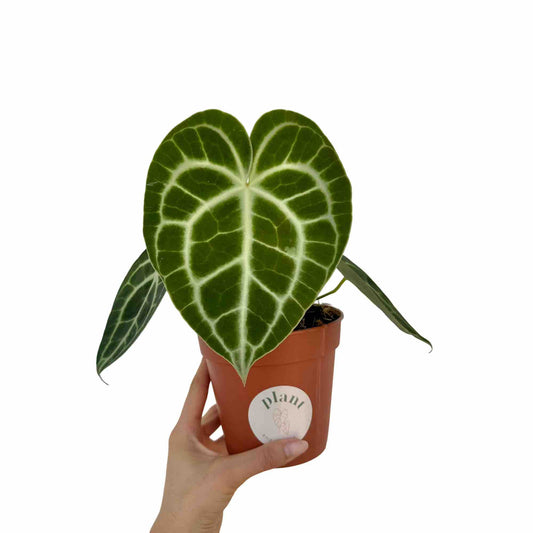
Anthurium clarinervium: Large, thick, heart-shaped leaves with clearly defined white veins. A true work of botanical art.
-
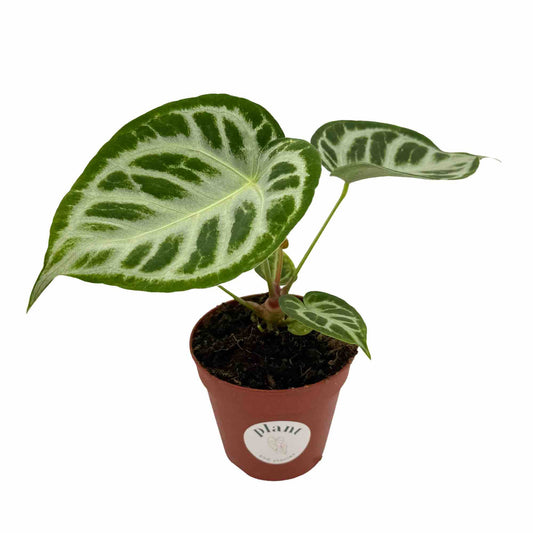
Anthurium crystallinum: A close cousin of clarinervium, but with a velvety appearance that captures light differently depending on the angle.
-
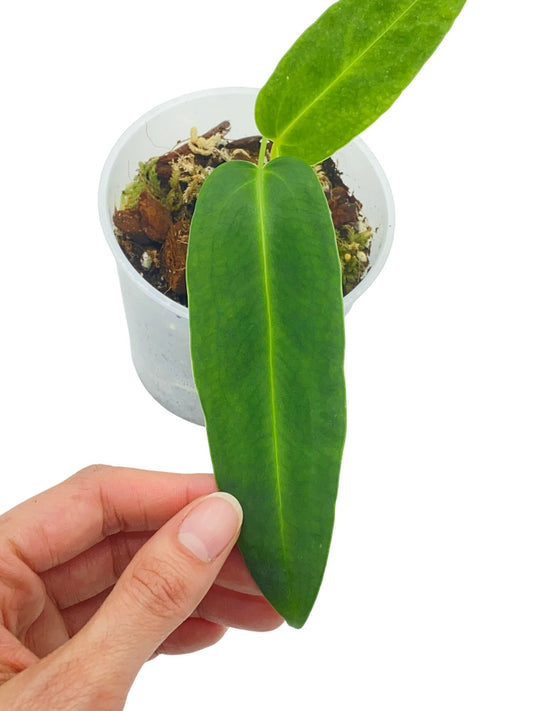
Anthurium magnificum: XXL foliage, deep green, marked veins… It is the quintessential tropical anthurium!
These varieties are ideal for a jungle atmosphere. They require less light than flowering varieties, but love humidity, so feel free to group them with other tropical plants or use a humidifier.
3. How to choose the right Anthurium?
Still hesitating? Here are a few suggestions:
-
If you want a plant that immediately attracts attention → Flowering varieties like Anthurium andreanum are ideal.
-
If you are looking for a more discreet but ultra aesthetic plant → Clarinervium and crystallinum are perfect.
-
If you are new to tropical plants → Anthurium scherzerianum is robust and easier to care for.
Whatever your choice, these plants will bring a unique exotic touch to your home. With a little care, they will last for years.
The ideal conditions for a healthy Anthurium
The Anthurium is a tropical plant that thrives in a warm, humid environment, similar to its native habitat. But for it to produce its most beautiful flowers and lush foliage, a few conditions must be met. Light, humidity, substrate... Every detail counts!
1. Properly balanced lighting to avoid common mistakes
Anthuriums need light to flower well, but too much direct sunlight can burn their leaves. This is a common mistake: people think they're doing the right thing by placing them close to a window, but if the sun's rays hit the leaves directly, they can turn brown and dry out.
Here's how to provide it with ideal lighting:
-
Place it near an east- or west-facing window where it will receive indirect light.
-
If your indoor space is dark, a horticultural LED lamp can help it maintain a good growth rate in winter.
-
Avoid direct sunlight, especially in the afternoon, which could burn the leaves.
Tip: If your Anthurium isn't flowering and its foliage is losing its vibrancy, it's probably in too much shade. Move it to a brighter room out of direct sunlight.
2. A temperature and humidity adapted to its tropical needs
Anthuriums originate from the tropical rainforests of South America, where the air is warm and humid year-round. To thrive indoors, this climate must be recreated by carefully controlling the temperature and humidity.
The ideal conditions for your plant:
-
Temperature: Between 18 and 25°C for optimal growth. Below 15°C, the plant slows down and may suffer.
-
Humidity: 60 to 80% humidity is ideal. Air that is too dry will cause the leaves to dry out.
-
What to do if the air is too dry? Place a layer of moistened clay pebbles under the pot or mist the leaves with non-calcareous water.
Where to place it? A bright bathroom is perfect, as the humidity is naturally higher there.
3. A well-draining substrate to prevent root rot
Anthuriums don't like overly compacted soil, as their roots need air to breathe properly. A potting mix that is too dense can retain water and cause root diseases. Therefore, a well-draining, light, and airy substrate is essential.
The perfect blend:
-
40% orchid potting mix, which provides lightness and drainage.
-
30% perlite or vermiculite, to retain moisture without suffocating the roots.
-
20% pine bark, to promote aeration.
-
10% activated charcoal, which prevents mold and purifies the soil.
Absolutely avoid: Classic universal potting soil, often too heavy and compact, which prevents water from draining properly and promotes root rot.
4. What type of pot should I choose?
The choice of pot is also essential: a poorly drained plant is a plant in danger. The roots of the Anthurium should never sit in stagnant water.
The right pot for a healthy Anthurium:
-
A perforated plastic pot, which facilitates water drainage.
-
A ceramic planter for aesthetics, but still with effective drainage.
-
A suitable size: Not too big, otherwise the water will take too long to dry and may cause moisture problems.
If your plant is turning yellow or its leaves are becoming limp, check the drainage! Overwatering is often the cause of health problems in Anthuriums.
5. Where should I place my Anthurium in the house?
In addition to being an easy-care houseplant, the Anthurium is a decorative asset that fits into many interior design styles. However, each room has its own specific requirements, and not all rooms are necessarily suitable for its needs.
The best locations depending on your interior:
-
In the living room: A beautiful flowering Anthurium (red, pink, white) will bring an elegant exotic touch.
-
In the bathroom: If it is bright, it is the ideal place to maintain natural humidity.
-
In an office: Perfect for a zen and calming atmosphere, but beware of overly dry air from heaters and air conditioners.
-
On a terrace or balcony (summer only): It can be put outside between May and September, provided it is protected from direct sunlight and drafts.
Combine your Anthurium with Calatheas, Marantas or Philodendrons, which share the same humidity needs and create a lush jungle effect.
Watering and fertilizing: the keys to a healthy Anthurium
Watering and fertilizing play a key role in the health of your Anthurium. A good balance is necessary to avoid yellowing leaves, wilting, or a lack of flowering. Here's everything you need to know to properly nourish and hydrate your plant.
1. Watering: not too much, not too little
Anthuriums dislike both drought and overwatering. Soil that is too dry will cause its leaves to wilt, while too much moisture can lead to root rot. The goal is to maintain light and consistent humidity.
The golden rules for proper watering:
-
Water once a week in summer and every 10 to 15 days in winter.
-
Always check the soil: It should be slightly moist, but never soggy.
-
Use non-calcareous water (rainwater or filtered water) to avoid white spots on the leaves.
-
Avoid stagnant water: Always empty the saucer after watering to prevent root rot.
If the leaves turn brown at the edges, it's often a sign of insufficient water. If they turn yellow and fall off, there's likely too much moisture.
2. Fertilization: boosting flowering
For an Anthurium to bloom regularly, it needs a suitable fertilizer. In nature, it draws its nutrients from rich, well-aerated soil. In a pot, it needs a little help.
When and how to fertilize?
-
In spring and summer, apply liquid fertilizer every 3 weeks.
-
In winter, reduce the frequency to once every 6 weeks, as the plant slows its growth.
-
Choose a fertilizer rich in potassium and phosphorus (special for flowering plants) to promote beautiful flowering.
Too much fertilizer can burn the roots and cause the leaves to yellow. It's better to dilute the fertilizer to half strength than to over-fertilize.
3. Signs of improper watering or fertilization
It's not always easy to know if your Anthurium is lacking water, fertilizer, or, conversely, receiving too much. Fortunately, the signs are quite clear if you know how to observe them.
How to identify a problem?
|
Symptom |
Possible cause |
Solution |
|
Yellow leaves |
Excess water or too much fertilizer |
Reduce watering and space out fertilization |
|
Brown leaf edges |
Air too dry or lack of water |
Increase humidity and water more regularly |
|
Falling leaves |
Waterlogged roots or lack of light |
Check the pot's drainage and move the plant |
|
Few flowers |
Lack of fertilizer or insufficient light |
Increase fertilization and place the plant in a brighter location. |
In case of fertilizer overdose, a good flush of the substrate can save your plant. Run lukewarm water through the pot until it drains cleanly from the bottom.
Preventing diseases and stimulating flowering of Anthurium
The Anthurium is a hardy plant, but it can be susceptible to diseases and pests if certain conditions are not met. Proper care will prevent these problems while ensuring abundant and long-lasting flowering.
1. How to avoid diseases and infestations?
To keep your Anthurium perfectly healthy, a few precautions are essential. Excessive humidity and poor air circulation are the main causes of disease.
Good habits to adopt:
-
Avoid stagnant water: Use a pot with drainage holes and a well-draining substrate to prevent root rot.
-
Do not overwater: Wait until the surface of the soil is slightly dry before watering again.
-
Monitor the foliage: Regularly remove dead or damaged leaves to prevent infections.
-
Maintain good ventilation: A well-ventilated room limits the development of mold and parasites.
-
Avoid cold drafts: Anthurium likes stability, a thermal shock can weaken it.
2. What parasites can attack the Anthurium?
Despite its robust appearance, the Anthurium can be susceptible to parasites. Regular inspection allows for quick action in case of an infestation.
|
Parasite |
Signs of infestation |
Solution |
|
Cochineals |
Small white clusters on the stems |
Spray a mixture of water and black soap |
|
Red spiders |
Small webs under the leaves |
Increase humidity, spray with water |
|
Aphids |
Rolled or sticky leaves |
Spray with a garlic infusion or black soap |
Cleaning the leaves with a damp cloth prevents dust buildup and reduces the risk of infestation.
Maximize Anthurium flowering
With proper care, an Anthurium can bloom for several months of the year. However, certain factors are crucial for stimulating abundant and long-lasting flowering.
1. The ideal conditions for continuous flowering
Anthuriums need light, humidity, and a balanced nutrient supply to produce beautiful, colorful spathes.
-
Bright but indirect light: Insufficient light reduces the number of flowers. Placing the plant near an east- or west-facing window is ideal.
-
A stable temperature: Anthuriums thrive between 18 and 24°C. Avoid temperature fluctuations and direct heat sources.
-
Proper humidity: A humidity level of 60 to 80% promotes flowering. To achieve this, place a container of water near the pot or use a humidifier.
-
A suitable fertilizer: Apply a liquid fertilizer rich in potassium and phosphorus every 2 to 3 weeks during growth (spring-summer).
Cutting off faded flowers stimulates the appearance of new flowers by redirecting the plant's energy.
Anthuriums in your interior decoration
The Anthurium is not just an ornamental plant, it's a real decorative asset. With its elegant leaves and vibrant flowers, it easily finds its place in various interior spaces.
1. Where should I place an Anthurium for optimal visual effect?
The Anthurium adapts to many decorative styles, whether as an accent plant or as the centerpiece of a plant composition.
|
Space |
Desired effect |
Recommended varieties |
|
Living room |
A central element that draws the eye |
Anthurium andreanum red or white |
|
Desk |
An elegant and soothing touch |
Anthurium clarinervium for its graphic foliage |
|
Bathroom |
Tropical atmosphere with controlled humidity |
Anthurium scherzerianum (less demanding in light) |
|
Bedroom |
Soft and relaxing touch |
White or pastel varieties for a zen atmosphere |
Combine an Anthurium with neutral ceramic pots and other plants with graphic foliage (Ficus, Calathea) to create a harmonious urban jungle.
2. The visual impact of Anthurium in a room
The Anthurium strongly influences the atmosphere of an interior, particularly through the colours of its flowers.
-
Bright red: Dynamic and energizing, perfect for a modern interior.
-
White: Minimalist and elegant, fits well into a clean, minimalist decor.
-
Pink and purple: A romantic and soft touch, ideal for a bohemian atmosphere.
-
Dark green (decorative foliage): Suitable for sophisticated or industrial settings.
3. Which Anthurium for which interior or exterior style?
The choice of an Anthurium also depends on the atmosphere you wish to create in your space.
-
For a modern and minimalist interior → A white or black Anthurium andreanum will bring an elegant and refined touch.
-
For a warm and colorful atmosphere → Red and pink varieties like 'Pink Champion' energize a room and fit well into a bohemian or exotic decor.
-
For an urban jungle space → Combine an Anthurium clarinervium or crystallinum with Monstera, Philodendron or Ficus for a lush effect.
-
For a covered terrace or balcony → Anthuriums can be placed outdoors provided that direct sunlight and excessively cold drafts are avoided.
A little decorating tip: White or black ceramic pots highlight the colorful flowers of flowering Anthuriums, while terracotta or coconut fiber pots go perfectly with varieties with decorative foliage.
Conclusion
The Anthurium is a plant that transforms an interior, bringing a touch of exoticism and elegance with its vibrant colors. With proper care, it can bloom several times a year and remain resplendent for years.
To take care of it effectively:
-
Ideal lighting: a bright spot, but without direct sunlight.
-
Controlled watering: slightly damp soil, never waterlogged.
-
Humidity well managed: misting or saucer with clay pebbles.
-
Suitable fertilizer: rich in potassium and phosphorus, applied every 2 to 3 weeks.
-
Strategic location: perfect for a living room, an office or even a bathroom.
For an even more spectacular effect, combine it with a Calathea , whose contrasting foliage enhances its brightness, or with a Philodendron , perfect for creating a lush tropical atmosphere.
With a few simple steps, the Anthurium becomes a true living decorative asset, transforming each room into a green and refined space.

Laura Bruneau
Jardinière & autrice