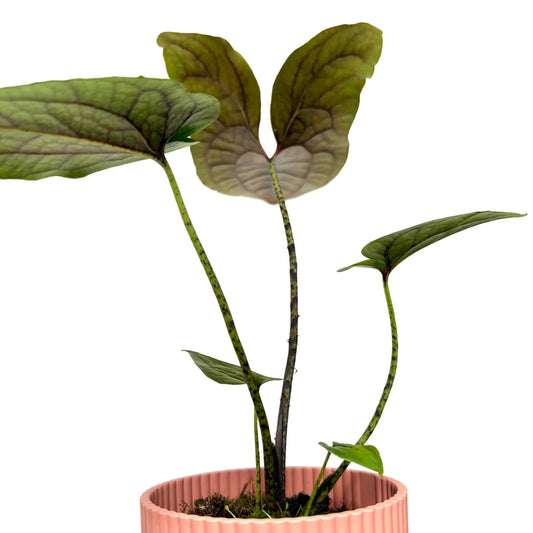
How to care for a Gynura Aurantiaca?

CARE INSTRUCTIONS: GYNURA AURANTIACA PURPLE PASSION

Introduction
Gynura aurantiaca , commonly known as the velvet plant , is recognized for its deep purple, fuzzy leaves and bright orange flowers that can add an exotic touch to any indoor environment.
Native to Southeast Asia , this tropical plant prefers warm, humid environments, making it an excellent houseplant under proper care.
Features
- Common name: Velvet plant,
- Scientific name: Gynura aurantiaca 'Purple passion'
- Family: Asteraceae
- Origin: Java, Indonesia
- Flower color: Bright orange
- Flowering period: Can flower year-round indoors under optimal conditions.
- Ideal temperature: 18-25°C
- Humidity: High
- Vegetation type: Perennial
- Foliage type: Evergreen
Did you know that?
In addition to its aesthetic appeal, Gynura aurantiaca is studied for its medicinal properties in several cultures, notably for its potential to positively influence blood sugar management and to possess anti-inflammatory properties.
In some parts of Asia , parts of this plant are traditionally used to treat various ailments, such as skin rashes, rheumatism , and even to improve blood circulation.
However, it is important to note that, although promising, these medicinal uses require more clinical studies to be fully validated.
Thus, although Gynura aurantiaca is considered an interesting complement to traditional treatments, its use should be approached with caution and under the supervision of a healthcare professional.
HOW TO CARE FOR A GYNURA AURANTIACA? | IN BRIEF

Light :
Bright but indirect light . Avoid direct sunlight which can dull the vibrant color of its leaves.
Water :
Water to keep the soil slightly moist, but not soggy. Reduce watering in winter.
Temperature :
Prefers warm temperatures, between 18°C and 25°C.
Humidity :
Requires high humidity . Consider using a humidifier or placing the pot on a tray of damp clay pebbles, especially in summer.
WHAT TYPE OF SOIL DOES GYNURA AURANTIACA REQUIRE?
A rich, well-draining potting mix is ideal.
A houseplant mix with added perlite will promote moisture retention and proper drainage. We recommend our " Perlite Potting Soil Mix, " which is 100% suitable for the needs of Gynura aurantiaca!
WHEN SHOULD I REPOT MY PLANT?
Repot every 1 to 2 years in spring to give the plant more room to grow and to refresh the soil.
Choose a pot only slightly larger than the previous one to avoid excess moisture.
HOW TO WATER A GYNURA AURANTIACA?
Keep the soil consistently moist, watering as soon as the topsoil begins to dry out.
Avoid stagnant water to prevent root diseases.
HOW TO PROPAGATE GYNURA AURANTIACA?
Gynura aurantiaca can be propagated effectively and easily by stem cuttings , either by placing them in water or by planting them directly in the ground.
Here are the steps for each method:
Cuttings in water
- Select a healthy stem at least 10-15 cm long. Use clean pruning shears to cut just below a leafy node.
- Remove the lower leaves to free up a stem segment which will be immersed in water.
- Place the cutting in a container filled with water , making sure to submerge the exposed nodes. The top leaves should remain above the water.
- Change the water every week to keep it clean.
- Keep the container in a bright place out of direct sunlight . Roots should appear in 2 to 4 weeks.
- Transplant into soil once the roots are well developed.
Cuttings directly in the ground
- Prepare a healthy stem and let the cut air dry for a few hours to heal.
- Plant the cutting in a pot with a well-draining potting mix.
- Ensure good contact between the stem and the soil.
- Water lightly to moisten the soil and place in a warm, bright location.
- Keep the soil slightly moist until the roots have established themselves.
Tips and tricks
Propagating Gynura aurantiaca from cuttings is simple , but success depends on the care given.
Use a rooting hormone to stimulate the process if desired, and take care not to expose the cutting to extreme conditions.
HOW TO PREVENT AND TREAT PESTS?
Inspect regularly to prevent any signs of mealybugs, thrips or spider mites.
In case of infestation, treat with natural and biological methods such as black soap.
HERE ARE OUR EXPERT ADVICE:
- Expose to indirect light to preserve the color of the leaves.
- Water to keep the soil slightly moist , adjust according to the season.
- Increase the ambient humidity to meet its tropical needs, especially in summer.
- Repot as needed to stimulate growth and health.
- Monitor and treat pests to keep the plant healthy.
- Gently pinching the stems above a leafy node in spring or early summer helps to stimulate and encourage the plant to branch out.

Laura Bruneau
Jardinière & autrice