

Azaleas: The Complete Guide to Planting, Caring for, and Getting Them to Bloom in the Garden

The azalea is an ericaceous shrub of the genus Rhododendron (family Ericaceae) that requires acidic soil, partial shade, and cool conditions to produce its spectacular spring display. The essentials at a glance:
- 🪴 Soil: acidic, pH 5.0 to 6.0, rich in organic matter (ericaceous soil).
- ☀️ Exposure: bright partial shade, never scorching full sun or dense shade.
- 🌸 Flowering: mainly in spring, sometimes until early summer.
- 🍂 Two families: deciduous azaleas (lose their leaves, very hardy) and evergreen so-called Japanese azaleas.
- 💧 Watering: regular, preferably with rainwater (lime is harmful to them).
- 🌦️ In the garden: yes, it is an outdoor plant that stays outside all year round.
- ❄️ In winter: the garden azalea stays outside; in a pot, protect the root ball from frost and water only when the substrate feels dry to the touch, never before a night of frost. An azalea sold in bloom in winter is an indoor azalea and is not hardy.
🌸 What exactly is an azalea?
An azalea is an ericaceous shrub belonging to the genus Rhododendron, in the family Ericaceae: in other words, all azaleas are rhododendrons, but not all rhododendrons are azaleas. The Missouri Botanical Garden reminds us that azaleas and rhododendrons are very closely related shrubs from the same family of ericaceous plants.
In practice, the name azalea is reserved for species and hybrids with often finer foliage and very abundant flowers, often funnel-shaped. What unites them all: a passion for acidic soils, shallow roots, and a need for constant moisture. Understanding this identity is already half the battle, because an azalea planted in alkaline soil will inevitably decline.
Two main uses coexist: the indoor azalea (often an Indian azalea, given as a flowering potted plant in winter) and the hardy garden azalea, which lives outside all year round. Do not confuse them: according to the RHS fact sheet on indoor azaleas, the indoor azalea comes from Rhododendron simsii and cannot tolerate frost, while the evergreen Japanese garden azalea spends the winter outside. It is the latter, the most durable and generous, that interests us here.
🍂 Deciduous or evergreen (Japanese) azalea: which one to choose?
The main distinction lies in the foliage: deciduous azaleas lose their leaves in winter (with superb autumn colours along the way), while evergreen so-called Japanese azaleas keep their foliage all year round. This choice determines hardiness, the flowering period, and the effect in the garden.
| Criterion | Deciduous azalea | Evergreen (Japanese) azalea |
|---|---|---|
| Foliage | Drops in winter, autumn colours | Evergreen, green all year round |
| Flowering | Late spring to early summer (May to July for R. viscosum) | Mid-spring, very dense (April-May) |
| Fragrance | Often scented | Rarely scented |
| Hardiness | Excellent (USDA zones 4 to 9 for R. viscosum) | Good but slightly less hardy, mulch when young |
| Habit | More open, 0.9 to 1.5 m | Compact, ideal for borders and low mass plantings |
The flowering and hardiness data for the deciduous azalea Rhododendron viscosum are documented by the Missouri Botanical Garden.
💡 Tip: for a flower bed that blooms for as long as possible, combine a Japanese azalea (early and dense flowering) with a scented deciduous azalea (later flowering): you spread the spectacle over several weeks.
🪴 Ericaceous soil and acidic soil: the secret to a perfectly healthy azalea
An azalea requires acidic soil, rich in organic matter, with a pH ideally between 5.0 and 6.0: this is the non-negotiable condition for its success. The Royal Horticultural Society (RHS, Royal Horticultural Society) recommends precisely a substrate with a pH of 5.0 to 6.0, rich in organic matter.
If your soil is alkaline or neutral, there are two solutions: dig a large pit filled with ericaceous soil (or special ericaceous plant potting mix), or better yet, grow your azalea in a pot or container, where you have complete control over the substrate. Warning: azalea roots are shallow and fibrous. The RHS states that all these plants have surface roots and that the roots must be barely covered: never plant too deep.
Express technical sheet for the azalea
| 🌿 Genus / family | Rhododendron / Ericaceae |
| 🪴 Soil type | Acidic, humus-rich, well-draining (ericaceous soil) |
| ⚗️ Ideal pH | 5.0 to 6.0 |
| ☀️ Exposure | Bright partial shade, light shade |
| 🌸 Flowering | Spring, sometimes early summer |
| 📏 Height | 0.5 to 1.5 m depending on the type |
| ❄️ Hardiness | Very good: up to USDA zone 4 for deciduous varieties (Missouri Botanical Garden); H5, i.e., -10 to -15 °C, for the Japanese azalea 'Hinomayo' (RHS) |
| 💧 Watering | Regular, preferably rainwater |
| 🕳️ Rooting | Shallow: roots barely covered |
| 🌦️ Use | Outdoor plant, outside all year round |
☀️ Where to place your azalea: partial shade above all
Place your azalea in bright partial shade, sheltered from the scorching afternoon sun and dense shade: this is the exposure that suits it best. The RHS advises dappled shade in a sheltered location, and advises against deep shade under trees as well as frost hollows.
Does it like sun? A little morning sun suits it very well, but full afternoon sun scorches its foliage, especially if the soil dries out. The Missouri Botanical Garden also notes a risk of foliage scorch in full sun, unless the soil remains uniformly cool. The edge of a copse, the foot of a north or east-facing wall, or the light shade of a large tree with light foliage are perfect locations.
| Exposure | Result for the azalea |
|---|---|
| Bright partial shade | Ideal: abundant flowering, healthy foliage |
| Morning sun | Well tolerated if the soil remains cool |
| Full afternoon sun | To be avoided: burnt leaves, drying soil |
| Dense shade | To be avoided: poor flowering, sparse habit |
columns: 4
columns_mobile: 2
-

 Livraison offerte Sale
Rhododendron (Rhododendron) – Evergreen flowering shrub – 17 cm pot – Height: 40 cm
Regular price From 49,95 €Regular price74,95 €Sale price From 49,95 €49,95 €From 39,96 €Livraison offerte Sale -

 Livraison offerte Sale
Rhododendron (Rhododendron) - flowering evergreen shrub - 23 cm pot - 50 cm tall
Regular price From 74,95 €Regular price79,95 €Sale price From 74,95 €74,95 €From 59,96 €Livraison offerte Sale -


Rhododendron (Rhododendron) – evergreen flowering shrub – 10 cm pot – Height 25 cm
Regular price From 39,95 €Regular price39,95 €From 31,96 €Livraison offerte -


Leucothoe 'Zeblid' (Leucothoe fontanesiana) - ericaceous shrub with colourful foliage - 17 cm pot - Height 45 cm
Regular price From 44,95 €Regular price44,95 €From 35,96 €Livraison offerte -


Leucothoe 'Makijaz' (Leucothoe fontanesiana) - ericaceous shrub with colourful foliage - 17 cm pot - Height 45 cm
Regular price From 44,95 €Regular price44,95 €From 35,96 €Livraison offerte -

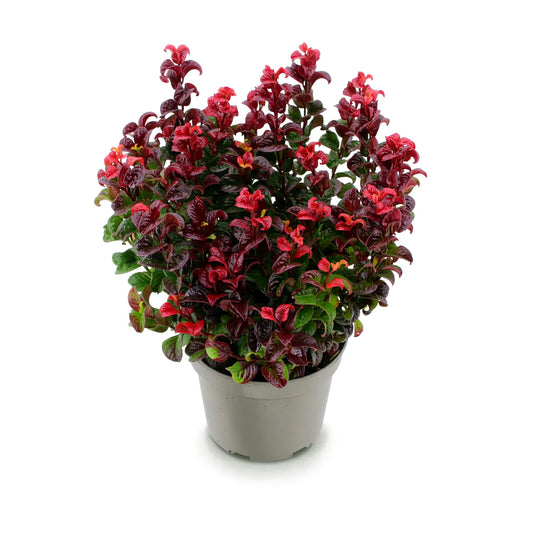
Leucothoe 'Curly Red' (Leucothoe axillaris) - ericaceous shrub with colourful foliage - 17 cm pot - Height 40 cm
Regular price From 44,95 €Regular price44,95 €From 35,96 €Livraison offerte


🗓️ When and how to plant an azalea, step by step
Plant your azalea preferably in autumn (from September to November) or early spring, outside the frost and heatwave period: autumn gives the roots time to establish before flowering. Container planting, however, is possible almost all year round as long as you water.
Azalea calendar through the seasons
| Season | Key actions |
|---|---|
| 🌱 Spring | Flowering, ericaceous soil fertilizer application, careful watering |
| ☀️ Summer | Regular watering with rainwater, mulching, partial shade |
| 🍂 Autumn | Ideal planting time, mulch renewal |
| ❄️ Winter | Dormancy, protection of young evergreen plants and pots, watering by touch outside frost, no pruning (buds already formed) |
Here is the procedure for a successful planting in the ground:
| Step | Action |
|---|---|
| 1. | Dip the root ball in a bucket of water until the bubbles stop. |
| 2. | Dig a wide, shallow pit (2 to 3 times the size of the root ball). |
| 3. | Fill with ericaceous soil mixed with potting mix and organic matter. |
| 4. | Position the root ball so that the top is level with the soil (roots barely covered). |
| 5. | Backfill without tamping down hard, form a watering basin. |
| 6. | Water abundantly, then mulch with at least 7.5 cm. |
💡 Tip: in alkaline soil, forget about the ground and opt for a large pot filled with ericaceous soil substrate. You thus offer your azalea exactly the acidity it requires, without fighting your land.
💧 Watering, mulching and feeding: year-round maintenance
Water your azalea regularly to keep the soil cool without waterlogging it, preferably with rainwater: this is the key to its maintenance. The RHS emphasizes that rainwater is preferable because tap water contains too much calcium, which is harmful to ericaceous plants (tap water remains acceptable for a month or two in summer as a backup).
Does the azalea need a lot of water? It mainly needs consistency: its shallow roots tolerate neither drought nor standing water. Mulching is your best ally: the RHS recommends applying at least 7.5 cm of conifer bark or acidic material, to be renewed every spring when the soil is moist.
| Action | Frequency / detail |
|---|---|
| 💧 Watering | Regular, rainwater, cool soil never waterlogged |
| 🍂 Mulching | Conifer bark, at least 7.5 cm, renewed in spring |
| 🌿 Fertilization | Ericaceous plant fertilizer in spring |
| 🪴 Container growing | Repotting every two years, or replacing 5 cm of substrate per year |
In good acidic soil, the RHS indicates that no additional input is necessary: reserve the special ericaceous fertilizer for potted plants or poor soils, in spring.
✂️ Pruning, flowering and common problems
Prune your azalea sparingly: simply removing faded flowers and a light rebalancing just after flowering is enough, because the azalea flowers mainly in spring on the previous year's wood. The RHS confirms mainly spring flowering, which can extend until early summer.
How to keep it beautiful after flowering? Carefully remove the dry flowers to concentrate energy on the foliage and future buds, keep the soil cool and mulched, and avoid any severe pruning that would compromise the next flowering.
| Problem | Probable cause | Solution |
|---|---|---|
| Yellow leaves between the veins | Chlorosis (soil too alkaline) | Acidic substrate, rainwater, ericaceous fertilizer |
| Browned, dried leaves | Full sun or dry soil | Move to partial shade, mulch, water |
| Few flowers | Too dense shade or poorly timed pruning | More light, prune just after flowering |
| General wilting | Excess standing water | Improve drainage, reduce watering |
💬 Laura Bruneau's opinion: if I had to give only one piece of advice on the azalea, it would be this: never fight your soil. On my rather alkaline land, my first azaleas in the ground turned yellow in one season. Since I have been growing them in large ericaceous soil containers, at the shaded edge of the house and watering them with collected rainwater, they explode with flowers every spring. The azalea is not capricious, it is simply demanding on one precise point: offer it acidity and coolness, it will give you everything else.
🌦️ Hardiness and wintering: your azalea outside all year round
Yes, the garden azalea is an outdoor plant that can stay outside in winter: most varieties are hardy and spend the bad season in the garden without any problems. The Missouri Botanical Garden classifies, for example, the deciduous azalea Rhododendron viscosum as hardy in USDA zones 4 to 9, which places it among the most cold-resistant shrubs.
Evergreen Japanese azaleas are a little more sensitive: protect young plants and pots with good mulching and, in harsh climates, lean the container against a sheltered wall. Does it fear frost? Shallow roots in a pot are more exposed to it than in the ground: a thick mulch and a location sheltered from cold winds are generally enough to preserve them.
To create a coherent ericaceous flower bed, combine your azaleas with other shade-loving acidophilic shrubs (rhododendrons, colorful-foliage leucothoe) that share exactly the same soil and exposure requirements.
❄️ The azalea in winter: pot, planter and watering by touch
In winter, leave your garden azalea outside: in the ground, a mulch is enough; in a pot, especially protect the root ball from frost and excess water, and water only when the substrate feels dry to the touch, never before a night of frost. Do not prune anything: according to the RHS rhododendron growing guide, flower buds begin to form as early as late summer, and it is they that will flower in spring.
The main danger in a pot, reminds the RHS container maintenance guide, is the freezing of the potting mix, which can kill the plants. A Japanese azalea like 'Hinomayo', classified H5 (-10 to -15 °C) by its RHS fact sheet, spends the winter outside, but its shallow roots are much more exposed in a pot than in the ground.
| Winter action for a potted azalea | Why (source) |
|---|---|
| Group the pots against a house wall | Protects the roots from the cold (RHS) |
| Place a thick winter fleece over strong frost nights | Provides about 2 °C of protection (RHS) |
| Remove the saucer | Standing water would freeze at the base; the RHS advises removing saucers in winter |
| Mulch the surface of the pot | RHS recommended mulching period for rhododendrons: from late autumn to late winter (November to February) |
| Shelter a waterlogged pot | In very wet periods, temporary shelter or a wall's "rain shadow" (RHS) |
| Never water if frost is forecast | RHS instruction for all containers |
| No fertilizer | Useless during the winter months (RHS) |
How to water an azalea in winter? An evergreen azalea continues to lose water through its leaves, and a pot placed under an overhang or covered balcony does not receive rain. Stick a finger into the substrate: if it is dry, water during a mild day, preferably with rainwater as the RHS recommends; if it is still cool, wait. A deciduous azalea, without leaves, asks for almost nothing: the RHS judges watering rarely necessary for deciduous plants in containers.
Regarding the substrate, the potted azalea remains an ericaceous plant: the RHS judges peat-free ericaceous plant potting mixes as suitable, and advises repotting every two years, in early spring. For mulch, our maritime pine bark plays the role of the conifer bark recommended by the RHS.
In a planter or winter pot, the compact Japanese azalea provides evergreen foliage until its spring flowering. Pair it with plants that share its acidic substrate, such as Leucothoe, or place it in its own pot next to a skimmia, which does not require ericaceous soil according to the RHS. Our guide to creating a winter planter details the pot, drainage, and six arrangements, and our guide to protecting plants from frost presents fleece and wrapping.
| Criterion | Garden Japanese azalea | House azalea |
|---|---|---|
| Botanical name | Evergreen hybrids of Rhododendron, such as 'Hinomayo' (RHS) | Cultivars of Rhododendron simsii (RHS) |
| Hardiness | H5: -10 to -15 °C for 'Hinomayo' (RHS) | Not hardy, does not tolerate frost (RHS) |
| Winter location | Outside, sheltered from cold winds | Indoors, in a cool (13 to 16 °C) and bright room (RHS) |
| Flowering | In spring, in the garden | In winter, after being forced to flower in warm conditions (18 to 21 °C) by the grower (RHS) |
| Time outdoors | All year round | Only after the frosts, from May, and bring indoors in September before any risk of frost (RHS) |
| Watering | When dry to the touch, with rainwater | Substrate never completely dry, with rainwater (RHS) |
💡 Tip: an azalea bought in flower for Christmas is generally a house azalea, which growers make flower in warm, humid conditions for Christmas, according to the RHS. Do not plant it in the garden in December: keep it cool (13 to 16 °C according to the RHS) and in a bright place in the house, and only take it out once the frosts have passed.
⚠️ Is azalea toxic to cats and dogs?
Yes. The ASPCA Azalea fact sheet (American Society for the Prevention of Cruelty to Animals), based on Rhododendron spp., classifies azalea as toxic to dogs, toxic to cats, and toxic to horses. The toxic principle cited is grayanotoxin, and the clinical signs are vomiting (not in horses), diarrhoea, weakness, and heart failure.
The RHS also states, on its 'Hinomayo' Japanese azalea fact sheet, that the plant is harmful if ingested, including by pets, and advises wearing gloves when handling it. Place your pots out of reach of animals and young children, and in the event of ingestion, contact your vet or a poison control centre immediately.
-

Rhododendrons and azaleas with abundant blooms for acidic soils and partially shaded...
-

Our flowering outdoor shrubs: buddleias, dogwoods, deutzias, hibiscus, mock oranges and more...


