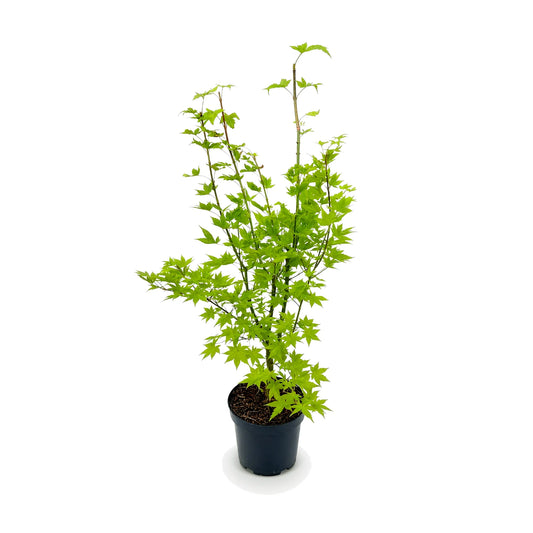
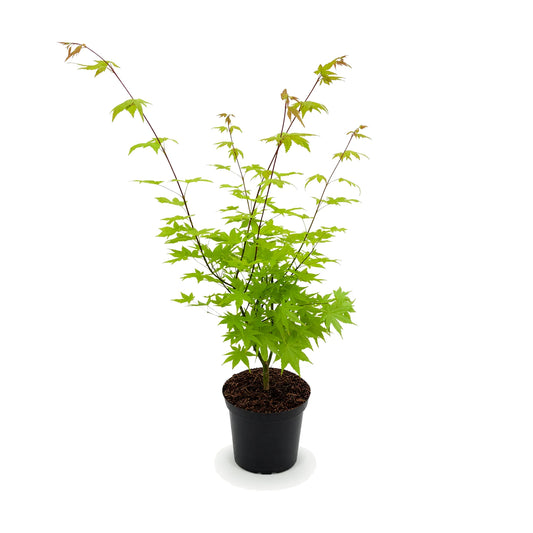
Japanese Maple in a Pot: Potting Mix, Watering, and Overwintering

Japanese maple is one of the most beautiful shrubs for a patio: compact, slow-growing and architectural, it grows perfectly well in a pot, provided you get three things right: well-draining compost, attentive watering in summer and protection for the roots in winter. In a container, its roots are more exposed to drying out and frost than they are in the ground, but a few simple steps are all it takes to help it thrive for years. Here’s the complete guide, backed by RHS horticultural data.
🌿 Why grow a Japanese maple in a pot?
Growing a maple in a pot puts its silhouette at eye level on a patio or balcony, or either side of an entrance—anywhere you don’t have open ground. The pot naturally restricts its growth, which is already slow, and lets you move it to shelter it. Given the right care, a potted maple offers the same architectural foliage and fiery autumn colour as one grown in the ground.
| Benefit | What it brings to your garden |
|---|---|
| A maple without a garden | Ideal for a patio or balcony, where there’s no open ground. |
| A silhouette at eye level | The pot showcases its shape and foliage, near an entrance or outdoor seating area. |
| Controlled growth | The container restricts the roots and keeps an already slow-growing shrub in check. |
| Easy to move and protect | You can shelter the pot from wind, sun or frost as the seasons change. |
🔎 Japanese maple in a pot: at a glance
The RHS (Royal Horticultural Society) confirms that Japanese maple (Acer palmatum, Sapindaceae, according to Kew POWO) grows very well in containers with well-draining compost, careful watering in summer and root protection in winter. Compact varieties, particularly those in the Dissectum Group, are best suited to pot growing.
| Factor | Verified details |
|---|---|
| 🔎 Species | Acer palmatum and cultivars (Sapindaceae) |
| 🪴 Best varieties for pots | Low-growing Dissectum Group and compact dwarf varieties |
| 🪵 Growing medium | Well-draining compost (peat-free John Innes No. 2 or ericaceous) + ~25% sand |
| 🔎 Summer watering | Regular; up to once a day in very hot weather |
| 🪴 Repotting | About every 2 years, in April or September |
| ❄️ Overwintering | Group pots together, shelter them and wrap them to protect the roots from frost |
📋 Quick reference guide
All the essentials at a glance.
| Parameter | Guideline |
|---|---|
| Species | Acer palmatum and cultivars (Sapindaceae) |
| Position | Sheltered partial shade, protected from wind, even in a pot |
| Hardiness | Hardy (H6), but roots in pots are more exposed to frost |
| Growing medium | Peat-free John Innes No. 2 or ericaceous compost, + around 25% sand |
| Container | Large, free-draining pot, wider than the rootball |
| Watering | Regular in summer, up to once a day in very hot weather |
| Repotting | Every 2 years, in April or September, with root pruning |
| Overwintering | Group pots together, shelter them and wrap them |
| Pruning | Minimal, from July to January |
| Autumn colour | Red, orange or purple, depending on the variety |
📍 Where to place it: sheltered partial shade, even in a pot
Even in a pot, Japanese maple has the same preferences: light partial shade in a sheltered spot, with gentle morning sun and afternoon shade. The advantage of a container is that you can move it with the seasons: to a shadier spot in summer and somewhere sheltered in winter.
Avoid patios in full, blazing sun and very windy corners, which scorch the foliage even faster than in the ground because the compost dries out quickly.
☀️ Position: Sheltered partial shade, protected from wind, even in a pot
🌱 Soil:
❄️ Climate: Hardy (H6), but roots in pots are more exposed to frost
🪴 Repotting: growing medium, container and roots
Choose a large, free-draining pot that’s wider than the rootball and has drainage holes in the base. Fill it with a suitable growing medium: peat-free John Innes No. 2 compost or peat-free ericaceous compost, mixed with around 25% coarse sand to improve drainage. Set the maple in the pot without burying the root collar, water thoroughly and mulch the surface.
After that, repot every two years, in April or September, lightly pruning the roots.
| Step | What to do |
|---|---|
| Container | Large, free-draining pot, wider than the rootball, with drainage holes in the base |
| Growing medium | Peat-free John Innes No. 2 or ericaceous compost + around 25% sand |
| Repotting | Every 2 years, in April or September |
| Roots | Prune lightly when repotting (base and sides) |
| After repotting | Water generously and mulch the surface of the pot |
columns: 4
columns_mobile: 2
-

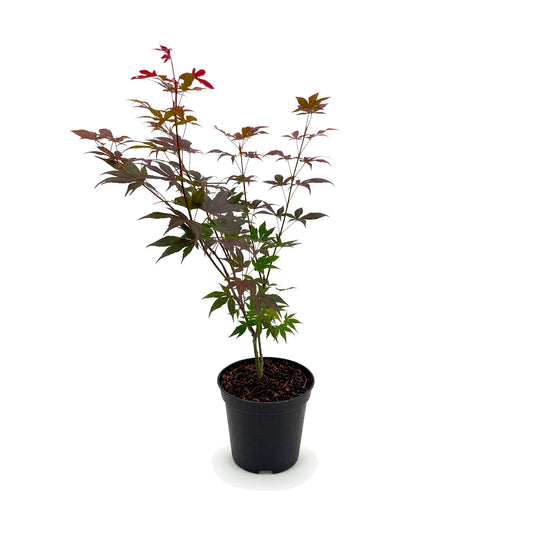
Japanese Maple 'Atropurpureum' (Acer palmatum) - with fiery foliage - 19 cm pot - Height 70 cm
Regular price From 64,95 €Regular price64,95 €From 51,96 €Livraison offerte -

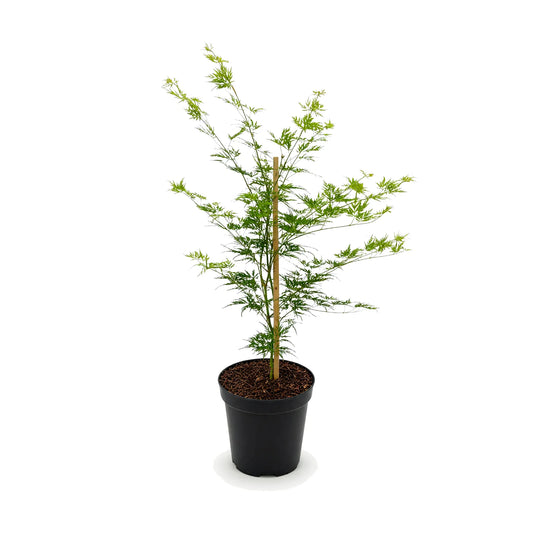
Japanese Maple 'Emerald Lace' (Acer palmatum) - with flamboyant foliage - 19 cm pot - Height 70 cm
Regular price From 64,95 €Regular price64,95 €From 51,96 €Livraison offerte -


Japanese Maple 'Sangokaku' (Acer palmatum) - with fiery foliage - 26 cm pot - Height 90 cm
Regular price 89,95 €Regular price89,95 €71,96 €Livraison offerte -

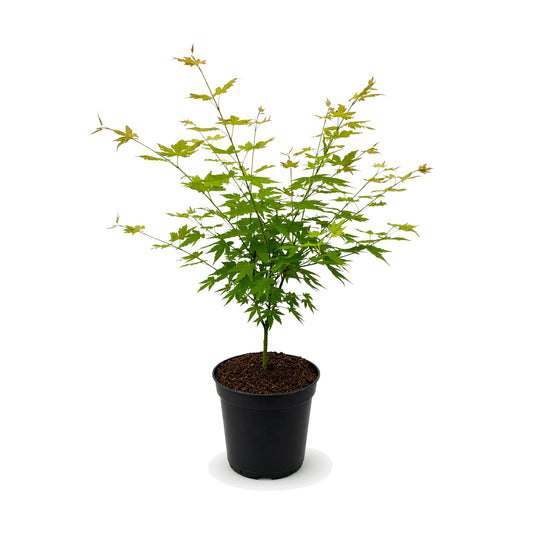
Japanese Maple 'Orange Dream' (Acer palmatum) - with fiery foliage - 19 cm pot - Height 70 cm
Regular price From 64,95 €Regular price64,95 €From 51,96 €Livraison offerte -

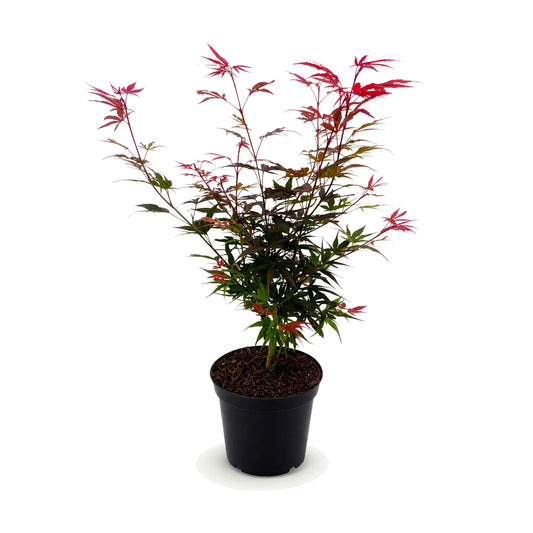
Japanese Maple 'Shaina' (Acer palmatum) - with fiery foliage - 19 cm pot - Height 70 cm
Regular price From 64,95 €Regular price64,95 €From 51,96 €Livraison offerte -

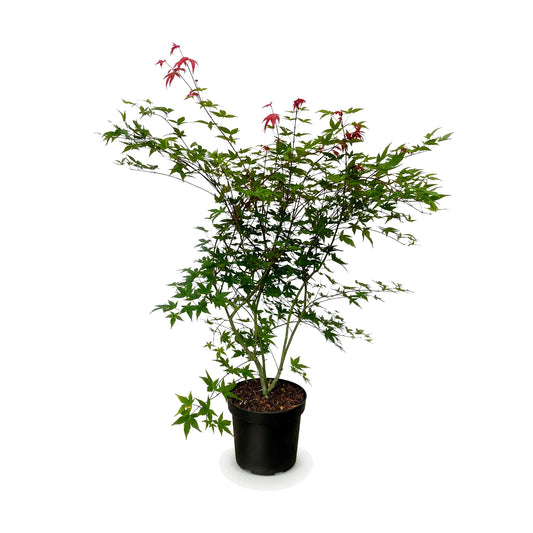
Japanese maple 'Beni Maiko' (Acer palmatum) – with vibrant foliage – 26 cm pot – 90 cm tall
Regular price 89,95 €Regular price89,95 €71,96 €Livraison offerte


✂️ Care: watering, pruning and year-round upkeep
Watering and overwintering are the two key things to get right. In summer, compost in a pot dries out quickly: water regularly, up to once a day in very hot weather, without letting it dry out completely or become waterlogged. Reduce watering in autumn. In winter, roots in pots are more exposed to frost than those in the ground: group the pots together in a sheltered spot and wrap them in horticultural fleece or insulating material. Pruning should be kept to a minimum, from July to January.
💧 Summer watering: Regular; up to once a day in very hot weather, without overwatering
💧 Winter watering: Reduce, but don’t let the growing medium dry out completely
🧣 Overwintering: Group pots together, shelter them and wrap them to protect them from frost
🌱 Feeding: Apply a mild fertiliser in spring; avoid excess nitrogen
👀 Keep an eye out for: Vine weevil (larvae in the growing medium) and leaf scorch
🍂 Japanese maple in a pot: a season-by-season calendar
Container care closely follows the seasons: repot and get growing in spring, water vigilantly in summer, enjoy the glorious colours in autumn and protect the roots in winter. Here are the key jobs to keep your patio maple in top condition throughout the year.
📅 Seasonal care calendar
| Season | Key task |
|---|---|
| 🌸 Spring | Repot (April); colourful new growth; resume watering; protect from late frosts. |
| ☀️ Summer | Water regularly (up to once a day); partial shade; watch for leaf scorch. |
| 🍂 Autumn | Enjoy the autumn colour; repotting is also possible in September; reduce watering. |
| ❄️ Winter | Group and wrap pots to protect roots from frost; water sparingly. |
🌱 How do you propagate a Japanese maple in a pot?
A potted Japanese maple is propagated in the same way as one grown in the ground, depending on the variety. The species can be grown from autumn samaras. However, the compact, colourful varieties grown in pots are cultivars, which won’t come true from seed: they are grafted or air-layered to ensure the new plants are identical to the parent.
For home gardeners, the easiest option is to buy a young grafted plant of the desired variety that’s suitable for growing in a container.
🐛 Common problems: diseases, pests and mistakes
When growing in a pot, problems are mainly caused by water (too much or too little) and the roots. Here are some common issues and their solutions.
| Symptom | Likely cause | Solution |
|---|---|---|
| Foliage scorched in summer | ☀️ Growing medium has dried out; pot in sun or wind | Water more often, move to sheltered partial shade and mulch the surface |
| Roots suffering in winter | ❄️ Growing medium in the pot has frozen | Group the pots together, shelter them and wrap them |
| Yellow leaves, waterlogged compost | 💧 Overwatering, poor drainage | Raise the pot, improve the drainage of the growing medium and water less often |
| Plant in decline, roots chewed | 🐛 Vine weevil larvae in the growing medium | Check the roots when repotting and treat if necessary |
-

Acer palmatum and Japanese maples with fiery foliage, perfect for pots or...
-

Outdoor plants that keep their foliage all year round: evergreen privacy hedges,...


🌸 Japanese maple varieties for pots
The best choice depends above all on how you plan to use it. Here’s a reliable selection to help you choose with confidence.
| Variety | What makes it special |
|---|---|
| Shaina | Dwarf and dense, with red foliage: one of the best varieties for growing in pots |
| Kamagata | Very compact, with delicate foliage and changing colours |
| Katsura | Young foliage is orange before turning green; compact growth |
| Mikawa yatsubusa | Dwarf variety with layered leaves and a domed shape, popular for bonsai |
| Beni-maiko | Flame-red new growth, compact and vibrant |
🎨 Where to place it and what to pair it with
A potted maple makes a stunning patio display: as a standalone focal point near outdoor seating, in a pair on either side of a doorway, or surrounded by pots of ferns, hostas, heucheras and heathers that share its preference for cool conditions and partial shade.
A decorative top dressing (pebbles, bark) dresses the base and reduces evaporation, while giving the whole display a neat, finished look.
🔑 Which Japanese maple should you choose for a pot?
Not all varieties are equally suited to containers: choose the most compact, slow-growing ones. The low-growing, cascading varieties in the Dissectum Group are best for pot culture: their waterfall-like shape spills beautifully over the sides of the pot, and their modest size (1.5 to 2.5 m) is easy to manage. Dwarf varieties and compact purple-leaved cultivars are also well suited.
The RHS specifically recommends Dissectum Group varieties for containers. Avoid vigorous, tree-like forms (4 to 8 m), which eventually become pot-bound and require cumbersome repotting. Whatever variety you choose, a large pot, well-draining growing medium and regular summer watering are still the keys to success on a patio.
⚠️ Is Japanese maple toxic when grown in a pot?
As with Japanese maples grown in the ground, none of our trusted horticultural sources list potted Japanese maple as toxic, and it is generally considered safe, even on a patio used by children and pets. As no formal declaration of safety is available, it’s best to avoid eating the foliage as a precaution, but there are no known risks from having the plant nearby or touching it. It’s a peaceful patio plant, with no thorns or tempting fruit.
✅ Our expert tips for success
Anyone can grow a Japanese maple in a pot, even without a garden, as long as they get three things right: well-draining compost, attentive watering in summer and protection for the roots in winter.
Choose a compact variety, place the pot in sheltered partial shade and repot every two years. Your patio maple will reward you with its architectural foliage and autumn colours for many years to come.
Japanese maple: complete guide · Which Japanese maple should you choose? · Dissectum maple
When growing in a pot, the number-one mistake is neglecting summer watering: a potted maple can dry out in a single heatwave day, and its foliage scorches straight away. My routine: a large pot, well-draining compost, a top dressing and a daily finger test to check moisture in summer. In winter, group the pots together and wrap them up. With this simple routine, a patio maple is a real joy.

Laura Bruneau
Jardinière et autrice