When to prune hydrangeas? The right time for each species

When to prune hydrangeas? In late winter or early spring, once the hard frosts have passed and the buds are swollen: lightly for mophead hydrangeas, severely for panicle hydrangeas and 'Annabelle', and after flowering for climbing hydrangeas.
It all depends on the wood that bears the flowers: Hydrangea macrophylla flowers on new growth from last year's stems, while Hydrangea paniculata and Hydrangea arborescens flower on new wood.
This guide gives the month and the technique for each species, according to the RHS and seven American universities; the plant itself is described in our complete hydrangea guide.
🌟 Last year's wood or new wood: the rule that decides everything
A hydrangea is pruned at the right time when you know which wood it flowers on: on last year's wood, pruning should be light, otherwise it removes the buds; on new wood, it can be severe in late winter, as the flowers will grow on the new shoots.
According to the University of Maryland Extension, old wood is a branch at least one year old, whose flower buds form in the summer and autumn of the previous year and then spend the winter on the stem. On new wood, the buds form just before blooming: the stems that spend the winter do not yet bear any.
According to the RHS shrubby hydrangea growing guide, macrophylla flowers form on new shoots from last year's stems: severe pruning therefore removes the flowers.
| Flowering type | Species concerned and pruning consequences |
|---|---|
| Last year's wood | Hydrangea macrophylla, H. serrata, H. quercifolia, climbing hydrangea: buds already formed in autumn, light pruning (Maryland, RHS) |
| New wood | Hydrangea paniculata and H. arborescens: buds formed on spring shoots, severe pruning possible (Maryland, RHS) |
| Both (reblooming) | Endless Summer and other reblooming varieties: first flowering on old wood, then on new wood throughout the summer (Clemson) |
| How to tell | Look at the label or the information sheet for your variety; if you don't have a name, observe whether the flowers grow at the ends of old stems or on new stems |
📊 Pruning hydrangeas: when to prune each species
The pruning month for a hydrangea can be found in this table: light pruning in spring for species that flower on last year's wood, severe pruning in late winter for those that flower on new wood, and summer pruning after flowering for climbing hydrangeas.
Techniques according to the RHS, hardiness taken from the RHS species sheets (from H1, greenhouse plant, to H7, very hardy); each species sold links to its detailed sheet.
| Species | Flowers on | When to prune | The technique | Hardiness (RHS) |
|---|---|---|---|---|
| hortensia macrophylla | Last year's wood | Spring, after hard frosts (early to mid-spring according to the RHS) | Cut faded flowers above the 1st pair of healthy buds; remove 1 or 2 old stems at the base | H5, -15 to -10 °C |
| Reblooming macrophylla (Endless Summer) | Last year's wood then new wood (Clemson) | Spring, or just after the 1st flowering | As little wood as possible; remove faded flowers in summer to encourage reblooming (UMass) | Same as the species |
| Hydrangea serrata | Last year's wood | Spring, like macrophylla (RHS) | Light pruning; little pruning required (Illinois Extension) | H4, -10 to -5 °C |
| Hydrangea quercifolia (oak-leaved hydrangea) | Last year's wood (NC State) | If needed, just after flowering; remove dead wood in spring | Minimal pruning: remove dead and overly long stems (RHS) | H5, -15 to -10 °C |
| Panicle hydrangea (Hydrangea paniculata) | New wood | Late winter or early spring, before vegetation starts | Cut last year's stems back to a pair of healthy buds, leaving 25 to 60 cm of structure (RHS) | H5, -15 to -10 °C |
| Hydrangea 'Annabelle' (Hydrangea arborescens) | New wood | Late winter or early spring | Same technique as panicle hydrangea; severe pruning to the ground is possible on an established plant (Minnesota) | H6, -20 to -15 °C |
| Climbing hydrangea (Hydrangea petiolaris) | Last year's wood | In summer, just after flowering (RHS) | Remove spent and overly long shoots; leave the top of the plant intact | H5, -15 to -10 °C |
📋 Quick technical sheet
Common hydrangea pruning guidelines, according to the RHS and the university extensions mentioned.
| Guideline | The rule |
|---|---|
| Main period | Late winter or early spring, after hard frosts have passed (RHS), earlier in mild climates, later in cold regions or at higher altitudes |
| Mophead and lacecap hydrangeas | Light pruning, above the 1st pair of healthy buds below the faded flower (RHS) |
| Panicle and 'Annabelle' | Severe pruning: leave no more than 25 cm of structure for large flowers, or about 60 cm (RHS) |
| Climbing hydrangea | After flowering, in summer (RHS) |
| Cut height | About 6 mm (1/4 inch) above a bud (UNH, Minnesota) |
| Rejuvenation | Cut 1 or 2 of the oldest stems at the base each year (RHS) |
| Faded flowers | Leave on mophead hydrangeas throughout the winter, remove in spring (RHS) |
| Tool | Clean and well-sharpened pruning shears; gloves, as the RHS classifies these hydrangeas as skin allergens |
| Maintenance | At least 5 cm of mulch from November to February; little fertilizer (RHS) |
When and how to prune a hydrangea in 6 steps
To prune a hydrangea, first identify its species, wait for the hard frosts to pass, then cut cleanly above a pair of healthy buds, lightly on mophead hydrangeas and severely on panicle or 'Annabelle' hydrangeas.
According to the University of New Hampshire (UNH) Extension, cut about 6 mm above the first pair of live buds, and remove completely dead stems at the base.
| Step | The right technique |
|---|---|
| 1. Identify the species | Mopheads or lacecaps with large leaves: macrophylla; flower cones: panicle; large white mopheads on flexible stems: 'Annabelle' (see our hydrangea comparison) |
| 2. Wait for the right time | Late winter or early spring, when hard frosts have passed and the buds are swelling |
| 3. Remove dead wood | Scratch the bark: green underneath means the stem is alive; brown means it is dead and should be cut at the base (UNH) |
| 4. Cut faded flowers | On a macrophylla, just above the 1st pair of healthy, plump buds below the flower (RHS) |
| 5. Shorten or severely prune | Panicle and 'Annabelle': cut last year's stems back to a pair of buds, leaving 25 to 60 cm above the ground (RHS) |
| 6. Clear the base | Cut 1 or 2 of the oldest stems flush with the ground, and remove weak stems trailing on the ground (RHS) |
columns: 4
columns_mobile: 2
-

Hydrangea 'Endless Summer The Original Blue' (Hydrangea macrophylla) – Repeat-flowering hydrangea – 14 cm pot – Height: 20–25 cm
Regular price From 49,95 €Regular price49,95 €From 39,96 €Livraison offerte -

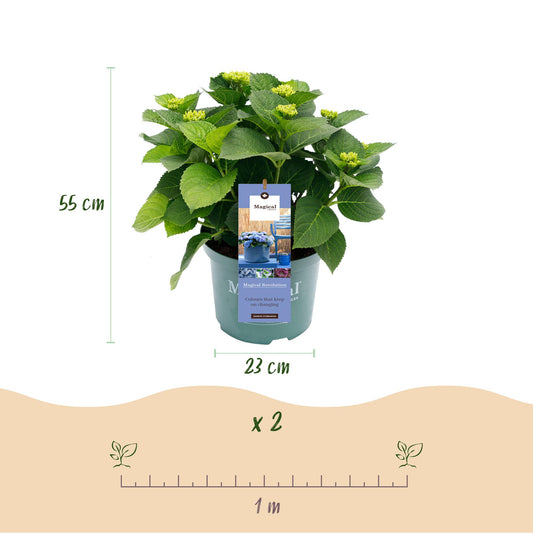
Magical Revolution Hydrangea (Hydrangea macrophylla), hardy flowering shrub, 23 cm pot, Height 55 cm
Regular price From 69,95 €Regular price69,95 €From 55,96 €Livraison offerte -

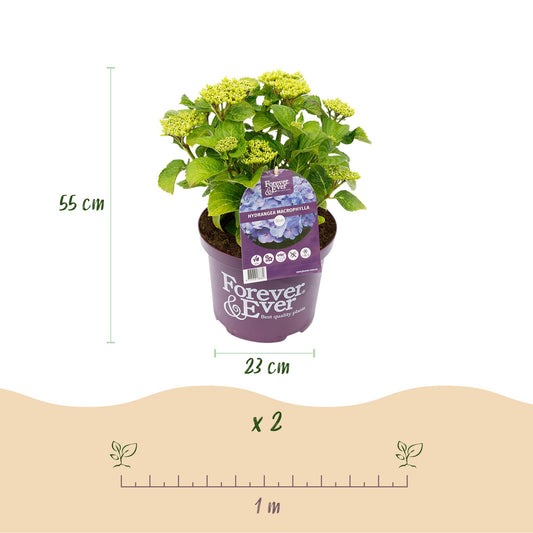
Forever Ever Hydrangea (Hydrangea macrophylla), hardy flowering shrub, 23 cm pot, Height 55 cm
Regular price From 69,95 €Regular price69,95 €From 55,96 €Livraison offerte -


Hydrangea 'Limelight' (Hydrangea paniculata) - garden hydrangea - 17 cm pot - Height 50 cm
Regular price From 44,95 €Regular price44,95 €From 35,96 €Livraison offerte -

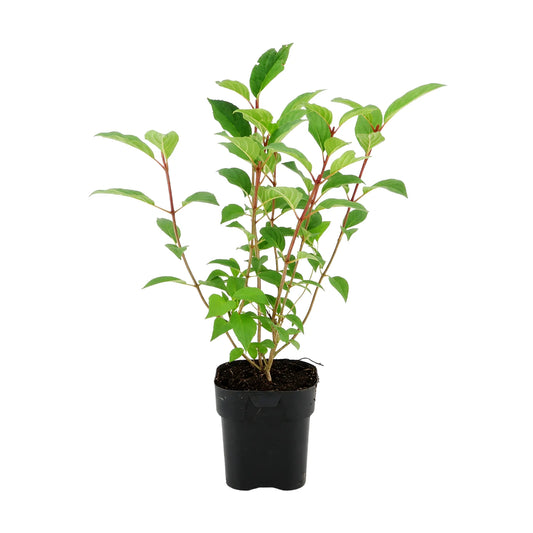
Hydrangea 'Vanilla Strawberry' (Hydrangea paniculata) - garden hydrangea - 17 cm pot - Height 50 cm
Regular price From 44,95 €Regular price44,95 €From 35,96 €Livraison offerte -

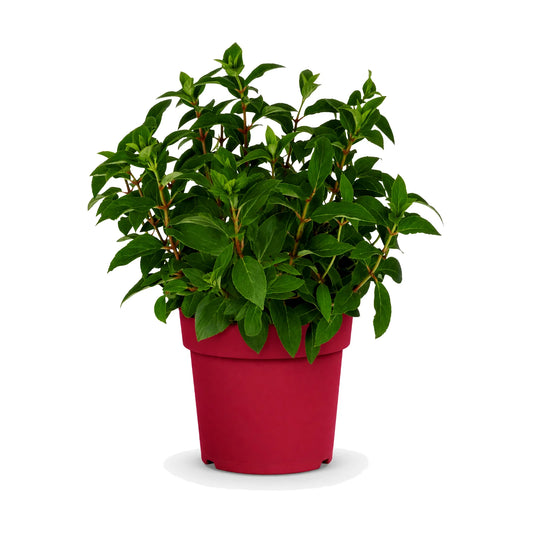
Groundbreaker Ruby Hydrangea (Hydrangea paniculata), hardy flowering shrub, 14 cm pot, Height 20–25 cm
Regular price From 44,95 €Regular price44,95 €From 35,96 €Livraison offerte -

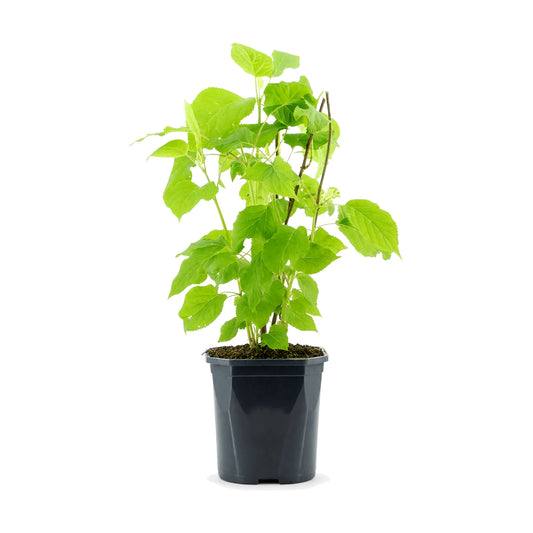
Hydrangea 'Annabelle' (Hydrangea arborescens) - garden hydrangea - 17 cm pot - Height 50 cm
Regular price From 39,95 €Regular price39,95 €From 31,96 €Livraison offerte -

 Livraison offerte Sale
Climbing hydrangea (Hydrangea petiolaris) – flowering climber for shade
Regular price From 34,95 €Regular price39,95 €Sale price From 34,95 €34,95 €From 27,96 €Livraison offerte Sale


🧭 Which month to prune hydrangeas according to your region and garden
The pruning month for a hydrangea depends mainly on the local climate: the RHS thinks in terms of seasons, late winter or spring, not fixed dates. In practice, the guideline is the end of hard frosts and the swelling of the buds, earlier in mild climates, later in cold regions or at higher altitudes. The Chicago Botanic Garden, under a continental winter, severely prunes 'Annabelle' in early March.
When in doubt, wait for the buds to swell: you will then see which ones have survived the winter, as the UNH recommends for macrophylla. To place pruning among other garden tasks, see our garden tasks from March to May.
| Your situation | When and how to prune |
|---|---|
| Mild climate, Atlantic coast | Late winter for panicle and 'Annabelle'; macrophylla as soon as the buds swell and hard frost is no longer forecast |
| Cold region or high altitude | Wait until the end of frosts for macrophylla: the RHS reminds us that young buds are susceptible to late frosts |
| Late frost after pruning | Cut back damaged shoots just above the 1st pair of intact buds (RHS) |
| Newly planted young plant | Only remove dead wood; the University of Minnesota waits until 'Annabelle' has had two growing seasons before severely pruning it |
| Panicle hydrangea grown too large | Gradual rejuvenation over three years, one-third of the old stems, then half, then the rest (UNH) |
| Panicle hydrangea grown on a stem | Prune only the branches: never cut the trunk (Maryland) |
🌸 Faded hydrangea flowers: should they be cut, and when?
On a mophead hydrangea, leave the faded flowers throughout the winter and cut them in spring: the RHS explains that they protect the buds located just below from frost. The RHS (Royal Horticultural Society) hydrangea pruning guide recommends removing them in early spring, by cutting above the first pair of strong, healthy buds.
Lacecaps, on the other hand, should be tidied at the end of flowering to prevent them from going to seed and exhausting the plant, according to the RHS; the RHS reserves this early tidying of mophead hydrangeas for mild regions. On reblooming varieties, according to UMass Amherst, regularly removing faded flowers encourages new flowering.
This is not essential for the plant's health, the University of Maryland reminds us. On panicle and 'Annabelle' hydrangeas, the dried panicles remain decorative under the frost and are removed with the late winter pruning.
✂️ Pruning hydrangeas to the ground: when it's yes, when it's no
Pruning to the ground is suitable for 'Annabelle' hydrangea and, to a lesser extent, panicle hydrangea; it should be avoided every year on macrophylla, which would lose all its flowers.
According to the University of Minnesota Extension, a well-established 'Annabelle' can be severely pruned to the ground every spring: details of the technique are in the 'Annabelle' hydrangea pruning sheet.
Oak-leaved hydrangea is not severely pruned either: the RHS only recommends minimal pruning for it; serrata is lightly pruned, like macrophylla, and the University of Illinois Extension considers that it requires little pruning. For panicle hydrangea, the RHS recommends no more than 25 cm of structure, as it retains permanent branches.
On an overly old macrophylla, the RHS allows cutting completely at the base to rejuvenate it, but the new stems will not flower until the following year.
🍁 Cutting hydrangeas in autumn: the false good idea
Do not prune a mophead hydrangea in autumn: its flower buds for the following summer are already formed at the ends of the stems, and cutting them removes the flowers. According to the University of Minnesota, macrophylla flower buds form at the end of summer, hence its advice to prune it just after flowering, before August, if summer pruning is necessary.
The University of Maryland also advises against any pruning as winter dormancy approaches when you want to keep the flowers. Only panicle hydrangea can withstand autumn pruning, which the University of Minnesota allows; late winter remains preferable, as the dried inflorescences decorate the garden. In autumn, stick to mulching and protecting plants from frost.
🔁 Reblooming hydrangea: a separate pruning
A reblooming hydrangea like Endless Summer needs very little pruning: it first flowers on last year's wood, then on new growth throughout the summer. According to Clemson University (HGIC), any necessary pruning should be done just after the first bloom.
The University of Minnesota notes that it will flower whether pruned or not, and the University of Maryland advises removing as little wood as possible: early pruning delays flowering, while mid-season pruning may shorten it. The best thing to do is remove faded flowers during the summer to encourage new blooms.
🗓️ The hydrangea pruning calendar, season by season
Hydrangea pruning is concentrated in late winter and spring, with a visit in summer for climbers and reblooming varieties, and nothing in autumn for mophead hydrangeas. Winter remains the season for mulching: the RHS recommends a layer of at least 5 cm from November to February.
Summer is the time for climbers: according to the RHS climbing hydrangea guide, they should be pruned just after flowering, as their flowers grow on last year's shoots, leaving the upper part intact where most of the flowers form.
Oakleaf hydrangea, which flowers from mid-spring to early summer according to NC State Extension, should also be pruned, if necessary, just after flowering. For other shrubs, see our spring pruning calendar.
📅 Seasonal maintenance calendar
| Season | Key action |
|---|---|
| 🌸 Spring | Late winter to early spring: paniculata and 'Annabelle' cut back; macrophylla and serrata lightly pruned after hard frosts (RHS) |
| ☀️ Summer | Climber pruned just after flowering (RHS); faded flowers removed from reblooming and lacecap hydrangeas |
| 🍂 Autumn | No pruning of mophead hydrangeas; dried flowers left in place, mulch prepared |
| ❄️ Winter | Mulch of at least 5 cm (RHS); put away pruning shears, except for broken wood |
🐛 Pruning mistakes that deprive a hydrangea of flowers
Most hydrangeas that no longer flower have been pruned at the wrong time or cut back too short; others have lost their buds to frost. UMass Amherst cites excessive shade, improper pruning, and frost on the buds as causes of lack of flowering.
| Mistake | Why it's a problem | The solution |
|---|---|---|
| Cutting back a macrophylla in autumn | Its buds for the following summer are already formed (Minnesota) | Light pruning in spring, back to the first pair of healthy buds |
| Pruning all stems of a macrophylla | Flowers grow on shoots from last year's wood (RHS) | Cut only faded flowers and 1 or 2 old stems |
| Cutting off dried flowers in November | They protect the buds below from frost (RHS) | Leave them until spring |
| Leaving a paniculata unpruned | Smaller flowers (RHS) | Prune back to 25 to 60 cm each late winter |
| Pruning during a hard frost | Buds damaged by late frosts (RHS) | Wait until the hard frosts have passed |
| Cutting back the climber all at once | Reduced flowering for two summers (RHS) | Spread severe pruning over three or four years |
-

Our flowering outdoor shrubs: buddleias, dogwoods, deutzias, hibiscus, mock oranges and more...
-

Rhododendrons and azaleas with abundant blooms for acidic soils and partially shaded...


🌿 Our hydrangeas by pruning type, and their fact sheets
Place your hydrangea in the right pruning family: each type has its own detailed fact sheet and varieties in our shop.
| Pruning type | Our varieties and the fact sheet to read |
|---|---|
| Hortensia macrophylla (Hydrangea macrophylla) | Light pruning in spring: Magical Revolution, Forever Ever or 'Blue' |
| Endless Summer reblooming varieties | Very little pruning, faded flowers removed in summer: 'Endless Summer The Original Blue', 'The Bride' or 'Endless' |
| paniculata hydrangea pruning | Hard pruning in late winter: 'Limelight', 'Vanille Fraise' or 'Wim's Red', and the compact Groundbreaker Ruby |
| Hortensia 'Annabelle' | Late winter cutback, even to the ground: our 17 cm pot 'Annabelle' |
| climbing hydrangea fact sheet | Pruning after flowering: our climbing hydrangea |
| Hydrangea: the complete guide | All species, planting and color, with our hydrangeas |
🪴 Hydrangea in a pot or in the ground: what changes for pruning
A potted hydrangea is pruned at the same time and in the same way as one in the ground: the calendar depends on the species, not the container. One nuance counts, however: as a potted plant is smaller, pruning remains more measured; for a macrophylla, remove only faded flowers and dead wood, once the frosts have passed.
The pot, the substrate, and the wintering are detailed in our guide to potted hydrangeas.
🐾 Pruning without risk: gloves, animals, and pruning waste
Wear gloves to prune a hydrangea and do not leave pruning waste within reach of animals. RHS fact sheets classify Hydrangea macrophylla, paniculata, and arborescens as skin allergens, harmful to dogs and cats if eaten.
The ASPCA (American Society for the Prevention of Cruelty to Animals) has no fact sheet for Hydrangea macrophylla; its Hydrangea fact sheet, which covers Hydrangea arborescens, indicates Toxic to Dogs, Toxic to Cats, Toxic to Horses, due to a cyanogenic glycoside, with vomiting, depression, and diarrhea as clinical signs, while cyanide poisoning remains rare.
For Hydrangea quercifolia, NC State Extension reports low toxicity. Compost the branches or take them to a waste collection center.
✅ Our tips for pruning your hydrangeas at the right time
Remember a simple rule: prune little and in spring hydrangeas that flower on last year's wood, hard back in late winter those that flower on this year's wood, and never mophead hydrangeas in autumn.
Find our varieties among our flowering shrubs, and for cool corners, our shade and cool plants or our ericaceous plants.
Every spring I see mophead hydrangeas pruned like 'Annabelle', then desperately green all summer: that is really the mistake to avoid. My advice: keep the dried flowers until spring, they look superb under the frost, then cut just above the two large green buds. For the paniculata, on the contrary, dare the hard cut: it will yield a hundredfold in panicles.

Laura Bruneau
Jardinière et autrice