Hydrangeas: The Complete Guide (Types, Planting, Pruning, Color)

The hydrangea (Hydrangea) is one of the most popular flowering shrubs in French gardens: hardy and generous, it blooms from June through autumn, often in partial shade. But under this single name are actually four different plants, which are planted and pruned in different ways, leading to most disappointments.
This comprehensive guide gives you the essentials for each type: which one to choose for your garden, where and when to plant it, how to obtain blue or pink flowers, and above all, how to prune it without sacrificing the blooms. Concrete and verified information (RHS, Kew).
🌸 The 4 main types of hydrangea
Under the name hydrangea are four main types of Hydrangea, all hardy and easy to grow, but which are planted and pruned in different ways. The genus counts more than 70 species according to Kew POWO (Plants of the World Online), but four dominate our gardens.
The garden hydrangea (Hydrangea macrophylla) is the best known, with its large blue, pink, red, or white balls. It grows 1 to 2 m tall and changes color depending on the soil pH. Discover everything in our guide dedicated to hortensia macrophylla.
The panicle hydrangea (Hydrangea paniculata) forms large cream-white conical panicles that turn pink, and reaches 2 to 3 m. It is the most resistant to sun and cold. See our guide to hortensia paniculata.
The 'Annabelle' arborescent hydrangea (Hydrangea arborescens) offers enormous white pom-poms from June through autumn. See the guide to hortensia Annabelle.
The climbing hydrangea (Hydrangea petiolaris) clings to walls on its own and climbs up to 10 to 12 m (up to 15 m on large old supports): ideal for a north wall. See the guide to climbing hydrangea. To decide, consult our comparison of which hydrangea to choose.
🌿 Where and when to plant your hydrangea
Plant your hydrangea preferably in autumn (September to November), when the soil is still warm: the roots settle before winter and the shrub starts more vigorously in spring. Planting is still possible in spring when there is no frost, provided you water regularly during the first summer.
Choose cool, humus-rich, and well-drained soil. The hydrangea hates both drought and stagnant water. Enrich the planting hole with compost or potting soil, and for blue-flowered macrophylla, prefer ericaceous (acid) soil. Maintain a distance of 90 cm to 2.40 m between two plants depending on the vigor of the type, as recommended by the RHS (Royal Horticultural Society). Water copiously at planting, then mulch the base to keep it cool.
☀️ Exposure: ideal partial shade
The ideal exposure for the hydrangea is partial shade, sheltered from the burning afternoon sun. This is the answer to the most asked question: the best place is a bright but protected location, for example to the east or north of a wall, or under the filtered light of large trees.
The RHS specifies that a sunnier exposure is still possible if the soil never dries out in summer. Paniculata and arborescens 'Annabelle' tolerate full sun better than macrophylla, whose flowers and foliage quickly suffer from excess heat and drought. In a pot on a south-facing balcony, therefore, monitor the substrate during a heatwave and water as soon as it is dry to the touch a few centimeters down.
columns: 4
columns_mobile: 2
-

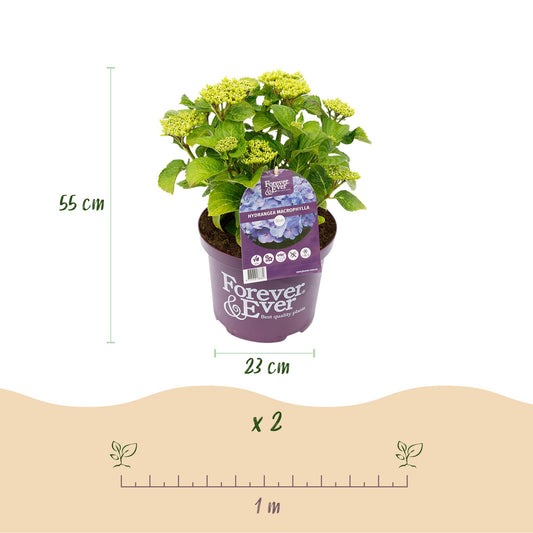
Forever Ever Hydrangea (Hydrangea macrophylla), hardy flowering shrub, 23 cm pot, Height 55 cm
Regular price From 69,95 €Regular price69,95 €From 55,96 €Livraison offerte -

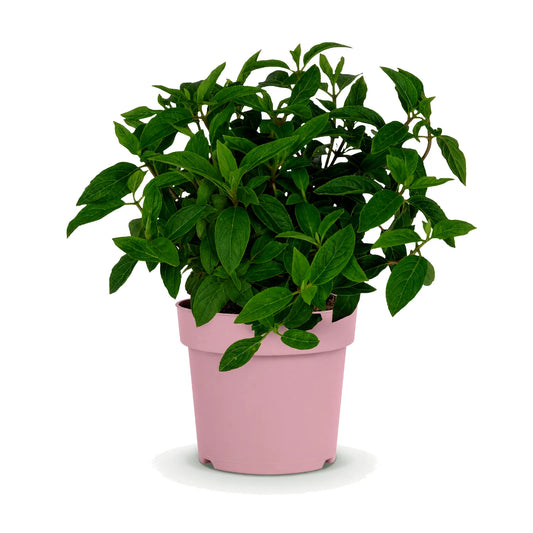
Hydrangea paniculata ‘Groundbreaker’ Blush, hardy flowering shrub, 14 cm pot, Height 20–25 cm
Regular price From 44,95 €Regular price44,95 €From 35,96 €Livraison offerte -

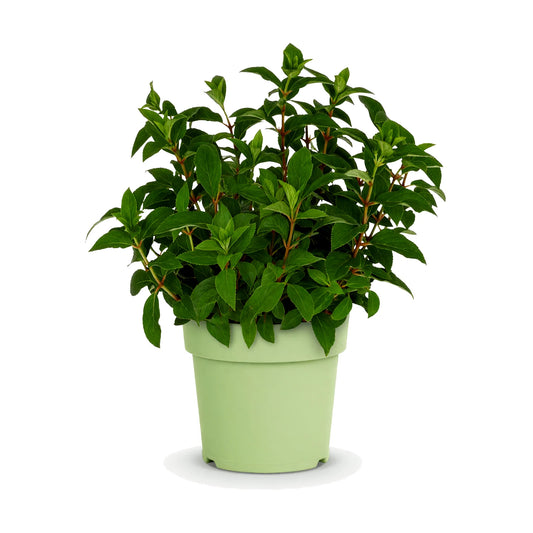
Groundbreaker Greeny Hydrangea (Hydrangea paniculata), hardy flowering shrub, 14 cm pot, Height 20–25 cm
Regular price From 44,95 €Regular price44,95 €From 35,96 €Livraison offerte -

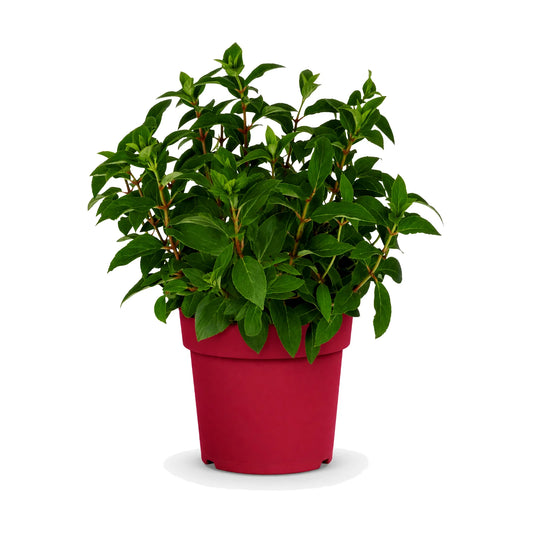
Groundbreaker Ruby Hydrangea (Hydrangea paniculata), hardy flowering shrub, 14 cm pot, Height 20–25 cm
Regular price From 44,95 €Regular price44,95 €From 35,96 €Livraison offerte -

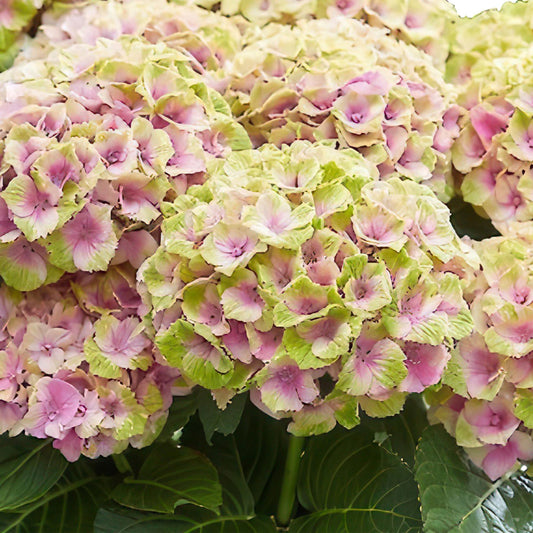
Magical Jewel Hydrangea (Hydrangea macrophylla), hardy flowering shrub, 23 cm pot, Height 55 cm
Regular price From 69,95 €Regular price69,95 €From 55,96 €Livraison offerte -

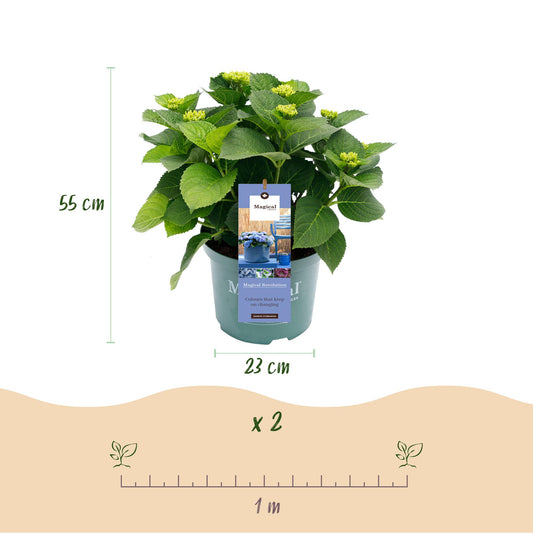
Magical Revolution Hydrangea (Hydrangea macrophylla), hardy flowering shrub, 23 cm pot, Height 55 cm
Regular price From 69,95 €Regular price69,95 €From 55,96 €Livraison offerte


🎨 Blue or pink: the color according to the soil pH
The color of Hydrangea macrophylla flowers depends directly on the acidity of the soil: blue in acidic soil (pH below 5.5), pink to red in alkaline soil, and purple shades in neutral soil. This phenomenon is driven by the availability of aluminum, which the plant only absorbs in acidic soil, as explained by the RHS.
To make a hydrangea turn blue, grow it in ericaceous soil or apply a "blueing" product based on aluminum sulfate. To make it pink, add lime lightly or plant it in alkaline soil. Warning: only blue or pink-flowered macrophylla and serrata change color. White, green, and red varieties, as well as paniculata and arborescens, keep their color regardless of the pH.
✂️ Pruning according to type (the crucial point)
Hydrangea pruning depends entirely on the type, because not all bloom on the same wood: this is the most common mistake in the garden. Macrophylla blooms on last year's wood, while paniculata and arborescens bloom on this year's wood.
Macrophylla (balls and lacecap): light pruning in late winter or early spring. Remove only the faded flowers down to the first beautiful pair of buds, and remove one or two old stems at the base. Never prune short in autumn, or you will remove the future flowers.
Paniculata and arborescens 'Annabelle': hard pruning in late winter (February-March). Cut back last year's stems to a framework 25 to 60 cm high according to the RHS: the shorter you prune, the larger the flowers will be. This is the secret to getting lots of flowers.
Climbing (petiolaris): light pruning just after flowering, shortening the stems that have grown too long.
For the exact month, pruning to the ground, and faded flowers, species by species, see our guide when to prune hydrangeas.
-

Our flowering outdoor shrubs: buddleias, dogwoods, deutzias, hibiscus, mock oranges and more...


💧 Care: watering, mulching, and overwintering
Caring for an outdoor hydrangea comes down to three steps: watering in summer, mulching to keep it cool, and protecting the young buds from late frosts. Its name Hydrangea literally means "water vase", from the Greek hydor (water) and angeion (container), in reference to the cup shape of its seed capsules. It is also a water-loving shrub.
In the first year, the RHS advises watering according to needs, especially from spring to summer when rain is lacking: water copiously as soon as the soil is dry a few centimeters down, then during hot and dry spells in the following years. An organic mulch of 5 to 7 cm (leaves, bark, compost) limits evaporation and nourishes the soil. Add compost in spring. Regarding hardiness, according to the RHS, macrophylla and paniculata are rated H5 (-15 to -10 °C), and arborescens 'Annabelle' H6 (-20 to -15 °C); late frosts especially threaten the buds of the macrophylla, which can be protected with a cover in case of an alert.
🐛 Common problems and solutions
The hydrangea is robust, but a few issues often recur, almost always related to water, sun, or soil. Here is how to read them.
Leaves wilting during the day: sign of drought or too direct sun. Water in the evening and mulch; move to partial shade if necessary. Yellow leaves (chlorosis): often too alkaline soil; add fertilizer for ericaceous plants. Lack of flowering: most often pruning at the wrong time on a macrophylla, or buds scorched by late frost. Flowers that stay green: natural end-of-season phenomenon or excess shade. Some wonder: "why should you no longer plant hydrangeas?" This idea circulates because of its water consumption in dry regions. In cool soil and partial shade, the hydrangea remains, on the contrary, a durable and generous shrub, to be reserved for grounds that do not dry out completely in summer.
🛒 Which hydrangea to choose for your garden
The right hydrangea depends on your exposure and your soil. In summary: macrophylla for cool partial shade and adjustable colors, paniculata for sun and cold, 'Annabelle' for a generous white bed, climbing to dress a north wall.
For a classic bed or border in partial shade, choose a macrophylla. For a sunny garden or a cold region, opt for a paniculata like 'Limelight' or 'Vanilla Fraise'. For a spectacular white curtain, 'Annabelle' is unbeatable. And to green a shaded facade, nothing beats the climbing hydrangea. Find all our varieties in the hydrangea collection, or compare them via our guide which hydrangea to choose.
Hortensia macrophylla · Hortensia paniculata · Hortensia Annabelle · Climbing hydrangea · Which hydrangea to choose?
Identify your hydrangea before taking out the secateurs: that is where most disappointments arise. Macrophylla blooms on last year's wood; pruned short in autumn, it loses its future flowers. My advice: on it, just remove the faded flowers in late winter down to the first beautiful pair of buds. Paniculata and arborescens Annabelle, on the other hand, accept hard pruning in late winter, and the shorter you prune, the larger their flowers will be.

Laura Bruneau
Jardinière et autrice