Houseplants for dark rooms: choosing them according to the light

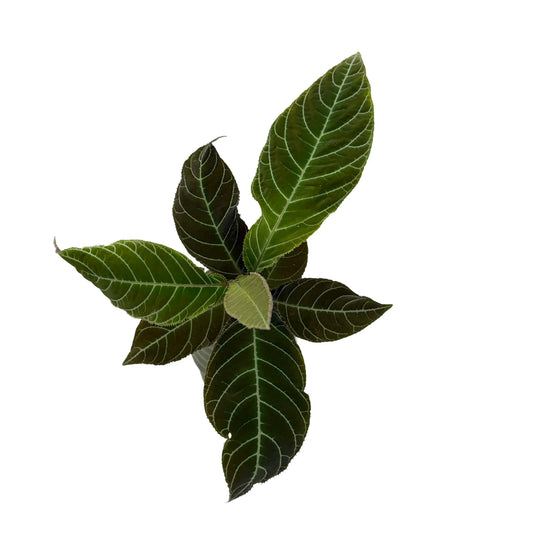
The best houseplants for a dark room are the Zamioculcas (Zamioculcas zamiifolia), Aspidistra (Aspidistra elatior), Sansevieria (Dracaena trifasciata), Aglaonema, Kentia and Chamaedorea, all cited as low-light plants by the University of Minnesota.
As soon as a little brightness arrives, Pothos, climbing Philodendron, Spathiphyllum and ferns take over. This guide helps you measure the actual light in your room, choose the right plant for each shady corner, and care for it during winter, when days get shorter. Find all our low-light houseplants selected for these conditions.
🌟 Why some houseplants tolerate shade
Most shade-tolerant houseplants come from tropical understories, where they grow beneath the canopy in filtered light. The Zamioculcas is native to tropical Africa and stores water in a thick rhizome, according to NC State. Aspidistra can tolerate deep shade, according to the RHS (Royal Horticultural Society) selection of low-light tolerant houseplants.
These plants make do with little light, but they grow slowly and use little water. It is this slowness that must be respected: in the shade, too much water kills more plants than a lack of light.
| Asset | What it means in a dark room |
|---|---|
| Low-light tolerance | Zamioculcas, Aspidistra, Sansevieria, Aglaonema, Kentia and Chamaedorea are among the University of Minnesota's low-light plants |
| Water reserves | Zamioculcas rhizome, thick Sansevieria leaves: they forgive a missed watering |
| Slow growth | A plant that grows little keeps its shape for a long time, without pruning |
| Long-lasting decor | Greenery all year round in a hallway, entrance or north-facing living room |
📊 Which houseplant for which light level
To choose a low-light houseplant, start with the actual light level of the location, not the impression given by the room.
According to the University of Minnesota (Extension), low light corresponds to 50 to 250 foot-candles (about 500 to 2,700 lux, one foot-candle being about 10.8 lux), medium light to 250 to 1,000 foot-candles, and a north window is suitable for low-light plants.
The table ranks our plants from most tolerant to most demanding. The animals column uses the words of the ASPCA (American Society for the Prevention of Cruelty to Animals) for the exact species, when it exists.
| Plant | Minimum light | Watering in the shade | Dogs and cats | The little extra |
|---|---|---|---|---|
| Zamioculcas (Zamioculcas zamiifolia) | Very low; grows even under fluorescent lighting (NC State Extension) | When the substrate is dry deep down; it prefers to stay dry (Iowa State University) | Absent from the ASPCA database; moderately toxic to cats and dogs according to NC State | Rhizome that stores water; direct sun not recommended |
| Aspidistra (Aspidistra elatior) | Deep shade tolerated (RHS) | When the substrate is dry to the touch | Non-toxic to dogs, cats and horses (ASPCA (Cast Iron Plant)) | The most resistant for a dark hallway |
| Sansevieria (Dracaena trifasciata, formerly Sansevieria trifasciata) | Low (University of Minnesota) | Rarely, dry substrate between waterings | Toxic to dogs and cats, saponins (ASPCA (Snake Plant)) | Vertical silhouette, takes up little floor space |
| Aglaonema (Aglaonema) | Low to medium, indirect (RHS) | When the top of the substrate is dry | Aglaonema modestum toxic to dogs, cats and horses (ASPCA (Chinese Evergreen)); unlisted hybrids | Colored varieties need a little more brightness |
| Kentia (Howea forsteriana) | Low (University of Minnesota) | Moderate, never a full saucer | Non-toxic to dogs and cats (ASPCA (Kentia Palm)) | Large elegant palm for a dimly lit living room |
| Chamaedorea (Chamaedorea elegans) | Low (University of Minnesota) | Fresh substrate, never waterlogged | Non-toxic to dogs and cats (ASPCA (Parlor Palm)) | Small desk or shelf palm |
| Pothos (Epipremnum aureum) | Low to medium; loses its variegation in the shade | When the substrate is dry to 2 to 3 cm | Toxic to dogs and cats (ASPCA (Golden Pothos)) | Trailing vine to dress up a shelf |
| Philodendron scandens (Philodendron hederaceum) | Low to medium (University of Minnesota for the genus) | When the substrate is dry to 2 to 3 cm | Toxic to dogs, cats and horses (ASPCA (Heartleaf Philodendron)) | Heart-shaped leaves, climbs on a stake or trails |
| Spathiphyllum (Spathiphyllum) | Low for foliage; flowers better with more light | Slightly fresh substrate; wilts when thirsty | Toxic to dogs and cats (ASPCA (Peace Lily)) | The most floriferous on the list in bright shade |
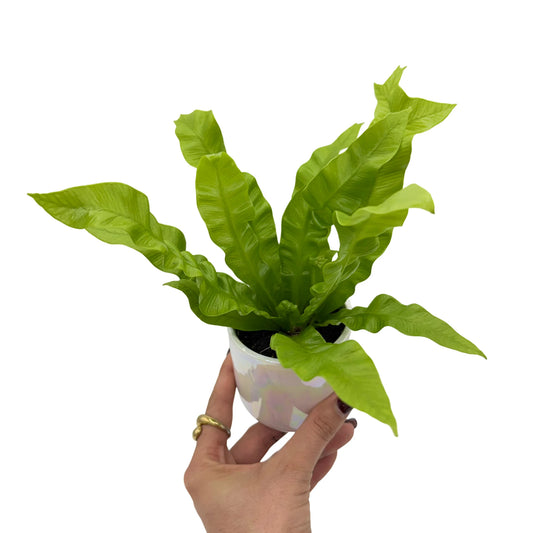
| Boston Fern and Asplenium | Medium, near a north window | Substrate always fresh | Boston Fern non-toxic to dogs and cats (ASPCA (Boston Fern)) | Love the humidity of a bright bathroom |
📋 Quick fact sheet
Common guidelines for low-light houseplants, according to the University of Minnesota, Colorado State University and the RHS.
| Guideline | The rule |
|---|---|
| Low light | 50 to 250 foot-candles, or about 500 to 2,700 lux (University of Minnesota) |
| Critical threshold | Few plants tolerate less than 50 foot-candles, about 540 lux (Colorado State University) |
| North window | Suitable for low-light plants (University of Minnesota) |
| Distance | Beyond 2.4 m from any light source, the light is low (University of Illinois) |
| Watering | By touch, when the substrate is dry to 2 to 3 cm, or deep down for Zamioculcas and Sansevieria |
| Fertilizer | Once a month at most in winter (RHS), reduced dose all year in the shade |
| Temperature | Away from radiators (RHS) and cold drafts |
| Grow light | 12 to 14 hours a day for foliage plants (University of Minnesota) |
| Rotation | Rotate the pot regularly to prevent leaning growth (University of Illinois) |
How to set up a plant in a dark room in 6 steps
To set up a plant in a dark room, first measure the light, choose a species suited to this level, then place it in the brightest spot in the room before moving it away if it can tolerate it.
According to the University of Illinois (Extension), low light of about 75 foot-candles is found in front of a north window or 2.4 m or more from any other light source. The north exposure guide details the case of north-facing rooms.
| Step | The right action |
|---|---|
| 1. Measure the light | Use a lux meter or measuring app at noon, in clear weather then in overcast weather, at the exact location of the pot |
| 2. Identify the orientation | North: suitable for low-light plants (University of Minnesota); east or west: medium light; south: strong |
| 3. Choose the plant | Less than about 2,700 lux: Zamioculcas, Aspidistra, Sansevieria, Kentia; a little more: Pothos, Philodendron, Spathiphyllum |
| 4. Provide a drainage hole | A well-draining substrate and a pot with a drainage hole prevent standing water, which is more dangerous in the shade |
| 5. Acclimate | Place the plant a few weeks near the window, then move it closer to its final corner |
| 6. Observe | Stretched stems, small leaves or old leaves that turn yellow: the plant lacks light (University of Illinois) |
columns: 4
columns_mobile: 2
-

 Livraison offerte
Zamioculcas - ZZ Plant
Regular price From 54,95 €Regular price54,95 €From 43,96 €Livraison offerte -

 Livraison offerte
Aspidistra elatior - Cast iron plant - 17cm pot - Height 70cm
Regular price 79,95 €Regular price79,95 €63,96 €Livraison offerte -

 Livraison offerte
Sansevieria Laurentii
Regular price From 54,95 €Regular price54,95 €From 43,96 €Livraison offerte -
Aglaonema Pictum Tricolor
Regular price From 9,95 €Regular price9,95 €From 7,96 € -

 Livraison offerte
Howea Forsteriana - Kentia Palm - 19cm Pot
Regular price From 69,95 €Regular price69,95 €From 55,96 €Livraison offerte -

 Livraison offerte
Chamaedorea elegans - Pet-friendly - 12 cm pot - Height 15 cm
Regular price From 39,95 €Regular price39,95 €From 31,96 €Livraison offerte -

 Livraison offerte
Zamioculcas Zamiifolia - ZZ Plant - 21cm Pot - Height 80cm
Regular price From 84,95 €Regular price84,95 €From 67,96 €Livraison offerte -

 Livraison offerte
Sansevieria Futura Superba - Mother-in-law's tongue - 12cm pot
Regular price From 44,95 €Regular price44,95 €From 35,96 €Livraison offerte


🧭 Which plant for which dark room
Each dark room has its constraint: a hallway is often cold and without a window, a bathroom is humid, a north-facing living room especially lacks light in winter. The table associates each room with the plant that suits it best.
For a windowless bathroom, our guide to plants for a windowless bathroom goes further, and our collection of bathroom plants brings together plants that love humidity.
| Room | The plant and the right approach |
|---|---|
| Dark hallway or entrance | Aspidistra or Zamioculcas, away from the front door and its cold drafts |
| North-facing living room | Kentia or Aglaonema near the window, Pothos on a nearby shelf |
| Dimly lit bedroom | Sansevieria or Chamaedorea, which require little water and care |
| Bathroom with a small window | Boston fern, Asplenium or Spathiphyllum, which love humidity |
| Windowless bathroom | A tolerant plant under a programmed grow light, or a rotation with a bright room |
| Fluorescent-lit office | Zamioculcas, which grows even under fluorescent lighting according to NC State |
| Dark kitchen | Hanging Pothos, away from the stove and oven |
❄️ Dark room in winter: short days and weaker light
In winter, a dark room becomes even darker: move your plants closer to the window, water less, and almost stop fertilizing. According to Colorado State University (PlantTalk), within 60 cm of a north-facing window, light remains weak from October to March, while it is moderate from April to September.
The same spot therefore loses a category of light in winter. According to the RHS houseplant guide, houseplants benefit from full sun in winter when daylight is weak, and fertilizing should be limited to once a month, as light is no longer sufficient for healthy growth.
The RHS adds that excess heat with little light forces the plant to produce weak shoots. Never leave a pot behind a closed curtain at night, as the space becomes very cold, and keep it away from radiators that dry out the leaf edges.
Our guide to houseplants in winter completes these tips for the whole house.
💧 Watering and substrate: the real risk in the shade
In the shade, a plant drinks little: water only when the substrate is dry to a depth of 2 to 3 cm, and even more deeply for the Zamioculcas and Sansevieria. Iowa State University states that Zamioculcas prefers to stay dry and that the potting mix must dry out thoroughly before the next watering.
Always empty the saucer, as standing water promotes root rot.
An airy substrate helps roots breathe: we add Pon mineral substrate or perlite to the mix, and our tropical plants grow in our Monstera potting mix, enriched with mycorrhizae and Bacillus.
Keep a shade plant in a pot just slightly larger than its root ball: too much potting mix stays damp for too long.
☀️ Grow light: the solution for a room without light
No plant survives long-term in a room without a window: it therefore needs a grow light. The University of Minnesota recommends 12 to 14 hours of light per day for foliage plants, with a lamp placed 30 to 60 cm from the foliage; your lamp's instructions specify the correct distance for its model.
Colorado State University notes that LED grow lights consume up to 50% less energy than older discharge lamps and barely generate heat. A timer maintains a regular cycle without you having to think about it. Our two-bulb grow light with a full spectrum and adjustable gooseneck stand is placed on a piece of furniture.
A lamp also helps more demanding plants in winter: an Alocasia that loses its leaves as days shorten, or a plant you want to make an Anthurium bloom again.
Our guide to choosing a grow light details spectrum, power, and duration.
🐾 Shade plants and pets: what the ASPCA says
If you have a cat or dog, choose from the shade plants that the ASPCA classifies as non-toxic: Aspidistra, Kentia, Chamaedorea, and Boston fern. Conversely, the ASPCA classifies Pothos as toxic to dogs and cats, causing mouth irritation, excessive salivation, vomiting, and difficulty swallowing due to insoluble calcium oxalates.
Sansevieria is toxic to dogs and cats (nausea, vomiting, diarrhea), and Aglaonema modestum to dogs, cats, and horses. Philodendron hederaceum is toxic to dogs, cats, and horses, and Spathiphyllum to dogs and cats. Zamioculcas has no entry in the ASPCA database: NC State rates it as moderately toxic to cats and dogs.
Keep these plants out of reach, elevated, or in a room closed off to pets.
🗓️ The seasonal calendar of a shade plant
A shade plant grows slowly from October to March and resumes growth in spring: adjust the water, fertilizer, and pot placement to this pace. Light is most lacking in winter, and it is in spring that you repot if roots grow out of the pot.
Take advantage of spring cleaning to clean the leaves: dust forms a veil that blocks some of the light.
📅 Seasonal care calendar
| Season | Key action |
|---|---|
| 🌸 Spring | Resumption of growth: repot if necessary in a pot just slightly larger, half-strength fertilizer, return plants to their spot |
| ☀️ Summer | Water by feel, away from direct sun that burns Zamioculcas foliage (NC State); half-strength fertilizer |
| 🍂 Autumn | Reduce watering as soon as days shorten, clean leaves, check for pests |
| ❄️ Winter | Move plants closer to windows, fertilize at most once a month (RHS), use a supplemental lamp if stems stretch |
🐛 Mistakes to avoid with a plant in a dark room
The most common mistakes with a plant in a dark room come from watering too generously or choosing a species that is too demanding for the room's light. Here is how to avoid them.
| Mistake | Why it's a problem | The solution |
|---|---|---|
| Watering as if in a bright room | In the shade, the substrate dries slowly and roots rot | Water by feel, when the substrate is dry to a depth of 2 to 3 cm |
| Choosing a full-light plant | Ficus or succulents become leggy away from a window | Choose a low-light species, see the chart |
| Believing a plant can live without light | Photosynthesis requires light; few plants tolerate less than 50 foot-candles (Colorado State University) | Install a grow light or rotate the plants |
| Keeping a variegated plant in the dark | Pothos and colored plants turn green and lose their variegation | Move them closer to bright indirect light |
| Leaving dust on the leaves | It forms a veil that slows photosynthesis | Wipe leaves with a damp cloth |
| Leaving the pot against a radiator | Leaf edges turn brown (RHS) | Move the pot away from heat sources |


🌿 Our selection of plants for dark rooms
These plants from our catalog tolerate low light; each has its own complete care sheet.
| Our selection | Why choose it |
|---|---|
| Zamioculcas care sheet | The easiest, even under office lighting: our Zamioculcas |
| Aspidistra (cast iron plant) | The most resistant for a hallway, non-toxic according to the ASPCA: our Aspidistra elatior |
| Sansevieria | Vertical and water-efficient: our Sansevieria zeylanica or the 'Moonshine' |
| Aglaonema | Variegated foliage for bright shade: Aglaonema 'Stripes' or Aglaonema 'B.J. Freeman', from our Aglaonema collection |
| Kentia and Chamaedorea | Two palms that are non-toxic according to the ASPCA: our Kentia in a 19 cm pot and our Chamaedorea elegans |
| Pothos and Philodendron scandens | Vines to dress a shelf: our Golden Pothos on a stake and our Philodendron hederaceum on a stake, to guide on our stakes and supports |
| Spathiphyllum | White flowers in bright shade: our Spathiphyllum |
| Boston fern and Asplenium | For a bright bathroom: our Nephrolepis 'Green Lady' and our Asplenium 'Crispy Wave' |
| Grow light | For a room without a window: our two-bulb grow light |
🔑 Colored and trailing plants: how much shade is too much
Colored and variegated plants tolerate shade less than green plants: keep them in the brightest part of the room. Deprived of light, many produce greener leaves and lose their patterns; this is the case with variegated Pothos.
Our colorful plants and our Monstera require bright indirect light, near an east or west-facing window. To decorate a tall shelf, choose the green Pothos or the Philodendron hederaceum, which we feature among our indoor trailing plants.
If you dream of a urban jungle atmosphere, reserve the most light-hungry tropical plants for the areas near the windows and keep the back of the room for the plants in this guide.
Finally, a plant weakened by a lack of light is more likely to attract pests: inspect the underside of the leaves and act quickly in the event of thrips or scale insects.
✅ Our tips for success with plants in a dark room
To succeed with a plant in a dark room, measure the light, choose a low-light species such as the Zamioculcas, Aspidistra, or Kentia, water by touch, and move it closer to the window in winter. Without a window, add a grow light.
Discover our entire collection of low-light plants, and if you are unsure about a specific room, write to us.
In a really dark corner, I always start with an Aspidistra or a Zamioculcas: they are the two most forgiving plants. I also recommend measuring the light before buying, because the eye adapts and always overestimates the brightness of a room. And I think that a low-light plant is more often lost due to overwatering than a lack of light.

Laura Bruneau
Jardinière et autrice