Trailing and Hanging Indoor Plants: Which Ones to Choose?

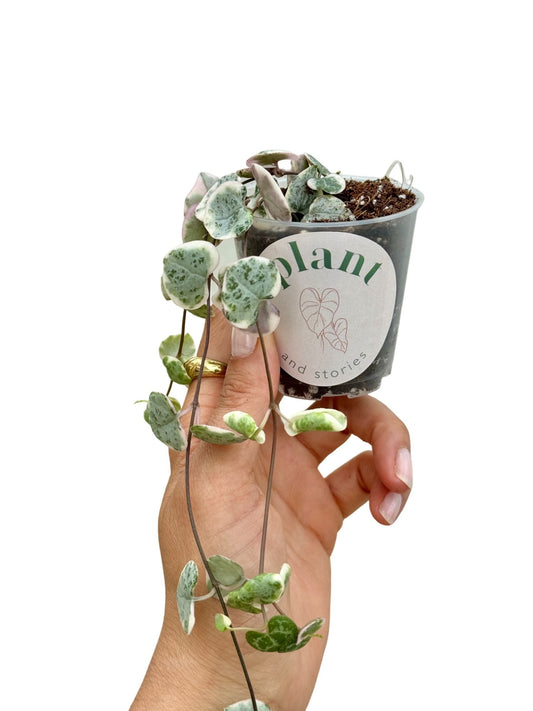
The best indoor trailing plants are pothos (Epipremnum aureum) for beginners, Hoya for its fragrant flowers, string of hearts (Ceropegia woodii) for a delicate cascade, and Chlorophytum comosum if you have a cat.
All these trailing plants have flexible stems that drape from a shelf or hanging planter, but they don't all need the same light, grow at the same rate, or have the same toxicity. This guide helps you choose based on your room and how you plan to use the plant, compares twelve plants in one table, and links to each plant's care guide.
🌟 Why choose a trailing plant
A trailing plant adds greenery at height without taking up floor space: it turns a shelf, the top of a bookcase, or a ceiling hook into a little green corner.
Several species are also very tolerant: North Carolina State University Extension (NC State Extension) says pothos prefers bright, indirect light but can survive for a long time in low light.
According to the RHS (Royal Horticultural Society) Epipremnum growing guide, Epipremnum does not need high humidity, a real advantage in a heated apartment. These plants are also very easy to propagate: the RHS notes that pothos stem cuttings root in a glass of water, and stems layered in the potting mix will root too.
| Benefit | What it means |
|---|---|
| Saves space | The greenery grows upward, freeing up floor and counter space |
| Cascading effect | Stems range from several dozen centimeters to over a meter, depending on the species |
| Wide range of light needs | From tolerant pothos to Hoya, which needs plenty of light to flower |
| Easy to propagate | A pruned stem can become a new plant to give away or replant in the pot |
📊 Indoor trailing plant comparison
To compare indoor trailing plants, four criteria are enough: light, stem length, difficulty, and toxicity to pets. The table brings together information from the RHS, NC State Extension, and the ASPCA; difficulty reflects our own garden-center assessment.
The lengths shown come from the sources cited in each row; in a pot, they depend heavily on light and pruning. String of pearls is included for comparison because it is often confused with string of hearts.
| Plant | Light | Stem length (source) | Difficulty | Cats and dogs | Ideal use |
|---|---|---|---|---|---|
| Pothos (Epipremnum aureum) | Bright, indirect; tolerates low light for a long time (NC State) | About 1.8 to 2.4 m indoors (6 to 8 ft), up to about 12 m outdoors (NC State) | Very easy | Toxic (ASPCA) | Shelf, hanging planter, medium-sized room |
| Scindapsus pictus | Bright, indirect (NC State) | About 45 to 90 cm indoors (NC State) | Easy | Toxic (NC State) | Shelf, bookcase |
| Philodendron hederaceum (Philodendron Brasil, Philodendron scandens) | Bright, indirect; tolerates medium light | Long, flexible stems that can be pruned | Very easy | Toxic (ASPCA) | Shelf, hanging planter |
| Hoya carnosa | Bright, indirect year-round (NC State) | Twining stems that lengthen over the years | Easy, but flowers take longer to appear | Non-toxic (ASPCA) | Bright hanging planter, window |
| Hoya linearis | Bright, indirect | Fine, trailing stems (see its care guide) | Moderate | Not verified: only Hoya carnosa is listed by the ASPCA | High hanging planter, cascade |
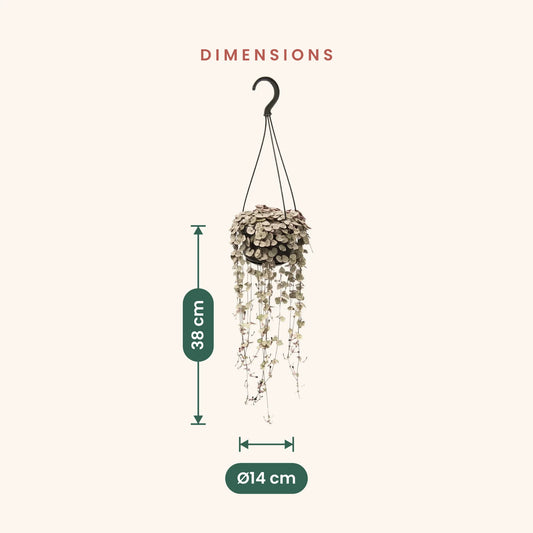
| String of hearts (Ceropegia woodii) | Partial shade, east- or west-facing exposure (RHS) | 0.5 to 1 m spread (RHS) | Easy with light watering | No ASPCA listing | Hanging planter, wall, high shelf |
| Tradescantia zebrina | Bright, filtered light (RHS) | 10 to 50 cm spread (RHS) | Very easy, needs pruning | ASPCA listing for T. fluminensis: toxic (ASPCA) | Bright shelf, hanging planter |
| Chlorophytum comosum | Medium light; tolerates deep shade, no direct sun (NC State) | Runners bearing plantlets; 30 to 60 cm wide (NC State) | Very easy | Non-toxic (ASPCA) | Hanging planter, home with pets |
| Peperomia prostrata | Bright, indirect; tolerates low light (NC State) | Stems about 30 cm long (NC State) | Moderate (sensitive to overwatering) | Non-toxic (NC State) | Small plant, shelf, bright bathroom |
| Rhipsalis | Bright, indirect | Cascading stems (see its care guide) | Easy | Rhipsalis cassutha is non-toxic (ASPCA) | Hanging planter, home with pets |
| Boston fern (Nephrolepis) | Bright, indirect; humid air | Arching fronds (see its care guide) | Moderate (sensitive to drought) | Non-toxic (ASPCA) | Bright bathroom, hanging planter |
| String of pearls (Curio rowleyanus, formerly Senecio) | Bright, indirect indoors (NC State) | About 30 to 60 cm (NC State) | Moderate (sensitive to overwatering) | Toxic (NC State) | Bright window, out of reach |
📋 Quick reference
The common care requirements for indoor trailing plants, based on the RHS, NC State Extension, and the ASPCA.
| Factor | The rule |
|---|---|
| Light | Bright, indirect light for most; pothos and Chlorophytum tolerate less, while Hoya and string of pearls need more |
| Direct sun | Avoid placing behind glass: it burns pothos leaves (RHS), and Chlorophytum cannot tolerate it (NC State) |
| Temperature | 18 to 30°C for Epipremnum (RHS); about 7°C or warmer for Chlorophytum (NC State) |
| Watering | Water pothos when the potting mix is nearly dry (RHS); water string of hearts more sparingly |
| Water | Rainwater or filtered water is recommended (RHS); chlorine and fluoride burn Chlorophytum leaf tips (NC State) |
| Humidity | Use a tray of wet pebbles (NC State) or group plants together; don't mist |
| Potting mix | Well-draining; cactus-type mix for string of hearts (RHS), light and airy mix for Hoya (NC State) |
| Pruning | Cut just above a leaf to encourage bushier growth (RHS); never cut Hoya flower spurs |
| Propagation | Root a stem cutting in water and then pot it up, or layer stems in the potting mix (RHS) |
| Toxicity | Pothos and philodendron are toxic; Chlorophytum and Hoya carnosa are non-toxic (ASPCA); Scindapsus is toxic (NC State) |
How to choose a trailing plant in 6 steps
To choose a trailing plant, start with where it will live: the actual light levels, hanging height, ease of watering, and whether you have pets. The same plant may thrive on a shelf near a window and struggle in a hanging planter at the back of the room. The six steps below will help you pick the right genus, then find its care guide.
| Step | What to do |
|---|---|
| 1. Assess the light at the location | Bright room near an east- or west-facing window: Hoya, string of hearts; medium light: pothos, philodendron, Chlorophytum |
| 2. Choose a spot | Shelf or bookcase: pothos, Scindapsus, Peperomia; hanging planter: Chlorophytum, Hoya, string of hearts; wall: fine, lightweight stems |
| 3. Plan for watering | A high hanging planter dries quickly and is hard to water: choose a plant that can wait, such as string of hearts or Hoya |
| 4. Consider your pets | Curious cat: Chlorophytum, Hoya carnosa, Boston fern, or Rhipsalis cassutha; otherwise, keep toxic plants out of reach |
| 5. Decide how long you want it to grow | Small, 30 cm cascade: Peperomia prostrata; up to 1 m: string of hearts; even longer: pothos |
| 6. Get the space ready | Pot with drainage holes, saucer or cachepot to empty, sturdy hook, tray of wet pebbles if the air is dry |
columns: 4
columns_mobile: 2
-
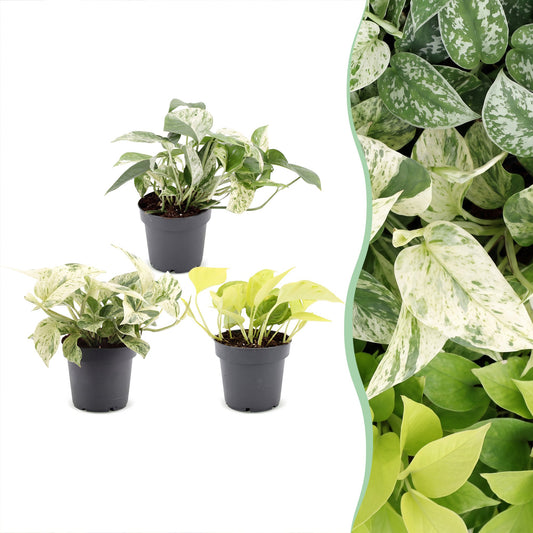
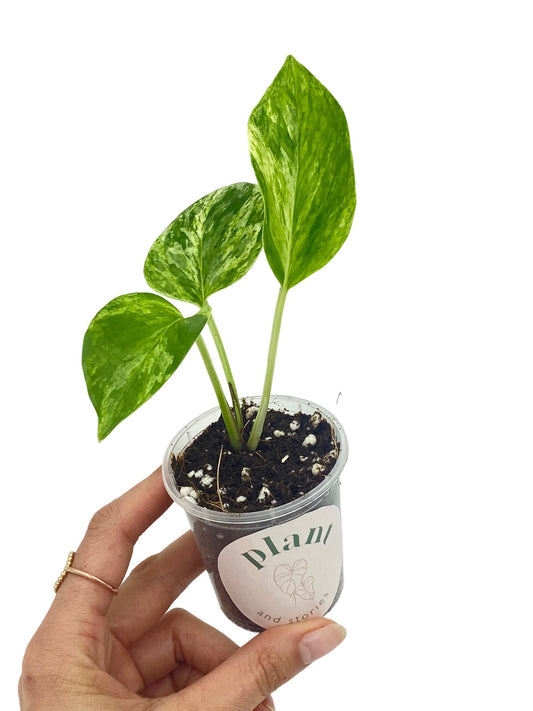
Epipremnum Marble Queen
Regular price From 7,95 €Regular price24,95 €Sale price From 7,95 €7,95 €From 6,36 €Sale -
-

 Sold out
Scindapsus Pictus Argyraeus
Regular price From 7,50 €Regular price24,95 €Sale price From 7,50 €7,50 €From 6,00 €Sold out -
Hoya carnosa 'Krimson Princess'
Regular price From 8,95 €Regular price8,95 €From 7,16 € -

 Sold out
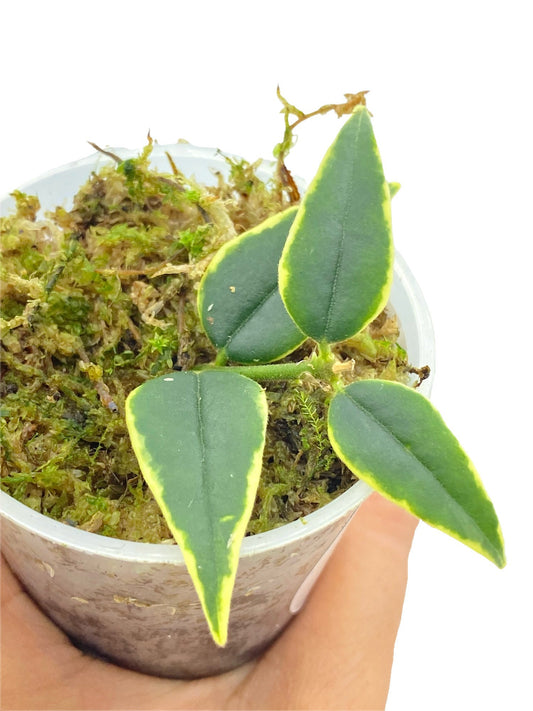
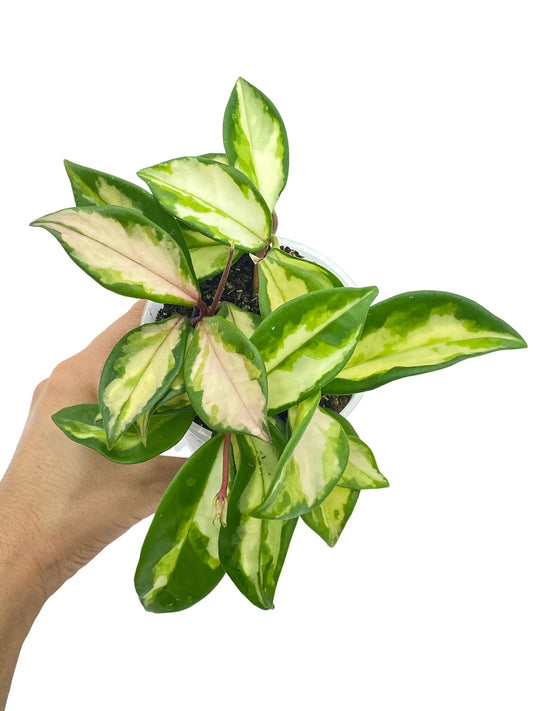
Hoya Bella Variegata (albomarginata)
Regular price From 19,95 €Regular price19,95 €From 15,96 €Sold out -
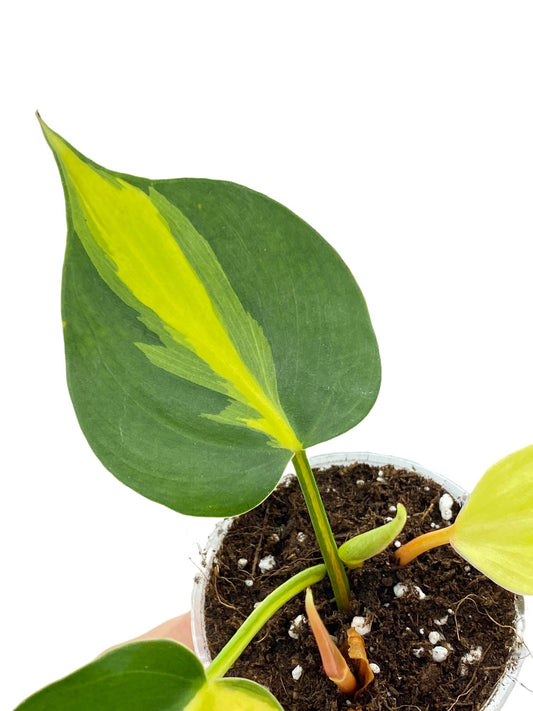
Philodendron Brasil
Regular price From 6,95 €Regular price6,95 €From 5,56 € -
Ceropegia Woodii variegata
Regular price From 8,95 €Regular price8,95 €From 7,16 € -


Chlorophytum comosum Variegatum - Pet-friendly - Spider plant - 12cm pot - Height 20-30cm
Regular price From 34,95 €Regular price34,95 €From 27,96 €Livraison offerte









🧭 Which trailing plant for each use
The right trailing plant depends on how you plan to use it: a bookcase, ceiling-hung planter, wall, bathroom, or home with a cat all call for different choices. This table summarizes our recommendations, each supported by the comparison above.
For genuinely low-light corners, our guide to plants for dark rooms suggests other companions.
| Your use | Our choice |
|---|---|
| Shelf or bookcase | Pothos, Philodendron Brasil, or Scindapsus pictus: dense foliage, with stems that are easy to guide or prune |
| Hanging planter near a window | Hoya carnosa, string of hearts, or Chlorophytum: they like bright light and trail naturally |
| Living wall or delicate cascade | String of hearts and Hoya linearis: lightweight stems create a curtain effect |
| Room with medium light | Pothos, which survives for a long time in low light (NC State), or Chlorophytum, which tolerates deep shade (NC State) |
| Bathroom with a window | Boston fern, Peperomia prostrata, or Hoya, which appreciate humid air |
| Windowless bathroom | No live plant without light: provide grow lighting or choose another room |
| Home with a cat or dog | Chlorophytum comosum, Hoya carnosa, Boston fern, Rhipsalis cassutha (ASPCA), Peperomia prostrata (NC State) |
| Small space, office | Peperomia prostrata, Hoya bella or Dischidia ruscifolia: compact sizes |
📐 Pothos, Scindapsus or philodendron: how to tell them apart
Pothos, Scindapsus and climbing philodendron look alike, but they are three different genera in the Araceae family. Pothos (Epipremnum aureum) has fairly thick, heart-shaped leaves that are green and often striped with yellow or white, as with our Epipremnum Neon or our Epipremnum Marble Queen.
Scindapsus pictus has more matte leaves, dark green with silver markings; NC State says it is native to Bangladesh, Thailand, the Malay Peninsula, Borneo, Java, Sumatra, Sulawesi and the Philippines.
Philodendron hederaceum, sold under the names scandens or Brasil, has thinner leaves and a more flexible petiole; explore our philodendrons. All three share the same caveat: they contain insoluble calcium oxalates, which the ASPCA flags for pothos and Philodendron hederaceum, and NC State also classifies Scindapsus pictus as toxic.
For Scindapsus leaves, NC State offers a simple diagnosis: yellow leaves indicate overwatering, while curling leaves indicate underwatering.
📐 Flowering trailing plants: Hoya and string of hearts
If you're looking for a flowering trailing houseplant, Hoya is the top choice. According to NC State, Hoya carnosa produces clusters of white to pink flowers that are fragrant and sticky, often after 2 to 3 years of cultivation, and with bright, indirect light year-round.
Above all, never cut off a flower stalk that has borne flowers: NC State notes that it will rebloom for several years. Hoya carnosa is also classified as non-toxic to dogs and cats by the ASPCA, in its “Wax Plant” profile (based on the Hoya carnosa 'Krinkle Kurl' cultivar), as well as by NC State.
To choose among the many species, see our comparison of which Hoya variety to choose or the Hoya bella profile for a miniature option. The string of hearts also flowers, with small, understated tubular blooms.
Botanically, Plants of the World Online (POWO), the Royal Botanic Gardens, Kew database accepts the name Ceropegia woodii, native from Zimbabwe to southern Africa, while the RHS classifies it as Ceropegia linearis subsp. woodii.
📐 Trailing plants and pets: what the sources say
Yes, several trailing plants are safe for cats: the ASPCA classifies Chlorophytum comosum, Hoya carnosa, Boston fern and Rhipsalis cassutha (listed as “Mistletoe Cactus”) as non-toxic to dogs and cats. NC State also tags Peperomia prostrata as non-toxic to cats and dogs.
By contrast, the ASPCA classifies pothos and Philodendron hederaceum as toxic; they cause mouth irritation, drooling and vomiting. For wandering jew, the ASPCA profile covers Tradescantia fluminensis, which is toxic and can cause dermatitis; the RHS notes that Tradescantia zebrina is a skin allergen and recommends wearing gloves.
String of pearls is toxic according to NC State, and we couldn't find an ASPCA profile for string of hearts: to be safe, hang it out of reach. Browse our selection of pet-friendly plants and our complete list of non-toxic plants for cats.
🗓️ Caring for a trailing plant through the seasons
Caring for a trailing plant follows the light cycle: growth and fertilizer from spring through late summer, followed by relative dormancy in winter. The RHS recommends watering pothos only when the potting mix is nearly dry and never leaving it sitting in water; for string of hearts, water moderately while it's growing, then keep it dry the rest of the time.
NC State recommends bringing a Hoya indoors if it has been outside for the summer as soon as nighttime temperatures fall below about 10 °C (50 °F), and watering it with room-temperature water. Chlorophytum produces plantlets as the days grow shorter: NC State specifies less than 12 hours of light per day for at least three weeks.
📅 Seasonal care calendar
| Season | Key task |
|---|---|
| 🌸 Spring | Repot if roots are growing out of the pot, resume fertilizing, prune bare stems and take cuttings |
| ☀️ Summer | Water hanging plants that dry out quickly more regularly, fertilize while they're growing, avoid direct sun through the window |
| 🍂 Fall | Bring outdoor plants inside (Hoya before nights fall below 10 °C), gradually stop fertilizing, look for Chlorophytum plantlets |
| ❄️ Winter | Water less often, keep the string of hearts' soil dry, place a tray of damp pebbles away from the radiator |
🐛 Mistakes to avoid with a hanging plant
The most common mistake with a hanging plant is hanging it wherever there's room, often in a dark corner near the ceiling, instead of placing it somewhere with good light.
Next come missed waterings, because hanging plants are out of sight, and, conversely, overwatering, which causes the base of the string of hearts to rot in winter, as the RHS notes.
As for pests, the RHS lists mealybugs and red spider mites on wandering jew; these mites thrive in dry air from heating. Here are the mistakes we see most often, and how to fix them.
| Mistake | Why it's a problem | The solution |
|---|---|---|
| Hanging the plant in a dark corner | Weak growth and fading variegation in pothos (RHS), bare stems | Move it closer to a window, or choose pothos or Chlorophytum for that spot |
| Leaving the plant in direct sun behind glass | Leaf scorch on pothos (RHS); Chlorophytum cannot tolerate direct sun (NC State) | Use a sheer curtain, or move the plant a few steps away from the window |
| Watering string of hearts like pothos | Base rot if the potting mix stays wet in winter (RHS) | Use cactus-type potting mix, water moderately while growing and keep it almost dry in winter |
| Misting to increase humidity | The effect is very brief and does not correct the dry air in a heated room | Use a tray of damp pebbles and group plants together (see our article on misting) |
| Cutting off faded Hoya stems | This removes flower stalks that rebloom each year (NC State) | Remove only faded flowers, never the flower stalk |
| Watering Chlorophytum with highly chlorinated water | Brown, scorched leaf tips (NC State) | Use rainwater or water that has been left to stand; avoid excess fertilizer |
| Placing a toxic plant within a cat's reach | Mouth irritation and vomiting from pothos or philodendron (ASPCA) | Hang it out of reach, or choose a non-toxic species |


🌿 Our trailing plants and their care guides
This guide is a starting point: each trailing plant has a complete profile with step-by-step care, varieties and troubleshooting. Here are our guides, along with a few plants from our selection to get you started.
| Our selection | Why choose it |
|---|---|
| Pothos and Marble Queen | The most forgiving trailing plant; try our Mystery Pothos Box to discover several varieties |
| Scindapsus pictus | Matte, silver foliage; slower-growing than pothos. Our Scindapsus pictus Argyraeus is a great place to start |
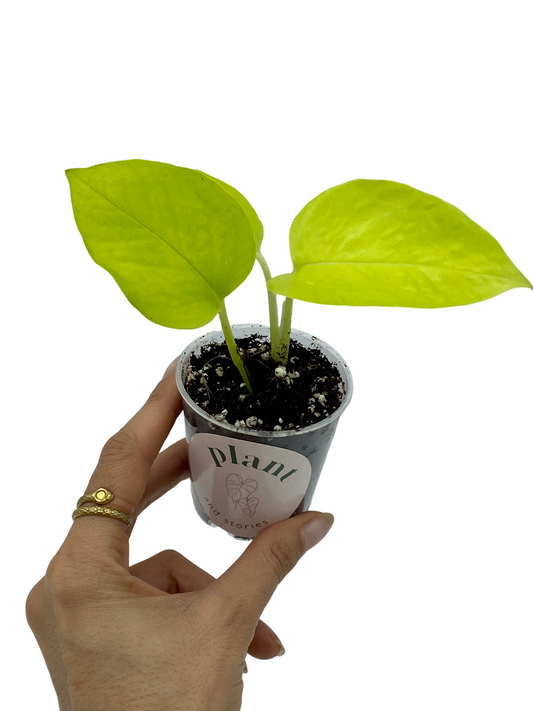
| Philodendron Brasil and Philodendron scandens | An easy-care climbing philodendron; see our Philodendron Brasil and our Philodendron scandens Lemon Lime |
| Hoya and Hoya linearis | Flowering trailing plants; try Hoya carnosa Krimson Princess, Hoya linearis or our Mystery Hoya Box |
| Hoya bella | A miniature Hoya for a small hanging planter, such as our variegated Hoya bella |
| String of hearts | The most delicate cascade, requiring light watering; our variegated Ceropegia woodii is its colorful form |
| Tradescantia | Bright colors and fast growth, like our Tradescantia zebrina Pink Joy |
| Chlorophytum | A hanging plant for homes with pets, non-toxic according to the ASPCA; see our Chlorophytum comosum Variegatum |
| Peperomia and Rhipsalis | A compact little cascade with our Peperomia prostrata, or a trailing cactus; Rhipsalis cassutha is non-toxic according to the ASPCA |
| Boston fern | A hanging fern for bright bathrooms, non-toxic according to the ASPCA; also see Dischidia ruscifolia and Callisia repens |
🔑 How to hang and set up a hanging plant
To hang a plant, attach a suitable hook to the ceiling or wall, since a watered plant weighs much more than it did when you bought it. Place it at a height where you can still see and touch the soil, in front of or beside a window rather than at the back of the room.
For a wall, choose lightweight plants with slender stems, such as string of hearts or Hoya linearis, in pots with drainage holes placed inside decorative planters. After buying a plant, wait until it has acclimated before repotting it: our guide explains when to repot a plant after purchase.
And if your only free spot is a bathroom without a window, read our dedicated article first: without light, no plant will last long.
✅ Our tips for growing trailing plants successfully
To grow an indoor trailing plant successfully, first choose one suited to the actual light in its location: pothos, philodendron, or Chlorophytum for medium light, and Hoya or string of hearts for a bright room. Hang it where you can see and water it easily, water it according to its genus, and use a tray of damp pebbles rather than misting.
If you have a cat, choose Chlorophytum, Hoya carnosa, or Boston fern, and hang toxic species out of reach. Finally, explore all our available plants in our hanging plants collection, along with our Tradescantia, Peperomia, and flowering Hoya to complete the cascade.
When people ask me which trailing plant to choose, I first ask where it will hang and how far it will be from the window. For a first try, pothos is still my safest recommendation because it’s very forgiving. I have a soft spot for Hoya hanging near a bright window, because their flowers reward your patience. And in a home with a cat, I almost always recommend Chlorophytum, which you can let trail without worry.

Laura Bruneau
Jardinière et autrice