

Indoor Plant Repotting Mat: The Guide

A potting mat is a waterproof, foldable surface that turns repotting, which can often be messy, into a clean and quick task. Its promise can be summed up in one sentence: no more soil on the floor or work surface, and cleanup in seconds. Discover our accessories in our gardening tools. Simple yet quickly indispensable, a potting mat protects your surfaces from splashes, contains the potting mix and makes every repotting job cleaner and quicker, at home or on a balcony. Then it can be cleaned and folded away in seconds.
This guide explains what a potting mat is really for, which materials and sizes to choose, how to use it effectively, and why it makes everyday life easier for anyone who loves growing plants in an apartment.
What is a potting mat for?
A potting mat keeps soil, water and debris contained while you repot, sow seeds, take cuttings or prune. Its fold-up edges turn it into a kind of temporary tray that keeps everything inside.
In practical terms, it cuts down on mess while you handle the growing medium: mix, repot and clean up without dirtying the table, floor or windowsill. Most models turn into a tray with raised edges using snap fasteners at all four corners.
It’s particularly useful in an apartment, where there’s no garden or workshop: it makes it possible to repot on the kitchen table or in a corner of the living room, then fold it up and put it away in an instant.
Compared with makeshift alternatives, it quickly proves its worth. Newspaper tears and lets moisture through; a tarp slips and has no raised edges; working directly in the sink limits the space you have. A potting mat, by contrast, combines a waterproof surface, edges that keep everything contained and easy storage.
| Solution | Drawback |
|---|---|
| Newspaper | Tears and lets water through |
| Plastic tarp | Slips and has no raised edges |
| Sink / bare work surface | Limited space and still gets dirty |
| Potting mat | Waterproof, raised edges, foldable |
Which material should you choose for your mat?
The material determines how durable and easy to clean the mat will be: most are made from coated PE (polyethylene), Oxford fabric or waxed cotton canvas. They all need to be waterproof and durable.
Double-coated PE is lightweight, odorless and very affordable. Oxford fabric offers a good balance of durability and flexibility. Thick waxed canvas, sometimes with a high fabric weight (up to around 950 g/m² on some premium models), is the most durable and pleasant to use, with corners often reinforced with brass buttons. Thicker models also stand up better to deep creases, which can eventually weaken budget mats after repeated folding.
| Material | Advantage | Best for |
|---|---|---|
| Coated PE | Lightweight, affordable, odorless | Occasional use |
| Oxford fabric | Flexible and durable | Regular use |
| Thick waxed canvas | Very durable, substantial | Enthusiasts, frequent use |
| Brass / snap-fastened corners | Sturdy raised edges | All tray-style models |
A potting mat is the accessory I recommend most, and yet it’s the most underestimated. I used to put off repotting because I dreaded the cleanup; now that I have one, I get on with it without giving it a second thought. My advice: choose a model that’s a little larger and thicker. You might think you’re saving by choosing a small one, but having plenty of workspace makes all the difference, especially when dealing with a large plant.
What size potting mat do your plants need?
The right size depends on your plants: a small one for succulents and small pots, and a large one for Monstera and other big plants. Manufacturers generally offer a whole range of sizes.
Common sizes range from around 30 × 30 cm for seedlings and small potted plants to 100 × 150 cm for larger specimens, with versatile square sizes such as 66 × 66 cm or 75 × 75 cm in between. A rectangular size such as 75 × 100 cm leaves room for your tools and bag of potting mix too. If in doubt, it’s better to go slightly larger: you can always work on one part of a large mat, whereas a mat that’s too small will let soil spill over as soon as you handle a somewhat bulky plant.
columns: 4
columns_mobile: 2
-
Large Faux Leather Potting Mat - Plant Potting Mat
Regular price 29,95 €Regular price34,95 €Sale price 29,95 €Sale -
-
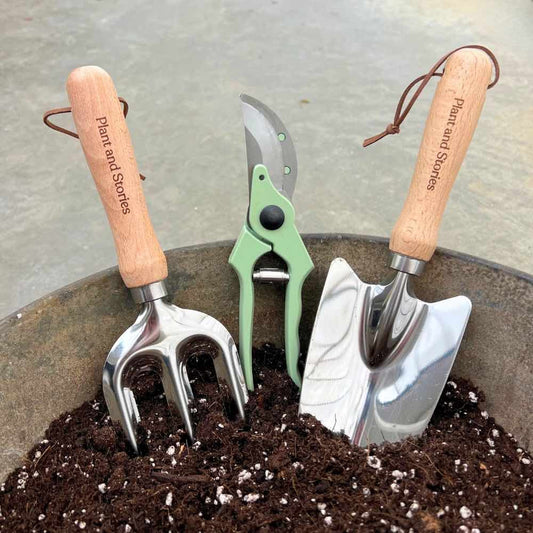
Gardening Tool Kit - Set of 3 Essential Tools - Garden Tool Set
Regular price 15,95 €Regular price29,95 €Sale price 15,95 €Sale -
Plant cleaning gloves - Anti-limescale
Regular price 10,00 €Regular price10,00 €Sale price 10,00 €




| Size | Ideal for |
|---|---|
| ~30 × 30 cm | Seedlings, cuttings, small potted plants |
| ~66 × 66 cm | Medium-sized plants, versatile use |
| ~75 × 100 cm | Large plants + tools |
| ~100 × 150 cm | Very large plants, major repotting jobs |
How do you use a potting mat?
It’s simple: unfold the mat, fasten the corner snaps to create raised edges, and work inside the tray you’ve made. All the mess stays contained.
Use it to mix your potting mix, take the plant out of its pot and repot it, then gather up any spilled soil in one corner, unfasten it and pour the soil back into the bag or bin. A quick wipe with a sponge is all it takes, since the material is waterproof. Finally, fold up the mat and put it away, often using a strap or pouch.
📋 Quick reference (for experienced gardeners)
Key points for choosing and using a potting mat, at a glance.
| Feature | What to look for |
|---|---|
| Purpose | Contains soil, water and debris |
| Materials | Coated PE, Oxford fabric, waxed canvas |
| Waterproofing | Essential; double coating is ideal |
| Corners | Snap fasteners to form a tray |
| Small sizes | ~30 × 30 cm |
| Large sizes | Up to ~100 × 150 cm |
| Care | Wipe with a damp sponge, foldable |
| Storage | Folds away, with a strap or pouch |
Your ally for successful repotting
Beyond keeping things clean, a potting mat encourages you to repot at the right time instead of putting it off for fear of the mess. And timely repotting is crucial to plant health.
Here’s a reminder of good repotting practices, whether you’re using a mat or not: repot in spring, into a pot only slightly larger, using an airy potting mix. The Royal Horticultural Society's growing guide also advises increasing the pot by only one size at a time, while the Missouri Botanical Garden highlights the importance of a well-draining potting mix. For more details, our step-by-step repotting guide covers every stage, from removing the plant from its pot to the first watering.
| Step on the mat | What to do |
|---|---|
| Prepare | Unfold, fasten the corners, lay out your tools |
| Repot | Mix the potting mix, remove the plant from its pot, repot |
| Clean up | Pour the soil back, wipe the mat, fold it away |


Your potting mat through the seasons
A potting mat comes in handy throughout the year, especially in spring, the main season for repotting.
📅 Seasonal care calendar
| Season | Key task |
|---|---|
| 🌸 Spring | Repotting season: the mat protects your surfaces from splashes |
| ☀️ Summer | Repotting and taking cuttings: easy cleanup after each task |
| 🍂 Autumn | Final repotting jobs before winter; store the mat clean and dry |
| ❄️ Winter | Less repotting: use the mat for small care tasks |
Diagnosis: choosing and caring for your mat
A few simple mistakes can make a potting mat less useful. Here’s how to avoid them.
| Problem | Cause and solution |
|---|---|
| Soil spilling over | Mat is too small: choose a larger one |
| Edges collapsing | Corners not fastened properly: pull them taut, then fasten |
| Stains that won’t come off | Low-quality material: choose a double-coated model |
| Deep creases | Stored too tightly: roll it rather than folding it sharply |
Choose well, and a quality potting mat will last for years and see you through every repotting job, from seedlings to your largest plants. It’s a small investment that quickly pays for itself in comfort and the time saved on cleanup with every use.
Stress-free repotting with Plant and Stories
A potting mat brings together three great qualities: it contains the mess, cleans up in a moment and folds flat for storage. It’s the accessory that makes repotting easy, especially in an apartment.
To put together your potting station, discover our gardening tools and our specialist potting mixes, carefully selected in France. With a good mat, a handful of tools and the right potting mix, you’ll have everything you need to care for your plants with confidence, without ever dreading repotting time. Once you’ve tried one, a potting mat becomes second nature for all your indoor gardening tasks. Easy to clean, fold and store, it serves you from spring repotting to small winter care jobs, turning an often-messy task into a clean, enjoyable routine on any table at home or on the balcony, without worrying about stains or the cleanup afterward.

Laura Bruneau
Jardinière & autrice


