

How to Create a Privacy Hedge: The Complete Guide

Creating a privacy hedge gives you more seclusion while dressing your garden with a living screen that changes with the seasons. But you’ll need to choose the right plant, plant it at the right distance and at the right time to get a dense, long-lasting hedge without any nasty surprises with the neighbors.
This comprehensive guide takes you through every step: from choosing evergreen or fast-growing species to maintenance, covering regulations, planting density and the ideal time to plant.
Which plants should you choose for a privacy hedge?
To create a successful privacy hedge, first choose an evergreen shrub (one that keeps its leaves in winter) suited to the level of screening you want, then narrow down your choice based on growth rate, soil and exposure. The combination of “evergreen foliage + vigorous growth + suitable soil” is what makes a hedge dense all year round.
Finally, tailor your choice to the exposure and soil: most hedge shrubs prefer full sun to partial shade and ordinary but well-drained soil. In heavy, damp soil, choose cherry laurel or privet, which tolerate these conditions better than conifers, which are sensitive to excess water.
Before you buy, measure the length to be covered and the desired height: a 1.5–2 m hedge is enough to screen ground-level views, while an upstairs window calls for 2.5–3 m. According to the Normandy Chamber of Agriculture, mixing 2 to 3 species (a mixed hedge) makes the hedge more resistant to disease and extends its ornamental appeal throughout the year.
The best fast-growing privacy hedge plants
The fastest-growing hedges are Leyland cypress, cherry laurel and privet, which can grow 40–90 cm per year in good conditions. Here’s a comparison of reliable favorites, with a link to each detailed guide.
These growth rates are estimates: they depend on the climate, soil quality and watering during the first year. The same shrub may grow twice as fast in rich, well-watered soil, or stagnate in poor, dry soil.
| Plant | Growth | Hedge height |
|---|---|---|
| Leyland cypress | 60–90 cm/year | 2–4 m |
| Cherry laurel | 40–60 cm/year | 1.5–3 m |
| Privet | 30–50 cm/year | 1.5–2.5 m |
| Photinia ‘Red Robin’ | 20–30 cm/year | 2–3 m |
| Smaragd thuja | 20–30 cm/year | 2–4 m |
Based on my experience growing these plants, I wouldn’t recommend Leyland cypress to gardeners who want quick results: it grows fast but needs pruning twice a year and quickly becomes invasive. For a hedge that stays attractive without taking up your weekends, I prefer cherry laurel or photinia, which are easier to keep in check and more ornamental.
columns: 4
columns_mobile: 2
-

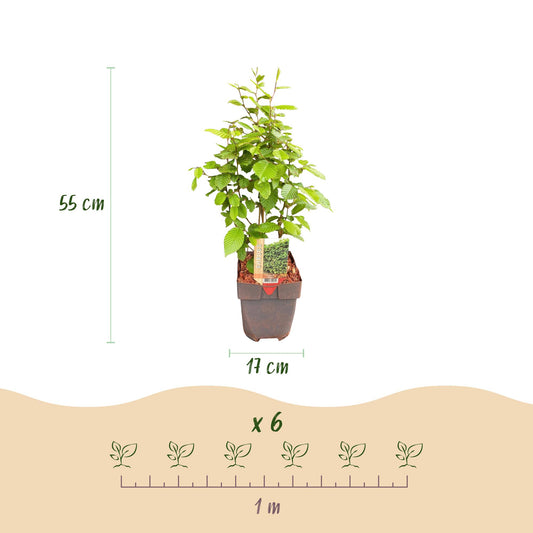
Hornbeam (Carpinus betulus), hardy hedging plant, 17 cm pot, Height 55 cm - Pack of 6
Regular price 89,95 €Regular price -


Compacta Oleaster (Elaeagnus x ebbingei), evergreen hedging plant, 9 cm pot, Height 25–35 cm
Regular price From 54,95 €Regular price -

 Livraison offerte Sale
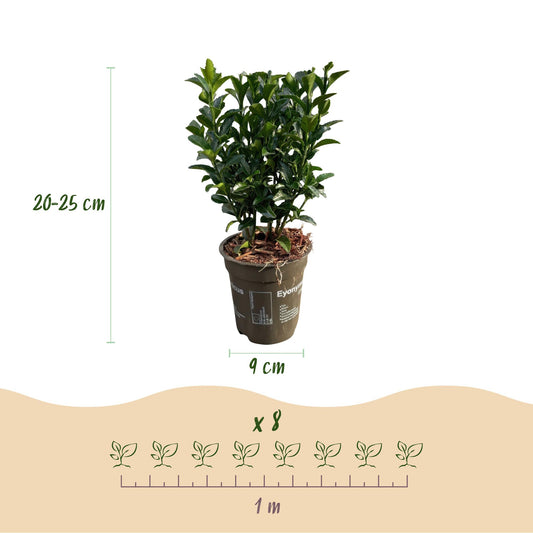
Green Spire Euonymus, evergreen hedging plant, 9 cm pot, Height 20–25 cm
Regular price From 49,95 €Regular price54,95 €Sale price From 49,95 €Livraison offerte Sale -

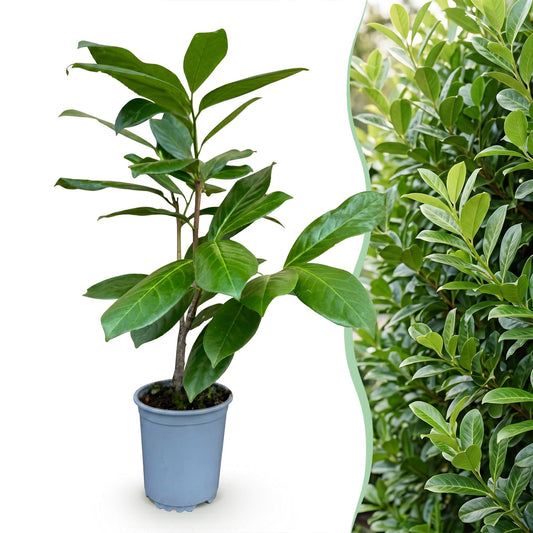
Cherry laurel Rotundifolia (Prunus laurocerasus), evergreen hedging plant, 9 cm pot, Height 25-35 cm
Regular price From 54,95 €Regular price -

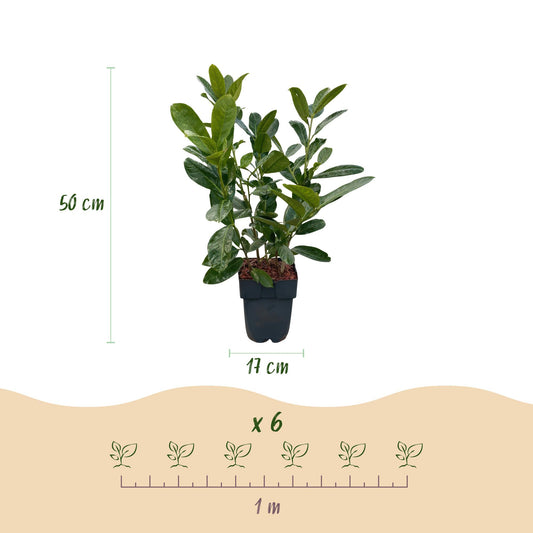
Cherry laurel Rotundifolia (Prunus laurocerasus), evergreen hedge plant, 17 cm pot, Height 50 cm - Pack of 6
Regular price 99,95 €Regular price -
Photinia Carré Rouge (Photinia x fraseri), evergreen hedge plant - Set of 6
Regular price 109,95 €Regular price -

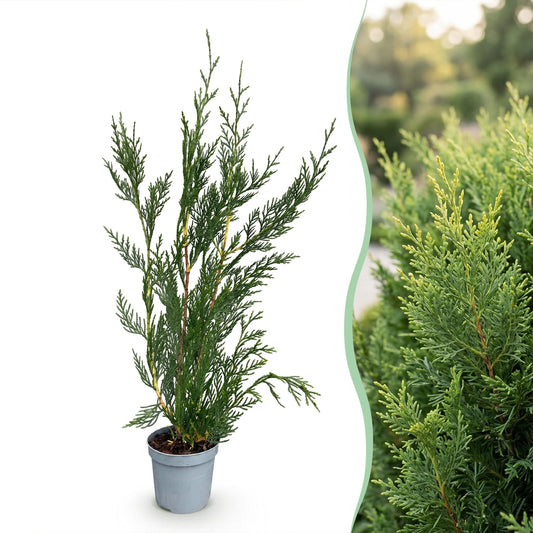
Leyland Cypress 2001 (Cupressocyparis leylandii), evergreen hedging plant, 9 cm pot, Height 30-40 cm
Regular price From 59,95 €Regular price -

 Livraison offerte
Privet (Ligustrum), hardy hedging plant, 9 cm pot, Height 35–45 cm
Regular price From 54,95 €Regular price -

 Livraison offerte Sale
Common yew (Taxus baccata), evergreen hedging plant, 9 cm pot, Height 20–30 cm
Regular price From 59,95 €Regular price179,95 €Sale price From 59,95 €Livraison offerte Sale -

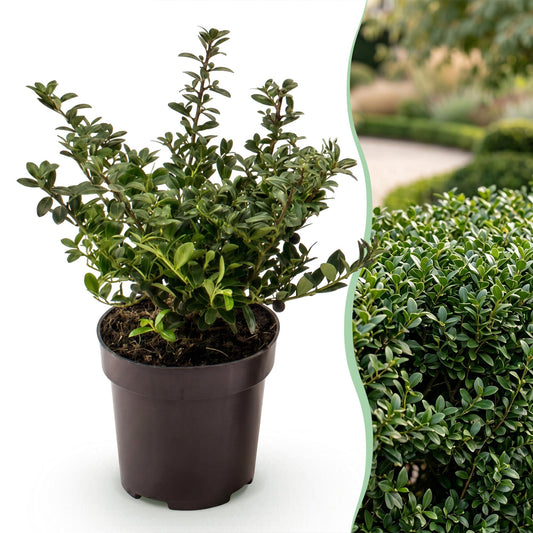
Stokes' Crenate Holly (Ilex crenata), evergreen hedging plant, 9 cm pot, Height 20-30 cm
Regular price From 59,95 €Regular price


An evergreen hedge all year round
For year-round screening, choose evergreen foliage: it guarantees privacy 12 months a year, unlike deciduous shrubs, which lose their leaves in the cold season. Here are the main types and what they offer.
Evergreens come with a small trade-off: they often grow a little more slowly than some deciduous shrubs and need to be pruned at the right time to stay dense. In return, they provide privacy even in the depths of winter, when bare gardens make it especially important.
| Foliage type | What to know |
|---|---|
| Traditional evergreen | Cherry laurel, photinia, oleaster: dense all year round, ideal for screening. |
| Evergreen conifer | Thuja, yew, cypress: maximum screening and a regular shape that is easy to trim neatly. |
| Clump-forming bamboo | Fargesia: a light, modern screen, perfect for pots and without invasive rhizomes. |
| Semi-evergreen | Privet: retains some of its foliage in mild winters and grows very quickly. |
How far from the neighbor’s property should you plant your hedge?
The law sets a minimum distance from the boundary: 0.50 m if the hedge is 2 m tall or less, and 2 m if it is taller than 2 m. This rule is set out in Article 671 of the French Civil Code and helps prevent many neighbor disputes.
Measure these distances from the center of the trunk to the property boundary. If the hedge is jointly owned and planted by mutual agreement on the boundary, both neighbors share responsibility for maintaining it. A written agreement between neighbors can prevent future disputes.
| Hedge height | Minimum distance from the boundary |
|---|---|
| 2 m or less | 0.50 m from the property boundary |
| More than 2 m | 2 m from the property boundary |
How many plants per meter: getting the density right
As a general rule, allow 1 to 3 plants per linear meter, depending on the species’ vigor: the more vigorous the shrub, the fewer plants you need. Always measure spacing from center to center (from the middle of one plant to the middle of the next).
To work out how many plants to order, divide the length of the hedge by the chosen spacing. For example, 10 meters with 2 plants per meter requires 20 plants; the same 10 meters planted with large conifers spaced 80 cm apart requires about 13.
| Shrub type | Recommended density |
|---|---|
| Small plants / low hedge | 3 plants/m (every 33 cm) |
| Medium shrubs (laurel, photinia) | 1.5 to 2 plants/m (every 50–70 cm) |
| Large plants (thuja, cypress) | 1 to 1.25 plants/m (every 80 cm–1 m) |
When should you plant a privacy hedge?
The best time is fall, from October to November: the still-warm soil encourages root growth before winter, as summed up by the saying, “At St. Catherine’s Day (November 25), all wood takes root.” Container-grown plants can be planted year-round, except during frost or heatwaves.
Spring is still a good alternative for container-grown plants, provided you water them regularly the following summer. Avoid planting in hard frost or during a heatwave, as both can seriously compromise establishment.
Planting in fall gives the hedge several months to settle in before the summer drought, reducing the need for watering and helping it get off to a faster start in spring. It’s also the ideal time to get the garden ready for the new season.
Bare-root, root ball or container-grown: which should you choose?
The way a plant is sold determines when it can be planted and how much it costs: bare-root plants are the cheapest but can only be planted during dormancy, while container-grown plants can be planted almost year-round and are more likely to establish successfully. Here’s how to choose.
Bare-root plants cost considerably less, which matters when planting a long stretch, but you need to plant them soon after buying them to stop the roots drying out. Container-grown plants cost more, but allow for delays and are ideal for first-time gardeners.
| Plant type | Planting period | Main advantage |
|---|---|---|
| Bare-root | November to March | Cheapest option, ideal for long stretches |
| Root ball (wrapped) | October to April | Good compromise, suitable for conifers |
| Container-grown | Year-round, except during frost | Most reliable establishment, perfect for beginners |
📋 Quick reference (for experienced gardeners)
Essential plant specifications at a glance.
| Factor | Guide |
|---|---|
| Distance from boundary | 0.50 m (hedge ≤ 2 m) / 2 m (> 2 m): Article 671 |
| Density | 1 to 3 plants/m, depending on vigor |
| Ideal planting period | Fall (Oct.–Nov.); container-grown plants year-round, except during frost |
| Exposure | Sun to partial shade, depending on species |
| Soil | Ordinary, well-drained; pH 6 to 7.5 |
| Hole depth | 2 to 3 times the volume of the root ball |
| Watering during the first year | Regularly, as soon as the soil surface dries out |
| Mulch | 5 to 8 cm to suppress weeds and reduce evaporation |
| Pruning | 1 to 2 times/year (late spring and late summer) |
Maintaining your privacy hedge
A hedge stays dense and provides good screening with just a few simple tasks: one well-timed annual trim, careful watering during the first year, and refreshed mulch. Here’s a season-by-season schedule.
The first year is crucial: regular, moderate watering allows the roots to establish deeply. A 5–8 cm layer of mulch around the base reduces evaporation, protects against frost and greatly cuts down on weeding; the RHS also recommends a mulch layer at least 5 cm thick and regular watering during the first two years.
📅 Seasonal maintenance calendar
| Season | Key task |
|---|---|
| 🌸 Spring | Light formative pruning; resume watering; add compost around the base. |
| ☀️ Summer | Water regularly during the first year; maintenance pruning in late summer. |
| 🍂 Fall | Ideal planting period; apply a thick layer of mulch; final light trim. |
| ❄️ Winter | Dormant period; plant bare-root specimens when the ground isn’t frozen; no pruning. |
Privacy hedges in pots for balconies and patios
For a balcony or patio, the best potted privacy screen is Fargesia bamboo: it’s clump-forming, lightweight and evergreen, creating a modern screen without spreading into your neighbors’ space. Choose a large planter (at least 40 cm deep) and water regularly, as pots dry out quickly.
When growing in a pot, replace the top layer of potting mix each spring and apply a slow-release organic fertilizer to make up for the limited soil volume. A light-colored planter heats up less in the sun and better protects the roots in summer.
Fargesia bamboo stays compact and does not develop invasive rhizomes (NC State Extension classifies it among the non-invasive clumping bamboos), unlike running bamboo: it’s a safe choice for a planter. Add a saucer and mulch to reduce how often you need to water in summer.


Laura Bruneau
Jardinière & autrice


