

Flowering hedge: create a hedge that blooms in every season

A flowering hedge is made up of flowering shrubs whose blooms follow one another through the seasons: Laurustinus (Viburnum tinus) and Cornelian cherry (Cornus mas) in late winter, forsythia and Burkwood osmanthus (Osmanthus × burkwoodii) in spring, common lilac (Syringa vulgaris) in late spring, mock orange (Philadelphus) in early summer, abelia and rose of Sharon (Hibiscus syriacus) in summer, and silverberry (Elaeagnus × ebbingei) in autumn.
No shrub flowers on its own for twelve months of the year; it takes a mix of four to six species to create an almost continuous display. This guide helps you choose them, evergreen or deciduous, according to your desired height, with each species’ RHS hardiness rating, then plant them at the right density and distance from your neighbor.
For a hedge that provides more privacy, see how to create a privacy hedge.
🌟 Why plant a flowering hedge instead of a traditional hedge
A flowering hedge provides a living boundary, flowers in every season, and food for insects, whereas a single-species hedge clipped into a straight line offers nothing but a green wall.
According to the RHS (Royal Horticultural Society) hedge-planting guide, hedges are ideal for wildlife, particularly nesting birds. Several varieties carry the RHS Plants for Pollinators label, awarded to plants that benefit bees, butterflies, and hoverflies. And if one species suffers in an exceptionally harsh winter, the others will keep the hedge standing.
| Benefit | What it means |
|---|---|
| Extended flowering season | Flowers from late winter to autumn with four to six species |
| Fragrance | Osmanthus, Mexican orange blossom, lilac, mock orange, and silverberry (RHS) |
| Biodiversity | Nectar for insects, shelter for nesting birds (RHS) |
| Less pruning | An informal hedge only needs light pruning after flowering |
📊 The best shrubs for a flowering hedge: a comparison
The best shrubs for a flowering hedge are those that take turns blooming through the seasons and can be planted in a row: the table lists them by flowering period, from late winter to autumn. Foliage, exposure, mature height, hardiness, and features come from RHS plant profiles unless otherwise noted. The time given in parentheses is how long the RHS says each plant takes to reach its mature size.
On the RHS hardiness scale, H4 corresponds to -10 to -5°C, H5 to -15 to -10°C, H6 to -20 to -15°C, and H7 to below -20°C.
| Shrub | Flowering | Foliage and exposure | Mature height (growth) | RHS hardiness | Features |
|---|---|---|---|---|---|
| Cornelian cherry (Cornus mas) | Late winter, yellow | Deciduous; sun or partial shade | 2.5 to 4 m (10 to 20 years) | H6 | Plants for Pollinators (RHS) |
| Laurustinus (Viburnum tinus) | Late winter to spring, creamy white (RHS) | Evergreen; sun to shade | 2.5 to 4 m (10 to 20 years) | H4 | Plants for Pollinators; berries are inedible |
| Forsythia (Forsythia × intermedia) | Early to mid-spring, bright yellow (RHS) | Deciduous; sun or partial shade | 1 to 2.5 m, depending on variety; 'Goldrausch' 1.5 to 2.5 m (5 to 10 years) | H5 | Recommended for hedges (RHS) |
| Flowering currant (Ribes sanguineum 'King Edward VII') | Spring, deep red (RHS) | Deciduous; full sun | 1.5 to 2.5 m (5 to 10 years) | H6 | Plants for Pollinators; informal hedge |
| Burkwood osmanthus (Osmanthus × burkwoodii) | Spring, highly fragrant white flowers (RHS) | Evergreen; sun or partial shade | 2.5 to 4 m (10 to 20 years) | H5 | Recommended for hedges (RHS) |
| Mexican orange blossom (Choisya ternata) | Fragrant white flowers, with sporadic blooms continuing into winter (RHS) | Evergreen; sun or partial shade | 1.5 to 2.5 m (10 to 20 years) | H4 | Compact growth habit |
| Common lilac (Syringa vulgaris) | Late spring, in April–May (RHS lilac guide; “early summer” in the RHS species profile, in the UK climate) | Deciduous; full sun | 4 to 8 m (10 to 20 years) | H6 | Very sweet fragrance |
| Mock orange (Philadelphus 'Belle Étoile') | Late spring to early summer (RHS) | Deciduous; sun or partial shade | 1 to 1.5 m (5 to 10 years) | H6 | Highly fragrant white flowers |
| Abelia × grandiflora | From midsummer, for an extended period (RHS) | Semi-evergreen; full sun | 2.5 to 4 m (10 to 20 years) | H5 | Bees and butterflies (NC State Extension) |
| Hibiscus syriacus | Midsummer to autumn (RHS) | Deciduous; full sun | 2.5 to 4 m (10 to 20 years) | H5 | Large, colorful flowers |
| Butterfly bush (Buddleja davidii) | Summer to autumn (RHS) | Deciduous; sun or partial shade | 2.5 to 4 m (5 to 10 years) | H6 | Plants for Pollinators, but invasive (OFB) |
| Silverberry (Elaeagnus × ebbingei) | Autumn, fragrant white flowers (RHS) | Evergreen; sun or partial shade | 2.5 to 4 m (5 to 10 years) | H5 | Plants for Pollinators; coastal winds |
📋 Quick reference
General guidelines for a flowering hedge, based on the RHS, the French Civil Code, and OFB.
| Guideline | Rule |
|---|---|
| Composition | 4 to 6 species with staggered flowering times, from late winter to autumn |
| Spacing in a single row | 30 to 60 cm, depending on the mature size and vigor of the shrubs (RHS) |
| Double row | Staggered rows 45 cm apart, with plants 90 cm apart, for a hedge more than 90 cm thick (RHS) |
| Planting evergreens | Early autumn, or from late autumn to late winter (RHS) |
| Planting deciduous shrubs | From mid-autumn to late winter, once the leaves have fallen (RHS) |
| Preparation | A 60 to 90 cm wide strip, dug over to the depth of a spade (RHS) |
| Mulching | 7.5 cm after planting, then at least 5 cm from late autumn to late winter (RHS) |
| Watering | During dry spells in the first two years, checking the soil by touch |
| Distance from neighbor | 2 m from the boundary if the hedge exceeds 2 m in height, 0.5 m otherwise (Article 671 of the French Civil Code) |
| Pruning | After flowering, avoiding the period from March 15 to July 31 (OFB recommendation) |
How to plant a flowering hedge in 6 steps
To plant a flowering hedge, prepare a strip of loose soil, arrange the species in small groups, and leave 30 to 60 cm between plants in a single row, or use a staggered double row for a thick hedge. The RHS recommends postponing planting if the soil is frozen or waterlogged, and watering a young hedge thoroughly during dry weather for its first two years.
For shrubs 2.5 to 4 m tall, use the upper end of the spacing range. Our guide to planting a hedge in autumn explains each step in detail.
| Step | What to do |
|---|---|
| 1. Measure the distance | 0.5 m from the boundary if the hedge will stay under 2 m, 2 m if taller |
| 2. Prepare the strip | Dig over a strip 60 to 90 cm wide to the depth of a spade (RHS) |
| 3. Plan the sequence | Arrange 4 to 6 species in groups of two or three plants, alternating evergreens and deciduous shrubs |
| 4. Space the plants | 30 to 60 cm apart in one row; for a thick hedge, use two staggered rows 45 cm apart, with plants 90 cm apart (RHS) |
| 5. Plant at the right time | Plant evergreens in early autumn and deciduous shrubs once the leaves have fallen; never plant in frozen soil (RHS) |
| 6. Mulch and water | Apply a 7.5 cm layer of mulch and water during dry weather for two years (RHS), when the soil is dry 2 to 3 cm down |
columns: 4
columns_mobile: 2
-

 Livraison offerte Sold out
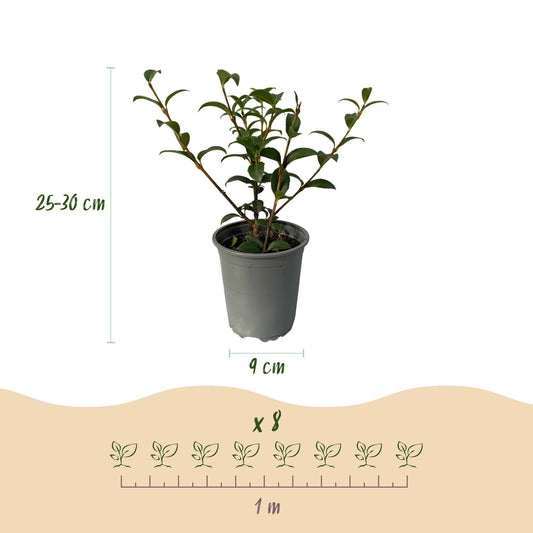
Burkwood Osmanthus (Osmanthus × burkwoodii), evergreen hedging plant, 9 cm pot, Height 25-30 cm - Pack of 8
Regular price 59,95 €Regular price -


Compacta Oleaster (Elaeagnus x ebbingei), evergreen hedging plant, 9 cm pot, Height 25–35 cm
Regular price From 54,95 €Regular price -
Viburnum (Viburnum) – Fragrant flowering shrub – 19 cm pot – Height: 90 cm
Regular price 69,95 €Regular price -
Forsythia 'Goldrausch' (Forsythia) - flowering shrub - 17 cm pot - Height 45 cm
Regular price 39,95 €Regular price -

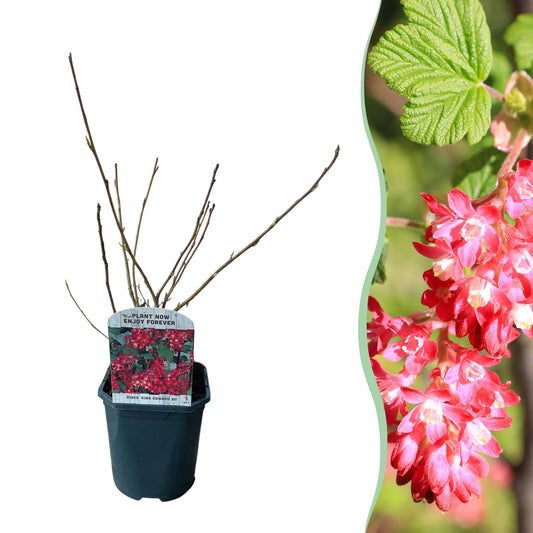
Flowering Currant 'King Edward' (Ribes sanguineum) - flowering shrub - 17 cm pot - Height 45 cm
Regular price 44,95 €Regular price -

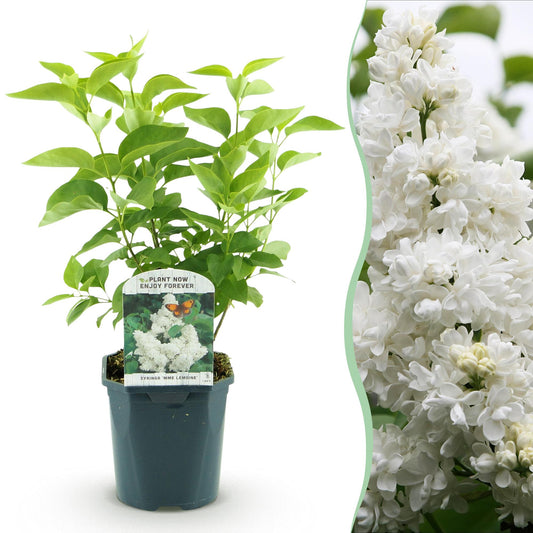
Common lilac 'Mme Lemoine' (Syringa vulgaris) - scented shrub - 17 cm pot - Height 45 cm
Regular price 49,95 €Regular price -
'Snowbelle' Mock Orange (Philadelphus) – Fragrant Shrub – 17 cm Pot – 45 cm Tall
Regular price 39,95 €Regular price -

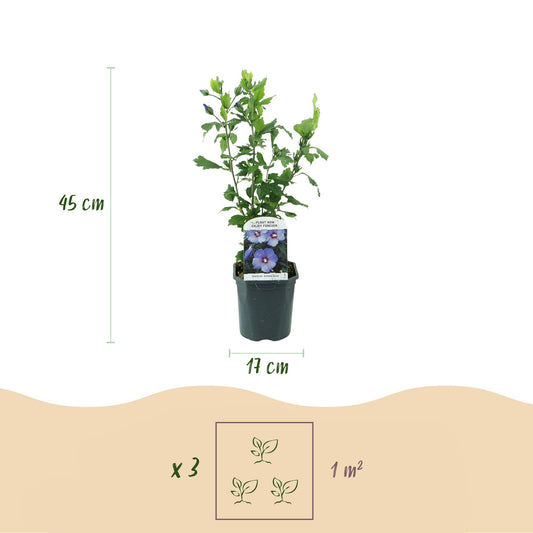
Hibiscus 'Blue Bird' (Hibiscus syriacus) - flowering shrub - 17 cm pot - Height 45 cm
Regular price From 44,95 €Regular price


🧭 Low, evergreen, or mixed native flowering hedge: which shrubs to choose
The right shrubs for a flowering hedge depend first on the desired height, the foliage you want in winter, and your climate. The heights and hardiness ratings below come from RHS plant profiles. A low flowering hedge stays under 1.5 m with compact shrubs; an evergreen flowering hedge keeps its leaves all winter; a mixed native hedge prioritizes native species and wildlife.
| Your situation | Shrubs to consider |
|---|---|
| Low flowering hedge (under 1.5 m) | Deutzia gracilis (0.5 to 1 m, H5), St. John’s wort 'Hidcote' (1 to 1.5 m, golden yellow flowers from midsummer to early autumn, H5), and mock orange 'Belle Étoile' (1 to 1.5 m); for greenery, Lonicera nitida |
| Evergreen flowering hedge | Laurustinus, osmanthus, Mexican orange blossom, and silverberry; Portuguese laurel flowers in early summer (H5); Portuguese laurel; photinia only flowers if left unpruned (RHS) |
| Informal mixed native hedge | Hawthorn, a native species, H7, Plants for Pollinators (RHS), with Cornelian cherry, flowering currant, and viburnums |
| Partial shade | Laurustinus, osmanthus, silverberry, forsythia, and mock orange (RHS) |
| Full sun and dry soil | Abelia, which is drought-resistant, and silverberry, which tolerates dry soils (RHS) |
| Coastal areas | Silverberry and Escallonia 'Apple Blossom' (evergreen, H4), recommended for coastal gardens (RHS) |
| Defensive flowering hedge | Pyracantha and hawthorn, both thorny and flowering in spring |
📐 Which hedge flowers all year round?
No hedge made up of a single species flowers all year round: for a hedge that flowers almost continuously, combine at least one shrub for each season, using the flowering periods listed by the RHS as a guide. Laurustinus and cornelian cherry get the season off to an early start, followed by forsythia, flowering currant, osmanthus and lilac in spring, then mock orange at the start of summer.
Summer belongs to abelia, which flowers from late spring to autumn according to NC State, and garden hibiscus. In autumn, oleaster produces its small fragrant flowers, while Mexican orange blossom flowers sporadically into winter, according to the RHS.
If fast growth matters, the RHS says oleaster, forsythia and flowering currant reach maturity in 5 to 10 years; see the full rankings in our comparison of which hedge grows fastest.
For staggered flowering in a border, see our flowering shrubs.
📐 Informal or clipped hedge: which shape for a flowering hedge?
A flowering hedge performs best when left informal and lightly pruned once a year, because repeated close clipping removes many of the flowers. The RHS illustrates this with photinia, whose cream-colored flowers only appear if it is left unpruned, whereas for a formal hedge it recommends two to three trims per growing season.
Forsythia and mock orange 'Belle Étoile' are classified by the RHS in pruning group 2, for early-flowering shrubs. For flowering currant and hawthorn grown as hedges, the RHS recommends pruning after flowering, or in autumn for hawthorn.
But be mindful of timing: the OFB recommendation shared by the Pays de la Loire Chamber of Agriculture advises against trimming hedges from March 15 to July 31, during the bird nesting season.
For private individuals, this is a recommendation; for farmers, the CAP (Common Agricultural Policy) prohibits hedge trimming from March 16 to August 15, according to the Ministry of Agriculture. Find the full schedule in our guide to when to trim a hedge.
📐 Flowering hedges and pollinators: how to choose well
A flowering hedge provides better nourishment for pollinators when it combines late-winter, spring and summer blooms, offering nectar over an extended period. The RHS awards its Plants for Pollinators label to laurustinus, cornelian cherry, flowering currant, oleaster, hawthorn and butterfly bush, while NC State notes that abelia flowers attract bees and butterflies.
One important caveat about butterfly bush: according to the OFB (French Biodiversity Agency), Buddleja davidii is classified as an invasive alien species in mainland France, and a single plant can produce up to 3 million seeds between September and October.
If you plant one, cut off each flower spike as soon as it fades throughout the summer, and no later than before September, when seed production begins according to the OFB: you can attract butterflies without spreading buddleia around the garden.
Fill in at the base of the hedge with nectar-rich perennials, and explore our nectar-rich plants.
📐 Flowering hedges and neighbors: required distances
A flowering hedge intended to grow over 2 m tall must be planted at least 2 m from the property boundary, and 0.5 m away if it will remain shorter, under Article 671 of the French Civil Code. These distances apply only in the absence of specific regulations or established, recognized local customs, as noted in a ministerial response published by the National Assembly.
Since the RHS gives laurustinus, osmanthus and oleaster a mature height of 2.5 to 4 m, allow 2 m for them unless you keep them below 2 m by pruning. Special cases are covered in our page on hedge planting distances.
🗓️ Flowering hedge maintenance calendar
Plant a flowering hedge between autumn and late winter, water it during its first two summers, and prune each species just after it flowers, outside the nesting season. The RHS recommends a mulch layer of at least 5 cm, replenished from late autumn to late winter.
Check the soil around a young hedge by touch and water when it is dry 2 to 3 cm below the surface, rather than watering on a fixed schedule.
📅 Seasonal maintenance calendar
| Season | Key task |
|---|---|
| 🌸 Spring | Spring flowering; do not trim from March 15 to July 31 (OFB); water young plants in dry weather |
| ☀️ Summer | Mock orange, abelia and hibiscus flowering; cut off faded buddleia spikes; lightly prune spring-flowering shrubs from August onward, after nesting season, at the cost of somewhat reduced flowering the following year (or leave the hedge informal); water when needed |
| 🍂 Autumn | Plant evergreen shrubs, then deciduous ones after leaf fall (RHS) |
| ❄️ Winter | Plant when there is no frost; apply at least 5 cm of mulch (RHS); laurustinus and cornelian cherry flowering |
🐛 Mistakes to avoid with a flowering hedge
The most common mistakes with a flowering hedge involve pruning at the wrong time, choosing unsuitable species or planting too close to a neighbor. Here is how to avoid them.
| Mistake | Why it's a problem | Solution |
|---|---|---|
| Clipping closely several times a year | Repeated trimming removes the flowers: photinia only flowers if left unpruned (RHS) | Leave the hedge informal and prune once after flowering |
| Pruning spring-flowering shrubs in late winter | You cut off the branches that were about to flower | Prune after flowering, outside the nesting season |
| Planting just one species | Flowering lasts only a few weeks | Mix 4 to 6 species with staggered flowering times |
| Laurustinus or Mexican orange blossom in a very cold region | Both are rated H4, hardy to -10 to -5°C (RHS) | Choose osmanthus or oleaster (H5), lilac (H6) or hawthorn (H7) |
| Letting butterfly bush set seed | Invasive, producing up to 3 million seeds per plant (OFB) | Cut off each spike as soon as it fades, before September |
| Planting a hedge expected to exceed 2 m at 50 cm from the boundary | Article 671 of the French Civil Code requires a 2 m distance in this case | Maintain the required distance or keep the hedge under 2 m |
-

Our flowering outdoor shrubs: buddleias, dogwoods, deutzias, hibiscus, mock oranges and more...
-

Nectar-producing plants & pollinators
Provide food for bees, bumblebees, and butterflies: our selection of outdoor nectar-rich...
-

Outdoor plants that keep their foliage all year round: evergreen privacy hedges,...


🌿 Our shrubs for a flowering hedge and their guides
This guide will help you put together your hedge; each shrub also has its own detailed guide to planting and pruning, as well as varieties in our flowering shrubs catalog.
🔑 Three ready-to-plant flowering hedge examples
For easy success, start with a mix of four or five species and repeat the sequence along the entire length. Evergreen flowering hedge, 2 to 3 m tall: laurustinus, Burkwood osmanthus, Mexican orange blossom and oleaster, in areas where winter temperatures stay above -10°C, as laurustinus and Mexican orange blossom are rated H4.
Low flowering hedge, 1 to 1.5 m tall: deutzia, ‘Belle Étoile’ mock orange, ‘Hidcote’ St John’s wort and dwarf Meyer lilac. Informal country hedge, 3 m or more: hawthorn, cornelian cherry dogwood, flowering currant, common lilac and viburnums.
For year-round greenery, see our evergreen foliage plants and our unusual evergreen hedges; for fragrance, see our fragrant plants.
✅ Our tips for a successful flowering hedge
For a successful flowering hedge, choose four to six shrubs that bloom at different times of year and suit your climate according to their RHS hardiness rating. Plant them 30 to 60 cm apart, at an appropriate distance from your neighbour, then let them grow into an informal hedge. Prune each species after it flowers, outside the nesting season: for spring-flowering shrubs, this means pruning from August onwards, at the cost of somewhat reduced flowering the following year.
Browse all our flowering shrubs to create your own.
My favourite flowering hedge is still the informal kind, a little irregular, with each shrub keeping its natural shape. I recommend always starting with two fragrant evergreens, Burkwood osmanthus and elaeagnus, to provide structure, then adding deciduous shrubs for colour. And I think a slightly less dense hedge that flowers is better than a wall clipped three times a year that no longer flowers.

Laura Bruneau
Jardinière & autrice


