Flowering shrubs: which ones to choose for a garden in bloom

A garden that blooms from spring through fall starts with choosing the right flowering shrubs. Magnolias in spring, hydrangeas and hibiscus in summer, witch hazel in winter: combine the right species and you’ll have color almost all year round, with very little maintenance. This guide will help you choose flowering shrubs based on bloom season, sun exposure, and available space, then prune them at the right time—the key to abundant blooms.
Which flowering shrubs should you choose? A seasonal approach
The best place to start is not with a variety, but with a season. To keep your garden in bloom all year round, combine shrubs with staggered flowering times: magnolia and forsythia in spring, deutzia and mock orange in early summer, hydrangea and hibiscus in midsummer, and witch hazel in winter. Here are the stars of each season.
| Bloom season | Featured shrubs | Colors |
|---|---|---|
| Spring | Magnolia, forsythia, lilac | White, yellow, mauve |
| Early summer | Deutzia, weigela, mock orange (fragrant) | White, pink |
| Midsummer | Hydrangea, hibiscus, butterfly bush (buddleia) | Blue, pink, purple |
| Late summer, fall | Panicle hydrangea, bluebeard | White-pink, blue |
| Winter | Witch hazel, winter viburnum | Yellow, fragrant white |
Think of this table as your toolkit: simply pick a shrub for each season and your garden will never look bare. The easiest choices for beginners are forsythia and magnolia in spring, and hydrangea and hibiscus in summer: reliable, hardy, generous bloomers that we cover in detail in our dedicated guides.
Staggering blooms throughout the year
The key to a garden that’s always in bloom comes down to one word: succession. Rather than planting five shrubs that all flower at the same time in spring, combine three to five species that take turns from March to November, along with a winter-blooming shrub to fill the gap.
A simple, effective plan: a magnolia gets things started as early as March, a hibiscus and a hydrangea take over throughout summer, and witch hazel brings fragrance to the colder months. This gives you an almost continuous succession of blooms without adding to your workload, since these shrubs need little care once established.
Also think about foliage and ornamental fruit: a dogwood with colorful stems adds winter interest, while a viburnum produces berries in fall. A good flowering shrub border should be planned for all twelve months, not just the growing season.
Choosing shrubs for your space: hedge, border, or pot
Consider a shrub’s mature size when making your choice. For an informal flowering hedge, look for 2–3 m shrubs such as butterfly bush or lilac; for a border, choose hydrangeas and hibiscus (1–1.5 m); and for a pot, go for compact varieties. There are suitable options for every setting.
| Location | Recommended shrubs | Why |
|---|---|---|
| Informal flowering hedge | Butterfly bush, lilac, mock orange | 2–3 m tall, vigorous and fast-growing |
| Garden border | Hydrangea, hibiscus | 1–1.5 m tall, long flowering season |
| Pot or balcony | Compact hydrangea, dwarf hibiscus | Well suited to large containers |
| Small city garden | Deutzia, weigela | Compact and prolific bloomers |
You can combine all three sizes in the same border: a tall background shrub such as butterfly bush, medium-sized choices such as hydrangea and hibiscus, and a few compact shrubs along the edge. This creates depth and staggers the blooms at different heights.
columns: 4
columns_mobile: 2
-

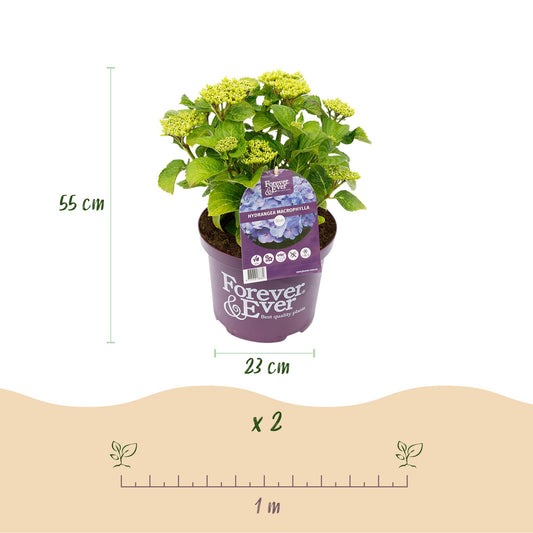
Forever Ever Hydrangea (Hydrangea macrophylla), hardy flowering shrub, 23 cm pot, Height 55 cm
Regular price From 69,95 €Regular price69,95 €From 55,96 €Livraison offerte -

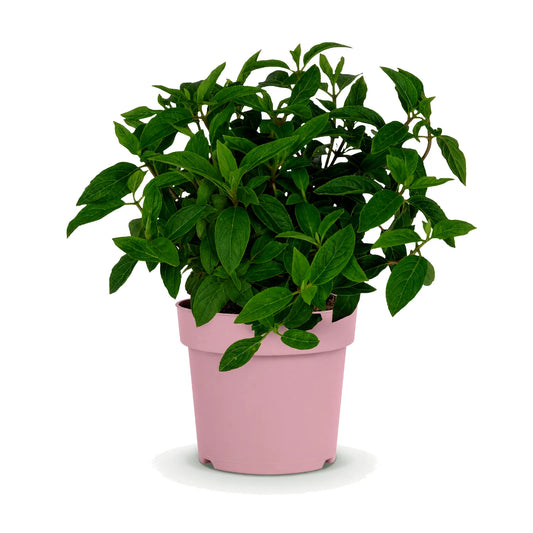
Hydrangea paniculata ‘Groundbreaker’ Blush, hardy flowering shrub, 14 cm pot, Height 20–25 cm
Regular price From 44,95 €Regular price44,95 €From 35,96 €Livraison offerte -

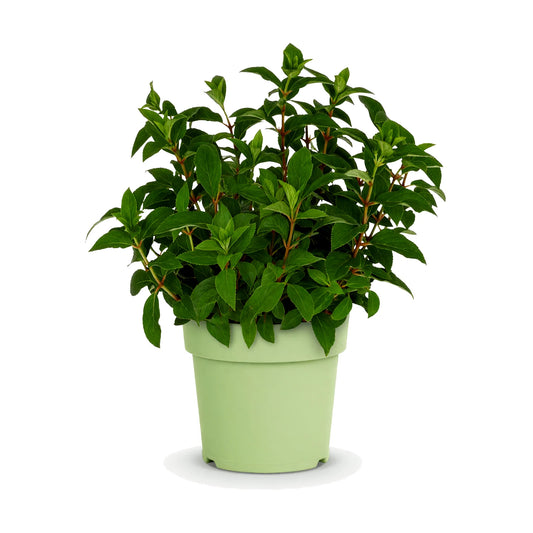
Groundbreaker Greeny Hydrangea (Hydrangea paniculata), hardy flowering shrub, 14 cm pot, Height 20–25 cm
Regular price From 44,95 €Regular price44,95 €From 35,96 €Livraison offerte -

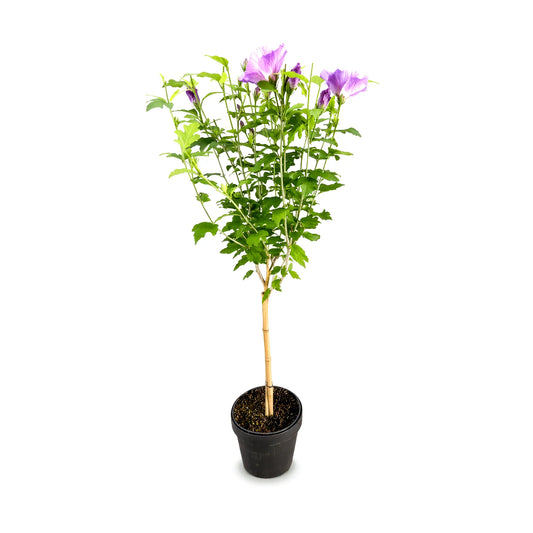
Hibiscus syriacus Lavender Chiffon® (Hibiscus syriacus), hardy flowering shrub, purple flowers, 19 cm pot, Height 90 cm
Regular price 74,95 €Regular price74,95 €59,96 €Livraison offerte -

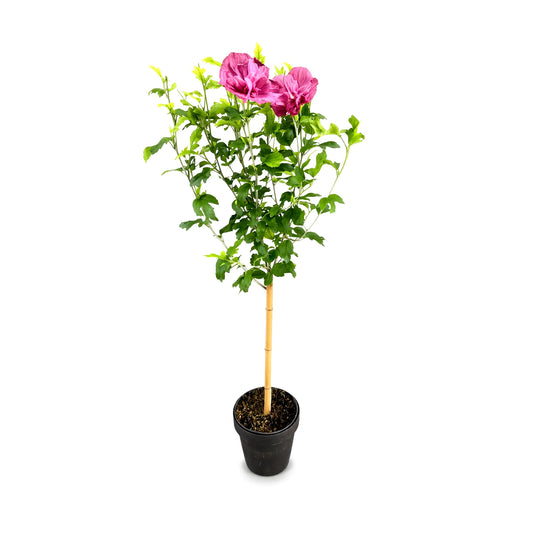
Hibiscus syriacus Magenta Chiffon® (Hibiscus syriacus), hardy flowering shrub, 19 cm pot, Height 90 cm
Regular price 74,95 €Regular price74,95 €59,96 €Livraison offerte -

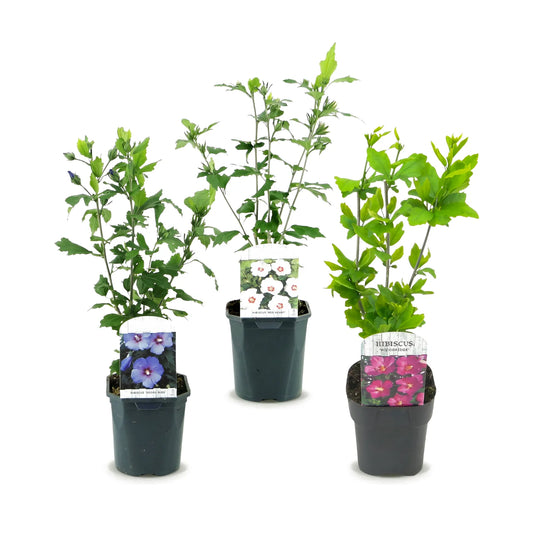
Hibiscus syriacus Tricolour (Hibiscus syriacus), hardy flowering shrub, 17 cm pot, Height 45 cm - Set of 3
Regular price 69,95 €Regular price69,95 €55,96 €Livraison offerte -


Magnolia (Magnolia), hardy flowering shrub, white flowers, 19 cm pot, Height 90 cm
Regular price 69,95 €Regular price69,95 €55,96 €Livraison offerte -
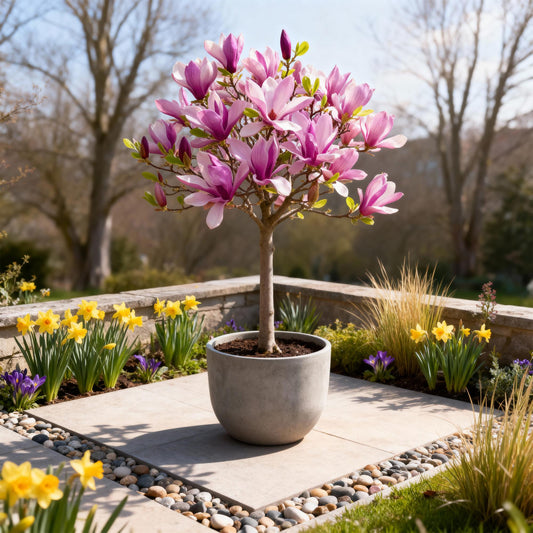

Magnolia Susan (Magnolia), hardy flowering shrub, pink flowers, 19 cm pot, Height 90 cm
Regular price 69,95 €Regular price69,95 €55,96 €Livraison offerte


Choosing shrubs for your sun exposure and soil
Sun exposure helps narrow down your choices. Most flowering shrubs prefer full sun or partial shade; only a few, such as mophead hydrangeas, prefer cool shade. As for soil, ordinary, moist but well-drained soil (with a pH close to 6–7) suits almost all of them.
| Sun exposure / soil | Suitable shrubs |
|---|---|
| Full sun | Hibiscus, butterfly bush, lilac, bluebeard |
| Partial shade | Deutzia, weigela, mock orange, panicle hydrangea |
| Cool shade | Mophead hydrangea, viburnum |
| Acidic soil (pH < 5.5) | Blue hydrangea, camellia, rhododendron |
The main thing to watch out for is hot, dry sun, which hydrangeas cannot tolerate. In such locations, choose sun-loving shrubs such as hibiscus and bluebeard, and plant hydrangeas in cool partial shade. Soil that stays moist in summer makes all the difference for most species.


Prune at the right time: the golden rule
Pruning is what separates a sparsely flowering shrub from one covered in blooms. The rule, highlighted by the SNHF (the French National Horticultural Society), can be summed up in one sentence: prune spring-flowering shrubs just after they bloom, and summer-flowering shrubs in late winter.
The reason is simple. Spring-flowering shrubs (magnolia, forsythia, lilac) bloom on the previous year’s wood, so pruning them in winter would remove the flowers to come. Summer-flowering shrubs (hibiscus, butterfly bush, panicle hydrangea) bloom on the current year’s growth, so late-winter pruning encourages them to flower. The RHS (Royal Horticultural Society, in English) explains this rule for each group, as does its guide to pruning summer-flowering shrubs (in English).
| Flowering season | When to prune | Examples |
|---|---|---|
| Spring / early summer | Just after flowering | Magnolia, forsythia, lilac, deutzia, mock orange |
| Summer | Late winter | Hibiscus, butterfly bush, panicle hydrangea, bluebeard |
| Little or no pruning | Leave to grow naturally | Viburnum, dogwood, mophead hydrangea (remove faded flowers) |
The SNHF also advocates “light pruning” that respects a shrub’s natural shape: it’s better to prune lightly at the right time than to cut it back hard every year. Some shrubs, such as viburnum and dogwood, may even flower better if left alone.
How to plant flowering shrubs successfully
Most flowering shrubs are easy to grow: they need moist, well-drained soil, regular watering during the first year, and fall planting to establish strong roots before summer. Here are the essentials.
📋 Quick facts
The essential growing information for flowering shrubs, at a glance.
| Feature | Guideline |
|---|---|
| Type | Flowering shrubs, deciduous or evergreen |
| Mature height | 0.5–3 m, depending on species |
| Sun exposure | Full sun to partial shade (cool shade for mophead hydrangeas) |
| Soil | Ordinary, moist, well-drained soil; acidic (pH < 5.5) for blue hydrangeas |
| Hardiness | Hardy, often to -15 °C and below |
| Plant spacing | 80 cm to 1.5 m, depending on mature size |
| Planting time | Fall (ideal) or spring |
| Flowering | From spring to fall, depending on species; some are fragrant |
| Watering | Regular in the first year, then moderate; water regularly in pots |
| Pruning | After flowering (spring-flowering shrubs) or in late winter (summer-flowering shrubs) |
The first year is the only time that requires real effort: young shrubs need regular watering while their roots become established. A thick layer of mulch around the base keeps the soil moist and greatly reduces the need to water. After that, most flowering shrubs are practically self-sufficient.
Seasonal maintenance calendar
Flowering shrubs need little care: prune at the right time, mulch, and water initially. Here’s a guide to help you stay on track throughout the year.
📅 Seasonal maintenance calendar
| Season | Key task |
|---|---|
| 🌸 Spring | Plant, mulch, and add compost; prune shrubs that have just finished flowering (forsythia). |
| ☀️ Summer | Water young plants and container-grown shrubs; prune spring-flowering shrubs just after they bloom. |
| 🍂 Fall | Ideal time to plant; leave faded hydrangea flowers in place to protect the buds. |
| ❄️ Winter | Prune summer-flowering shrubs (hibiscus, butterfly bush); enjoy witch hazel in bloom. |
Butterfly bush · Smoke tree · Lilac · Heavenly bamboo · Ericaceous plants
My tip for a blooming garden that doesn’t take up your weekends: choose three shrubs that take turns flowering—a magnolia for spring, a hydrangea for summer, and witch hazel for winter. With this trio and the right pruning rule, you’ll have color almost all year round and hardly any work to do. It’s the foundation of a beautiful garden, whatever your experience level.
Mistakes to avoid with flowering shrubs
Most disappointments come down to three mistakes: pruning at the wrong time, planting a shade-loving shrub in scorching sun, or letting a young plant go without water during its first year. Here are the right habits to adopt.
| Common mistake | What to do instead |
|---|---|
| Pruning a spring-flowering shrub in winter | Wait until just after it blooms |
| Planting a hydrangea in hot, dry sun | Give it partial shade and moist soil |
| Forgetting to water during the first year | Water regularly and mulch around the base |
| Cutting a shrub “right back” for no reason | Respect its natural shape (light pruning) |
Remember the first one in particular: it’s the most common mistake. A forsythia or lilac pruned in winter won’t flower in spring—not because it’s unhealthy, but because its buds have been cut off. The right time to prune always depends on when the shrub flowers.
Where to start: our picks
If you’re just starting out, choose one easy, generous bloomer for each season: a magnolia or forsythia for spring, and a hydrangea or hibiscus for summer. You can add to your border over time as you like, simply making sure to stagger the flowering seasons.
For more information on each species, explore our dedicated guides: the hydrangea guide, our guide to Hibiscus syriacus (rose of Sharon), and the magnolia guide. These three reliable choices alone will cover spring and summer.
Finally, to put your border together, browse our collection of flowering shrubs (hydrangeas): you’ll find the easy-care, hardy varieties mentioned in this guide, ready to plant in fall for their first blooms the following summer.

Laura Bruneau
Jardinière et autrice