What to Plant in Spring: Shrubs, Perennials and Summer Bulbs

What should you plant in spring? In the ornamental garden, make the most of March to May to plant tender plants and those sold in containers: lavender, olive trees, agapanthus, star jasmine, warm-climate grasses, perennials, potted roses, clematis and summer bulbs such as dahlias and gladioli.
This guide is the counterpart to our what to plant in autumn page: it tells you what to plant, month by month and according to your garden, with the right time and hardiness rating for each plant, based on the RHS.
Spring gardening tasks (pruning, maintenance) have their own guide, and all our outdoor plants are gathered in one collection.
🌟 Why plant in spring, and what autumn does better
Planting in spring is the right choice for plants that cannot tolerate a cold, wet winter while their roots are still young, and for summer bulbs.
According to the RHS guide to lavender, lavender is best planted in April or May, when the soil warms up naturally, and never in winter, as young plants rot in cold, wet soil. The RHS also recommends planting olive trees and agapanthus in borders in spring.
Autumn, however, is still better for bare-root plants and hedges: container-grown plants established in autumn or winter need less watering than those planted in spring or summer, according to the RHS tree and shrub planting guide.
| Advantage | What this means |
|---|---|
| Warming soil | Warm-climate plants (lavender, olive trees, grasses such as Pennisetum) establish roots without rotting |
| Summer bulbs | Dahlias, summer gladioli and outdoor freesias are planted in spring (freesias in April, 5 cm deep, RHS) |
| Container-grown selection | Shrubs, roses, perennials and potted climbers can be planted year-round, except when the ground is frozen or waterlogged (RHS) |
| Quick results | Perennials planted in March or April may flower as soon as summer |
| The trade-off | More attentive watering during the first year, especially if spring is dry |
📊 What to plant in spring: the March-to-May planting table
To find out what to plant in spring, first check the recommended planting period and the hardiness rating for each plant: these determine whether it is best to wait until April or May. Planting periods and hardiness ratings come from RHS plant profiles, unless otherwise stated.
On the RHS (Royal Horticultural Society) hardiness scale, H3 corresponds to -5 to 1°C, H4 to -10 to -5°C, H5 to -15 to -10°C and H6 to -20 to -15°C, based on absolute minimum temperatures.
| Plant | When to plant | Position | Hardiness (RHS) | Key tip |
|---|---|---|---|---|
| Container-grown shrubs (flowering shrubs) | March to May, as long as the ground is not frozen or waterlogged (RHS) | Depends on the species | Butterfly bush H6 (invasive according to OFB; deadhead before it sets seed), garden hibiscus H5 | Make a hole at least 3 times wider than the root ball, with the root ball level with the soil (RHS) |
| Roses (Roses) | Bare-root roses until early spring, before growth resumes; container-grown roses year-round (the RHS rose planting guide) | Sun | Varies by rose | Keep the graft union at soil level, never below (RHS) |
| Perennials (hardy geranium, catmint, coneflower) | Bare-root plants from March to early May; plants in pots year-round, as long as the ground is not frozen (RHS) | Usually sun | Varies by species | Cover the roots only, leaving shoots above ground; apply 5–7 cm of mulch (RHS) |
| Clematis (Clematis) | Spring or early to mid-autumn (the RHS clematis guide) | Sun or partial shade, with the base in shade | Clematis montana H5 | Large-flowered varieties: bury the root ball 5–7.5 cm deep; plant 30–45 cm from the wall (RHS) |
| Star jasmine (Trachelospermum jasminoides) | Spring, after the worst frosts | Sheltered from cold winds | H4, -10 to -5°C (RHS) | Evergreen and fragrant; plant against a warm wall |
| Lavender (Lavandula angustifolia) | April or May (RHS) | Full sun, very well-drained soil | H5, -15 to -10°C (RHS) | Plant on a 20–30 cm mound in heavy soil (RHS) |
| Olive tree (Olea europaea) | Spring for planting in the ground (the RHS olive tree guide) | Sun, sheltered from cold winds | H4; the RHS gives -5 to -10°C | In cold regions, use a large pot at least 30–35 cm wide |
| Agapanthus (Agapanthus) | Late March to April (the RHS agapanthus guide) | Full sun, well-drained soil | Agapanthus africanus H3, -5 to 1°C (RHS) | Cover the crowns with 5 cm of soil; use a pot at least 20–23 cm wide |
| Warm-climate grasses (Pennisetum, Miscanthus) | Late spring (the RHS ornamental grasses guide) | Sun | Varies by species | Fescues and stipas, which are cool-climate grasses, prefer autumn (RHS) |
| Gladioli (Gladiolus) | Mid-April to May for summer hybrids (the RHS gladioli guide) | Full sun, with no competition | Gladiolus byzantinus is described as hardy by the RHS | Plant corms 10–15 cm deep, in successive batches |
| Dahlias | Plant tubers in the ground from mid- to late April; pot-grown plants can go out in late May (the RHS dahlia guide) | Sun, sheltered | Not hardy according to the RHS | Set the top of the tuber just below the surface; space plants 60 cm apart |
📋 Quick reference
General guidelines for spring planting in the garden, based on the RHS and Météo-France.
| Guideline | Rule |
|---|---|
| Timing | March to May, as soon as the ground is no longer frozen or waterlogged |
| Plants to prioritise | Tender plants, Mediterranean plants, warm-climate grasses, summer bulbs and all container-grown plants |
| Bare-root plants | Until early spring, before growth starts (RHS) |
| Planting hole | At least 3 times the diameter of the roots, but no deeper than their length (RHS) |
| Depth | Top of the root ball level with the soil, except for large-flowered clematis (5–7.5 cm deeper) |
| Watering | Water thoroughly when planting, even if rain is forecast, then check by touch (RHS) |
| Mulching | 5–7 cm thick, leaving 10 cm clear around the stems (RHS) |
| Late frosts | Possible after the Ice Saints (11–13 May), according to Météo-France |
| Tender plants in pots | Move or plant them outside when temperatures remain above 5°C (RHS, for dahlias) |
How to plant successfully in spring in 7 steps
To plant successfully in spring, choose a day when the soil has drained, dig a wide hole, plant at the right depth, water thoroughly and mulch.
| Step | What to do |
|---|---|
| 1. Check the soil | It should be neither frozen nor waterlogged: a handful of soil should crumble, not stick together |
| 2. Rehydrate the root ball | Water the root ball well before removing the pot; soak bare roots for about 30 minutes (RHS) |
| 3. Dig a wide hole | At least 3 times the diameter of the root ball, but no deeper than it (RHS) |
| 4. Set it at the right depth | Top of the root ball level with the soil; rose graft union at soil level; large-flowered clematis planted deeper |
| 5. Backfill and firm | Use the soil from the hole, without adding too much soil improver, and firm it around the root ball with your foot |
| 6. Water thoroughly | To eliminate air pockets, even in rainy weather |
| 7. Mulch and monitor | Apply 5–7 cm of mulch, then water whenever the soil feels dry 2–3 cm down throughout the first growing season |
columns: 4
columns_mobile: 2
-

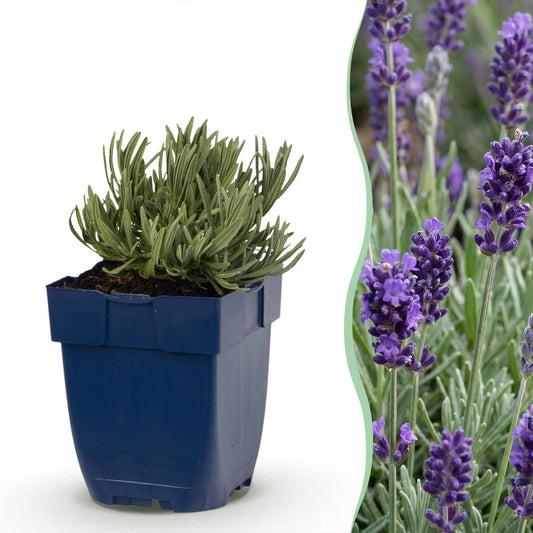
Lavender 'Munstead' (Lavandula angustifolia) - fragrant honey-producing perennial - 11 cm pot - Height 25 cm
Regular price From 39,95 €Regular price -

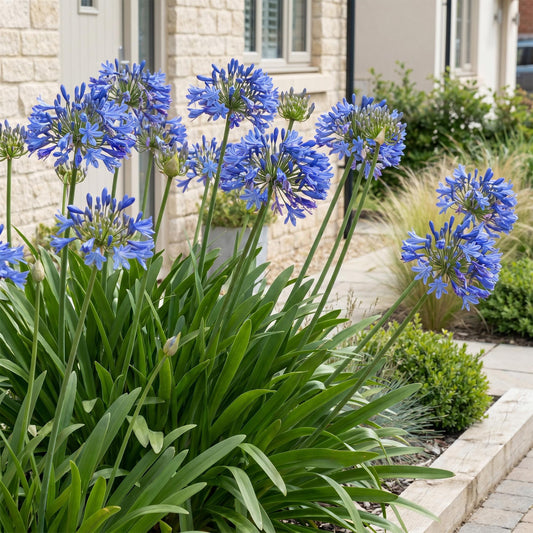
Blue African lily (Agapanthus africanus) – flowering perennial – 11 cm pot – height 15–25 cm
Regular price From 39,95 €Regular price -
Olive (Olea europaea), Mediterranean ornamental shrub, 19 cm pot, Height 90 cm
Regular price 64,95 €Regular price -

 Livraison offerte
Star jasmine (Trachelospermum jasminoides) – fragrant evergreen climber
Regular price From 54,95 €Regular price -

 Livraison offerte
Mountain clematis ‘Mayleen’ (Clematis montana) – fragrant climber
Regular price From 34,95 €Regular price -

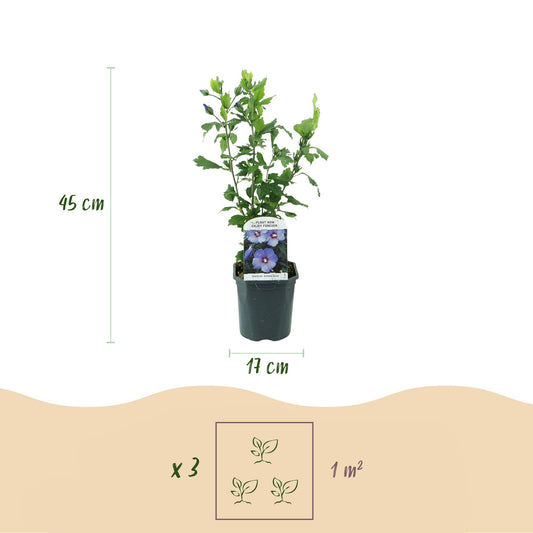
Hibiscus 'Blue Bird' (Hibiscus syriacus) - flowering shrub - 17 cm pot - Height 45 cm
Regular price From 44,95 €Regular price -

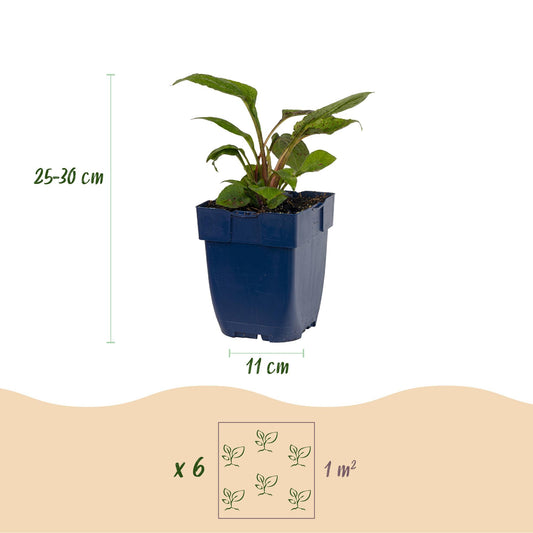
Pollinator perennial plant pack for borders, attracts bees and butterflies, Set of 6, 11 cm pot, Height 15–25 cm
Regular price From 64,95 €Regular price -

 Livraison offerte
Bulb mix for a sunny garden – summer flowering – size 10/12
Regular price From 44,95 €Regular price


🧭 What to plant in spring, depending on your garden
What you plant in spring depends first on your aspect, soil and available space. To explore your choice of species further, see our comparison of perennials by growing conditions.
| Your situation | What to plant in spring |
|---|---|
| Full sun, dry soil | Lavender, olive trees, agapanthus, warm-climate grasses and summer bulbs: see our plants for full sun and our dry garden guide |
| Partial shade or shade | Container-grown hydrangeas, shade-loving perennials and clematis with shaded roots: our selection of perennials for shade |
| Balcony or patio | Agapanthus, olive trees, lavender and compact potted roses, combined with our plants for balconies and patios; for hydrangeas, see our guide to potted hydrangeas |
| Wall, pergola or fence | Clematis, star jasmine, honeysuckles and climbing roses; our evergreen climbers stay green through winter |
| Hedge | Container-grown plants in spring; for bare-root plants, wait until November to February, as recommended by the RHS: find out how to plant a hedge in autumn, create a privacy hedge or put together a flowering hedge |
| Pollinator-friendly garden | Catmint, echinaceas, lavender and garden hibiscus (Hibiscus syriacus), attractive to bees and butterflies according to NC State Extension: our pollinator-friendly perennials. The butterfly bush (Buddleja davidii) is RHS Plants for Pollinators certified, but the OFB (French Biodiversity Agency) classifies it as an invasive alien species in mainland France: deadhead it as soon as flowering ends, before it sets seed |
| Garden with a dog or cat | The ASPCA (American Society for the Prevention of Cruelty to Animals) classifies English lavender (Lavandula angustifolia) as toxic to dogs, cats and horses (nausea, vomiting except in horses, loss of appetite); NC State classifies garden hibiscus (Hibiscus syriacus) as non-toxic |
📐 What to plant in March in the garden
In March, plant the last bare-root roses and perennials before growth resumes, along with container-grown shrubs, roses, perennials and clematis as soon as the soil is no longer frozen or waterlogged. Leave lavender, agapanthus and dahlias until April.
For roses, the RHS recommends planting bare-root plants between late winter and early spring; for perennials, from March to early May.
This is also a good time to plant a garden hibiscus or a container-grown butterfly bush (the latter is invasive according to the OFB, so deadhead it before it sets seed).
For details on pruning in March, see our spring pruning guide.
📐 What to plant in April in the garden
April is the key month for spring planting: plant lavender, agapanthus, olive trees and star jasmine in a sunny spot, fill out perennial borders with plug plants, then plant the first summer bulbs, dahlia tubers directly in the ground, gladioli and freesias from mid-April onward.
The RHS recommends planting lavender in April or May, and dahlia tubers directly in the ground from mid- to late April, as the soil is no longer frozen even though ground frosts are still possible. Summer gladioli are planted from mid-April to May, 10 to 15 cm deep; plant them in batches a few weeks apart to extend the flowering season.
For all types of bulbs, our guide to when and how to plant bulbs gives planting depths. For perennials for borders, see our guide to perennials for borders.
📐 What to plant in May in the garden
In May, plant only what is truly sensitive to the cold: dahlias started in pots, summer containers, warm-climate grasses such as Pennisetum and Miscanthus, and patio plants brought out of shelter. For the most tender plants, wait until the risk of late frost has passed in your area.
The RHS recommends putting dahlias started in pots outside once all risk of frost has passed, generally in late May, or early to mid-June in colder regions, and keeping them under cover until temperatures stay above 5°C.
Keep an eye on the Ice Saints, May 11–13: Météo-France reminds us that this is a tradition, not a rule. Yet among 130 lowland weather stations and 73 years studied, frost was recorded after May 13 at at least one station in 49 out of 73 years, or 67% of the time.
Our guide to what to do in the garden in March, April and May has the full calendar of May tasks.
🗓️ After spring planting: care season by season
A plant established in spring mainly needs watering at the right time during its first year, then little care. The RHS notes that container-grown plants planted in spring or summer need more watering than those planted in autumn: check the soil by touch near the root ball before watering.
For monthly tasks in detail, see our spring gardening calendar, and for overwintering tender plants, see our guide to protecting plants from frost.
📅 Seasonal care calendar
| Season | Key task |
|---|---|
| 🌸 Spring | Plant from March to May, water thoroughly, apply 5–7 cm of mulch (RHS) |
| ☀️ Summer | Water when the soil feels dry 2–3 cm down, especially in the first year; stake tall dahlias |
| 🍂 Autumn | Ideal season for bare-root hedges and cool-climate grasses (RHS); lift dahlia tubers and store frost-free in colder regions (RHS) |
| ❄️ Winter | Protect agapanthus with 2–3 layers of fleece from November to early April (RHS); shelter potted olive trees in colder regions |
🐛 Spring planting mistakes to avoid
Spring planting mistakes are almost always caused by poor timing or choosing the wrong spot for a plant.
| Mistake | Why it's a problem | Solution |
|---|---|---|
| Planting in frozen or waterlogged soil | Roots suffocate or fail to establish (RHS) | Wait until the soil crumbles in your hand |
| Burying a rose's graft union | The RHS links planting too deeply with an increased risk of dieback | Keep the graft union at soil level |
| Planting a tree or shrub too deeply | The RHS lists this mistake among the common causes of tree mortality | Set the top of the root ball level with the ground |
| Putting potted dahlias outside too early | They are not hardy (RHS) | Wait until late May, or until temperatures are above 5°C |
| Planting a bare-root hedge in May | The bare-root season runs from November to February (RHS) | Choose container-grown plants or wait until autumn |
| Leaving evergreen agapanthus outdoors in a cold region | Agapanthus africanus is rated H3, -5 to 1°C (RHS) | Grow it in a pot and bring it indoors to keep it frost-free in winter |
| Forgetting to water during the first year | Spring planting needs more water than autumn planting (RHS) | Water when needed and mulch |


🌿 Our spring planting picks and plant profiles
Each plant in this guide has a full profile and varieties in our catalog.
🔑 And what about the vegetable garden in spring?
The vegetable garden is the other big spring project, and most pages about “what to plant in April” talk about vegetables. The basic rules are the same as in an ornamental garden: sow and plant in the ground when the soil has drained and warmed up, and keep tender vegetables under cover until the last frosts have passed.
For example, the RHS recommends only putting tomatoes outside once temperatures stay above 16°C, after hardening them off, in a warm, sunny, sheltered spot.
For the vegetable garden, follow your region’s sowing calendar; our guide to preparing the garden in winter explains what to get ready before March, while our autumn planting guide covers what to wait until autumn for.
✅ Our tips for successful spring planting
To know what to plant in spring, remember three groups: tender plants, everything sold in containers, and summer bulbs. Plant them from March to May depending on their hardiness, water thoroughly and then as needed, and mulch.
Explore our outdoor flowering plants, our Mediterranean plants, our balcony and patio plants and our nectar-rich plants.
In spring, I recommend starting with plants that love warmth: a lavender planted in the right spot on a small mound, an agapanthus in a large pot and star jasmine against a sunny wall can already transform the look of a garden. I leave bare-root hedging for autumn, and always wait until the last frosts have passed before bringing tender plants outside. My simplest tip is to touch the soil before watering: it’s the habit that makes spring planting a success.

Laura Bruneau
Jardinière & autrice