Perennials for flower beds: the complete guide to creating an easy-care flower bed

Want a flower bed that comes back year after year without having to replant everything? Perennials are the answer. Unlike annuals, which you have to buy again every spring, perennials become established for the long term, come back stronger each season and require little maintenance. Whether you’re looking for plants that attract pollinators, ground covers, fragrant varieties, or plants for shade or full sun, there’s something for every corner of the garden.
This comprehensive guide explains how to create a beautiful, easy-care perennial bed: how to choose plants based on sun exposure, plant and care for them, divide them to propagate, and enjoy successive blooms from spring through fall. With practical, reliable advice.
🌸 Perennials: a flower bed that comes back every year
A perennial lives for several years: it spends the winter underground (or in a low-growing clump) and comes back in spring, fuller than before. It provides the lasting, cost-effective structure of a flower bed: plant once, and enjoy it for years. Most require little care, and many grow into clumps that you can divide to get new plants for free.
By playing with heights (from 15 cm for ground covers to 60 cm or more), colors and blooming periods, you can create a vibrant flower bed from March to November that attracts pollinators and is easy to maintain. Plant 5 to 9 per m², and the bed will fill in within 2 to 3 years.
At a glance
| Feature | Perennials for flower beds |
|---|---|
| Type | Plants that come back every year (long-lived) |
| Blooming period | From spring through fall, depending on the variety |
| Height | From ground covers (15 cm) to structural plants (60 cm and up) |
| Hardiness | Generally hardy (choose varieties suited to your region) |
| Exposure | ☀️ Sun or 🌑 shade: there are perennials for every situation |
| Maintenance | Low: little watering once established, and one pruning per year |
| Main advantage | ✅ Come back every year; cost-effective and eco-friendly |
🎁 Our perennial bundles, ready to plant
To get started with confidence, our themed bundles bring together compatible perennials in sets of 6 to 24 plants, ready to create a 1 to 3 m² flower bed:
| Bundle | What it’s for |
|---|---|
| Pollinator-friendly | Attract bees and butterflies for a vibrant, eco-friendly garden |
| Ground covers | Cover the soil and help limit weeds |
| For shade | Bring flowers to challenging shady spots |
| White / fragrant | Create an elegant, fragrant bed that glows at dusk |
| Herbs for tea | Combine beauty with a harvest for your teapot |
Each bundle makes planning easy: the plants are chosen to complement one another and thrive in the same conditions.
💪 Perennials or annuals: why choose perennials
| Criteria | Perennials | Annuals |
|---|---|---|
| Lifespan | ✅ Several years | One season only |
| Long-term cost | ✅ Cost-effective (plant once) | Need to be bought again every year |
| Maintenance | ✅ Low once established | Replant every year |
| Biodiversity | ✅ Lasting habitat; attracts pollinators | Temporary |
| Instant impact | Gradual (they fill out over time) | Instant blooms |
🎯 Plan your flower bed: choose plants for the conditions
| Your situation | The right choice |
|---|---|
| Flower bed in full sun | Sun-loving perennials, pollinator-friendly plants, herbs |
| Shady spot | Shade bundle |
| Cover a slope / the base of a tree | Ground-cover perennials |
| Attract wildlife | Pollinator-friendly perennials |
| Fragrant bed near a patio | White and fragrant perennials |
The key to a beautiful flower bed: place tall perennials (50 to 80 cm) at the back, medium-height ones (30 to 50 cm) in the middle, and ground covers (15 to 25 cm) at the front. Repeat a few varieties to create a rhythm. Mix blooming periods to keep the bed in flower throughout the season.
🪴 Where and how to plant them (step by step)
☀️ Exposure: follow the instructions on each bundle’s label (sun or shade): this is the key to success.
🌱 Soil: most perennials like ordinary soil that has been loosened and enriched with compost—not too dry or waterlogged. The ideal time to plant is in fall or spring.
- Set the pots out on the soil to visualize the flower bed before planting.
- Loosen the soil, add compost, and plant at the crown level.
- Allow around 5 to 9 perennials per m² (one plant every 30 to 40 cm), depending on how large they will grow.
- Water thoroughly and mulch to limit weeds and retain moisture.
columns: 4
columns_mobile: 2
-
Perennial herb starter kit for herbal teas, Set of 6, 11 cm pot, Height 15–25 cm
Regular price From 64,95 €Regular price -

 Livraison offerte
Pack of White Perennials for Borders, Set of 24, 11 cm Pots
Regular price 169,95 €Regular price -
Groundcover Perennial Pack for Borders, Set of 6, 11 cm Pots, Height 15–25 cm
Regular price From 64,95 €Regular price -

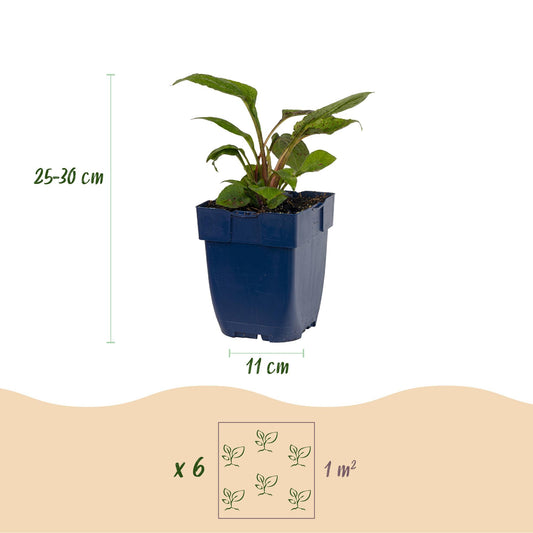
Pollinator perennial plant pack for borders, attracts bees and butterflies, Set of 6, 11 cm pot, Height 15–25 cm
Regular price From 64,95 €Regular price -


Pack of Perennial Plants for Borders, Ready to Plant, Set of 6, 11 cm Pots, Height 15–25 cm
Regular price From 64,95 €Regular price -

 Livraison offerte
Perennial pack for shaded beds, Set of 6, 11 cm pots, Height 15-25 cm
Regular price From 64,95 €Regular price -
Pack of scented perennials for borders, Set of 6, 11 cm pot, Height 15-25 cm
Regular price From 64,95 €Regular price -


Elf Flower 'Frohnleiten' (Epimedium x perralchicum) - evergreen shade ground cover - 11 cm pot - height 15–25 cm
Regular price From 39,95 €Regular price


🌿 Caring for them throughout the seasons
💧 Watering: water regularly during the first year while the plants take root; after that, most perennials need little water.
✂️ Pruning: maintenance takes just a few steps: removing spent flowers extends blooming, and a cleanup prune at the end of winter (cutting back dry stems) prepares plants to grow again. Leaving dry stems in place over winter protects the crown and provides shelter for insects.
🌾 Fertilizing: adding compost in spring keeps the flower bed vigorous.
📅 Seasonal maintenance calendar
| Season | Key task |
|---|---|
| 🌸 Spring | Planting; new growth; add compost; first blooms |
| ☀️ Summer | Flowering bed; water in the first year; remove spent flowers |
| 🍂 Fall | Ideal time to plant; divide clumps; last blooms |
| ❄️ Winter | Clean up if needed, or leave stems in place (shelter for insects); mulch; dormancy |
🔀 Propagate them by division (for free!)
This is one of the great pleasures of perennials: after two to three years, most form handsome clumps that you can divide to get new plants for free—and rejuvenate the original plant at the same time.
- In fall or spring, dig up a well-established clump.
- Separate it into sections, each with roots and buds.
- Replant right away, water, and just like that, you’ve expanded your flower bed at no cost.
🐛 Common problems: quick diagnosis
| Symptom | Likely cause | What to do |
|---|---|---|
| Sparse bed in the first year | ⏳ Normal establishment | Be patient: perennials fill out in the second or third year |
| Holes in leaves, plants nibbled | 🐌 Slugs / snails | Use traps, ash/grit, and hand-pick in the evening |
| Clump thinning in the middle after a few years | 🔀 Clump needs dividing | Divide in spring or fall to rejuvenate it |
| Yellow foliage, waterlogged soil | 🌊 Too much water | Improve drainage and water less often |
🐝 A vibrant flower bed that supports biodiversity
Choosing perennials is also a way to help nature. A thoughtfully designed perennial bed becomes a true haven for biodiversity, far more than just a pretty backdrop. Pollinator-friendly perennials provide nectar and pollen for bees, bumblebees and butterflies over a long period, especially if you stagger blooms from spring through fall so there’s never a “gap” without flowers.
A few simple steps can multiply this effect. Leave dry stems in place over winter instead of cutting everything back in fall: they shelter many beneficial insects and provide seeds for birds, while protecting the crown from the cold. Avoid pesticides: a diverse flower bed regulates itself, with beneficial insects (ladybugs, hoverflies) taking care of aphids. And choose organic mulch, which feeds soil life as it breaks down while reducing the need for watering and weeding.
Ground-cover perennials play a key role here: by covering the soil, they smother unwanted weeds, retain moisture, and reduce maintenance and water needs. The result is a flower bed that’s beautiful, economical and full of life—and needs less and less attention as it becomes established. That’s the essence of sustainable gardening: plant once, work with nature, and let it do the rest.
For a flower bed that blooms without interruption, it’s best to plan by season. A few early-blooming perennials put on a show in spring, others take over in midsummer, and late-season varieties keep the flowers coming until the first frosts. Combine these three waves and you’ll have a lively bed from March to November, with no lull—a result you can’t get from a single species.
Best of all, this flower bed takes less and less work over time. The first year calls for a little attention (watering and weeding while the plants fill in), but once the perennials cover the soil, maintenance is reduced to a few tasks each year. Dividing clumps every three or four years rejuvenates them and even lets you expand the bed or create new ones for free: a garden that pays for itself, in a way.
If you want to get started with confidence, the easiest option is to choose a themed bundle suited to your conditions: the plants have already been selected to grow well together, helping you avoid mismatched combinations and disappointment. Plant them, water during the first year, and be a little patient—and you’ll enjoy years of renewed blooms, pollinator visits and pleasure, for a modest initial investment. That’s the charm of perennials: a garden that grows richer and more beautiful all by itself over time, instead of starting over every spring.
In short, perennials are a gardener’s best investment: plant them once, and they come back more beautiful every year, multiply for free and support biodiversity. Choose a bundle suited to your conditions, be a little patient in the first year, and enjoy a long-lasting flower bed for years to come.


Pollinator-friendly perennials · Ground-cover perennials · Perennials for shade
What is a perennial plant? (and why it’s the smart choice)
Before you plan your flower bed, let’s clarify the term. A perennial plant lives for several years, unlike an annual (which lasts just one season) or a biennial (which flowers in its second year and then dies). The Royal Horticultural Society defines them simply as “plants that live for several years.”
Most perennials used in flower beds are herbaceous: they don’t have permanent woody structures and “die back to ground level each autumn,” as the RHS explains. Underground, the crown remains alive—roots, bulbs, tubers or rhizomes—and starts growing again in spring. That’s the beauty of it: plant once and enjoy for years.
Be careful not to confuse “perennial” with “evergreen”: the former describes lifespan, while the latter refers to foliage that stays green all year. A perennial can have deciduous foliage (like a hosta, which dies back in winter) or evergreen foliage (like a hellebore, which keeps its leaves). To keep a flower bed alive and attractive all twelve months of the year, the trick is to combine both—we’ll explain how below.

Laura Bruneau
Jardinière & autrice