What to Plant in the Garden in Fall: The Complete Guide

Autumn is the main planting season in the ornamental garden. From September to December, it’s time to establish the garden’s framework (hedges, shrubs, perennials, bulbs) so it can get a head start when spring arrives. This guide covers the ornamental garden (the autumn vegetable garden, with its sowing and vegetables, follows a different calendar): why to plant in autumn, how late you can plant in your region, what to plant by plant family and according to your exposure, then how to ensure plants establish successfully and care for them through the seasons.
Why plant in autumn rather than spring?
Autumn is the best season for planting shrubs, hedges and perennials in the garden because the soil is still warm from summer as the rains return: roots establish over several months before winter, and plants get off to a strong start the following spring (NC State Extension). That’s the idea behind the saying, “Plant in autumn and you’ll be a year ahead.”
In practice, as long as the soil is neither cold nor frozen, roots keep growing even when the above-ground parts of the plant are dormant. The Royal Horticultural Society also recommends planting trees and shrubs while they are dormant, in soil that is neither frozen nor waterlogged.
Autumn is also the season for bare-root plants, which are significantly cheaper than container-grown plants and are available at this time of year for hedges, roses and many deciduous shrubs. Early root establishment also means less watering the following summer—a real benefit where water is becoming scarce.
| Criteria | Autumn planting | Spring planting |
|---|---|---|
| Soil temperature | Still warm (active root growth) | Cold, warms up slowly |
| Watering in the first year | Reduced (natural rainfall) | Heavy watering needed as soon as hot weather begins |
| Establishment before summer | One season’s head start on root development | Late root development, more vulnerable |
| Plant cost | Cheaper bare-root plants | Mostly container-grown plants, more expensive |
How late can you plant in autumn? The window by region
The planting window runs from September to early December, outside periods of frost and waterlogged soil, but shifts according to climate: earlier in mountain regions, later around the Mediterranean. The nationwide reference date is November 25, St. Catherine’s Day, when “all wood takes root.”
| Region / climate | Best planting window |
|---|---|
| Mountain areas and cold eastern regions | September to late October (before frost and snow) |
| Lowlands and oceanic climate | October to early December, outside periods of frost |
| Mediterranean region | Mid-October to early November (after September’s dry spell) |
| Nationwide reference date | St. Catherine’s Day, November 25 |
Once the first hard frosts have arrived, it’s better to wait until the end of winter: a root ball planted in frozen soil won’t grow new roots and will suffer. So if you’re planting a hedge, plan your purchase in advance: see our guide to planting a hedge in autumn.
To tell whether the planting window is still open, go by the soil rather than the calendar: soil that crumbles in your hand, neither sticky nor hardened by frost, is ready for planting. In the Mediterranean region, on the other hand, wait until September’s intense heat has passed before planting.
What to plant in autumn, by plant family
In autumn, focus on structural plants and hardy perennials: hedges and privacy screens, flowering shrubs, border perennials, hardy Mediterranean plants and spring bulbs. Frost-tender annuals and delicate plants, meanwhile, should wait until spring.
| Plant family | Examples to plant in autumn | Why plant in autumn? |
|---|---|---|
| Hedges & privacy screens | Cherry laurel, photinia, hornbeam, privet | Plants establish before spring’s rapid growth |
| Flowering shrubs | Hydrangea, hibiscus, magnolia | More abundant flowering the following year |
| Perennials & borders | Ornamental grasses, ground cover, pollinator-friendly perennials | Well-established roots before summer |
| Hardy Mediterranean plants | Lavender, rosemary (olive trees in frost-free climates) | Suitable for mild climates and well-drained soil; otherwise, plant in spring |
| Spring bulbs | Tulips, daffodils, crocuses | Plant in autumn for early blooms |
Spring bulbs deserve a special mention: they are planted in autumn to bloom as soon as winter ends, because they need winter cold to trigger flowering (University of Illinois Extension). Plant daffodils and crocuses early, from September to October, while tulips do better planted later, from late October to November, which helps limit disease.
For more information, see our dedicated guides: creating a privacy hedge and our selection of perennials for borders.
columns: 4
columns_mobile: 2
-
Groundcover Perennial Pack for Borders, Set of 6, 11 cm Pots, Height 15–25 cm
Regular price From 64,95 €Regular price -

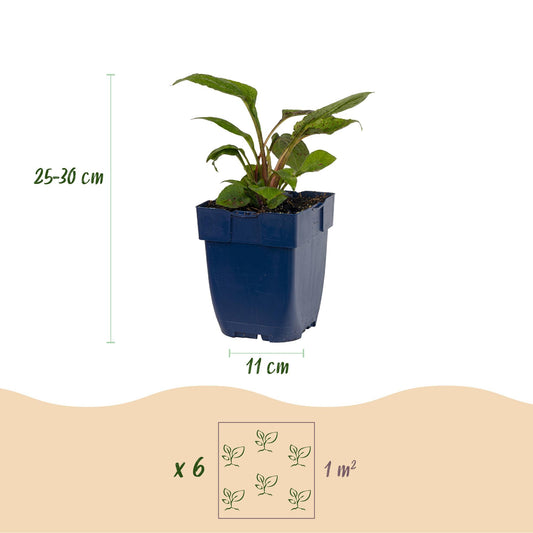
Pollinator perennial plant pack for borders, attracts bees and butterflies, Set of 6, 11 cm pot, Height 15–25 cm
Regular price From 64,95 €Regular price -


Pack of Perennial Plants for Borders, Ready to Plant, Set of 6, 11 cm Pots, Height 15–25 cm
Regular price From 64,95 €Regular price -

 Livraison offerte
Perennial pack for shaded beds, Set of 6, 11 cm pots, Height 15-25 cm
Regular price From 64,95 €Regular price -


Elf Flower 'Frohnleiten' (Epimedium x perralchicum) - evergreen shade ground cover - 11 cm pot - height 15–25 cm
Regular price From 39,95 €Regular price -

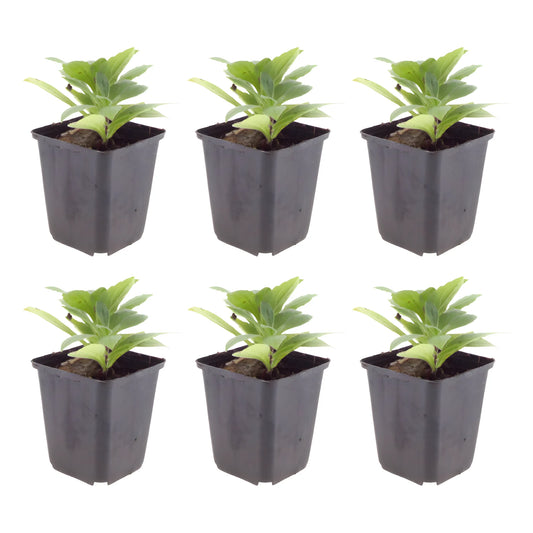
Frikart's Aster 'Mönch' (Aster × frikartii) - lavender-blue long-blooming perennial
Regular price From 49,95 €Regular price -
Bigroot Cranesbill (Geranium macrorrhizum) - scented perennial groundcover
Regular price From 39,95 €Regular price -


Wood sage 'Caradonna' (Salvia nemorosa) - melliferous perennial with purple spikes on almost black stems
Regular price From 44,95 €Regular price




What to plant for your situation: frost, sun, shade or balcony
The right choice depends first on your exposure and your main constraint: frost resistance, full sun, cool shade or growing in pots on a balcony. There’s a collection and a few reliable choices for every situation that you can plant right away in autumn.
| Situation | What to choose | Where to look |
|---|---|---|
| Areas with harsh winters | Hardy, evergreen species | Frost-resistant plants |
| Full sun, dry soil | Mediterranean plants, ornamental grasses | Full-sun plants |
| Shade and cool conditions | Shade-loving perennials, ground cover | Shade plants |
| Balcony & patio | Hardy plants in containers | Balcony & patio |
For a garden exposed to cold, start with our collection of frost-resistant plants: it brings together species that can make it through winter without heavy protection.
Also think about winter color: evergreens and shrubs with berries or ornamental bark remain attractive when everything else is bare. Autumn is the ideal time to plant these reliable choices, which will give your garden structure through the colder months.


Successful autumn planting: practical guidelines
Successful autumn planting comes down to a few simple, measurable steps: the right hole, the right spacing, a thorough watering after planting and mulch. Here are the key guidelines for shrubs and perennials alike.
📋 Quick reference guide
The essential practical guidelines for autumn planting, at a glance.
| Factor | Guideline |
|---|---|
| Planting window | September to early December, outside periods of frost |
| Soil condition | Still warm, neither frozen nor waterlogged |
| Hole size | At least 3 times the diameter of the roots |
| Depth | Keep the root collar level with the soil (never bury it) |
| Perennial spacing | About 80% of the mature width (e.g. 60 cm → 50 cm) |
| Hedge density | 1 to 3 plants per linear meter |
| Legal distance (hedge) | 0.50 m or 2 m from the boundary (Civil Code, Art. 671) |
| Watering after planting | 30 to 50 L/m² once the soil surface dries, in dry weather during the first year |
| Mulching | 5 to 7 cm, leaving 10 cm clear around the root collar |
The spacing and mulching guidelines follow the RHS recommendations for perennials; the watering after planting and the roughly 1.2 m weed-free circle to maintain around a young plant for 3 years come from the RHS guide to trees and shrubs. Keeping this area clear significantly improves establishment by reserving water for the roots.
The care calendar, season by season
Once planted in autumn, your garden needs little care, spread throughout the year: establishment in autumn, protection in winter, spring growth, and watering in summer. Here’s a seasonal guide.
📅 Seasonal care calendar
| Season | Key task |
|---|---|
| 🌸 Spring | Cut back and divide perennials; prepare borders for spring. |
| ☀️ Summer | Water during dry spells, pinch off spent flowers, hoe. |
| 🍂 Autumn | Plant shrubs, hedges, perennials and bulbs; mulch; water after planting. |
| ❄️ Winter | Protect delicate plants with fleece; avoid planting in frozen soil. |
In my experience, I never regret my choice: a hedge or border planted in October catches up with and overtakes those planted in spring within a year. The only real pitfall is planting too late, when the soil is already cold: if in doubt, I wait until the end of winter rather than push ahead.
Autumn planting mistakes to avoid
Most autumn planting failures come down to three easy-to-correct mistakes: planting too deep, planting in frozen soil, or skipping the initial watering despite the rain.
| Common mistake | What to do instead |
|---|---|
| Burying the root collar | Keep the graft point and root collar level with the soil |
| Planting in frozen or waterlogged soil | Wait until the soil is drained and frost-free |
| Not watering “because it’s raining” | Water thoroughly after planting to eliminate air pockets |
| Crowding perennials | Space them at about 80% of their mature width |
| Forgetting to mulch | Add 5 to 7 cm of mulch to protect plants and retain moisture |
Planting on St. Catherine’s Day: what does tradition say?
“On St. Catherine’s Day, all wood takes root”: this November 25 saying sums up a horticultural reality—the end of the ideal autumn planting window in much of France. It’s the last good time to plant bare-root shrubs and hedges before winter.
In regions where winter comes early, it’s best not to wait until this date: the rule is to plant as long as the soil isn’t frozen. Once that window has passed, wait until the late-winter thaw rather than risk poor establishment. Remember the spirit of the saying rather than the exact date: it simply reminds us that autumn, not spring, is the true planting season for structural plants in the garden.

Laura Bruneau
Jardinière & autrice