What to do in the garden in spring: tasks from March to May

What should you do in the garden in March? Prune bush roses, finish pruning summer-flowering clematis if you didn't do it in February, divide overcrowded perennials, mulch borders and plant summer bulbs, then move on to sowing and lavender in April, and frost-tender plants in May.
This guide brings together spring gardening tasks, month by month, in tables: planting, sowing, pruning, maintenance and protection. Each task links to a detailed guide, with advice from the RHS, Météo-France and OFB.
It follows on from our guide to what to do in the garden in winter: winter is for preparation; spring is for action.
🌟 Why spring is the season when the garden gets to work
Spring is when the garden gets to work because growth resumes: it's the right time to prune summer-flowering plants, divide perennials, mulch soil that's still moist from winter and plant anything that can't tolerate cold, while keeping an eye out for the last frosts.
According to the RHS guide to organic mulching, the best time to mulch is late winter or early spring, before weeds emerge. The RHS pruning guide recommends pruning bush roses as growth resumes, in March in colder regions.
| Benefit | What it means |
|---|---|
| Prune at the right time | Shrubs that flower in summer on this year's growth can be pruned now without sacrificing blooms |
| Rejuvenated perennials | Dividing overcrowded clumps in March encourages them to flower again (RHS) |
| Protected soil | A mulch at least 5 cm deep suppresses weeds and helps retain moisture (RHS) |
| Fewer losses | Waiting until the frosts are over before planting tender plants means you won't have to replant everything |
| Biodiversity | Leaving hedges undisturbed during nesting season helps protect birds (OFB) |
📊 Spring gardening calendar: March, April and May
The spring gardening calendar covers five types of tasks: planting, sowing, pruning, maintenance and protection, spread across March, April and May. The table shows the right month for each ornamental gardening task and links to a detailed guide.
Guidance is based on the RHS list of jobs for March (Royal Horticultural Society) and its lists for April and May, unless otherwise stated.
| Task | March | April | May | Detailed guide |
|---|---|---|---|---|
| Prune bush roses | Yes, as growth resumes (RHS guide to pruning bush roses) | No: let them grow | No: flowering | Our guide to pruning roses |
| Prune clematis | Groups 2 and 3: the RHS recommends pruning in February, so finish as soon as possible | Nothing | Group 1 after flowering (RHS) | Our guides to the three clematis pruning groups |
| Prune panicle hydrangeas and 'Annabelle' | Yes, to a pair of healthy buds | No: let them grow | No | Our guide to panicle hydrangeas |
| Cut back deciduous ornamental grasses | Miscanthus from mid-March to April (RHS) | Pennisetum orientale in late April | No: new growth | Our guide to ornamental grasses |
| Divide perennials | Yes, overcrowded clumps | Still possible | Overcrowded spring-flowering bulbs (RHS list of jobs for May) | Our guide to border perennials |
| Plant summer bulbs | Yes (RHS) | Dahlias in the ground from mid- to late April (RHS) | Dahlias started in pots, late May | Our guides to dahlias |
| Sow flowers | Under cover | Hardy annuals and wildflowers sown in place (RHS) | Move annuals outside towards the end of the month | Our spring planting guide |
| Mulch and weed | Hoe and mulch early (RHS) | Weed | Hoe regularly | Our tips for maintaining a perennial border |
| Mow the lawn | In dry weather, with the blades set high | Sow seed or fill in bare patches (RHS) | Leave some areas unmown (RHS) | RHS guide to mowing |
| Protect from frost | Have horticultural fleece ready | Protect fruit tree blossom (RHS) | Tender plants, even after 13 May | Our guide to protecting plants from frost |
📋 Quick reference
Spring gardening figures and guidelines, based on the RHS, Météo-France and OFB.
| Guide | Rule of thumb |
|---|---|
| Hybrid tea roses | Cut strong stems back to 4–6 buds, or 10–15 cm above ground (RHS) |
| Floribunda roses | Cut strong stems back to 25–30 cm above ground (RHS) |
| Panicle hydrangeas | Hard prune: leave a framework no more than 25 cm high; if taller, cut back to around 60 cm (RHS) |
| Mulching | At least 5 cm, ideally 7.5 cm, leaving a 10 cm gap around woody stems (RHS) |
| Mowing | Set the mower blades to their highest setting for the first cut; aim for a lawn around 4 cm high in spring and, ideally, never cut more than a third off (RHS) |
| Dahlias | Space plants about 60 cm apart; pinch out the stem at around 40 cm (RHS) |
| Hardening off | Allow 2–3 weeks to acclimatise a plant from under cover to outdoor conditions (RHS) |
| Bulbs after flowering | Leave the foliage for at least 6 weeks before cutting it back or mowing (RHS) |
| Ice Saints | 11, 12 and 13 May; frost may still occur in lowland areas afterwards (Météo-France) |
| Hedges | Do not trim from 15 March to 31 July, as recommended by the OFB |
How to organise your spring gardening in 6 steps
To organise your spring gardening, prune and divide in March, mulch and sow in April, and leave tender plants until late May, when the risk of frost has receded. Always work when the soil is neither frozen nor waterlogged: the RHS advises postponing mulching if the ground is frozen or waterlogged.
For details on each pruning cut, our guide to spring pruning covers shrubs one by one.
| Step | What to do |
|---|---|
| 1. Take a tour of the garden | Make a note of winter damage, overcrowded clumps and shrubs that need pruning |
| 2. Prune summer-flowering plants | Bush roses, panicle hydrangeas, deciduous ornamental grasses, and group 2 and 3 clematis if you missed February |
| 3. Divide and replant | Divide overcrowded perennials and replant the divisions straight away (RHS) |
| 4. Feed and mulch | Feed hungry shrubs and roses in April (RHS), then apply mulch at least 5 cm deep |
| 5. Sow and plant | Sow hardy annuals in April; plant lavender in April or May (RHS guide to growing lavender) |
| 6. Plant out tender plants | Harden them off for 2–3 weeks (RHS), then plant out in late May |
columns: 4
columns_mobile: 2
-

 Livraison offerte
‘White Fairy’ Rose (Rosa) – Fragrant shrub rose – 12 cm pot – 20 cm tall
Regular price From 34,95 €Regular price -

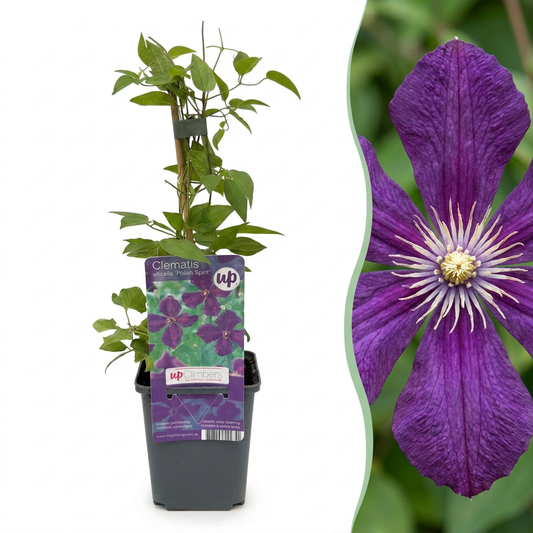
Clematis viticella 'Polish Spirit' (Clematis) – climbing plant with abundant deep violet flowers
Regular price From 49,95 €Regular price -

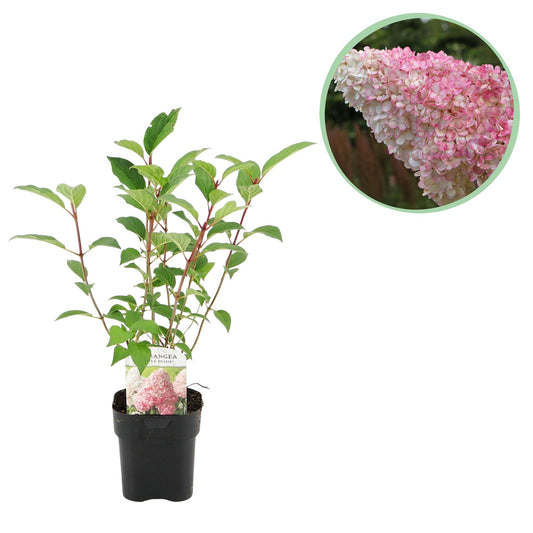
Hydrangea 'Vanilla Strawberry' (Hydrangea paniculata) - garden hydrangea - 17 cm pot - Height 50 cm
Regular price From 44,95 €Regular price -

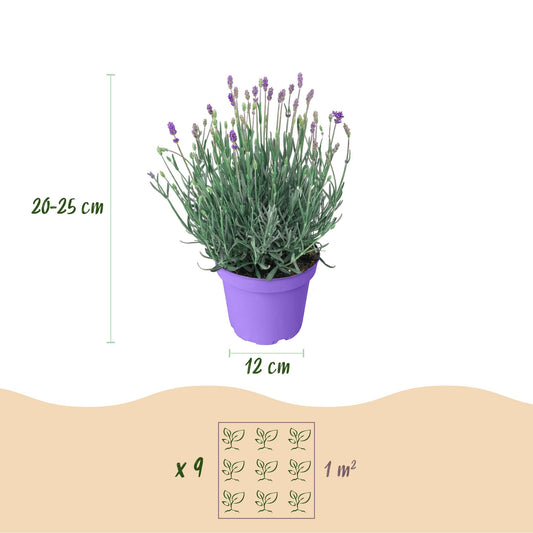
Lavender 'Munstead' (Lavandula angustifolia) - fragrant honey-producing perennial - 12 cm pot - Height 25 cm
Regular price From 34,95 €Regular price -

 Livraison offerte
Mixed bulbs for the garden – summer flowering – size 10/12
Regular price From 49,95 €Regular price -

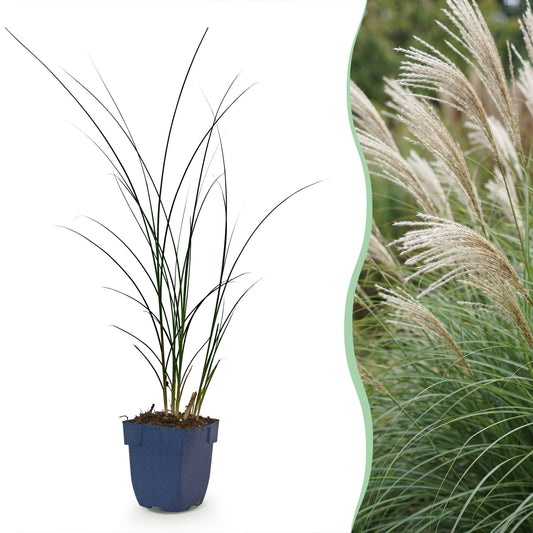
Maiden Grass ‘Gracillimus’ (Miscanthus sinensis) – ornamental grass – 11 cm pot – 25 cm tall
Regular price From 39,95 €Regular price -
Straight-point pruning shears - Stainless steel plant pruners
Regular price 7,50 €Regular price10,00 €Sale price 7,50 €Sale -
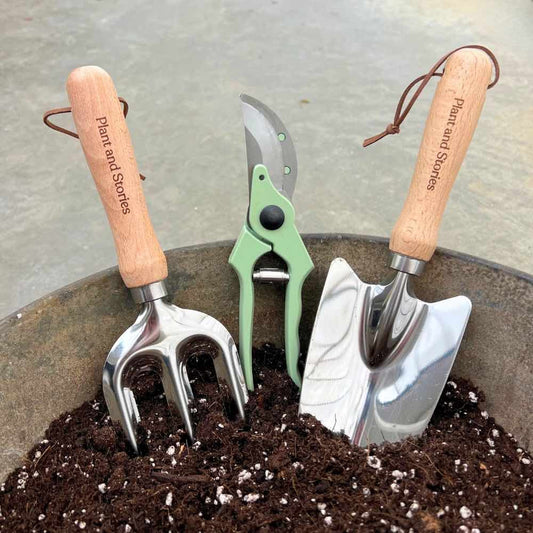
Gardening Tool Kit - Set of 3 Essential Tools - Garden Tool Set
Regular price 15,95 €Regular price29,95 €Sale price 15,95 €Sale


🧭 What to do in spring, depending on your garden
Spring tasks vary depending on whether you have a perennial border, a hedge, a patio or a sunny garden: tailor the list to what you grow. For planting ideas, see our guide to what to plant in spring, by purpose.
| Your garden | Priority spring tasks |
|---|---|
| Perennial border | Cut back dead stems left over winter, divide overcrowded clumps, mulch and stake tall perennials early |
| Hedge | Carry out formative pruning before 15 March, then leave it alone until the end of July: see when to trim a hedge |
| Roses and climbers | Prune bush roses in March, train a climbing rose in April, and prune wisteria in summer and winter |
| Spring-flowering shrubs | Prune forsythia, lilac or mock orange just after flowering, never before |
| Hydrangeas | Remove faded flowers from macrophylla hydrangeas, cutting back to the first pair of strong buds below the flower (RHS); see our guide to hydrangeas |
| Pots and patio | Replace the top layer of potting mix in March (RHS) and move your potted lemon tree outside once nights are frost-free |
| Dry, Mediterranean-style garden | Plant lavender in April or May in well-drained soil, never in winter (RHS) |
📐 What to do in the garden in March
In March, gardeners prune, divide and tidy up: it's the month for bush roses, any remaining summer-flowering clematis (the RHS recommends pruning these in February), panicle hydrangeas and overcrowded perennials, before growth really gets underway.
According to the RHS list of jobs for March (Royal Horticultural Society), it's also time to plant summer bulbs, protect young shoots from slugs, hoe and mulch early.
The RHS recommends pruning roses as growth resumes, around mid-February in mild climates and in March in colder regions (RHS guidance for the UK). Group 3 clematis are cut back to the lowest pair of buds, as they flower on the top 60 cm of the current year's growth.
For hydrangeas, the RHS hydrangea pruning guide recommends cutting panicle hydrangeas and 'Annabelle' back each spring to a pair of healthy buds. Also cut back coloured-stem dogwoods, and mow only in dry weather. Finish trimming hedges by mid-March. Wait until they have finished flowering before pruning spring-flowering shrubs.
📐 What to do in the garden in April
In April, the garden comes to life: sow hardy annuals, herbs and wildflowers in place, train climbing roses, feed shrubs and roses, protect fruit tree blossom, then plant lavender and cut back any remaining deciduous ornamental grasses.
Sowing, training plants, applying fertiliser and protecting fruit-tree blossom from late frosts are the RHS’s priorities for April; lavender and ornamental grasses have their own dedicated guides. The RHS lavender guide states that lavender is best planted in April or May, once the soil has warmed up, and never in winter.
According to the RHS, dahlias can be planted outdoors from mid to late April as dormant tubers. April is also the time to patch bare spots in the lawn: sow seed in the gaps, then mow with the blade set high. Finally, weed before the weeds set seed.
📐 What to do in the garden in May
In May, gardeners plant tender plants, care for bulbs that have finished flowering and keep an eye on two things: late frosts and birds nesting in hedges.
According to the RHS’s May gardening checklist, summer bedding plants can be planted out at the end of the month, except in cold regions, and overcrowded clumps of daffodils can be divided.
Leave bulb foliage in place for at least six weeks after flowering, without tying it up, as recommended by the RHS. Prune Group 1 clematis, such as mountain clematis, just after flowering.
Water outside the hottest hours to save water, as the RHS advises—preferably in the morning and ideally with rainwater—and check for nests before trimming any hedge.
Our guide to what to do with bulbs after flowering explains what to do next with tulips and daffodils.
📐 The Ice Saints: tradition or real rule?
The Ice Saints are a tradition, not a weather rule: Saint Mamertus, Saint Pancras and Saint Servatius, celebrated on 11, 12 and 13 May, mark the supposed end of frosts in gardeners’ minds, but records show that frost can return afterwards.
According to Météo-France’s study of the Ice Saints, based on data from 130 lowland weather stations between 1951 and 2023, at least one station recorded frost between 14 May and 30 June in 49 out of 73 years, or 67% of the time. Météo-France sums it up as a belief that is wrong two years out of three.
It also notes that these late frosts remain common, but affect fewer places at once than they did before 1995. Treat the date as a rough guide, keep a close eye on local forecasts and keep some frost-protection fleece handy.
🗓️ Spring in the garden year
Spring reaps what winter has prepared and gets the garden ready for summer: pruning, dividing and mulching from March to May influence flowering and resilience to dry conditions in the months that follow. Looking further ahead, the RHS reminds us that wisteria should be pruned twice a year, in July or August and then in January or February, cutting back to 2 or 3 buds in winter.
Lavender, meanwhile, should be pruned every year in late summer, just after flowering, without cutting into old wood. And for autumn, our guide to what to plant in autumn explains why it is the best season for planting bare-root shrubs and hedges.
📅 Seasonal maintenance calendar
| Season | Key task |
|---|---|
| 🌸 Spring | Prune roses and panicle hydrangeas in March (Groups 2 and 3 clematis from February); sow seeds and plant lavender in April; plant tender plants in late May |
| ☀️ Summer | Water at the base in the morning when the soil is dry 2 to 3 cm down; summer-prune wisteria; prune lavender after flowering |
| 🍂 Autumn | Plant shrubs, hedges and spring-flowering bulbs; the best season for bare-root plants |
| ❄️ Winter | Protect plants from frost, winter-prune wisteria, prepare flower beds and order plants |
🐛 Spring gardening mistakes to avoid
Spring gardening mistakes are mostly caused by impatience: pruning plants that are about to flower, planting frost-sensitive plants too early or mowing a lawn that is just starting to grow too short. Here’s how to avoid them.
| Mistake | Why it’s a problem | What to do instead |
|---|---|---|
| Pruning forsythia or lilac in March | They flower on the previous year’s growth, so pruning removes the flowers | Prune them just after flowering |
| Trimming a hedge in April or May | Nesting season (the recommendation from the French Biodiversity Agency (OFB), shared by the Pays de la Loire Chamber of Agriculture) | Trim before 15 March or after 31 July |
| Planting tender plants as soon as the weather turns mild | Frost is still possible after 13 May (Météo-France) | Harden plants off for 2 to 3 weeks, plant in late May and keep frost fleece handy |
| Cutting daffodil foliage as soon as the flowers fade | The bulb needs its leaves to flower again (RHS) | Wait at least 6 weeks and don’t tie up the leaves |
| Scalping the lawn on the first mow | The RHS ideally advises against cutting off more than a third of the grass height | Set the blade to its highest setting, then mow to around 4 cm |
| Mulching frozen or waterlogged soil | The RHS advises waiting in these conditions | Mulch when the soil is moist but well drained |
| Piling mulch against tree trunks | It stays damp and encourages rot (RHS) | Leave a clear 10 cm ring around the trunk |


🌿 Our guides and plants for every spring task
This calendar tells you what to do and when; each task is covered in more detail in its own guide, and you’ll find plants to add to your garden this spring in our catalogue.
| Our selection | Why choose it |
|---|---|
| Roses | Prune in March, then enjoy the flowers: our 'White Fairy' rose or our climbing rose, from our range of roses |
| Clematis | Group 3 clematis are pruned in February (RHS), such as the viticella 'Polish Spirit'; Group 1 clematis are pruned after flowering, like mountain clematis 'Mayleen'. Find them among our clematis |
| Hydrangeas | Panicle hydrangeas and 'Annabelle' are pruned in March ('Vanille Fraise', 'Annabelle'), while macrophylla hydrangeas just need tidying up ('Endless Summer The Original Blue'). For patio growing, see our guide to growing hydrangeas in pots |
| Lavender | Plant in April or May: our 'Munstead' and 'Hidcote' lavender |
| Dahlias and summer bulbs | Our summer-flowering bulb mix or mixed double freesias, from our range of bulbs to plant in spring |
| Creating a perennial border | Divide, mulch and fill in gaps with 'Walker's Low' catmint, blue agapanthus and all our border perennials |
| Ornamental grasses | Cut back from mid-March to April: our Chinese silver grass 'Gracillimus', from our range of bamboos and ornamental grasses |
| Spring-flowering bulbs | How to care for tulips and daffodils after they finish flowering in May |
| Tools and plant care | A straight-blade pruning shear, a 3-piece gardening tool set and waterproof labels for your seedlings, from our ranges of gardening tools and fertilisers and plant care products |
🔑 What about the vegetable garden in spring?
The vegetable garden has its own calendar: this guide focuses on ornamental gardening, but the RHS’s monthly checklists offer three simple pointers.
| Month | In the vegetable garden, according to the RHS |
|---|---|
| March | Plant shallots, onion sets and early potatoes |
| April | Sow herbs in their final positions and protect fruit-tree blossom from late frosts |
| May | Earth up potatoes, plant the last ones and watch out for late frosts |
The same precautions apply to tomatoes and other tender vegetables as to flowers: harden off the plants and wait until the frosts have passed.
✅ Our tips for a successful spring in the garden
To make the most of spring in the garden, remember these three stages: in March, prune summer-flowering plants and divide perennials; in April, mulch, sow seeds and plant lavender; in May, plant tender plants while watching for frost, and leave bulb foliage to die back naturally. Avoid trimming hedges from 15 March to 31 July.
To find out what to plant, follow our guide to what to plant in the garden in spring, and to fill out your borders, browse our garden plants and all our outdoor plants.
In spring, I recommend resisting the urge to do everything on the first sunny weekend. I prefer to work in short sessions: pruning first, then mulching, and tender plants last. And to my mind, a notebook where you record what flowered and when is worth more than any calendar.

Laura Bruneau
Jardinière & autrice