

What to prune in spring? A plant-by-plant calendar

Spring pruning follows a simple rule: shrubs that flower in summer on the current year's growth (roses [Rosa], panicle hydrangea [Hydrangea paniculata], butterfly bush [Buddleja davidii], Group 3 clematis) are pruned in late winter or early spring, while those that flower in spring on the previous year's wood (forsythia, lilac, mock orange) are pruned just after flowering.
This guide applies that rule plant by plant, with the month and the technique, based on the RHS (Royal Horticultural Society) and university extension services. Each row then links to the detailed pruning guide for the plant, as well as to our flowering shrubs.
🌟 Why prune in spring, and why not everything
Spring pruning encourages more flowers on plants that flower on the current year's growth, keeps them compact and removes winter dieback, but pruning at the wrong time removes the buds on spring-flowering shrubs.
For summer-flowering shrubs, the RHS guide to pruning summer-flowering shrubs recommends pruning as early as possible in spring, giving young shoots the longest possible growing season.
By contrast, according to Penn State Extension, shrubs that flower before mid-June form their buds the previous year: if pruned too early, they lose their flowers.
| Benefit | What it changes |
|---|---|
| More flowers | Summer-flowering shrubs flower on the shoots produced by pruning (RHS) |
| A healthy garden | Dead, damaged or diseased wood removed before growth resumes |
| Less visible pruning scars | On evergreens pruned in mid-spring, new growth hides the cuts (RHS) |
📊 What to prune in spring and when: the plant-by-plant table
Plants to prune in spring mainly include roses, hydrangeas, butterfly bush, Russian sage, Group 3 clematis and ornamental grasses, each at a specific time between February and April, with its own pruning technique, which determines the following summer's flowering. The timings and techniques are from the RHS unless otherwise noted, and each name links to its detailed guide.
| Plant | Flowers on | When to prune | How to prune | ||
|---|---|---|---|---|---|
| Bush and shrub roses | Current year's wood | Late winter, as growth resumes: mid-February in mild climates, March in colder regions (RHS timings for the UK, RHS guide to pruning bush roses) | Hybrid teas: 4 to 6 buds, 10 to 15 cm above ground; floribundas: 25 to 30 cm | ||
| Climbing roses | Lateral shoots | December to February (RHS) | Shorten flowered lateral shoots by two-thirds | ||
| Hydrangea macrophylla | Previous year's wood | In spring, from early to mid-spring according to the RHS (RHS guide to pruning hydrangeas) | Cut just above the first pair of healthy buds below the faded flower | ||
| Panicle hydrangea and 'Annabelle' | Current year's wood | Late winter or early spring (February to March) | Prune last year's stems back to a pair of healthy buds; leave a framework no more than 25 cm tall for large flowers, or around 60 cm tall | ||
| Butterfly bush (Buddleja davidii), Perovskia (Russian sage), bluebeard, fuchsia | Current year's wood | Butterfly bush: late March to mid-April (RHS guide to buddlejas); the others: early to mid-spring | Butterfly bush: leave a low framework of permanent stems; the others: cut stems back to 1 or 2 buds on the framework | ||
| Group 3 clematis (Clematis) | Current year's shoots | February (RHS clematis pruning guide) | Cut back hard to the lowest pair of buds | ||
| Wisteria (Wisteria) | Short flowering shoots (RHS) | January-February, then July-August (Miscanthus (Chinese silver grass) | Renewed clump | Mid-March to April (RHS guide to cutting back ornamental grasses) | Cut dry stems as low as possible before new shoots emerge |
| Pampas grass (Cortaderia selloana) | Evergreen grass | Early spring (RHS) | Cut back hard, as low as possible without damaging new shoots, wearing gloves and safety glasses | ||
| Lavender (Lavandula angustifolia) | Summer flowering | Mainly in late summer, after flowering (RHS guide to lavender) | In spring: simply tidy up if damaged by frost or straggly | ||
| Forsythia, mock orange, deutzia, lilac (Syringa) | Previous year's wood | Just after flowering (RHS guide to pruning early-flowering shrubs; lilac: Penn State Extension) | Cut flowered shoots back to vigorous young growth, removing up to 1 in 5 old stems at the base; Deutzia gracilis is in pruning group 2 according to its RHS profile (H5, -15 to -10°C) | ||
| dogwoods grown for colorful stems and smoke bush | Colored stems or foliage | Late winter or early spring (RHS group 7) | Cut back very hard |
📋 Quick reference
General spring-pruning guidelines, based on the RHS, Penn State Extension and NC State Extension.
| Guideline | The rule |
|---|---|
| Golden rule | Flowers before mid-June: prune after flowering; summer flowers: prune in late winter or early spring (Penn State) |
| February | Roses in mild regions, Group 2 and 3 clematis, wisteria (winter pruning) |
| March | Roses in cold regions, perennials to cut back, start on Miscanthus |
| Late March to mid-April | Butterfly bush, Russian sage, bluebeard and fuchsia, once hard frosts have passed (RHS) |
| April-May | Evergreens, just before growth resumes and after frosts; tidy up lavender if needed |
| After flowering | Forsythia, mock orange, deutzia, lilac, California lilac, Mexican orange blossom and Group 1 clematis |
| The cut | No more than 5 mm above a bud, with an angled cut sloping away from it (RHS); choose a bud pointing in the desired direction of growth (NC State) |
| How much | Remove no more than one-third of a plant's crown in a year (NC State) |
| After pruning | Mulch and feed (RHS) |
| Hedges | Do not prune from March 15 to July 31, as recommended by OFB (French Office for Biodiversity) |
How to prune in spring in 6 steps
To prune successfully in spring, first work out whether the plant flowers on the current year's wood or the previous year's wood, use clean, sharp tools, remove dead wood first, then cut just above a bud without removing more than one-third of the plant.
According to NC State Extension, cut above a vigorous bud pointing in the desired direction of growth, without leaving a stub; the RHS specifies no more than 5 mm above the bud, with an angled cut sloping away from it.
| Step | What to do |
|---|---|
| 1. Identify the flowering habit | Flowers before mid-June: wait until flowering is over; summer flowers: prune now |
| 2. Prepare your tools | Secateurs for stems up to about 1.9 cm in diameter, loppers up to about 3.8 cm, and a pruning saw for anything larger (University of Minnesota Extension) |
| 3. Remove dead wood | Cut dead, damaged or diseased branches back to healthy wood, as recommended by the RHS |
| 4. Thin out | Remove weak or crossing stems |
| 5. Cut above a bud | No more than 5 mm above a bud pointing in the desired direction of growth, with an angled cut sloping away from the bud |
| 6. Mulch and feed | Apply mulch and fertilizer after pruning, according to the RHS |
columns: 4
columns_mobile: 2
-

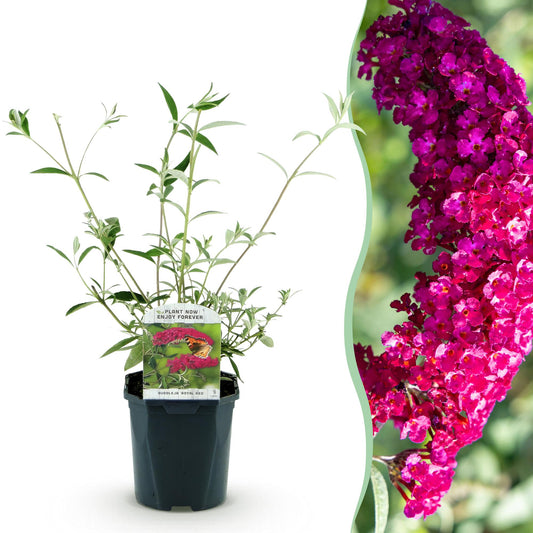
Butterfly Bush 'Royal Red' (Buddleja davidii) - nectar-rich shrub - 17 cm pot - Height 45 cm
Regular price From 39,95 €Regular price -

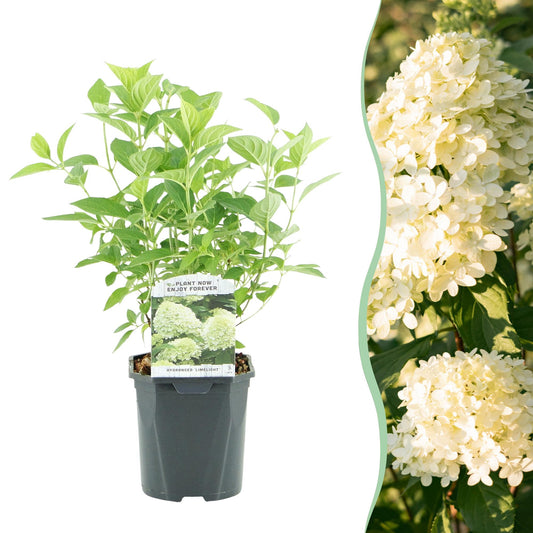
Hydrangea 'Limelight' (Hydrangea paniculata) - garden hydrangea - 17 cm pot - Height 50 cm
Regular price From 44,95 €Regular price -

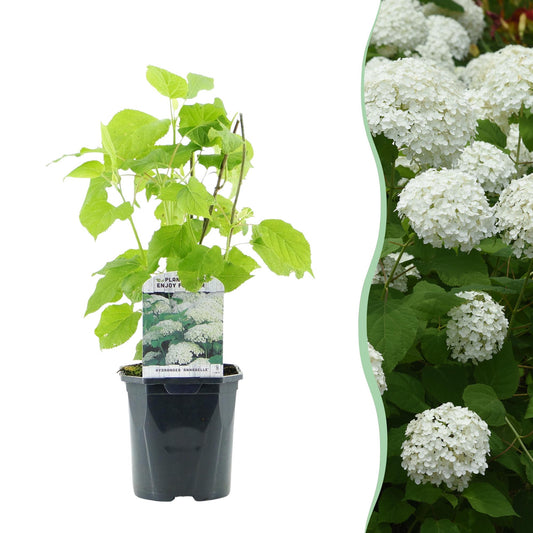
Hydrangea 'Annabelle' (Hydrangea arborescens) - garden hydrangea - 17 cm pot - Height 50 cm
Regular price From 39,95 €Regular price -

 Livraison offerte
‘White Fairy’ Rose (Rosa) – Fragrant shrub rose – 12 cm pot – 20 cm tall
Regular price From 34,95 €Regular price -

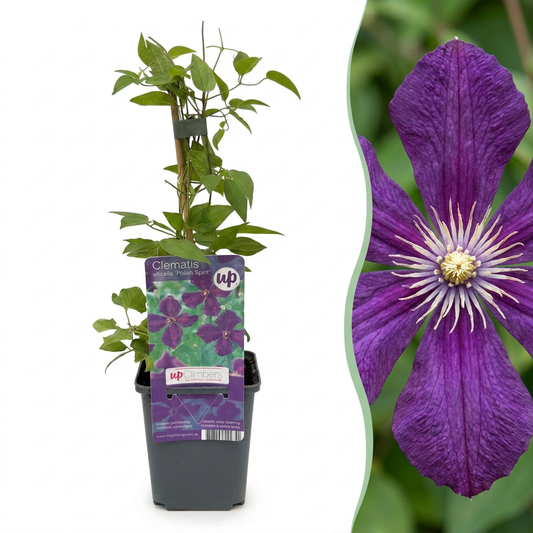
Clematis viticella 'Polish Spirit' (Clematis) – climbing plant with abundant deep violet flowers
Regular price From 49,95 €Regular price -


Lavender 'Hidcote' (Lavandula angustifolia) - fragrant honey-producing perennial - 12 cm pot - Height 25 cm
Regular price From 34,95 €Regular price -

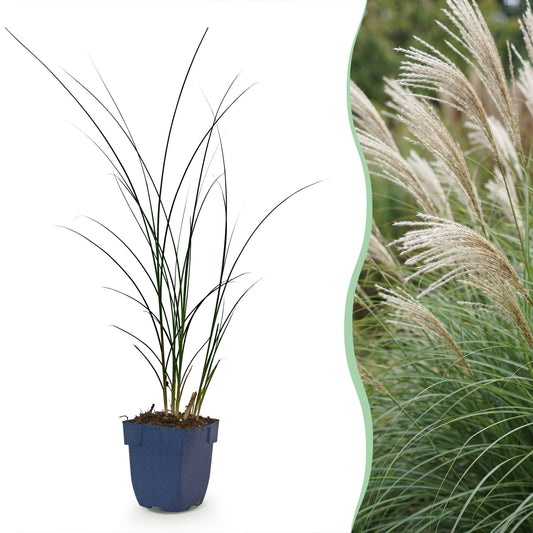
Maiden Grass ‘Gracillimus’ (Miscanthus sinensis) – ornamental grass – 11 cm pot – 25 cm tall
Regular price From 39,95 €Regular price -
Straight-point pruning shears - Stainless steel plant pruners
Regular price 7,50 €Regular price10,00 €Sale price 7,50 €Sale


🧭 Plants not to prune in spring
Plants not to prune in spring are those that flower early on the previous year's wood: forsythia, lilac, mock orange, deutzia, weigela, flowering currant, Group 1 clematis and most early-flowering evergreens.
The RHS guide to pruning early-flowering shrubs says to prune them immediately after flowering, giving them as much time as possible to produce the wood that will flower the following year.
The RHS pruning groups place mock orange, forsythia and weigela in Group 2; the RHS profile for Deutzia gracilis also classifies it in Group 2 (H5, -15 to -10°C).
| Plants not to prune in spring | When and how to prune |
|---|---|
| Forsythia (Forsythia × intermedia), mock orange (Philadelphus), weigela | Just after flowering: cut flowered shoots back to young growth, removing up to 20% of old stems near the base (RHS) |
| Lilac | After flowering, like all shrubs that flower before mid-June (Penn State) |
| Montana clematis (Clematis montana) | Group 1: after flowering, from mid- to late spring, once the frost has passed (RHS) |
| Evergreen ceanothus and Mexican orange blossom (Choisya) | Evergreens that flower early: just after flowering (RHS guide to pruning evergreen shrubs) |
| Rhododendron and camellia | Very little pruning: remove spent flowers and unsightly growth (RHS group 8) |
| Climbing hydrangea | Just after flowering, in summer: most flowers grow at the top of the plant (RHS) |
📐 When to prune roses in spring
Bush roses are pruned in late winter, when growth resumes: around mid-February in mild climates and in March in colder regions, according to the RHS guidelines for the UK. Hybrid teas are cut back hard, to 4 to 6 buds and 10 to 15 cm (4 to 6 in) above the ground for vigorous stems, and to 2 to 4 buds for weaker ones.
Climbing roses are pruned earlier, from December to February, by shortening the flowering side shoots by two-thirds. Rambling roses follow different rules, explained in our climbing rose guide.
For a step-by-step method, see how to prune roses in our complete rose guide, and browse our roses.
📐 When to prune hydrangeas: macrophylla, panicle and 'Annabelle'
Hydrangeas are pruned in spring, but the approach varies by species: mophead hydrangeas need only light pruning, while panicle hydrangeas and 'Annabelle' can be cut back harder. For mophead hydrangeas, the RHS recommends leaving the spent flowers on over winter to protect the buds below from frost, then cutting in early spring just above the first pair of healthy buds.
Panicle hydrangeas and 'Annabelle' flower on the current year's growth: in late winter or early spring (February to March), cut last year's stems back to a pair of healthy buds. For large flowers on strong stems, the RHS recommends cutting back to the lowest pair, leaving a framework no more than 25 cm (10 in) high, or around 60 cm (24 in) to retain height.
For details on pruning hydrangeas, see our complete guide and the guides to mophead hydrangeas, panicle hydrangeas and 'Annabelle' hydrangeas.
For container growing, see our guide to hydrangeas in pots.
📐 Clematis and wisteria: climbers to prune at the right time
Clematis are pruned according to their group: group 3 hard in February, group 2 lightly in February and again after the first flush of flowers, and group 1 only after its spring flowering. For group 2, which includes the large-flowered clematis that bloom in May and June, the RHS cuts the spent stem just above a large bud below the flower.
Our clematis guide to the 3 pruning groups will help you identify your variety's group, among our clematis.
Wisteria, on the other hand, is pruned twice a year: in July or August, cut the long green shoots of the current year back to 5 or 6 leaves, then in January or February to 2 or 3 buds, 2.5 to 5 cm (1 to 2 in) from the old wood, according to the RHS. Find the details in our wisteria guide.
📐 Lavender, rosemary, perennials and grasses: light pruning
Lavender and rosemary should not be pruned hard in spring: the RHS recommends pruning lavender every year in late summer, just after flowering, and lightly pruning rosemary after it flowers, never cutting into old wood. In spring, lavender only needs tidying if it has been damaged by frost. According to the RHS, unpruned rosemary becomes bare at the base.
For the exact technique, see our lavender guide and our rosemary guide.
Perennials can be cut back from March onward, according to the RHS guide to cutting back perennials, which notes that their dry stems provide wildlife with shelter over winter. For tender perennials with woody stems, such as penstemon, wait until the risk of frost has passed, usually in April or May.
For grasses, cut deciduous species back close to the ground before new shoots appear: Miscanthus from mid-March to April and Pennisetum orientale towards the end of April. Also see our ornamental grasses and our border perennials.
🗓️ What to prune in March, April and May
In March, prune roses in colder regions, cut back perennials and start on ornamental grasses; in April, turn to buddleia, perovskia and evergreens; in May, prune spring-flowering shrubs as they finish flowering. February is the time for clematis and wisteria: see what to prune in winter.
For other tasks, follow our March, April and May garden calendar, and for planting, see our guide to what to plant in spring.
📅 Seasonal care calendar
| Season | Key task |
|---|---|
| 🌸 Spring | Roses in February–March; buddleia, perovskia, panicle hydrangeas, grasses and perennials in March–April; spring-flowering shrubs after flowering |
| ☀️ Summer | Summer pruning of wisteria in July–August; prune lavender just after flowering, in late summer; climbing hydrangea after flowering |
| 🍂 Autumn | Little pruning: remove dead wood, leave perennial stems for wildlife |
| ❄️ Winter | Climbing roses from December to February; group 2 and 3 clematis and wisteria in February; late-winter pruning on frost-free days |
🐛 Spring pruning mistakes to avoid
Spring pruning mistakes are mostly down to poor timing: pruning a shrub in March when it flowers in April, or cutting back too hard a plant that won't regrow from old wood. Here are the most common ones.
| Mistake | Why it's a problem | Solution |
|---|---|---|
| Pruning forsythia or lilac in March | Their buds formed the previous year (Penn State) | Wait until after flowering |
| Cutting lavender back into old wood | It regrows poorly from woody stems (RHS) | Prune just after flowering, in the leafy growth |
| Cutting off spent mophead hydrangea flowers in autumn | They protect the buds below from frost (RHS) | Leave them until early spring |
| Pruning buddleia in midwinter | Young shoots are exposed to frost (RHS) | Wait until the end of March |
| Removing more than a third at once | It exhausts the plant (NC State) | Spread rejuvenation pruning over several years |
| Coating pruning wounds with mastic | NC State advises against it | A clean cut is enough |
-

Our flowering outdoor shrubs: buddleias, dogwoods, deutzias, hibiscus, mock oranges and more...


🌿 Plants to prune in spring and their guides
This guide tells you when to prune; each plant guide explains the technique step by step.
🔑 Hedges and nesting: what changes in spring
In spring, hedge trimming takes a pause: OFB recommends not trimming hedges from March 15 to July 31, to avoid disturbing birds during breeding and nesting season.
According to the OFB statement shared by the Pays de la Loire Chamber of Agriculture, this also applies to private individuals.
We explain the timing, method and considerations for evergreens in our hedge-pruning guide, so you can find out when to trim a hedge without harming birds.
✅ Our tips for successful spring pruning
For successful spring pruning, prune summer-flowering plants from February to April, keep your pruning shears away from spring-flowering shrubs until they have finished flowering, and make each clean cut just above a bud.
Browse our outdoor flowering plants and all our flowering shrubs to create a garden that blooms from one season to the next.
I always recommend checking when a plant flowered before reaching for the pruning shears: this is the question that prevents almost every mistake. My favorite task is cutting back the butterfly bush and panicle hydrangea, which reward a hard prune. By contrast, I think a forsythia or lilac does perfectly well without pruning—and is better off than with a bad prune: when in doubt, it's best to wait until flowering is over.

Laura Bruneau
Jardinière & autrice


