Winter planter: create a container arrangement that lasts until spring.

To create a winter planter that lasts until spring, combine an evergreen shrub for structure, colourful foliage, a winter-flowering plant such as hellebores, and a trailing plant, in a frost-resistant pot with drainage holes, raised off the ground.
This guide gives you a list of the best plants for winter planters, advice on choosing the right pot and compost, watering during frosts, and six ready-to-recreate arrangements featuring our frost-resistant plants.
🌟 Why create a winter container arrangement
A winter container arrangement keeps the colour going outside your home during the months when the garden is at rest. According to the RHS (Royal Horticultural Society) guide to winter container planting, plants grow very little in winter, so start with well-established specimens and use enough plants for the size of the container.
And most of these plants, perennials and shrubs, can be transplanted into the garden in spring.
| Benefit | What it means |
|---|---|
| Instant impact | Well-established plants look good straight after planting, since growth is slow in winter (RHS) |
| Colour without flowers | Variegated, bronze or purple foliage stays decorative even in frosty weather |
| Hardy | Hellebores, sedges, ivy, skimmia and holly tolerate the cold, provided the pot is protected |
| Long-lasting | Perennials and shrubs can be transplanted into the garden in spring, unlike annual flowers |
📊 The best plants for winter planters
The best plants for winter planters are those that play a specific role: structure, foliage colour, flowers or a trailing effect. Information on exposure, hardiness and toxicity is from the RHS, NC State Extension and ASPCA.
When it comes to hardiness, bear in mind an important point about the RHS hardiness scale: in pots, plants rated H4 and H5 are more vulnerable than they are in the ground, and even many H6 plants grown in containers will suffer without protection.
| Plant | Role in the arrangement | Exposure | Hardiness (source) | Cats and dogs |
|---|---|---|---|---|
| Hellebore (Christmas rose, Lenten rose) | Winter flower, at the centre | Partial shade or light shade, with a little sun (RHS) | H7 (below -20 °C) for Helleborus niger, H4 (-10 to -5 °C) for 'Christmas Carol' and 'Silver Dollar' (RHS) | Toxic (ASPCA, Helleborus niger profile) |
| Skimmia japonica | Evergreen structure, colourful buds | Partial shade to shade (RHS) | Hardy evergreen shrub (RHS) | Berries: mild digestive upset if eaten (RHS); no ASPCA profile |
| Leucothoe (Leucothoe fontanesiana) | Structure and colourful foliage | Partial shade to shade (NC State) | USDA zone 4a, approximately -34 °C (NC State) | Highly toxic, high severity (NC State) |
| Holly (Ilex) | Vertical structure, berries | Sun to partial shade (NC State) | USDA zone 5a, approximately -29 °C, for Ilex × meserveae (NC State) | Low toxicity (ASPCA, Ilex opaca profile) |
| Coral bells (Heuchera) | Foliage colour | Partial shade or light shade (RHS) | Hardy, with no winter protection (RHS) | Non-toxic (ASPCA, Heuchera sanguinea profile) |
| Bergenia | Large evergreen leaves | Partial shade | Hardy perennial (see plant profile) | No ASPCA profile found |
| Carex and sedges | Lightness, edging, trailing effect | Sun or partial shade for 'Evergold' (RHS) | H7 for 'Evergold' (RHS) | No ASPCA profile found |
| Ivy (Hedera helix) | Trailing, conceals the edge of the pot | All aspects, sun or partial shade (RHS) | H5 for 'Glacier': -15 to -10 °C (RHS) | Toxic (ASPCA) |
| Periwinkle (Vinca minor) | Trailing ground cover | Partial shade to shade | Hardy perennial (see plant profile) | No ASPCA profile found for Vinca minor: keep out of reach |
📋 Quick reference
The essentials for a winter planter, based on RHS guides.
| Key point | The rule |
|---|---|
| Exposure | As much light as possible in winter (RHS), sheltered from prevailing winds |
| Pot | Frost-resistant terracotta, plastic, fibreglass or wood (RHS), always with drainage holes |
| Drainage | Keep holes clear; cover holes more than 2.5 cm in diameter with crocks (RHS) |
| Raising the pot | Use pot feet or bricks to allow water to drain (RHS) |
| Compost | Multipurpose peat-free compost (RHS); ericaceous compost for Leucothoe |
| Filling | Keep the root balls about 5 cm below the rim of the pot (RHS) |
| Watering | Check evergreens at least weekly; never water if frost is forecast (RHS) |
| Fertiliser | Not needed in winter (RHS) |
| Protection | Group pots against a wall; heavy fleece provides around 2 °C of protection (RHS) |
| After winter | Transplant hellebores into the garden in spring (RHS), along with other perennials and shrubs |
How to create a winter planter in 7 steps
To create a winter planter, choose the pot first, then arrange the plants while they are still in their nursery pots before planting: put the structural plant at the back or in the centre, surround it with colour, and place trailing plants around the edge.
According to the RHS method for planting containers, tall plants go at the back of a pot placed against a wall, or in the centre of a pot that can be viewed from all sides. Plant closely together, as nothing will grow much before spring.
Make your arrangement in autumn, while the soil is still warm: our guide to what to plant in autumn gives you the schedule.
| Step | What to do |
|---|---|
| 1. Choose the pot | Choose a frost-resistant pot with drainage holes, wide enough to fit all the root balls without pressing them against the sides |
| 2. Raise it | Set it on pot feet or bricks before filling it, as it will be too heavy afterwards |
| 3. Protect the holes | Cover large holes with crocks or pebbles to keep the compost in (RHS), without adding a thick layer to the bottom |
| 4. Fill with compost | Use free-draining multipurpose compost; make a separate mix with ericaceous compost for Leucothoe |
| 5. Arrange the plants | Place the nursery pots in the empty container: structure, colour, flower, trailing plant, then adjust the arrangement |
| 6. Plant | Remove the plants from their pots, tease out any pot-bound roots, keep the root balls about 5 cm below the rim (RHS), then fill in and firm the compost |
| 7. Water thoroughly | Water slowly with a watering-can rose to soak all the compost (RHS) |
columns: 4
columns_mobile: 2
-


Leucothoe 'Burning Love' (Leucothoe keiskei) - ericaceous shrub with colourful foliage - 17 cm pot - Height 45 cm
Regular price From 44,95 €Regular price44,95 €From 35,96 €Livraison offerte -

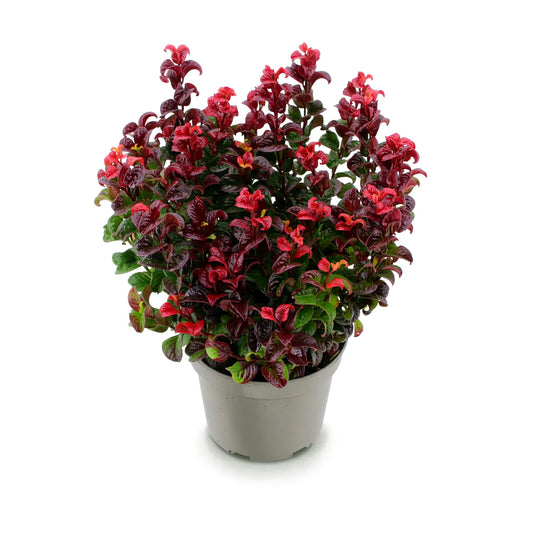
Leucothoe 'Curly Red' (Leucothoe axillaris) - ericaceous shrub with colourful foliage - 17 cm pot - Height 40 cm
Regular price From 44,95 €Regular price44,95 €From 35,96 €Livraison offerte -

 Livraison offerte Sale
Japanese Skimmia 'Rubella' (Skimmia japonica) – evergreen shade shrub
Regular price From 44,95 €Regular price59,95 €Sale price From 44,95 €44,95 €From 35,96 €Livraison offerte Sale -


Heuchera 'Palace Purple' (Heuchera) - perennial with colorful foliage - 11 cm pot - Height 25 cm
Regular price From 39,95 €Regular price39,95 €From 31,96 €Livraison offerte -

 Livraison offerte
Sedge 'Evergold' (Carex) - ornamental grass - 11 cm pot - Height 25 cm
Regular price From 39,95 €Regular price39,95 €From 31,96 €Livraison offerte -

 Livraison offerte Sold out
Ivy 'Glacier' (Hedera helix) - evergreen climber - 11 cm pot - Height 40 cm - Pack of 2
Regular price 39,95 €Regular price39,95 €31,96 €Livraison offerte Sold out -
Christmas rose 'Christmas Carol' (Helleborus niger) – winter-flowering perennial
Regular price From 44,95 €Regular price44,95 €From 35,96 €Livraison offerte -

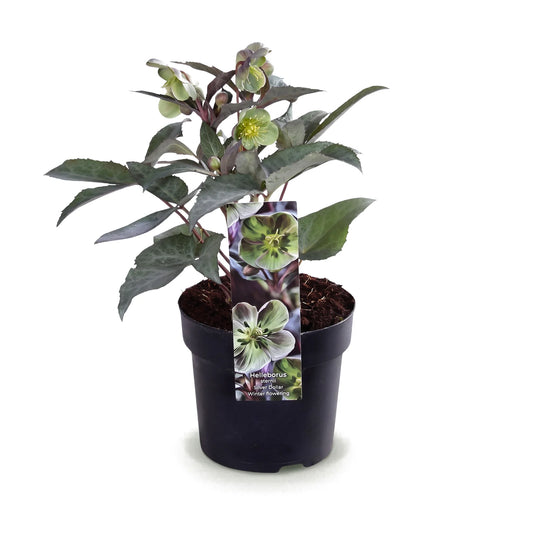
Hellebore ‘Silver Dollar’ (Helleborus x sternii) – evergreen perennial with silvery foliage – 14 cm pot – height 35 cm
Regular price From 39,95 €Regular price39,95 €From 31,96 €Livraison offerte


🧭 6 ready-to-plant winter planter arrangements
Here are six easy-to-recreate winter planter arrangements, grouped by exposure, using plants from our selection and a few seasonal favourites. Each recipe follows the same principle: one structural plant, one for colour, one flower or bright foliage, and one trailing plant. For a balcony planter exposed to strong winds, choose one of the arrangements featuring holly and carex.
| Arrangement and exposure | Plants to bring together |
|---|---|
| Christmas in the shade (north, east) | Skimmia in the centre, 'Christmas Carol' Christmas rose at the front, 'Evergold' sedge on one side, and 'Glacier' ivy trailing over the edge |
| Winter fire (partial shade) | 'Curly Red' or 'Little Flame' Leucothoe, 'Palace Purple' coral bells, 'Everillo' sedge and red 'Everflame' sedge |
| Windy balcony (sun to partial shade) | 'Blue Maid' holly at the back, 'Ice Dance' sedge and 'Glacier' ivy around the edge, with pansies for a splash of colour |
| White and silver (partial shade) | 'Silver Dollar' hellebore, 'Ice Dance' and 'Frosted Curls' sedges, 'Glacier' ivy, with white cyclamen as an accent (not hardy: keep sheltered until New Year's, RHS) |
| Long-lasting planter for the garden (shade) | Bergenia, 'Palace Purple' coral bells, 'Everest' sedge and periwinkle, all to be planted in the garden in spring |
| Small doorstep planter (25 cm pot) | One 'Christmas Carol' Christmas rose in a 10.5 cm pot, surrounded by 'Glacier' ivy |
📐 Pot and compost: what helps a planter withstand frost
A winter planter's ability to withstand frost depends more on its pot than its plants. According to the RHS guide to winter container planting, choose terracotta guaranteed to be frost-resistant, or a plastic, fibreglass or wooden pot, then raise it on pot feet or bricks to allow water to drain away.
The main danger, as the RHS container maintenance guide points out, is compost freezing, which can kill plants. To compare materials, see our guide to terracotta versus plastic pots.
Good drainage depends on clear holes and airy compost, not a layer of clay pebbles at the bottom. The RHS recommends peat-free multipurpose compost; for skimmia, it recommends a mix of half John Innes No. 3 compost and half multipurpose compost.
One common pitfall to watch out for: according to the RHS, skimmia is not an ericaceous plant, whereas Leucothoe prefers moist, acidic soil with a pH below 6, according to NC State.
If you combine them, plant Leucothoe in a pocket of ericaceous compost, or grow it in its own pot.
📐 Watering a winter planter: frost, rain and mild spells
Yes, a winter planter needs watering, but only when the compost dries out, and never before a frosty night. The RHS recommends checking evergreens and conifers at least once a week, watering if necessary, and avoiding watering altogether if frost is forecast. Compost can dry out quickly during mild spells, especially under an eave that keeps the rain off.
Conversely, after prolonged rainfall, the RHS advises moving the pot under cover if the compost is waterlogged, and removing the saucers in winter. Potted hellebores dry out quickly, warns the RHS hellebore growing guide: they’re the ones to keep an eye on first.
And no fertiliser: the RHS considers it unnecessary during the winter months.
📐 Winter container plants and pets: toxicity checked
Several winter container plants are toxic to cats and dogs. The ASPCA lists the Christmas rose (Helleborus niger) as toxic to dogs, cats and horses, causing drooling, abdominal pain and diarrhoea. Ivy (Hedera helix) is also toxic according to the ASPCA, which notes that the foliage is more toxic than the berries; the RHS also flags it as a skin irritant.
Leucothoe is the biggest concern: NC State rates it as highly toxic to cats, dogs and horses, and notes that swallowing just a few leaves can cause serious problems. For holly, the ASPCA’s listing covers Ilex opaca, which is mildly toxic; NC State notes that the berries of Ilex × meserveae are particularly dangerous for children.
The good news is that the ASPCA lists coral bells as non-toxic, in its entry for Heuchera sanguinea. If you have a playful cat, keep the rest out of reach.
🗓️ Caring for a winter container planting through the seasons
A winter container planting is put together in autumn, monitored in winter and dismantled in spring. In winter, group pots against a house wall: the RHS explains that this protects the roots from the cold, and that a heavy-duty horticultural fleece provides around 2°C of protection.
For severe cold, our guide to protecting plants from frost covers fleece and wrapping. In spring, the RHS advises replanting hellebores in the ground after flowering, as most are only kept in pots for a winter display.
If the compost in a potted coral bells remains waterlogged, the RHS advises placing it under cover at the foot of a wall or fence.
📅 Seasonal care calendar
| Season | Key task |
|---|---|
| 🌸 Spring | Replant hellebores in the garden after flowering, plant carex and perennials in borders, empty and clean the pot |
| ☀️ Summer | Store the pot or replant it with summer plants; winter perennials spend the summer in partial shade in the garden |
| 🍂 Autumn | Arrange the planter as soon as the nights turn cooler, water thoroughly when planting, apply a light mulch |
| ❄️ Winter | Check the compost weekly, don’t water before frost, remove the saucer, cover on very cold nights |
🐛 Mistakes that ruin a winter planter
In a winter container planting, water often causes more damage than cold: waterlogged compost freezes solid in a full saucer. Here are the most common mistakes and how to fix them.
| Mistake | Why it’s a problem | Solution |
|---|---|---|
| Leaving the saucer under the pot | Water pools around the base and freezes around the roots | Remove saucers in winter (RHS) and raise the pot |
| Choosing ordinary terracotta | It can crack in freezing weather | Frost-proof terracotta, plastic, fibreglass or wood (RHS) |
| Watering before a frosty night | Waterlogged compost freezes solid | Water only on mild days, never when frost is forecast (RHS) |
| Relying on pebbles at the bottom for drainage | A layer at the bottom is no substitute for drainage holes or airy compost | Use a pot with drainage holes, cover large holes with crocks, and use free-draining compost |
| Treating a yellowing skimmia with iron | Yellowing is caused by sun or soil that is too dry and poor (RHS) | Place it in the shade and keep the compost moist |
| Keeping hellebores in pots all year | Most are only suited to temporary container displays (RHS) | Replant them in the ground in spring |
| Putting Leucothoe within the dog’s reach | Leaves and flowers are highly toxic (NC State) | Keep floor-standing pots for coral bells, which are non-toxic (ASPCA) |
-

Outdoor plants that keep their foliage all year round: evergreen privacy hedges,...


🌿 Our winter planter plants and their guides
This guide will help you put your arrangement together; each plant also has a detailed guide to planting and caring for it in the garden.
| Our selection | Why choose it |
|---|---|
| Hellebore (Christmas rose, Lenten rose) | The flower of winter; our Christmas rose ‘Christmas Carol’, our hellebore ‘Silver Dollar’, or a Lenten rose ‘Double Ellen Pink’ and our mixed double-flowered Lenten roses |
| Skimmia japonica | Structure for shady container plantings; one male plant is enough to pollinate several females for berries (RHS) |
| Leucothoe (Leucothoe fontanesiana) | Fiery foliage in acidic soil: Leucothoe ‘Curly Red’, Leucothoe ‘Little Flame’, Leucothoe ‘Burning Love’ or ‘Zeblid’ |
| Carex and sedges | A light, airy touch: ‘Evergold’ sedge, ‘Everillo’ sedge, ‘Ice Dance’ sedge, ‘Everest’ sedge, ‘Frosted Curls’ or ‘Everflame’ red sedge |
| Ivy (Hedera helix) | The most reliable trailing plant, including our cream-variegated ivy ‘Glacier’ |
| Holly (Ilex) | Height and berries, with our holly ‘Blue Maid’ or our ‘Blue’ holly in a 9 cm pot; a female plant needs a male nearby (NC State) |
| Coral bells (Heuchera) | Purple foliage that adds warmth to any arrangement, including our coral bells ‘Palace Purple’; non-toxic according to the ASPCA (entry based on Heuchera sanguinea) |
| Bergenia and Periwinkle (Vinca minor) | Ground-covering perennials to replant in spring, such as our bergenia |
🔑 Where to place a winter planter
Place your winter planter where it will get as much light as possible, as the RHS recommends, but shelter it from prevailing winds and position it against a wall. On a balcony, a sheltered ledge is better than an exposed railing; our guide to plants for balconies and patios will help you assess your aspect.
For a shady courtyard or north-facing porch, choose skimmia, hellebore, Leucothoe and liriope, as you would for shade-loving perennials.
Tuck a few bulbs in lasagne layers beneath the perennials too, and browse our hardy outdoor plants.
And if the container planting is intended as a gift, our guide to Christmas plants will help you choose.
✅ Our tips for a successful winter planter
A successful winter planter comes down to four hardy plants, a raised frost-proof pot and careful watering that takes frost and rain into account. Plant densely in autumn, using well-established plants, and place the container in a bright, sheltered spot. Come spring, nothing goes to waste: hellebores, coral bells, carex and shrubs can all be planted in the garden.
To complete your arrangement, browse our evergreen plants, shade and moisture-loving plants, perennials and balcony and patio plants, along with all-purpose compost for the pot and maritime pine bark for mulch.
My favourite arrangement is still the simplest: a Christmas rose in the centre, golden carex and variegated ivy trailing over the edge. I always recommend arranging the plants in their pots inside the empty planter before planting; you can immediately see what’s missing. And for a December gift, I think a small winter planter makes a lovelier present than a bouquet, because it can eventually be planted in the garden.

Laura Bruneau
Jardinière et autrice