

Oleander (Nerium oleander): planting, pruning and care

To successfully grow oleander, plant it in full sun in a sheltered spot, in well-drained soil, and protect it from frost: the RHS rates it H3, meaning it can withstand temperatures down to around -5°C. In the South and along mild coastlines, it can grow in the ground; elsewhere, grow it in a large pot and bring it indoors during winter to a bright, frost-free place.
Oleander, Nerium oleander, is also one of the most toxic plants in the garden: this guide details planting, pruning and care, followed by essential precautions, with information verified by Kew, the RHS and American universities.
🌿 Why plant oleander
Oleander produces abundant summer flowers on narrow, tough evergreen foliage that withstands sun and summer drought once well established. The RHS recommends it for courtyards and urban gardens, terrace pots, Mediterranean-climate gardens and even hedges and screens.
Its name is often misunderstood: it has nothing to do with cherry laurel (Prunus laurocerasus) or Portuguese laurel (Prunus lusitanica), two hedge shrubs in the Rosaceae family, nor with culinary bay laurel. Oleander belongs to a different family, the Apocynaceae.
| Strength | What it means for you |
|---|---|
| Long summer flowering | Bouquets of pink, white or red flowers when the rest of the garden is struggling in the heat |
| Evergreen foliage | A green silhouette all year round, as a specimen, free-form hedge or in a large planter |
| Suitable for pots | Can be grown in terrace pots and easily brought indoors in winter outside mild regions |
| Tolerates severe pruning | According to the RHS, an old, sparse specimen can be rejuvenated with a hard prune |
🔎 Oleander's profile
According to Plants of the World Online (POWO) from the Royal Botanic Gardens, Kew, Nerium oleander L. is the accepted name of the species, published in 1753; it is a shrub or small tree of the subtropical biome, native to the Mediterranean region through to Myanmar, including France.
According to the RHS (Royal Horticultural Society), it grows to 1.5–2.5 m high and 1–1.5 m wide in 10–20 years in the UK.
In hot climates, NC State Extension states it grows to 5–19.5 feet high (around 1.5–6 m) and 6–10 feet wide (around 1.8–3 m).
| Feature | Verified detail |
|---|---|
| 🏷️ Botanical name | Nerium oleander L. (1753) |
| 🧬 Family | Apocynaceae (Apocynaceae) |
| 🌳 Type | Evergreen shrub, sometimes trained as a small tree or standard |
| 🌍 Origin | From the Mediterranean region (including France) to Myanmar, according to Kew |
| ❄️ Hardiness | RHS H3: -5 to 1°C; USDA zones 8a to 10b (NC State) |
| 🍃 Foliage | Narrow lanceolate leaves, grey-green, evergreen |
| 🌸 Flowers | In summer, 3–4 cm pink, white or red flowers (RHS), also salmon or apricot (NC State) |
| 📏 Mature size | 1.5–2.5 m in the UK (RHS); up to around 6 m in hot climates |
📋 Quick care guide
Essential growing information at a glance.
| Parameter | Guideline |
|---|---|
| Exposure | Full sun (at least 6 hours), sheltered from cold winds |
| Soil | Well-drained but moist; limestone, clay, loam or sand are all suitable |
| Hardiness | RHS H3, meaning -5 to 1°C; never prolonged frost |
| Watering | Regularly during the first year and in pots; never waterlog the soil |
| Planting | In spring, once frosts have passed |
| Pruning | Late winter; tolerates hard rejuvenation pruning |
| Flowering | In summer, in bouquets at the tips of the branches |
| Care | Easy in mild climates; overwinter in a frost-free place in pots elsewhere |
| Toxicity | Very toxic to humans and animals; wear gloves and never burn |
📍 Where and when to plant oleander
Plant oleander in the sunniest spot in the garden, against a south-facing wall or in a sheltered courtyard: the RHS recommends full sun, a sheltered position and a frost-free location. NC State Extension accepts partial shade, but flowering is best in the sun, for at least 6 hours a day.
In the ground, reserve it for regions with mild winters, practically the Mediterranean rim and sheltered Atlantic coastlines. The best time to plant is in spring, after the last frosts: the plant has all summer to establish its roots before its first winter.
☀️ Ideal: Full sun against a south-facing wall, in a Mediterranean or mild coastal climate, with well-drained soil
🪴 In pots: Large planter on a sunny terrace anywhere in France, with overwintering in a frost-free place
🚫 Avoid: Waterlogged soil in winter, cold draughts, or planting near play areas or animal enclosures
🪴 Planting oleander in the ground or in pots
Oleander adapts to many soils: NC State Extension lists clay, loam, sand and shallow stony soils, with a preference for good drainage. The RHS recommends moist but well-drained soil in the ground and, in pots, a soil-based compost free from peat. Wear gloves from the start of planting.
In a planter, choose a container with drainage holes that is heavy and stable, and slightly wider than the root ball: a flowering oleander is easily caught by the wind.
| Step | The right approach |
|---|---|
| 1. Choose the right time | In spring, after the last frosts |
| 2. Prepare the hole or planter | A hole significantly wider than the root ball, or a heavy planter with drainage holes |
| 3. Improve drainage | Loosen the bottom and lighten heavy soil with gravel; use soil-based compost in pots |
| 4. Position the root ball | At the same level as in the nursery, tamping down lightly with gloved hands |
| 5. Water | Water thoroughly, then regularly throughout the first summer |
columns: 4
columns_mobile: 2
-

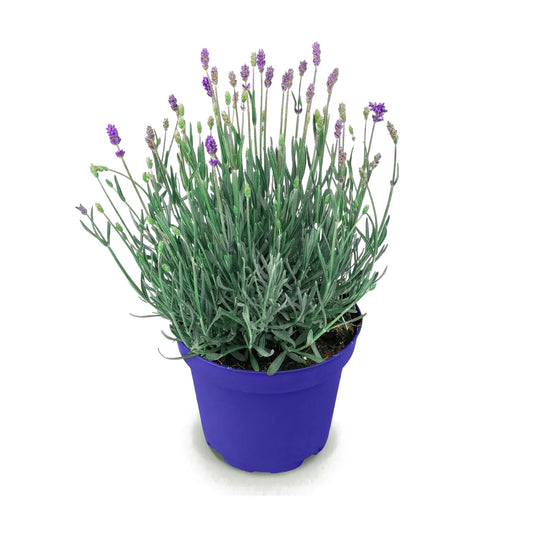
Lavender 'Hidcote' (Lavandula angustifolia) - fragrant honey-producing perennial - 12 cm pot - Height 25 cm
Regular price From 34,95 €Regular price34,95 €From 27,96 €Livraison offerte -

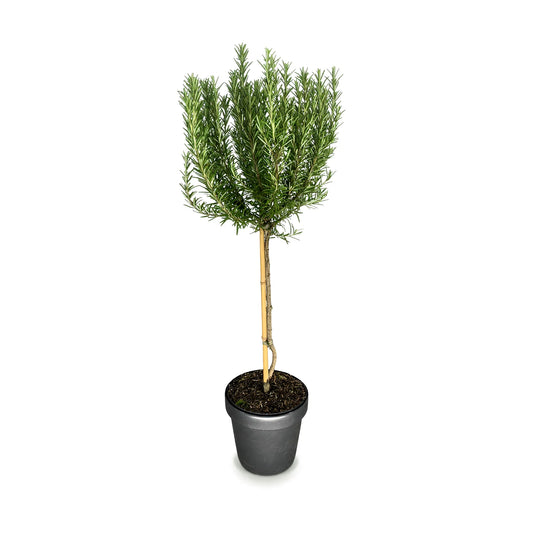
Rosemary (Rosmarinus officinalis), Mediterranean perennial, purple flowers, 19 cm pot, Height 90 cm
Regular price 69,95 €Regular price69,95 €55,96 €Livraison offerte -

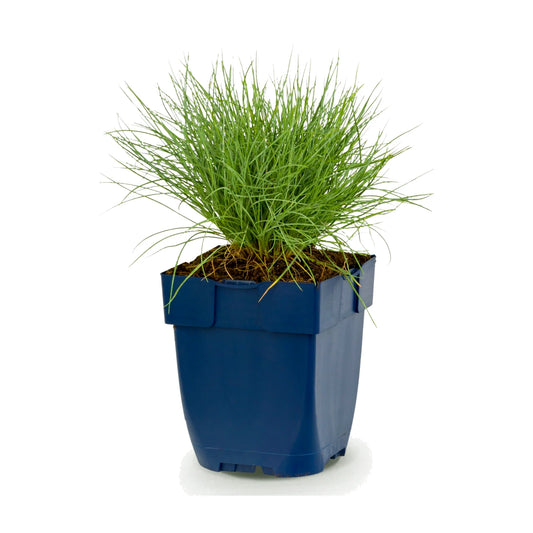
Blue fescue (Festuca glauca) - grass with blue-tinted foliage - 11 cm pot - Height 25 cm
Regular price From 39,95 €Regular price39,95 €From 31,96 €Livraison offerte -


Buenos Aires verbena ‘Lollipop’ (Verbena bonariensis) – nectar-rich perennial – 11 cm pot – height 25 cm
Regular price From 39,95 €Regular price39,95 €From 31,96 €Livraison offerte -

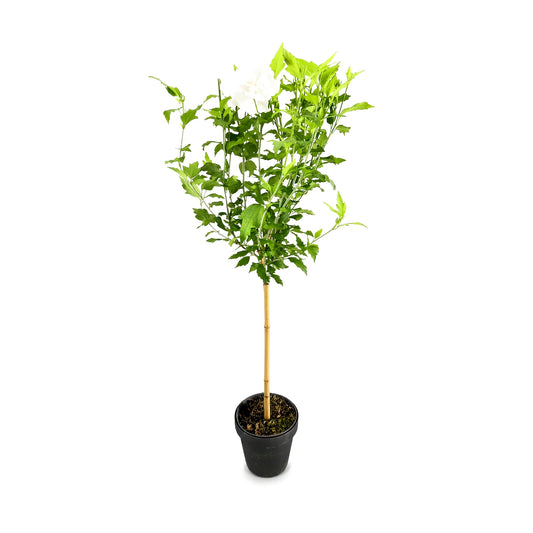
Hibiscus 'White Chiffon®' (Hibiscus syriacus) - flowering shrub - 19 cm pot - Height 90 cm
Regular price 74,95 €Regular price74,95 €59,96 €Livraison offerte


💧 Oleander care: watering, feeding and overwintering
Oleander care mainly involves watering at the right time and protecting it from the cold. In the ground, water regularly during the first year; once established, it tolerates dry summers, but prolonged drought reduces flowering.
In pots, the soil dries much faster: check it with your finger in summer and water as soon as the top of the growing medium is dry, without leaving water to stand in the saucer. For winter, the RHS recommends a bright, well-ventilated place sheltered from frost.
💧 Watering in pots: Water thoroughly when the top of the growing medium is dry, emptying the saucer
💧 Watering in the ground: Regularly during the first year, then only in times of severe drought
🌱 Feeding: Use feed for flowering plants in spring and summer, especially in pots
🧣 Overwintering in pots: A bright, frost-free, well-ventilated place, with watering very infrequently
👀 Monitoring: Check the undersides of leaves and new shoots for aphids and scale
✂️ When to prune oleander
In short: February–March, just before new growth begins, according to the University of Florida (UF/IFAS) Extension: it flowers on the current year's growth, so pruning at this time will not deprive the plant of its summer flowers. Simply wait until severe frosts have passed.
Prune oleander in late winter, when severe frosts have passed: the RHS recommends this time for restricting the size of specimens grown under cover and states that it tolerates hard pruning. For an oleander that is too tall or sparse, cut back the oldest stems near the base, gradually if you want to retain flowers.
NC State Extension also recommends light pruning just after flowering to shape the plant, and no pruning from early autumn onwards, so as not to remove next year's buds. In our climate, flowering often continues into autumn: shape the plant in summer by pruning back the spent flower stems, but never after early autumn. Below around -5°C (the limit of the RHS H3 category), the foliage and branches may freeze: wait until spring to cut back blackened wood to healthy wood.
NC State Extension rates it in USDA zones 8a to 10b, meaning winters that do not fall below around -12°C.
What type of pruning and when? The timing and technique depend on your goal (maintenance, containing a specimen in a pot or rejuvenating an old oleander).
| Type of pruning | Timing | Technique |
|---|---|---|
| Maintenance pruning | Late winter, in February–March, before new growth begins (UF/IFAS) | Remove dead wood and crossing branches, and cut back a few old stems at the base to improve air circulation |
| Light shaping | In summer, on branches that have finished flowering; no more pruning from early autumn (NC State) | Shorten overhanging spent flower stems without severely thinning the plant's shape |
| Gradual rejuvenation | Late winter, over 3–4 years | Each year, remove a quarter to a third of the oldest stems at the base (the University of Arizona's general rejuvenation method) |
| Hard rejuvenation | In spring, before the buds open | Cut back all stems to 30–45 cm above the ground (University of Arizona); flowering will be reduced for one or more years |
| Overwintering oleander in pots under cover | Late winter (RHS) | Restrictive pruning to control size before moving the pots outdoors |
| Standard oleander | Throughout the season | Remove new shoots from the base very regularly (University of Arizona) |
🪚 How to prune oleander, step by step
The University of Arizona Extension recommends thinning out old stems and removing old wood rather than severely thinning the plant, as oleander does not tolerate shears well. A stainless steel straight-tip secateur makes clean cuts on branches.
| Step | The right approach |
|---|---|
| 1. Protect yourself | Wear gloves and long sleeves: the whole plant is toxic (RHS) |
| 2. Prepare the tool | Use clean, sharp secateurs and a saw for large stems; never use hedge trimmers |
| 3. Remove dead wood | Cut back dry or frost-blackened wood to healthy wood |
| 4. Thin out at the base | Remove a few of the oldest stems at the base rather than shortening all the tips |
| 5. Balance | Shorten branches that are too long just above a node, where leaves grow |
| 6. Dispose of waste | Do not burn or add to the vegetable patch compost; then wash your tools and hands |
🚫 Mistakes to avoid
Pruning with hedge trimmers: according to the University of Arizona, shears remove buds and flowers and leave the inside of the shrub bare.
Cutting back everything at once: NC State Extension warns that removing a third or more of the above-ground parts can deprive the plant of flowers for several years. If you want flowers every summer, spread out the rejuvenation.
Pruning in autumn: NC State Extension advises against any pruning from early autumn onwards; save major cuts for late winter.
Oleander as a hedge: if it forms a free-form hedge, prune it in late winter before March 15, then avoid severe pruning from March 15 to July 31, the nesting season during which the OFB (French Office for Biodiversity) recommends not pruning hedges. More details can be found in our guide when to prune a hedge, and the schedule for other shrubs in our guide to spring pruning.
📅 Seasonal care schedule
| Season | Key task |
|---|---|
| 🌸 Spring | Late winter pruning, moving pots outdoors after frosts, planting, resuming feeding |
| ☀️ Summer | Flowering, regular watering in pots, monitoring for aphids on young shoots |
| 🍂 Autumn | End of flowering, stop fertilizing, bring pots in before the first frosts |
| ❄️ Winter | Bright, frost-free, well-ventilated area for pots; fleece or shelter in case of severe cold when planted in the ground |
🌱 Propagating oleander
The RHS recommends three methods: sowing, semi-hardwood cuttings (stems from the current year that are beginning to harden), and summer pruning in spring. For a cutting, take a healthy, unflowered branch using gloves, remove the lower leaves, and plant it in a light, well-draining mixture kept slightly moist, in light but away from scorching sun.
NC State Extension confirms propagation by sowing or stem cuttings. Wash your tools and hands after the operation: the sap is toxic.
🐛 Common problems: causes and solutions
Oleander is hardy, but NC State Extension lists aphids, caterpillars, mealybugs, and scale insects as pests, and armillaria root rot, leaf spot, and sooty mold as diseases. The RHS adds greenhouse thrips and notes that oleander is a high-risk host for Xylella fastidiosa, a plant pathogenic bacterium: buy healthy plants from a traceable source.
Yellow leaves, however, are most often caused by watering or cold.
| Symptom | Probable cause | Solution |
|---|---|---|
| Many yellow leaves, waterlogged soil | 💧 Overwatering, full saucer, or soil that does not drain | Let dry, empty the saucer, repot in a well-draining mixture |
| Yellow then dry leaves in midsummer, in a pot | 💧 Lack of water or pot that has become too small | Water thoroughly, repot in spring in a larger container |
| Insect colonies on young shoots and buds | 🐛 Aphids | Water jet, remove heavily affected shoots, encourage ladybirds and hoverflies |
| Black and sticky leaves | 🍄 Sooty mold on aphid or scale honeydew | Eliminate the insects, then clean the foliage with water |
| Small shields or cottony clusters on stems | 🐛 Scale insects or mealybugs | Remove with cotton soaked in alcohol, cut off heavily infested branches |
| Blackened branches and browned leaves after winter | ❄️ Frost damage | Wait until spring, cut back to healthy wood, provide better shelter the following winter |


🧺 Our selection for more information
We do not offer oleander in the shop at the moment. To create a garden or terrace with the same Mediterranean spirit, here are our guides and outdoor collections.
| Our selection | Why choose it |
|---|---|
| Mediterranean garden: designing a border | The guide to organizing a Mediterranean border around sun-loving shrubs like oleander |
| Mediterranean plants | Olive, lavender, rosemary and other sun and well-drained soil plants |
| Full sun plants | Plants that, like it, love scorching exposures |
| Plants for balcony and terrace | Plants for large terrace containers, to be paired with a potted oleander |
🎨 What plants to pair with oleander
Pair oleander with plants that share its love of sun and well-drained soils. A potted olive tree by its side creates a classic Mediterranean terrace, while lavender and rosemary dress its base in the ground. To extend the blue in summer, agapanthus blooms at the same time.
Find other ideas in our outdoor plants.
⚠️ Is oleander toxic?
Yes, very. NC State Extension classifies its toxicity as high: bark, flowers, fruits, leaves, roots, sap, seeds and stems are toxic, whether fresh or dry. It cites cardiac glycosides (nerioside, oleanderoside), saponins and other compounds, and describes a highly toxic plant, potentially fatal if ingested.
Symptoms listed: nausea, vomiting, abdominal pain, dizziness, slow pulse, irregular heartbeat, dilated pupils, bloody diarrhea, drowsiness, weakness, up to death; the plant also causes contact dermatitis.
For animals, the ASPCA (American Society for the Prevention of Cruelty to Animals) declares it toxic to dogs, cats and horses, due to its cardiac glycosides: salivation, abdominal pain, diarrhea, colic, weakness, death.
The RHS summarizes: toxic if ingested, for humans as well as animals, harmful combustion smoke, gloves and protection when handling; Purdue University Arboretum speaks of severely irritating smoke.
If you are looking for safe plants for your pet, consult our list of non-toxic plants for cats. Plant it out of reach of children and animals, wear gloves, do not compost cuttings in the vegetable garden, and never burn them. In case of ingestion, call 15 or a poison control center immediately.
✅ Our expert tips for success
A successful oleander comes down to three rules: full sun sheltered from the wind, well-draining soil or substrate, and real protection as soon as winter drops to -5 °C. In a pot, it can be grown anywhere in France provided it spends the winter in a bright, frost-free, well-ventilated area.
Prune it at the end of winter without fear of a clean cut, monitor for aphids and scale insects, and always keep its toxicity in mind: gloves, no fire, out of reach of children and animals.
Oleander is the shrub I associate most with Southern summers, and I understand why people want to recreate it on a terrace. I almost always recommend a large pot outside the Mediterranean coast: it's safer than gambling on a mild winter. I frankly advise against it in a garden where young children play or where animals chew on the leaves. And I never prune mine without gloves.

Laura Bruneau
Jardinière et autrice


