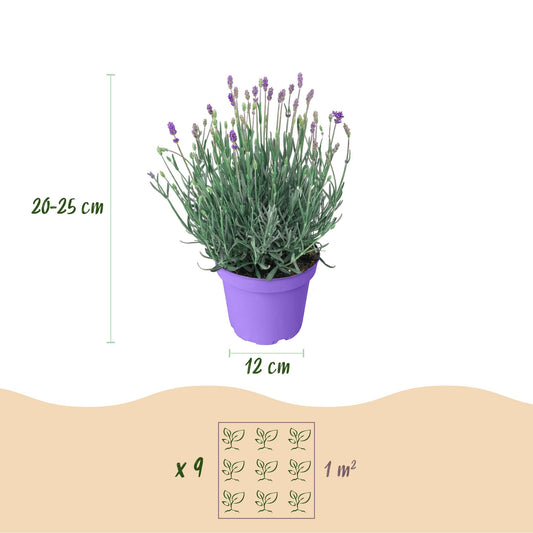
Mediterranean Garden: Designing, Landscaping, and Planting

A Mediterranean garden is a sun-drenched garden with mineral features and low water needs, recreating the bright atmosphere of the South with drought-resistant plants set in very well-drained soil. Olive trees, lavenders, rockroses and grasses combine to create a structured, fragrant and carefully designed landscape that looks beautiful all year round, needs virtually no maintenance and requires almost no watering once established.
This guide covers everything: the hallmarks of the style, the plants to choose, how to create your garden step by step, design a flower bed, create a gravel rock garden, make the most of a small garden or terrace, and keep maintenance to a minimum. For species details, explore our guide to Mediterranean plants.
🌿 What is a Mediterranean garden?
A Mediterranean garden recreates the conditions of the Mediterranean region: plenty of sun, dry summers and poor, well-drained soil. It favors plants adapted to heat, mineral elements (gravel, stone, terracotta) and a framework of evergreens that keeps the garden looking good in winter as well as summer.
It’s about more than just plants: it’s a style, defined by pale gravel, silvery foliage, striking silhouettes (olive trees, cypresses) and a slower-paced way of life, with low water and maintenance needs. In its modern form, it pares things back to a few species, clean lines, pale gravel and contemporary planters.
This style isn’t just for coastal areas: it can be adapted anywhere in France, as long as you choose plants suited to the local climate. In mild regions, the full range of plants can stay outdoors in winter; farther north, stick to the hardiest options (lavender, rockroses, salvias, grasses) and grow tender plants such as olive trees and oleanders in pots that can be brought in for winter. The basics remain the same: sun, well-drained soil and plants that don’t mind being thirsty.
| Hallmark of the style | What it looks like in the garden |
|---|---|
| Full sun | a warm, sunny spot with at least 6 hours of sun a day |
| Well-drained soil | gravelly or sandy; water never pools, even in winter |
| Mineral mulch | a 5 to 8 cm layer of gravel or pozzolana rather than organic mulch |
| Evergreen structure | olive trees, cypresses and bay laurels that keep the garden looking good all year round |
| Silvery foliage | lavender, cotton lavender and dusty miller for brightness and low water needs |
| Low water use | plants that need no watering once established |
🪴 Which plants are right for a Mediterranean garden?
Choose full-sun plants with foliage adapted to dry conditions: fine, silvery, leathery or aromatic leaves. The secret to a beautiful planting scheme is to combine different roles, from structural trees to ground cover, creating a layered landscape that still looks striking in winter.
| Role in the garden | Typical plants | What they bring |
|---|---|---|
| Trees and structure | olive tree, Provence cypress, umbrella pine, bay laurel | evergreen shape, light shade and a focal point for the design |
| Shrubs | rockroses, oleander, rosemary clipped into a ball, ceanothus | abundant blooms, volume and evergreen foliage |
| Perennials and aromatic plants | lavender, sage, thyme, cotton lavender, gaura | color, fragrance (lavender, thyme) and bee-friendly blooms with low water needs |
| Grasses | feather grass and blue fescue, fountain grass | movement, light and an airy feel throughout the season |
| Rock garden ground cover | sedum, ice plant, creeping thyme | cover the soil and gravel; almost impossible to kill |
Most of these plant groups have their own detailed profiles; to choose plants for your region and soil, refer to our guide to Mediterranean plants and browse the full selection in our Mediterranean plants collection.
Always check hardiness for your region: oleander is vulnerable to frost at -5 to -8 °C, while olive trees are a little hardier (-10 to -12 °C for an established tree). Lavender, rockroses, salvias and grasses withstand the cold almost everywhere without trouble.
columns: 4
columns_mobile: 2
-


Ceanothus Repens (Ceanothus), flowering Mediterranean shrub, light blue flowers, 19 cm pot, Height 90 cm
Regular price 69,95 €Regular price -


Ceanothus Victoria (Ceanothus), flowering Mediterranean shrub, purple flowers, 19 cm pot, Height 90 cm
Regular price 69,95 €Regular price -


Eucalyptus Azura (Eucalyptus gunnii), Mediterranean ornamental shrub, 19 cm pot, Height 70-90 cm
Regular price 74,95 €Regular price -

 Livraison offerte Sold out
Hidcote Lavender (Lavandula angustifolia), Mediterranean perennial, 17 cm pot, Height 30 cm - Pack of 6
Regular price 84,95 €Regular price -
Olive (Olea europaea), Mediterranean ornamental shrub, 19 cm pot, Height 90 cm
Regular price 69,95 €Regular price -


Rosemary (Rosmarinus officinalis), Mediterranean perennial, purple flowers, 19 cm pot, Height 90 cm
Regular price 69,95 €Regular price -

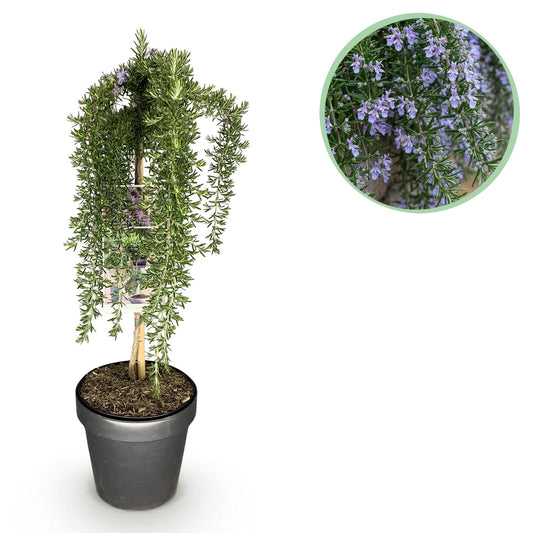
Prostrate Rosemary (Rosmarinus officinalis), Mediterranean perennial, purple flowers, 19 cm pot, Height 70–90 cm
Regular price 69,95 €Regular price


🛠️ How do you create a Mediterranean garden?
Success comes down to preparation: a warm, sunny spot and perfectly well-drained soil matter more than anything else. Follow these steps in order to create a garden that establishes well and soon needs no watering.
| Step | What to do |
|---|---|
| 1. Check the exposure | choose the warmest, brightest spot, with at least 6 hours of sun a day |
| 2. Improve drainage | lighten heavy soil with gravel or coarse sand to a depth of 20 to 30 cm |
| 3. Add structure | plant the main features first (olive trees, cypresses) and lay out gravel paths |
| 4. Plant in groups | group plants with similar needs, spacing perennials 40 to 50 cm apart |
| 5. Apply mineral mulch | cover the soil with a 5 to 8 cm layer of gravel or pozzolana to retain moisture |
Mineral mulch is the hallmark of this style: it limits evaporation, suppresses weeds and highlights the foliage. According to the ADEME (French Agency for Ecological Transition), applying mulch properly significantly reduces watering needs. The RHS (Royal Horticultural Society) confirms that a well-designed gravel garden can support long-lasting flower beds even in dry areas.
🌸 Designing a Mediterranean flower bed
A Mediterranean flower bed is arranged in layers: one or two structural specimens (olive tree, oleander), a framework of evergreen shrubs (rockroses, rosemary), fragrant perennials for color (lavender, sage) and grasses for movement, all set in a bed of pale gravel. Focus on contrasts in foliage more than flowers.
In front of a house, place the bed against a light-colored wall that reflects heat and position the olive tree as a focal point, surrounded by balls of rosemary and drifts of lavender. Vary the heights and leave patches of gravel visible between plants for a clean, streamlined look that’s easy to maintain.
To keep the flower bed looking good all year round, make sure at least a third of the plants are evergreens: they provide structure when the perennials are dormant in winter. A terracotta urn, a few pebbles or an upright stone are all you need to add a touch of the South without overdoing it.
Your choice of tree sets the character of the flower bed: here are some reliable options for different spaces and climates.
| Mediterranean tree | Hardiness | Use and space |
|---|---|---|
| Olive tree | -10 to -12 °C | focal point; plant in the ground in the South or in a large pot that can be brought in for winter |
| Provence cypress | -12 to -15 °C | striking vertical accent, screen or backdrop for a flower bed |
| Umbrella pine | -12 to -15 °C | large gardens, light shade and a distinctive parasol-shaped silhouette |
| Bay laurel | -10 to -12 °C | prunable evergreen for a hedge or topiary; aromatic leaves |
| Judas tree | -15 to -20 °C | pink flowers on bare wood in April; suitable for small to medium-sized gardens |
🪨 Rock gardens and gravel gardens
A rock garden or gravel garden is the driest, most sculptural take on this style. In very well-drained soil, gravel serves as both mulch and planting medium: rock garden plants (sedum, houseleek, ice plant, creeping thyme) establish themselves and self-seed.
Spread a 5 to 8 cm layer of gravel over loosened soil, then plant directly through it. This is the most water- and low-maintenance option, ideal for a slope, dry bank or scorching corner where nothing else will grow.
Choose a pale, medium-grade gravel (6 to 20 mm) that is stable underfoot and reflects the light. A geotextile membrane laid beneath the gravel helps control weeds while allowing water to pass through, but leave a few patches of bare soil wherever you want plants to self-seed naturally.
🏡 Small gardens, terraces and growing in pots
Mediterranean style works very well in small spaces and on terraces: a few terracotta pots, an olive tree or oleander in a container, some lavender and aromatic plants are all you need to create the right atmosphere. In pots, the key is a very free-draining growing medium and a container with drainage holes.
Choose containers at least 40 cm in diameter and a genuinely free-draining growing medium (potting mix lightened with sand and gravel): that matters far more than a layer of clay pebbles at the bottom, which makes little difference to drainage if the pot has proper holes. Group pots together for visual impact, and move tender plants (citrus trees, oleander) to a sheltered spot for winter in cold regions.
-

Our flowering outdoor shrubs: buddleias, dogwoods, deutzias, hibiscus, mock oranges and more...


💧 A garden that needs (almost) no watering
Once established, a Mediterranean garden needs virtually no watering: a major advantage in an era of hot summers and water restrictions. The first year is crucial, while the roots grow deeper into the soil.
Water thoroughly but infrequently during the first year (in summer, once the soil has dried out at depth), then cut back sharply from the second year onward. For more on drought resilience, the RHS and our in-depth guide to dry gardens cover plant selection and soil preparation.
📅 Seasonal maintenance calendar
| Season | Key task |
|---|---|
| 🌸 Spring | Tidy up and lightly prune shrubs; plant; lavender and rockroses begin to flower |
| ☀️ Summer | Peak flowering; water regularly during the first year only; keep mineral mulch in place |
| 🍂 Autumn | The best season for planting; warm soil encourages roots to establish before summer |
| ❄️ Winter | Dormant season; protect oleander (frost damage from -5 to -8 °C) and potted olive trees in cold regions |
❌ Mistakes to avoid
Most failures come down to excess: too much water, soil that is too rich or too heavy, or plants that aren’t suited to the local cold. Here are the most common pitfalls and how to fix them before they cost you a plant.
| Common mistake | What to do instead |
|---|---|
| Heavy soil that retains water | lighten it with gravel; winter waterlogging kills plants more readily than drought |
| Watering too much and too often | space out watering from the second year onward; excess water rots roots |
| Adding compost to enrich the soil | unnecessary and counterproductive: these plants thrive in poor soil |
| Forgetting hardiness | check each species: oleander is damaged by frost from -5 to -8 °C, olive trees around -10 to -12 °C |
| Planting too close together | space perennials 40 to 50 cm apart to avoid extra pruning and disease |
📋 Mediterranean garden quick reference
| Factor | Guideline |
|---|---|
| ☀️ Exposure | full sun, at least 6 hours; warm, sheltered spot |
| 🪨 Soil | poor, gravelly or sandy, perfectly well-drained; tolerant of limestone |
| 🧪 pH | not fussy, to slightly alkaline (6.5 to 8) |
| 🕳️ Drainage | top priority; lighten heavy soil to a depth of 20 to 30 cm |
| ❄️ Hardiness | varies: lavender, rockroses and grasses are very hardy; olive trees -10 to -12 °C, oleander -5 to -8 °C |
| 💧 Watering | thoroughly during the first year only, then almost never |
| 🌾 Mulch | mineral (gravel, pozzolana) in a 5 to 8 cm layer |
| 📏 Spacing | 40 to 50 cm between perennials; 1 to 3 m for structural plants |
| 🌸 Flowering | from spring (rockroses) to autumn (oleander, gaura, sage) |
| 🧰 Maintenance | light pruning in spring; very little overall |
The Mediterranean garden is the style I recommend to anyone who wants a beautiful garden without spending every weekend working on it. The only real rule is good drainage: give these plants soil that doesn’t hold water, then leave them alone. Resist the urge to water and feed them—it’s when you pamper them that you lose them. A bed of pale gravel, three olive trees and drifts of lavender, and you’ve brought the South home.

Laura Bruneau
Jardinière & autrice