

Mediterranean Plants: The Complete Guide (Olive Tree, Eucalyptus, Ceanothus)

A touch of Provence or Tuscany at home? Mediterranean plants bring that extra sunshine, fragrance, and carefree charm we love so much to the garden. The olive tree, with its timeless silvery foliage; eucalyptus, with its fresh scent; California lilac, with its clouds of blue flowers: these full-sun plants need little water and plenty of light.
This complete guide covers the essentials: Mediterranean favorites, planting (including THE secret to good drainage), care, hardiness and how to protect plants in colder regions, plus growing them in pots. With practical, reliable advice.
☀️ Mediterranean spirit in the garden
Mediterranean plants have one thing in common: they’re made for sunshine and drought. With silvery or bluish foliage, striking shapes, and bright blooms, they create a warm atmosphere and need little once established. Their one real requirement: soil that doesn’t hold water.
Most are evergreen and bring structure to the garden all year round. Depending on the species, they’re hardy down to ‑10 to ‑15 °C and reach 90 cm to 3–4 m tall at maturity. In cold or damp regions, a few precautions (good drainage, winter protection, growing in pots) make it possible to enjoy them almost anywhere.
Key facts at a glance
| Feature | Mediterranean plants |
|---|---|
| Type | Sun-loving trees and shrubs, often evergreen |
| Foliage | Silvery (olive tree), bluish (eucalyptus), glossy green (California lilac) |
| Hardiness | Moderate: ‑10 to ‑15 °C, depending on the species |
| Position | ☀️ Full sun is essential |
| Soil | Poor, dry, very well-drained; doesn’t tolerate standing water |
| Watering | Light once established (drought-tolerant) |
| Main advantage | ✅ Southern charm, little water, decorative foliage |
🌿 Mediterranean favorites in our selection
| Plant | What makes it special |
|---|---|
| Olive tree (Olea europaea) | A symbol of the South: evergreen silvery foliage and a timeless silhouette |
| Eucalyptus (Eucalyptus gunnii) | Highly fragrant bluish foliage and fast growth |
| California lilac (Ceanothus) | Spectacular blue blooms |
The olive tree brings structure and elegance, eucalyptus adds fragrance and vigor, and California lilac delivers an explosion of blue flowers in spring.
🌡️ Hardiness: choose the right plants for your climate
This is what to watch out for: these plants love sunshine but are sensitive to severe damp cold. Here are some guidelines:
| Plant | Hardiness | Advice for colder regions |
|---|---|---|
| Olive tree | ≈ ‑10 to ‑12 °C | Grow in a pot and bring indoors, or use fleece + a thick layer of mulch |
| Eucalyptus gunnii | ≈ ‑12 to ‑15 °C | The hardiest; shelter from cold winds |
| California lilac | ≈ ‑10 to ‑12 °C | Choose a sheltered spot (against a south-facing wall); ensure perfect drainage |
🪴 Where and how to plant them (the secret to good drainage)
☀️ Position: full sun, without hesitation: it’s essential for their beauty and resilience.
🌱 Soil: poor, stony, and perfectly drained. In heavy or clay soil, plant on a mound and mix gravel and sand into the planting hole.
- Dig a wide hole and add a layer of drainage material (gravel) at the bottom.
- Mix the soil with coarse sand and gravel; avoid overly rich potting soil.
- Position the crown slightly above soil level (never bury it).
- Water at planting time, then sparingly.
📏 Spacing:
| Use | Recommended spacing |
|---|---|
| Olive tree (specimen plant) | Space 3 to 4 m apart |
| Eucalyptus (vigorous grower) | Space 3 to 5 m apart |
| California lilac (border) | Space 1.5 to 2 m apart |
| In pots | One plant per large, very well-drained container |
columns: 4
columns_mobile: 2
-


Ceanothus Repens (Ceanothus), flowering Mediterranean shrub, light blue flowers, 19 cm pot, Height 90 cm
Regular price 69,95 €Regular price -


Ceanothus Victoria (Ceanothus), flowering Mediterranean shrub, purple flowers, 19 cm pot, Height 90 cm
Regular price 69,95 €Regular price -


Eucalyptus Azura (Eucalyptus gunnii), Mediterranean ornamental shrub, 19 cm pot, Height 70-90 cm
Regular price 74,95 €Regular price -


Hidcote Lavender (Lavandula angustifolia), Mediterranean perennial, 17 cm pot, Height 30 cm - Pack of 6
Regular price 84,95 €Regular price -
Olive (Olea europaea), Mediterranean ornamental shrub, 19 cm pot, Height 90 cm
Regular price 69,95 €Regular price -


Rosemary (Rosmarinus officinalis), Mediterranean perennial, purple flowers, 19 cm pot, Height 90 cm
Regular price 69,95 €Regular price -

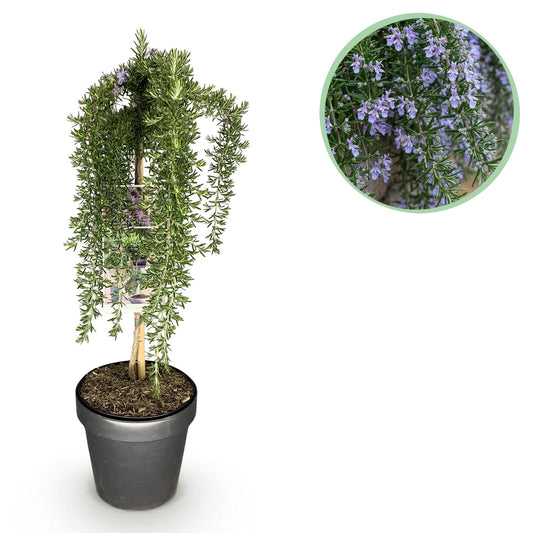
Prostrate Rosemary (Rosmarinus officinalis), Mediterranean perennial, purple flowers, 19 cm pot, Height 70–90 cm
Regular price 69,95 €Regular price


💧 Caring for them throughout the seasons
💧 Watering: water regularly during the first year to help plants establish, then cut back considerably: these plants hate excess water. In pots, let the soil dry out between waterings.
✂️ Pruning: lightly prune the olive tree in spring to open up its shape; eucalyptus tolerates hard pruning (coppicing) to keep it compact; evergreen California lilac, on the other hand, doesn’t like being cut back into old wood: prune it lightly just after flowering.
🌾 Fertilizing: keep it to a minimum. These plants prefer poor soil to overly rich soil.
📅 Seasonal care calendar
| Season | Key task |
|---|---|
| 🌸 Spring | California lilac blooms blue; plant; lightly prune the olive tree |
| ☀️ Summer | Full sun; reduce watering; eucalyptus can be coppiced |
| 🍂 Fall | Ideal planting time (while the soil is still warm); reduce watering |
| ❄️ Winter | Protect from damp cold (fleece, mulch, bring pots indoors); don’t water |
🏺 Growing Mediterranean plants successfully in pots
Growing in pots is ideal in colder regions: it lets you bring plants indoors for shelter in winter (a conservatory, bright garage, or sheltered spot by a wall). Use a large, very well-drained container and a sandy potting mix, and water sparingly. The olive tree in particular looks beautiful and is easy to grow in a container.
Move pots into full sun as soon as spring arrives, and cut back watering considerably in fall to help plants harden off before winter.
🐛 Common problems: quick diagnosis
| Symptom | Likely cause | What to do |
|---|---|---|
| Yellowing, falling leaves and a soft base | 🌊 Too much water / poor drainage | Reduce watering and urgently improve drainage |
| Declining after a cold, wet winter | ❄️💧 Cold + waterlogged soil | Plant on a mound, choose a sheltered spot, ensure perfect drainage |
| Cottony clusters on the olive tree | 🐛 Scale insects | Spray with water, use black soap or white oil |
| California lilac declines after hard pruning | ✂️ Pruned into old wood | Prune lightly only, after flowering |
🎨 Designing a Mediterranean dry garden
Mediterranean plants really come into their own when brought together in a cohesive design: a dry garden. The idea is to recreate southern conditions (full sun, well-drained soil, minimal watering) while creating a striking garden that looks good all year thanks to evergreen foliage.
Pair the structure of the olive tree with the bluish foliage of eucalyptus and the waves of flowers from California lilac, then fill in with herbs (lavender, rosemary), airy grasses, and drought-tolerant perennials (gaura, cotton lavender, sage). The visual secret: a light-colored mineral mulch (gravel, pozzolan) that reflects light, keeps roots dry, and eliminates the need for routine watering—exactly the opposite of a traditional border.
This type of landscaping has two benefits. Aesthetically, it instantly evokes scrubland and coastal gardens. Ecologically, it’s one of the most water-efficient types of garden: once established, these plants need virtually no watering—a major advantage as summer water restrictions become increasingly common. On a slope or in a rock garden, the effect is even greater, and the natural drainage provided by the incline perfectly protects roots from winter damp.
Each plant has its own little secrets. The olive tree can produce olives in our mildest climates, but it’s mostly grown for its shape and foliage; in colder regions, it rarely fruits, and that’s perfectly fine. Eucalyptus gunnii tolerates coppicing: cut back close to the ground every spring and it produces rounded, bluish juvenile foliage, highly prized by florists, while staying compact. California lilac is relatively short-lived (around ten years), but its spectacular flowers more than earn it a place in the garden.
One tip applies to all of them: the first winter is the most delicate, because the plant isn’t well established yet. A thick layer of mulch around the base, winter fleece on young plants during nights of severe frost, and above all perfectly drained soil are enough to get them through. Once established, these Mediterranean plants are remarkably self-sufficient and resilient.
If you remember just three things for growing Mediterranean plants successfully, make them these: plant in full sun, ensure perfect drainage (mounds, gravel, poor soil), and water very little once plants are established. Everything else follows from there. This winning combination also explains why these plants are so popular: with hotter, drier summers, they offer a beautiful, structured garden that uses very little water. Choosing Mediterranean plants means combining visual appeal, southern charm, and responsible gardening.
Whether it’s a single olive tree in a large pot on the patio or a whole dry garden at the back of the yard, these plants bring an instant taste of the South without leaving home—and without driving up your water bill. It’s hard to find anything more transportive or better suited to warming summers, with so little effort and maintenance once the plants are established. Their quiet generosity, combined with exemplary water efficiency, makes Mediterranean plants the big winners in today’s garden: beautiful to look at, a pleasure to live with, and respectful of water resources.
In short, Mediterranean plants bring southern sunshine with very little maintenance—as long as you give them what they really need: plenty of light and flawless drainage. Grow the more cold-sensitive varieties in pots, and they can find a place in almost any garden.
-

Our flowering outdoor shrubs: buddleias, dogwoods, deutzias, hibiscus, mock oranges and more...


Laura Bruneau
Jardinière & autrice


