

Increase the humidity for tropical plants

To increase humidity around your tropical plants, the gold standard is a humidifier, complemented by grouping your plants together; pebble trays and misting, on the other hand, have only a marginal effect. The rule in a nutshell: rely on a humidifier and plant grouping, and monitor conditions with a hygrometer. Find everything you need to care for your plants in our range of gardening tools.
This guide explains why your tropical plants need humidity, what levels to aim for, which methods really work, and how to combine them depending on your situation.
📊 Why do tropical plants need humidity?
Most of our houseplants come from tropical regions, where the air is warm and humid all year round. In an apartment, the air is often much drier, especially when the heating or air conditioning is on, which can stress them.
Most homes have an average humidity level of 30 to 40%, while tropical plants generally prefer 50% or more. This difference explains the classic symptoms of dry air: brown, crispy leaf tips, curling leaves, flower buds dropping, and slowed growth. According to Purdue University Extension, maintaining proper humidity also reduces pest problems and significantly improves overall plant health.
In other words, humidity isn't a luxury for a Calathea or a fern: it's essential for good health, just like light and watering. This is especially true in winter, when heating dries out indoor air to levels well below what these plants can tolerate. Brown leaf tips and spider mite infestations often appear during this season—two symptoms directly linked to air that's too dry. Getting into the habit of monitoring humidity, especially from October to March, helps prevent a lot of problems and keeps foliage vibrant all year round.
🔢 What humidity level should you aim for?
The target depends on the plant, but most tropical houseplants do well at 50 to 60% relative humidity. The most demanding species, such as some rare aroids, need 70–80%.
There is no universal “ideal level”: a desert cactus and a jungle plant don't have the same needs. The important thing is to adapt to each plant's natural habitat and aim for consistent humidity rather than a perfect number. A hygrometer lets you measure accurately and make adjustments. University of Minnesota Extension notes that most houseplants are tropical in origin and thrive in a more humid atmosphere than the dry air in our heated homes.
| Plant type | Target humidity |
|---|---|
| Common foliage plants | 40% and above; tolerant |
| Common tropical plants | 50 to 60% |
| Rare aroids, Calathea | 60% and above |
| Terrariums, demanding plants | 70 to 80% |
When it comes to humidity, I'm direct with my clients: forget misting and pebble trays as your main solution—they do virtually nothing for the air in the room. What really works is a humidifier and grouping plants together. I always add a hygrometer: without one, you're flying blind. After years of experience, this trio solves 90% of problems with dry leaf tips.
🧰 The methods that really work
Not all methods are equally effective. By far the best are a humidifier and grouping plants together; the others are supplementary and sometimes negligible.
A humidifier is the most reliable solution: it can raise the humidity in a room by 20 to 30 percentage points in an hour and maintain it over time. A cool-mist model is ideal because it won't damage foliage or encourage fungal growth. Grouping plants together is the best free option: each plant transpires, creating a more humid microclimate for its neighbors, as confirmed by Iowa State University Extension. Placing plants in a naturally humid room, such as a bright bathroom or kitchen, also makes a real difference without any equipment: these rooms benefit from steam from showers and cooking, and are ideal for ferns and other humidity-loving plants.
columns: 4
columns_mobile: 2
-
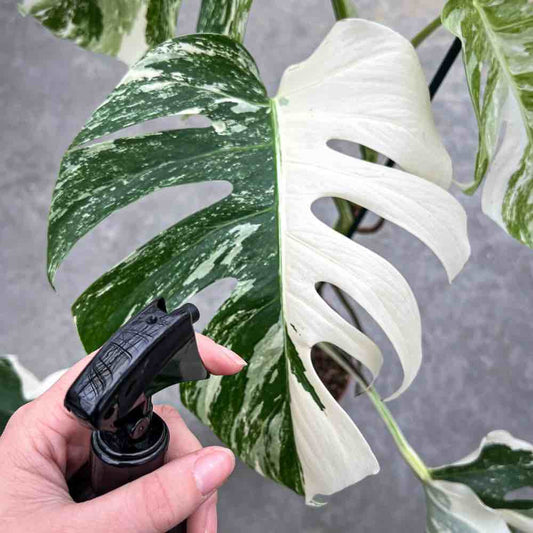
Plant sprayer, mist spray bottle, fine mist, 250ml
Regular price From 5,00 €Regular price5,00 €Sale price From 5,00 €5,00 €From 4,00 € -
Plant cleaning gloves - Anti-limescale
Regular price 10,00 €Regular price10,00 €Sale price 10,00 €10,00 €8,00 € -
Graduated watering bulb pipette, precision watering bulb
Regular price From 5,00 €Regular price5,00 €Sale price From 5,00 €5,00 €From 4,00 € -
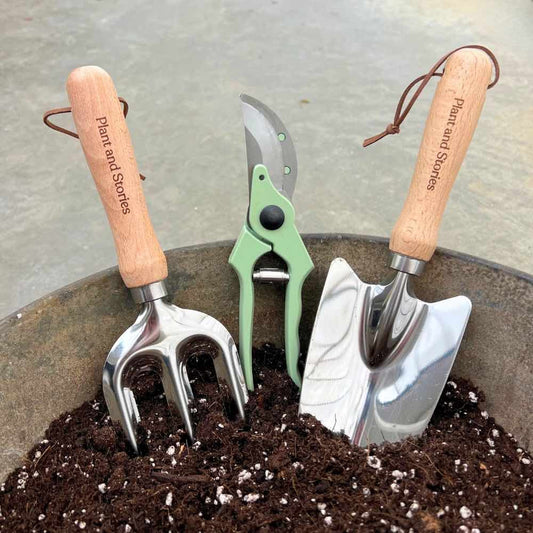
Gardening Tool Kit - Set of 3 Essential Tools - Garden Tool Set
Regular price 15,95 €Regular price29,95 €Sale price 15,95 €15,95 €12,76 €Sale



| Method | Actual effectiveness |
|---|---|
| Humidifier | Very high: +20–30 points, long-lasting |
| Grouping plants | Good, free, creates a microclimate |
| Humid room (bathroom) | Good, depending on the room |
| Pebble tray | Low, very localized |
| Misting | Almost no lasting effect |
| Humidity-loving plant | Sign of low humidity |
|---|---|
| Calathea, Maranta | Brown, crispy edges |
| Ferns | Fronds browning at the tips |
| Fittonia | Soft leaves, wilting |
| Tropical aroids | Distorted new leaves |
💦 Pebble trays and misting: how effective are they really?
These two very popular methods are widely overrated: their effect on air humidity is slight and short-lived. Think of them as supplements, never as a primary solution.
A tray of wet pebbles under a pot only raises humidity by a few percentage points, just above the water's surface, and the effect becomes negligible as soon as you move away. Misting, meanwhile, only lasts a few minutes before humidity drops again. They can help with a small plant on its own, but they will never replace a humidifier for an entire collection.
📋 Quick reference guide (for experienced gardeners)
Humidity guidelines at a glance.
| Parameter | Guideline |
|---|---|
| Average household air | 30 to 40% humidity |
| Target for tropical plants | 50 to 60% |
| Top method | Humidifier (cool mist) |
| Free method | Group plants together |
| Less effective options | Pebble tray, misting |
| Monitoring | Hygrometer essential |
| Humid rooms | Bathroom, kitchen |
| Signs of dry air | Brown tips, curling leaves |
🌫️ How to use a humidifier properly
Since a humidifier is the most effective solution, it's worth using it correctly. A few simple adjustments will help you avoid common mistakes and protect your plants.
Place it near your plants, but never direct the mist straight at the foliage, as this could leave it too wet. Choose a cool-mist model, which is safer for leaves, and match its size to the room: a small humidifier for one corner, a larger one for an entire room. Fill it with clean water and clean it regularly to prevent mold and bacteria from growing. A hygrometer nearby lets you check that you're reaching your target.
| Setting | Best practice |
|---|---|
| Placement | Near plants, not aimed directly at them |
| Type | Cool mist |
| Size | Matched to the room's volume |
| Maintenance | Clean water, regular cleaning |
🌵 Which method should you use in your situation?
The right strategy depends on how many plants you have and how demanding they are. Combining several methods often gives the best results.
For a large room with several tropical plants, a humidifier combined with grouping them together is the most effective and economical duo. For one valuable, demanding plant in a dry room, you can combine double potting with damp sphagnum moss, a large pebble tray, and a small humidifier nearby to maintain 65–70% humidity around it. If you're on a budget, group all your humidity-loving plants together in the most naturally humid room, often the kitchen or bathroom.
| Situation | Recommended combination |
|---|---|
| Large room, several tropical plants | Humidifier + grouping |
| One valuable, demanding plant | Sphagnum moss + tray + small humidifier |
| Tight budget | Group plants in a humid room |
| Very demanding species | Terrarium or enclosed cabinet |


🩺 Diagnosis: reading the signs of air that's too dry
Plants themselves signal when humidity is too low. Here's how to interpret those signs.
| Symptom | Likely cause and solution |
|---|---|
| Brown, crispy leaf tips | Air too dry: use a humidifier, group plants |
| Curling leaves | Low humidity or lack of water: check both |
| Flower buds dropping | Dry air: increase humidity |
| Spider mites appearing | Dry air encourages mites: increase humidity |
To care for your plants, explore our range of gardening tools and our humidity-loving Calathea plants.
💚 Create a tropical microclimate with Plant and Stories
Increasing humidity comes down to methods that really work: a humidifier, grouping plants together, and monitoring with a hygrometer. By leaving ineffective quick fixes aside, you'll give your tropical plants the humid air they crave. Supple, glossy foliage with no dry edges will soon be your reward—and the best proof that your efforts are paying off.
To create your own jungle, explore our houseplants and tools, carefully selected in France. With the right methods, creating a little tropical corner at home is within everyone's reach, even in the driest apartment.


