Bergenia cordifolia (leather bergenia): planting and care

To grow bergenia successfully, plant it in partial shade in humus-rich, moist but well-drained soil. Water it during its first year, then simply cut back faded flower stems and leaves damaged by winter.
Sold under the names bergenia or leather bergenia, the plants most often grown are Bergenia cordifolia and its hybrids: evergreen perennials with large, round, glossy leaves, among the few ground covers that flower as winter draws to a close.
It is one of the cornerstones of our guide to perennials for shade and beneath trees, ideal for planting around tree trunks, along shaded borders and in woodland beds.
This guide brings together information verified against the RHS, Kew and NC State Extension: where to plant it, how to divide it, which varieties to choose for their winter colours, and what is known about its toxicity.
🌿 Why plant bergenia as a ground cover?
Plant bergenia for year-round ground cover, striking foliage and flowers when the garden is still bare. According to the RHS (Royal Horticultural Society), Bergenia cordifolia is a vigorous evergreen perennial that forms spreading clumps of rounded, wavy leaves about 30 cm long, often tinged purple in winter.
Its dark pink clusters rise on red stems about 60 cm tall in early spring. According to the University of Illinois Extension, it is an excellent shade perennial that is not aggressive and spreads slowly by rhizomes: it covers the ground without taking over, unlike more invasive ground covers.
| Benefit | What it means for your garden |
|---|---|
| Evergreen foliage | The ground stays covered and green all year, with purple or red winter tones depending on the variety |
| Early flowering | Pink clusters in early spring, when few perennials are flowering |
| Slow, well-behaved growth | Spreads slowly by rhizomes without spilling into neighbouring beds |
| Highly adaptable | Grows in sun or partial shade, in chalky, clay, loamy or sandy soil |
🔎 Bergenia at a glance
The name Bergenia cordifolia (Haw.) Sternb., published in 1831, is still used by the trade and the RHS, but Plants of the World Online (POWO) from the Royal Botanic Gardens, Kew now lists it as a synonym of Bergenia crassifolia var. crassifolia, a member of the Saxifragaceae family.
The same database gives its native range as Siberia (from the Altai to Yakutia and the Amur region), Kazakhstan, Mongolia, Xinjiang and Korea. NC State Extension follows this classification: its Bergenia crassifolia profile notes that the plant was formerly known as Bergenia cordifolia.
It also gives its English nickname, pigsqueak: when rubbed between the fingers, the leaf makes a sound reminiscent of a pig squealing. The RHS also calls bergenias elephant's ears, which often leads to confusion with Alocasia, known as elephant ears in French.
| Feature | Verified details |
|---|---|
| 🏷️ Botanical name | Bergenia cordifolia (Haw.) Sternb., a synonym of Bergenia crassifolia (L.) Fritsch according to POWO |
| 🧬 Family | Saxifragaceae |
| 🌳 Type | Evergreen, rhizomatous herbaceous perennial and ground cover |
| 🌍 Native range | Siberia, Kazakhstan, Mongolia, Xinjiang and Korea (POWO) |
| ❄️ Hardiness | H7 according to the RHS, meaning temperatures below -20 °C; USDA zones 3a to 8b (NC State) |
| 🍃 Foliage | Evergreen, leathery and glossy, with rounded leaves about 30 cm long that turn purple in winter (RHS) |
| 🌸 Flowers | Dark pink clusters on red stems in early spring (RHS), from March to May according to NC State |
| 📏 Mature size | 0.5 to 1 m tall and wide when in flower according to the RHS, reached in 2 to 5 years |
📋 Quick growing guide
Essential growing information, all in one place.
| Factor | Guideline |
|---|---|
| Position | Partial shade or sun; flowering is reduced or absent in deep shade (RHS) |
| Soil | Humus-rich, moist but well-drained; chalky, clay, loamy or sandy, with an acidic to alkaline pH |
| Hardiness | H7 RHS for B. cordifolia: below -20 °C (varies by cultivar) |
| Watering | Regularly during the first year; thereafter only during drought or in a sunny position |
| Planting | Autumn or spring, avoiding frost and heatwaves |
| Pruning | Remove faded flower stems after flowering and damaged leaves at the end of winter |
| Flowering | Early: in early spring, sometimes from late winter |
| Care | Very easy; divide in autumn or spring |
| Toxicity | Not listed by the ASPCA, and not classified by the RHS or NC State; do not eat |
📍 Where and when to plant bergenia
Plant bergenia in partial shade, where it will get a few hours of light: beneath deciduous trees, at the foot of a hedge, along a path or in front of an east-facing wall.
The RHS grows it in sun or partial shade, in any aspect and in exposed or sheltered sites, but warns in its bergenia growing guide that deep shade reduces or prevents flowering, and that constantly waterlogged soil causes it to rot. South Dakota State University Extension (SDSU Extension) adds that it needs extra moisture in full sun.
As for timing, plant container-grown plants in autumn or spring, when the soil is not waterlogged and there is no frost or heatwave.
🌳 Ideal: Partial shade beneath deciduous trees, at the foot of a hedge or an east-facing wall, in cool, humus-rich soil
☀️ Acceptable: Full sun in soil that stays moist, with summer watering; light shade, with slightly fewer flowers
🚫 Avoid: Very deep shade, constantly waterlogged soil, and very dry ground beneath conifers
🪴 How to plant bergenia as a ground cover
For successful ground cover, focus on preparing the soil: bergenia likes humus-rich, moist but well-drained soil. According to the RHS profile for Bergenia cordifolia, it tolerates chalky, clay, loamy or sandy soils with an acidic, neutral or alkaline pH, provided they do not remain waterlogged.
Weed the area thoroughly, work in compost if the soil is poor, then plant in a staggered pattern, allowing each plant room to reach its mature spread. Since it spreads slowly, planting them closer together will fill in the carpet faster.
| Step | What to do |
|---|---|
| 1. Prepare the area | Weed the area, removing the roots of unwanted perennials, especially beneath trees |
| 2. Improve the soil | Loosen the soil and incorporate compost; improve heavy soil to prevent waterlogging |
| 3. Rehydrate the root ball | Stand the pot in a bucket of water before removing the plant |
| 4. Plant at the right depth | Set the rhizome at soil level, no deeper than it was in the pot, then firm the soil |
| 5. Water and mulch | Water thoroughly, then mulch with leaves or compost while the ground cover fills in |
columns: 4
columns_mobile: 2
-


Bergenia (Bergenia cordifolia) - evergreen perennial groundcover - 11 cm pot - Height 25 cm
Regular price From 39,95 €Regular price39,95 €From 31,96 €Livraison offerte -


Heuchera 'Palace Purple' (Heuchera) - perennial with colorful foliage - 11 cm pot - Height 25 cm
Regular price From 39,95 €Regular price39,95 €From 31,96 €Livraison offerte -

 Livraison offerte
Astilbe 'Europa' (Astilbe) - shade perennial - 11 cm pot - Height 25 cm
Regular price From 39,95 €Regular price39,95 €From 31,96 €Livraison offerte -


Foxglove 'Dalmatian Purple' (Digitalis purpurea) - shade-loving flowering perennial - 11 cm pot - Height 25 cm
Regular price From 39,95 €Regular price39,95 €From 31,96 €Livraison offerte Sold out -

 Livraison offerte
Perennial pack for shaded beds, Set of 6, 11 cm pots, Height 15-25 cm
Regular price From 64,95 €Regular price64,95 €From 51,96 €Livraison offerte -


Begonia 'Herbstblüte' (Begonia cordifolia) - evergreen groundcover with repeat blooms
Regular price From 59,95 €Regular price59,95 €From 47,96 €Livraison offerte -

 Livraison offerte
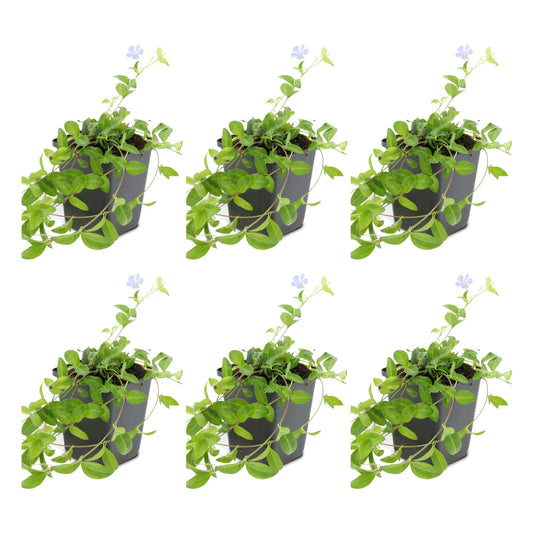
Lesser periwinkle (Vinca minor) - flowering evergreen groundcover
Regular price From 39,95 €Regular price39,95 €From 31,96 €Livraison offerte -
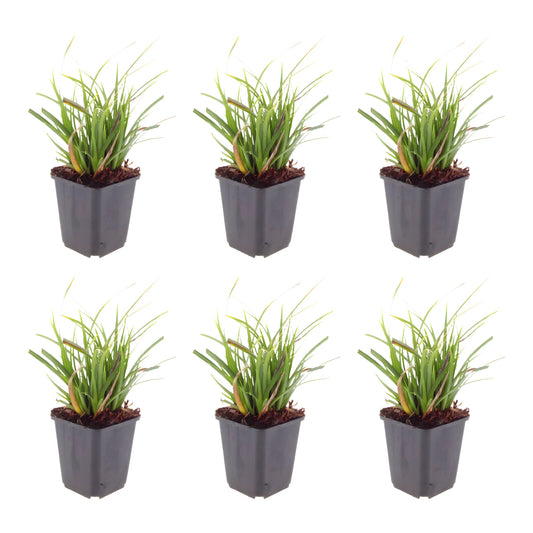
Japanese sedge (Carex morrowii) - bright green shade-tolerant perennial grass
Regular price From 44,95 €Regular price44,95 €From 35,96 €Livraison offerte


✂️ Bergenia care: watering, tidying and feeding
Bergenia care comes down to three tasks: watering during the first year, cutting back faded flower stems and removing damaged leaves. Once established, it generally relies on rainfall; the RHS describes it as drought-resistant, while noting that it dislikes extreme heat and prolonged drought.
Before flowering, the RHS recommends removing leaves damaged or blackened by winter to show off the flowers. A spring compost mulch is enough to feed the clump: there is no need to overdo the fertiliser.
💧 Watering: Regularly during the first year, then only during drought or in a sunny position
🧹 Tidying: Remove damaged or blackened leaves at the end of winter, before flowering
🔹 Flower stems: Cut faded flower stems back to the base after flowering
🌱 Feeding: Apply a compost mulch in spring; avoid nitrogen fertiliser
👀 Check for: Slugs, snails and vine weevil notches on the leaves
🍂 Early flowering and winter colour from bergenia
Bergenia flowers early: the RHS places B. cordifolia's flowering period in early spring, while the University of Illinois Extension says it can flower from late winter, with pink to rosy-red flowers on red stems. NC State Extension gives a flowering period from March to May, with flowers possible as early as December in mild regions.
The downside of flowering so early is that, as the RHS notes, frost can damage the blooms. In autumn, as the nights grow cooler, the foliage changes colour: purple in B. cordifolia (RHS), coppery brown in B. crassifolia (NC State), and burgundy in 'Winterglut', according to South Dakota State University Extension. The same source notes that the leaves withstand winter better under mulch or snow.
📅 Seasonal care calendar
| Season | Key task |
|---|---|
| 🌸 Spring | Main flowering period, remove damaged leaves, plant, and divide after flowering |
| ☀️ Summer | Cut back faded flower stems, water new plantings and check for slugs |
| 🍂 Autumn | Plant and divide; foliage colours up as the weather cools |
| ❄️ Winter | Evergreen clumps are dormant; first flowers may appear in mild climates |
🌱 Dividing and propagating bergenia
Bergenia is easy to propagate by division, the surest way to produce a plant identical to the parent. The RHS recommends dividing established clumps or taking rhizome cuttings in autumn or spring. Lift the clump with a garden fork, separate sections by hand or with a knife, ensuring each has a rosette of leaves and roots, then replant immediately and water.
For a rhizome cutting without leaves, lay it flat in a light growing mix, keep it moist and place it in the shade until a rosette appears. You can also divide an old clump that has become bare in the middle: it will grow back more densely.
🐛 Common problems: causes and solutions
Bergenia is tough: NC State Extension reports no known diseases and says it is rabbit-resistant. The RHS does note that it can be affected by vine weevil, slugs, snails and leaf spot; most problems stem from soil that is too wet or shade that is too deep.
| Symptom | Likely cause | Solution |
|---|---|---|
| Chewed leaves, irregular holes in spring | 🐌 Slugs and snails | Hand-pick in the evening, use traps, and spread coarse mulch around the clumps |
| Half-moon notches along leaf edges | 🐛 Adult vine weevil (larvae feed on roots) | Hand-pick at night; use beneficial nematodes against larvae in moist soil |
| Brown or black spots on leaves | 🍄 Leaf spot (fungal) | Remove affected leaves, open up the clump and avoid wetting the foliage |
| Soft rhizome, collapsing clump | 🍄 Constantly waterlogged soil (rot) | Move to well-drained soil, improve the soil structure and stop overwatering |
| Lots of leaves but no flowers | ⚠️ Deep shade | Move to partial shade or thin the branches overhead |
| Flowers turn brown as soon as they open | ❄️ Frost damage to early flowers (RHS) | Remove damaged flowers; choose a position sheltered from late frosts |
-

Cover the ground with ease: our outdoor ground cover plants blanket slopes,...
-

Outdoor plants that keep their foliage all year round: evergreen privacy hedges,...


🌸 Our bergenia varieties
Here are the bergenias best documented by the RHS, along with their winter colour and hardiness, which varies from one variety to another; we offer Bergenia cordifolia in an 11 cm pot.
| Variety | What makes it special |
|---|---|
| Bergenia cordifolia in an 11 cm pot | The classic species: rounded leaves tinged purple in winter, dark pink flowers in early spring, H7 according to the RHS (below -20 °C) |
| Bergenia 'Eroica' | Bronze-green leaves that turn red in winter, bright rosy-purple flowers; H7 and RHS Award of Garden Merit (AGM) |
| Bergenia cordifolia 'Vinterglöd' | Glossy dark green leaves flushed red in winter, dark pink flowers in spring and often again in autumn, up to 40 cm tall, H7 (RHS) |
| Bergenia purpurascens | Upright leaves that turn beetroot red in winter, dark pink flowers; H5, meaning -15 to -10°C, and AGM (RHS) |
| Bergenia 'Abendglut' | Also known as 'Evening Glow': dark red leaf undersides, semi-double dark pink flowers; H5, meaning -15 to -10°C (RHS) |
| Bergenia 'Bressingham White' | Pure white flowers in spring, matte green leaves; H6, meaning -20 to -15°C, and AGM (RHS), ideal for a white garden |
🎨 Which plants to pair with bergenia
Pair bergenia with woodland plants that enjoy the same cool, humus-rich soil, playing with foliage contrasts. Its large, rounded leaves complement the fine clumps of sedges and the plumes of astilbe.
In the background, Fatsia japonica, skimmia or the flower spikes of foxglove add height, while Japanese anemone takes over the flowering display at the end of summer. In spring, naturalized daffodils bloom at the same time.
For a finer ground cover beneath trees, intersperse it with periwinkle; find more ideas in our ground-cover perennials for a low-maintenance flower bed.
Plan your flower bed with our bergenias and other shade- and cool-loving plants, our ground cover plants and our evergreen plants, or browse all our outdoor plants.
And if you were looking for an indoor elephant ear plant, our guide to Alocasia care is the one for you.
⚠️ Is bergenia toxic to dogs and cats?
When it comes to toxicity, let's be precise: we have found no authoritative source that classifies bergenia as toxic, but none that declares it safe either. The genus Bergenia is not listed in the ASPCA (American Society for the Prevention of Cruelty to Animals) database of toxic and non-toxic plants, which has no entry for it.
The NC State Extension profile has no toxicity section, although it includes one for plants it considers dangerous, and the RHS reports no risks on its Bergenia cordifolia profile.
As a precaution, do not eat the plant, use it for self-medication, or let animals chew on the leaves. If ingestion is followed by symptoms, call a poison control center or your veterinarian.
As for its behavior in the garden, the University of Illinois Extension describes it as very non-aggressive, spreading slowly by rhizomes: it is not an invasive plant.
✅ Our expert tips for success
Growing bergenia successfully comes down to a few simple rules: choose partial shade rather than dense shade, use humus-rich soil that never stays waterlogged, water during the first year and remove damaged leaves before flowering. Choose Bergenia cordifolia or an H7 variety in cold regions, and reserve H5 varieties for gardens with milder winters.
Divide the clumps in autumn or spring to expand the ground cover: you'll get an evergreen carpet, colorful in winter and flowering from late winter.
Bergenia is the plant I recommend when people ask me for a shade-loving ground cover that needs almost no care and flowers early. I always plant it in groups, never on its own, because its large leaves make the biggest impact en masse. At the end of winter, I take ten minutes to remove damaged leaves, which makes the pink flowers stand out even more. And I like to make a leaf squeak between my fingers in front of the children: they remember its name afterwards.

Laura Bruneau
Jardinière et autrice