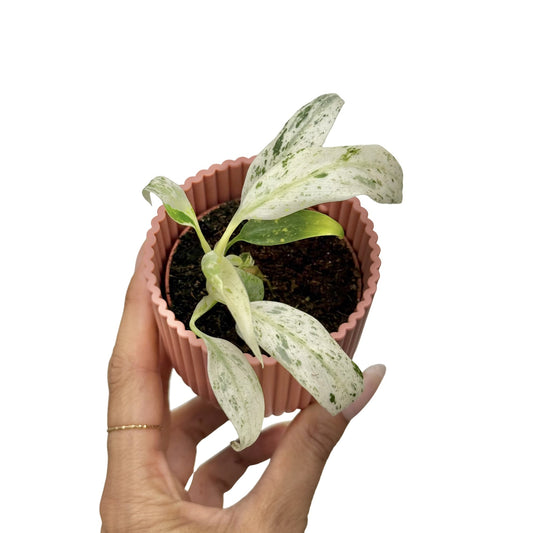
Daily care and tips for Rhaphidophora

How do you care for a Rhaphidophora day to day?

Water thoroughly once the substrate is dry, generally every 7 to 10 days, and place the plant in bright, indirect light. If the room lacks sufficient light, our full-spectrum grow light can effectively make up for it without exposing the plant to direct sunlight.

What kind of light is suitable for a Rhaphidophora?

Bright, indirect light, about 1 to 2 meters from a'east- or west-facing window, is ideal for this climbing plant. Avoid direct sunlight, which scorches the leaves, as well as overly dark areas, which slow its growth.

Why are the leaves on my Rhaphidophora turning yellow?

Yellowing leaves most often indicate overwatering or a growing medium that stays wet for too long. Space out watering and make sure the pot has 'good drainage to prevent the roots from suffocating.

Can a Rhaphidophora be kept outdoors in summer?

Rhaphidophora can benefit from a shaded spot outdoors when temperatures remain above 15°C, protected from direct sunlight and wind. Bring it back indoors as soon as nighttime temperatures drop below this threshold.

How do I repot a Rhaphidophora?

Repot in spring in a container only slightly larger, waiting 2 to 3 weeks after receipt for acclimatization before handling. A well-draining container paired with an airy substrate encourages the development of aerial roots.

Everything you need to know about Rhaphidophora

What are the most popular varieties of Rhaphidophora?

The Rhaphidophora Tetrasperma Variegata is distinguished by its irregular white variegation, while the Rhaphidophora Korthalsii Marble Aurea features unique golden marbling. Both varieties are sought after for their decorative foliage and rapid climbing growth.

Is Rhaphidophora toxic to cats and dogs?

Yes, Rhaphidophora contains calcium oxalate crystals that are irritating to pets, according to the'ASPCA. Ingestion may cause oral and digestive irritation, so it is best to keep it out of reach of curious pets.'

Which Rhaphidophora should I choose for a low-light apartment?

The classic form of Rhaphidophora tetrasperma tolerates lower light better than its variegated varieties, which need more light to preserve their colors. In a dimly lit room, choose a spot near'a window rather than'a dark corner.

Can a Rhaphidophora be placed in a living room?

The living room is very suitable for Rhaphidophora, provided you 'place it near 'a source of indirect natural light. A moss pole or trellis also lets you 'make use of the room’s height to support its climbing growth.

Where can I buy a high-quality Rhaphidophora?

Plant and Stories offers a carefully curated selection of Rhaphidophora from French and European growers. Each plant comes with'fast, secure delivery and packaging designed to protect its foliage during transit.

Rhaphidophora

Rhaphidophora, a tropical climbing plant, thrives in bright, indirect light near an east- or west-facing window and should be watered once the potting mix has thoroughly dried out.

The essentials at a glance:

  • ☀️ Light: bright, indirect light; east- or west-facing window
  • 💧 Watering: once the potting mix has thoroughly dried out
  • 🍃 Foliage: develops splits once mature
  • 📈 Growth: vertical, with aerial roots
  • 🎯 Tip: use a moss pole to support its growth

Rhaphidophora: the rare climbing plant that fascinates collectors

Few plants generate as much excitement among enthusiasts as Rhaphidophora. Native to the tropical forests of Southeast Asia, this climbing genus charms with foliage that transforms as it grows, changing from solid leaves to spectacular splits once mature. Among the most sought-after varieties are Rhaphidophora Tetrasperma Variegata and Rhaphidophora Korthalsii Marble Aurea, two highly prized variegated varieties.

Rhaphidophora care: bright light and an airy potting mix

This climbing plant thrives in bright, indirect light near an east- or west-facing window and should only be watered once the potting mix has thoroughly dried out. Choose our airy potting mix designed for tropical climbing plants, which encourages aerial root development. A moss pole helps support its vertical growth and bring out the full potential of its foliage.

Buy your Rhaphidophora from Plant and Stories

Our Rhaphidophora plants are carefully selected from French and European growers to ensure healthy foliage and vigorous growth from the moment they arrive. Each plant is shipped in packaging designed to protect its delicate stems, with fast, secure delivery straight to your door. A reliable choice for anyone looking for a rare climbing plant that’s easy to place in the living room, such as Rhaphidophora.

Show moreShow less