More than 100,00 € missing translation: "t:settings_schema.cart_progress_bar.settings.text_motivation_last.default" is not present in any of the ["en"] schema locale files
0 €
100,00 €
🚨 2026 Advent Calendar - Limited Edition!
9.9/10 OVER 3121 REVIEWS ⭐⭐⭐⭐⭐
FREE DELIVERY TO A PICK-UP POINT ON ORDERS OVER €100
188K ON INSTAGRAM @plantandstories.shop - JOIN US ! :)
Pay in 2, 3 or 4 interest-free installments from €50 with Klarna
Out of stock
Careful delivery with optimal protection
Plant health guaranteed for 30 days
You’re subscribed to alerts for this variant.
Back in stock alert
Get notified first
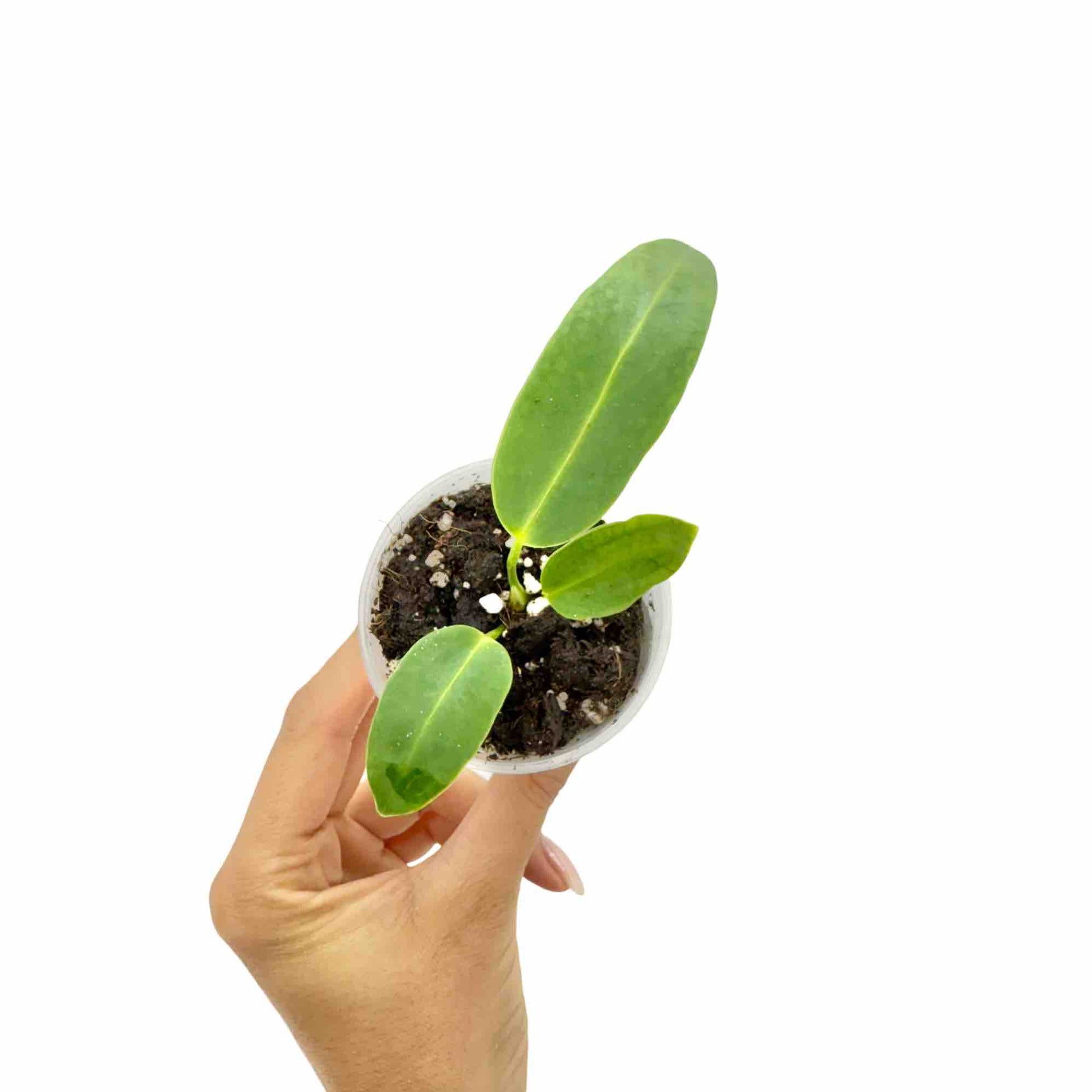
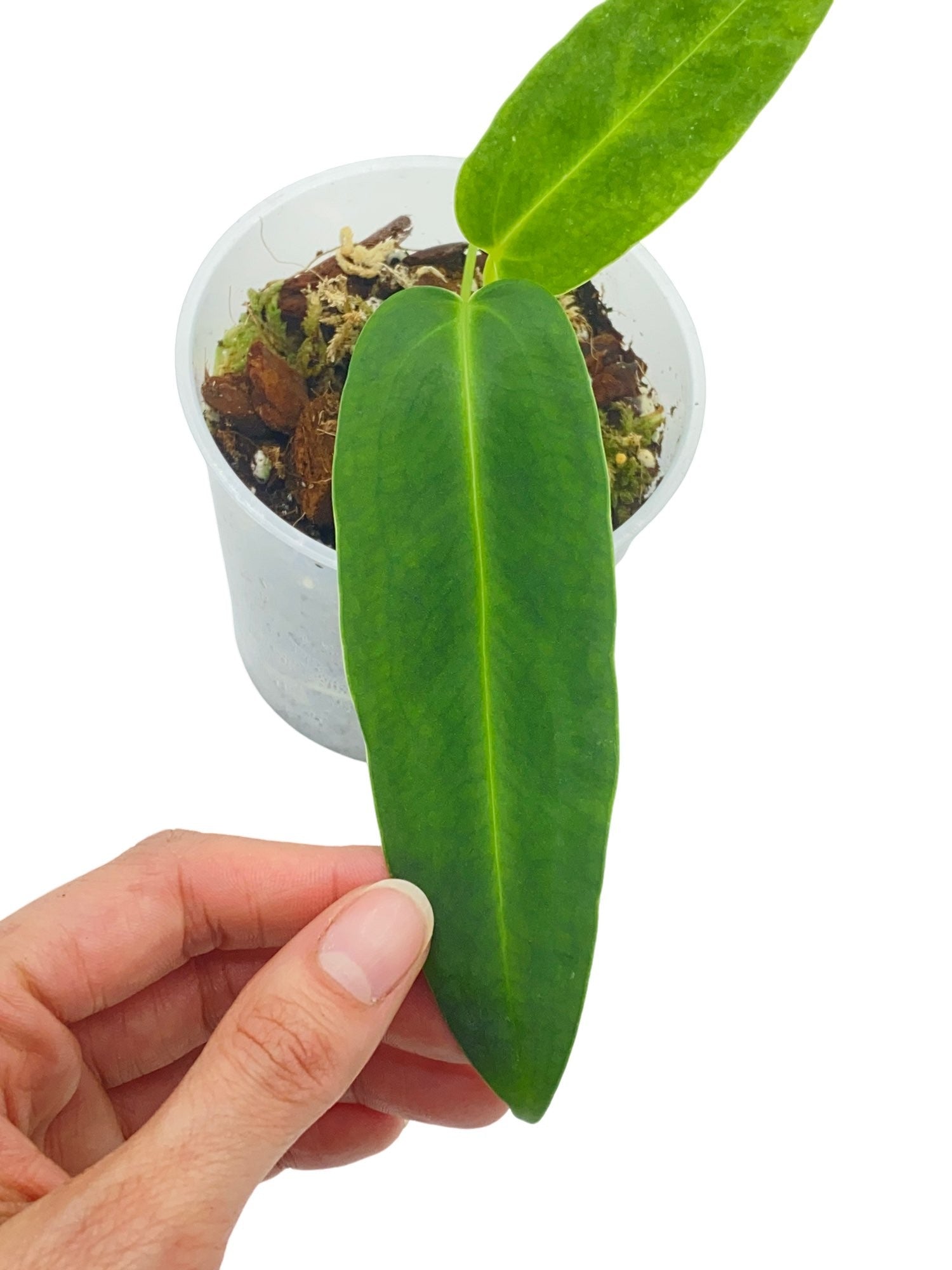
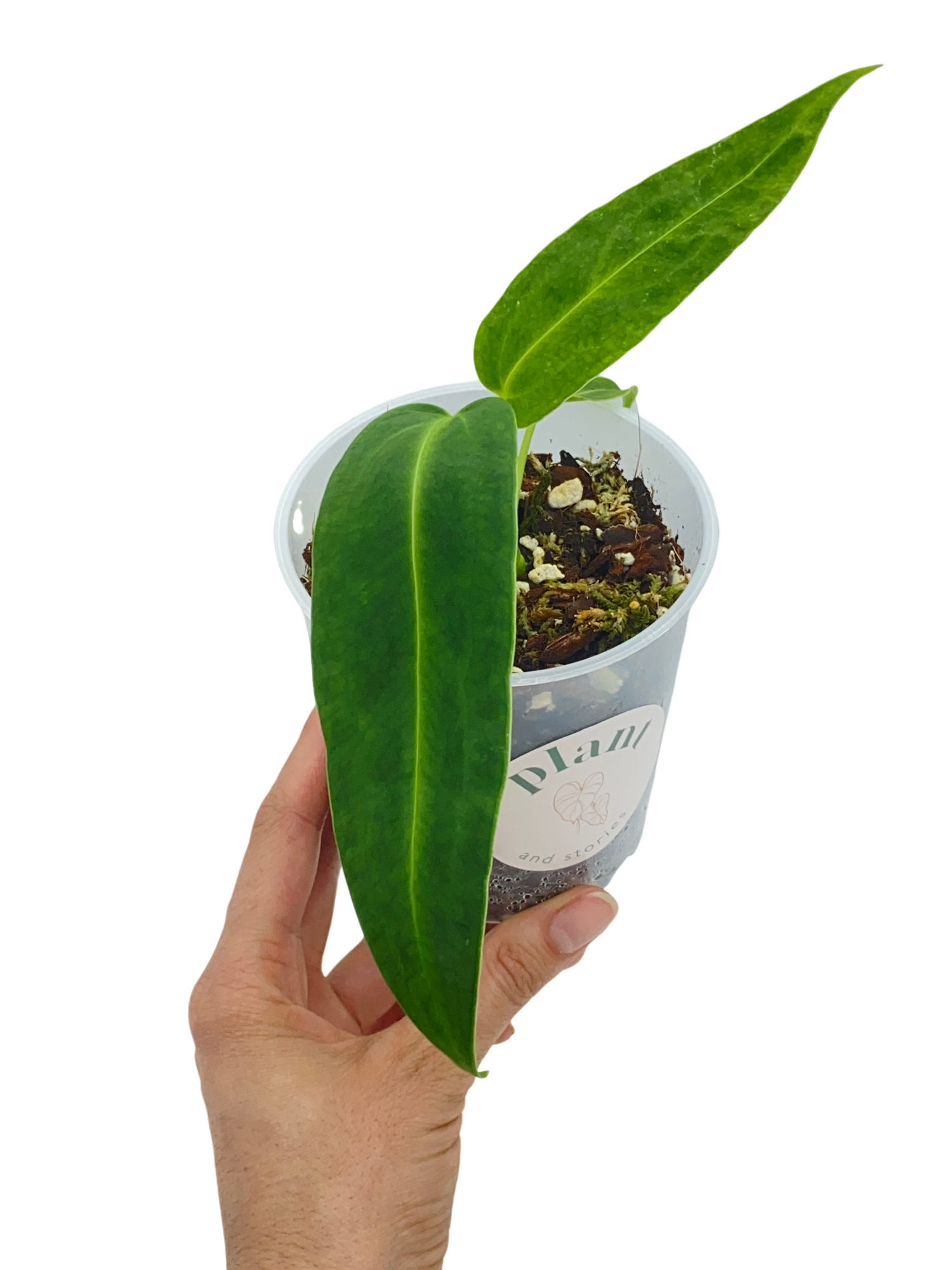
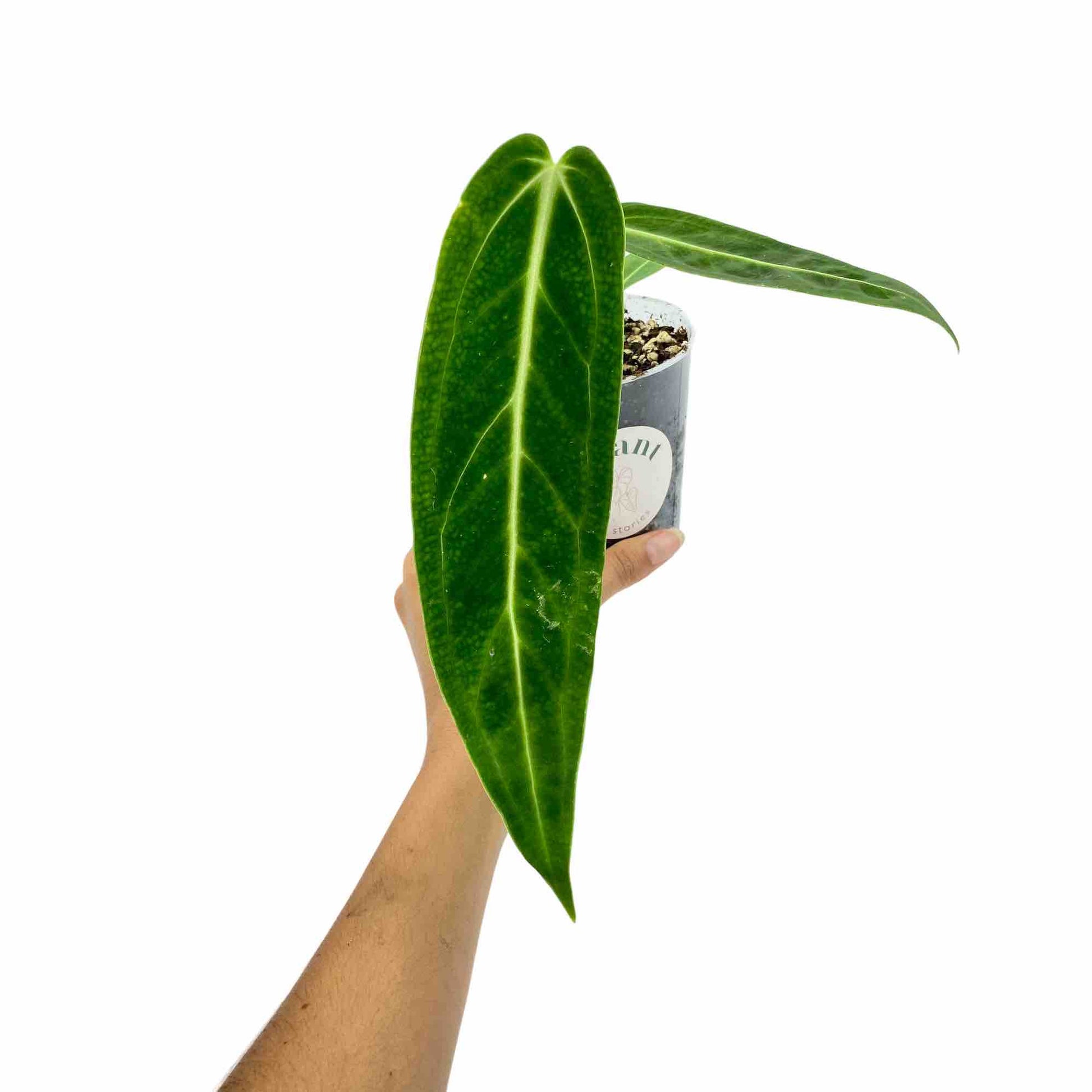
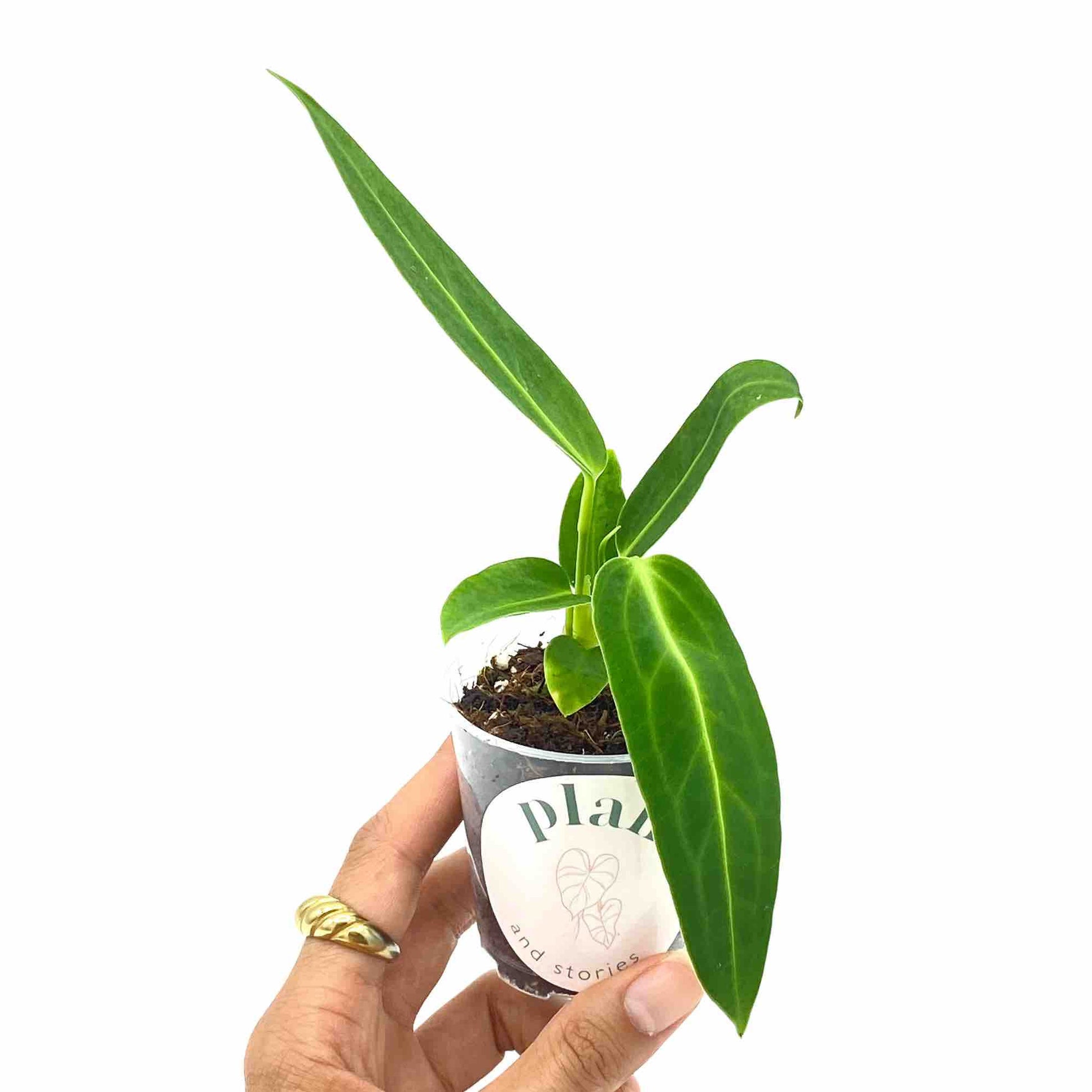
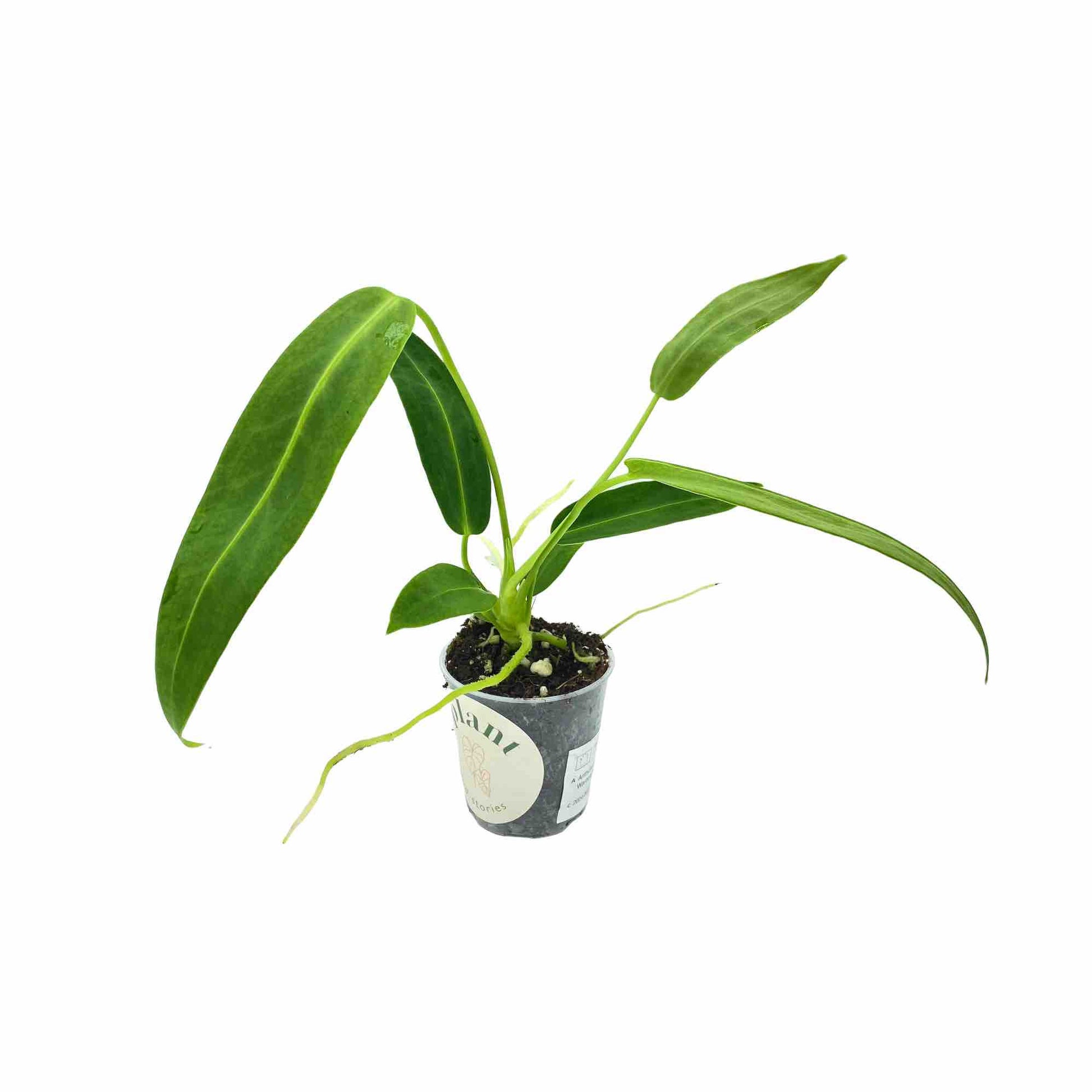
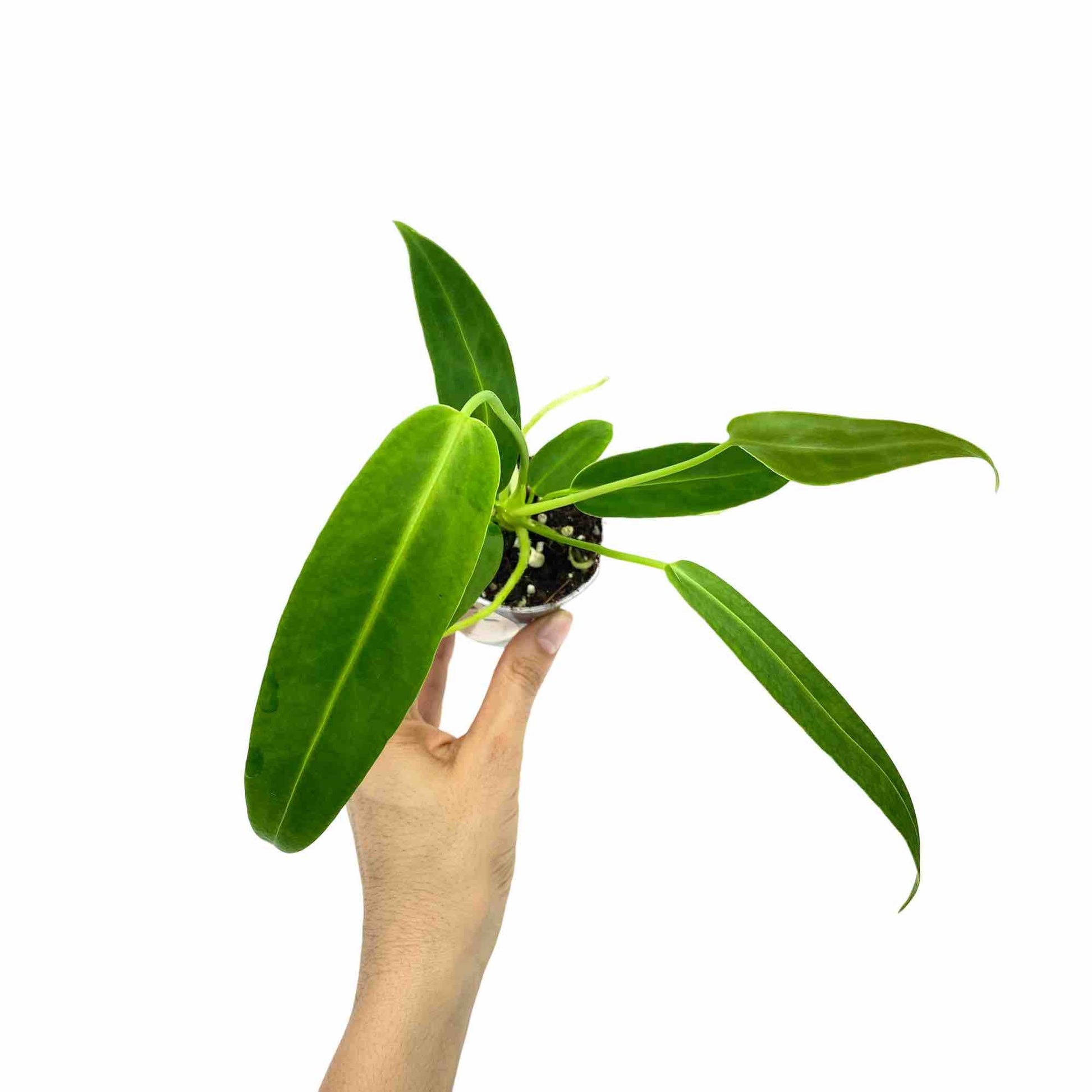
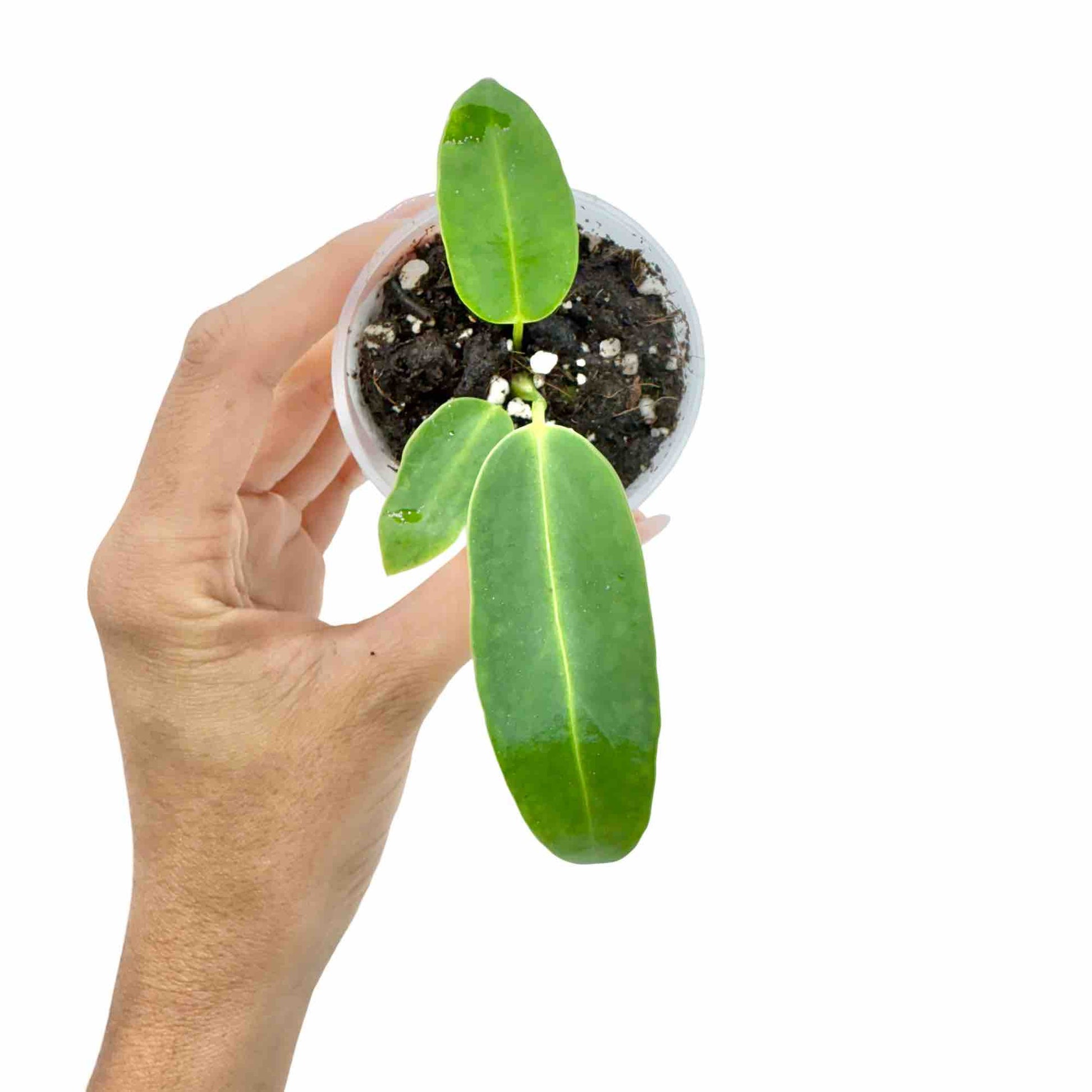
Anthurium Warocqueanum
Une question ?Nos experts vous répondent01 89 48 03 62
About
Anthurium Warocqueanum, the queen of velvet leaves
Anthurium warocqueanum , nicknamed the Queen of Anthuriums, is an epiphytic plant native to the rainforests of Colombia, where it naturally grows attached to tree trunks at altitudes between 1,000 and 2,000 meters. Belonging to the Araceae family, it develops drooping leaves that can exceed 120 cm in length at maturity, making it one of the most spectacular foliage Anthuriums grown indoors.
Its foliage is strikingly beautiful: each leaf, a deep dark green with velvety highlights , is traversed by contrasting light veins that form a remarkably precise graphic network. The surface texture imitates the finest velvet, and its naturally drooping habit gives the plant a unique sculptural appearance, difficult to match in a botanical collection.
Order your Anthurium Warocqueanum today and treat yourself to an extraordinary piece of plant, delivered directly to your home.
Description
Maintenance tips
Guarantee
Commandez en toute sérénité 💚
Nos plantes d'intérieur, nos plantes d'extérieur et nos bulbes sont garantis 30 jours à compter de la réception.
Nos plantes sont rigoureusement sélectionnées, en pleine santé, acclimatées et expédiées dans un emballage pensé pour leur protection. Si un aléa survient pendant le transport, notre équipe est là pour vous accompagner.
💌 Comment bénéficier de la garantie ? 1. À la réception, sous 48 h : envoyez une photo de votre plante entière à sav@plantandstories.com, avec votre numéro de commande. Même si elle est en parfait état, cette photo est obligatoire : elle active votre garantie de 30 jours et nous permet de vous conseiller dès l'arrivée. Si la plante est abîmée, ajoutez une photo du dégât.
2. Pendant 30 jours : si votre plante dépérit, écrivez-nous à la même adresse avec des photos et votre numéro de commande.
3. Nous étudions votre situation et convenons avec vous d'une solution : plante équivalente, avoir, remboursement partiel ou total 💚
Conditions : la plante n'a pas été rempotée et se trouve dans son pot d'origine ; son exposition et son arrosage ont respecté sa fiche d'entretien. Les plantes livrées dans une consigne ou un casier automatique ne sont pas couvertes.
Plantes d'extérieur et bulbes : la garantie s'applique jusqu'à leur plantation. Une fois plantés en pleine terre ou dans un autre contenant, ils ne sont plus couverts. Envoyez-nous votre photo de réception avant de planter.
🧺 Un accessoire défectueux ou non conforme ?
Envoyez une photo et votre numéro de commande à la même adresse. Vous choisissez le remplacement ou la réparation ; si ce n'est pas possible, nous vous remboursons. Tous les frais sont à notre charge.
Cette garantie s'ajoute aux garanties légales. Tous les détails sont dans notre politique « Garantie, retours et remboursements ».
Shipping
Vos plantes et accessoires livrés avec soin 🌿
📦 Quand votre commande part-elle ?
Plantes : expédiées du lundi au mercredi, pour ne pas rester bloquées en transit le week-end.
Accessoires : expédiés du lundi au vendredi.
Plantes et accessoires commandés ensemble : un seul colis, expédié du lundi au mercredi.
Par grand froid ou forte chaleur, nous pouvons décaler l'envoi des plantes de quelques jours pour les protéger. Nous vous prévenons alors par e-mail.
🚚 Qui livre votre colis ?
Commandes préparées par notre équipe : UPS.
Produits « direct producteur » : DPD, puis livraison chez vous par Chronopost, qui vous propose la veille plusieurs options (dont le point relais). Pour une plante, évitez les consignes automatiques (Pickup Station), où notre garantie de 30 jours ne s'applique pas.
Votre numéro de suivi vous est envoyé par e-mail. Vous le retrouvez aussi dans votre espace client, sur la page de votre commande.
⏱ En combien de temps ?
Une fois le colis remis au transporteur :
France continentale : 1 à 2 jours ouvrés
Corse : 3 à 5 jours ouvrés
Union européenne : 24 à 48 h à domicile, 24 à 72 h en point relais
Suisse : 3 à 5 jours ouvrés
💶 Combien ça coûte ?
France continentale : point relais 7,50 €, offert dès 100 € d'achat ; domicile 9,99 €.
Produits « direct producteur » : livraison offerte, à domicile, en France continentale (hors Corse), en Belgique, en Allemagne et aux Pays-Bas.
Autres destinations : tous les tarifs sont dans notre politique d'expédition. Le montant exact s'affiche au moment du paiement.
📸 À la réception
Envoyez sous 48 h une photo de votre plante à sav@plantandstories.com, avec votre numéro de commande : elle active votre garantie.
🌱 Plantes calées sur mesure, emballages recyclables.
🤝 Une question ?
sav@plantandstories.com ou 01 89 48 03 62, du lundi au vendredi de 9 h à 17 h.
Ordering plants online is completely risk-free with us. Here is your worry-free journey.
1
You are ordering
100% secure payment, in full or in 3 interest-free installments with Klarna.
Risk-free
2
We prepare it by hand
Each plant is selected, inspected, and secured in suitable packaging.
Expert treatment
3
Ships within 24–48 hours
Ship at the beginning of the week to avoid having it stuck in transit over the weekend.
Fast delivery
4
Arrival guarantee
A problem with your delivery? Photos are all we need: we’ll replace it or refund you.
No stress
★★★★★9.99/10 from over 2,880 verified reviews
Already over 87,000 plants delivered with a smile
Propriétés des plantes
Anthurium Warocqueanum
Luminosité
Bright indirect light
Arrosage
Keep the substrate slightly moist.
Difficulté de culture
Confirmed
Toxicité animaux
Toxic (cats, dogs)
Température idéale
18 to 27 °C
Hauteur à maturité
2 to 4 feet
Emplacement conseillé
Bright, humid living room, away from drafts
Humidité
Raised (display case, damp counter)
Substrat
Light epiphyte mix (bark, perlite, sphagnum moss)
Rempotage
Every 2 years
Fertilisation
Fertilize every 2–3 weeks from March to October.
Croissance
Slow
Nom latin
Anthurium warocqueanum
Noms communs
Queen Anthurium, Anthurium
Famille botanique
Araceae
Origine
Colombia
Port
Falling back
Forme du feuillage
Elongated oval
Couleur du feuillage
Velvety dark green with silver veins
Couleur de floraison
(non-ornamental flowering)
Feuillage
Persistent
Parfumé
No
Dépolluante
No
Your satisfaction is our priority
If you have any questions about the delivery of your package, or if anything is wrong upon its arrival, our team is here for you.
Feel free to contact us Monday through Friday, from 9 a.m. to 5 p.m., by phone at 01 89 48 03 62 or by email at sav@plantandstories.com.
We will do our utmost to find a solution quickly. 🌱
Help and solutions:
Everything you need to know Anthurium Warocqueanum
What light exposure is best for my Anthurium Warocqueanum?
Anthurium Warocqueanum thrives in bright, indirect light, ideally placed 1 to 2 meters from an east- or north-facing window, away from direct sunlight.
In its natural Colombian habitat, this epiphytic plant grows in humid tropical forests, where the canopy constantly filters the light. It is therefore naturally adapted to diffuse, stable light with no sudden changes. Light that is too bright or too direct quickly scorches the velvety surface of its leaves, leaving irreversible pale spots that are highly characteristic of this species.
In summer, move the plant slightly farther away if the light becomes intense around midday. In autumn and winter, move it closer to the light source to make up for the natural decrease in sunlight. A northeast-facing window is ideal year-round.
Important tip 🌿Avoid cold drafts and any sudden change in position: Anthurium Warocqueanum is very sensitive to changes in its environment and may show this stress through visibly slower growth.For dark interiors, our grow light that mimics daylight provides a full spectrum that supports the growth of this tropical plant without any harmful UV.
Is Anthurium Warocqueanum toxic to animals and children?
Anthurium Warocqueanum is toxic to cats, dogs and young children due to the presence of calcium oxalate crystals in all parts of the plant.
These crystals, found in the leaves, stems, and roots, cause a mechanical and chemical reaction upon contact with mucous membranes. In pets and young children, ingestion or even simple contact with the sap can lead to severe irritation of the mouth, throat, and digestive tract.
The most common symptoms of ingestion are excessive salivation, difficulty swallowing, vomiting, and inflammation of the lips or tongue. These symptoms are usually temporary but can be uncomfortable and may require veterinary or medical attention depending on the amount ingested.
What precautions should be taken on a daily basis?
Place your Anthurium Warocqueanum in a high place or in a room inaccessible to pets and young children. Also, avoid leaving cut or fallen leaves within their reach.
With the proper precautions, this majestic plant can absolutely coexist harmoniously in a caring and attentive home.
Why are the leaves of my Anthurium Warocqueanum turning yellow?
The leaves of Anthurium Warocqueanum most often turn yellow due to overwatering, insufficient light, or a nutrient deficiency.
If the leaves turn yellow and become limp, the problem usually stems from excess water causing the beginning of root rot.
If the leaves gradually turn yellow while remaining firm and dry, the plant often lacks light or fertilizer.
If the yellowing is accompanied by small light spots, a dull appearance or fine webbing, it may be a mite infestation, common indoors, especially in dry atmospheres.
Since Anthurium Warocqueanum is an epiphytic plant naturally adapted to very aerated substrates, its roots tolerate stagnant water very poorly, and yellowing of the leaves is often the first visible sign of a substrate that is too compact or too wet.
Important tip 🌿One or two old leaves turning yellow from time to time is perfectly normal: it is part of the plant's natural cycle.On the other hand, there is cause for concern if several leaves turn yellow rapidly, if the phenomenon spreads to young leaves, or if growth slows down significantly.
When and how should I repot my Anthurium Warocqueanum?
Anthurium Warocqueanum is ideally repotted in the spring, between March and May, when growth resumes actively.
Repotting is necessary when:
The roots emerge through the drainage holes.
Growth is slowing down.
or that the substrate compacts too quickly after watering.
As a general rule, repotting every 2 years is sufficient for an adult plant.
Anthurium Warocqueanum develops large epiphytic roots that appreciate space and aeration, and can quickly suffocate in a pot that is too small or in a poorly draining substrate.
Choose a pot 2 to 3 cm wider than the old one, and make sure it has drainage holes. Ourtransparent pots to monitor the rootsare ideal: their transparency allows you to observe the root condition after repotting without disturbing the plant.
Carefully remove the plant from its pot, tapping the pot if necessary to loosen the root ball without pulling on the stems.
Gently loosen the roots if they are very compacted, without breaking them.
Place a layer of substrate at the bottom of the pot, position the plant upright, then fill with substrate without burying the crown.
Important tip 🌿After repotting, water the plant to help the potting mix settle around the roots and eliminate any air pockets. Ensure that excess water can drain freely.Keep in mind that repotting is always a source of stress for the plant. Repotting every two years is sufficient to ensure healthy and balanced growth.
When and how should I fertilize my Anthurium Warocqueanum?
Anthurium Warocqueanum should be fertilized every 2 to 3 weeks from March to October, with a liquid fertilizer diluted in the watering water.
During autumn and winter, from November to February, significantly reduce or stop fertilizing. This is a period of dormancy during which the plant produces few or no new leaves.
As an epiphytic plant with very large leaves, Anthurium Warocqueanum has high nutrient requirements during the growth period, particularly nitrogen and potassium, to support the development of its velvety leaves which can reach remarkable dimensions.
A well-balanced intake promotes:
denser, more colorful foliage
steady growth,
and improved plant resistance.
👉 For best results, we recommend ourconcentrated fertilizer for houseplantsEasy to dose, with fast visible results. Practical tips are printed directly on the back of the label and on the product information sheet, for simple and hassle-free use.
Important tip 🌿Never fertilize a plant in a dry substrate: this could burn the roots.Water normally first, then apply diluted fertilizer 2 to 3 days later, when the soil is slightly moist. Excess fertilizer can cause leaf burn. Regular but moderate fertilization will keep your Anthurium warocqueanum vigorous and healthy 💚
How do I properly water my Anthurium Warocqueanum?
Water your Anthurium Warocqueanum once the substrate has dried out thoroughly, and less often in winter. Use room-temperature water.
How do you know when to water?
The finger test is still the most reliable method: insert your index finger 2 to 3 cm into the substrate. If the substrate is dry, it's time to water. If it's still damp, wait a few more days.
As the Anthurium Warocqueanum is an epiphytic plant native to the humid tropical forests of Colombia, its aerial roots are naturally adapted to cycles of moisture followed by rapid drying. It is very sensitive to waterlogged substrate, but does well with soft or filtered water, as its velvety foliage may react negatively to water with high mineral content.
Important tip: When in doubt, it's always better to wait a little longer than to overwater. Plants cope better with too little water than with too much, which can quickly cause root rot.
How do I take cuttings from my Anthurium Warocqueanum?
Anthurium Warocqueanum is propagated by stem division or by separation of basal shoots, ideally in spring when the plant enters its active growth phase.
Stem division methodIdentify a healthy stem with at least one node and one or two well-developed leaves. Use ourStainless steel blade pruning shears for taking cuttings without damaging the plantA clean cut is essential to limit the risk of infection in this species, which is particularly susceptible to poorly healed wounds. Allow the cut section to dry for a few hours before planting in the substrate.
Cut the stem below a node with the stainless steel blade pruning shears, taking care to keep at least one aerial root on the cutting if possible.
Maintain a constant temperature between 22 and 26°C, in a place with bright indirect light, and cover if possible with a transparent dome to maintain ambient humidity.
To encourage root growth, fill the pot with ourlive sphagnum moss to maintain root moisture, particularly suited to the epiphytic roots of Anthurium warocqueanum. Once the roots are well formed, transplant into ourpremium blend designed for Anthurium rootsdesigned to provide the aeration and nutrition this species needs to resume vigorous growth.
Important tip 🌿Anthurium warocqueanum is a slow-growing species; rooting after propagation from cuttings can take 6 to 10 weeks, depending on conditions. The first signs of success are the appearance of a new leaf or a developing bud at the base of the stem. Do not rush transplanting: wait until the root system is well established before changing the potting mix.
The essentials regarding Anthurium Warocqueanum
Anthurium Warocqueanum: identity and origin
Anthurium Warocqueanum, known by its scientific name Anthurium warocqueanum, is one of the most impressive species in the Anthurium genus. Native to the rainforests of Colombia, this velvet anthurium stands out for its monumental, narrow, drooping leaves, which can exceed one meter in length when grown indoors. Their dark green, velvety surface, crossed by contrasting silver veins, makes this an extraordinary botanical specimen.
Anthurium care: light, watering, and potting mix
This velvet anthurium thrives in bright, indirect light, 1 to 2 meters from a well-lit window. Water moderately: it is essential to let the potting mix dry slightly on the surface between waterings, and never leave the roots sitting in moisture. A stable temperature of around 18 to 29 °C (according to NC State Extension) and high ambient humidity, provided by a display cabinet, indoor greenhouse, tray of damp pebbles, or grouping plants together, are essential to preserve the integrity of its velvety foliage. Our Anthurium potting mix enriched with biostimulants provides the drainage and aeration this species' roots need.
Where should you place your Anthurium for healthy, abundant foliage?
Ideal placement directly affects the size and quality of the leaves. Here are the key guidelines:
East-facing window: gentle morning light, ideal for this species
Distance: 1 to 2 meters from a natural light source
Temperature: around 18 to 29 °C, away from cold drafts
Humidity: high, in a display cabinet, indoor greenhouse, or on a tray of damp pebbles
Dry air: group your plants together or place it in a ventilated growing cabinet
Frequently asked questions: why are my Anthurium Warocqueanum's leaves losing their velvety texture?
Loss of the velvety appearance and brown tips are most often linked to air that is too dry: NC State Extension notes that leaf tips turn brown when humidity is too low. Too much water around the roots can also cause the leaf blade to turn yellow all over, a sign of root suffocation. After 2 to 3 weeks of acclimation, repotting in one of our clear pots designed for root monitoring makes it easy to check the condition of the potting mix. Regular applications of enriched liquid fertilizer support the growth of large new leaves.
Buy Anthurium Warocqueanum from Plant and Stories
Our Anthurium Warocqueanum is in stock and carefully shipped to ensure it arrives in good condition. At Plant and Stories, each specimen is selected for the quality of its foliage and the vigor of its roots. To complete your collection of large velvet Anthuriums, browse our range of specialist potting mixes for tropical plants, formulated to meet this species' specific needs.