Skip to product information
1 of 3

Labisia 'Turtle Back'

Labisia 'Turtle Back'

Lush foliage, zero effort

Regular price 44,95 €
Regular price Sale price 44,95 €
Sale Sold out
Taxes included. Shipping calculated at checkout.
Pot diameter
Quantity

Pay in 2, 3 or 4 interest-free installments from €50 with Klarna

Low stock: 5 left

  • Rated 9.9/10 by thousands of customers
  • Carefully packaged for optimal protection
  • 30-day plant health guarantee
Une question ? Nos experts vous répondent 01 89 48 03 62

About

Labisia 'Turtle Back', the scaly-leaved plant from the tropical undergrowth

Labisia 'Turtle Back', also known as the turtle plant or Labisia pumila 'Turtle Back', is a tropical plant native to the humid forests of Malaysia and Borneo, where it naturally grows at ground level, sheltered by the dense vegetation cover. Belonging to the Primulaceae family, it is recognized as one of the most sought-after textured foliage houseplants by rare plant collectors.

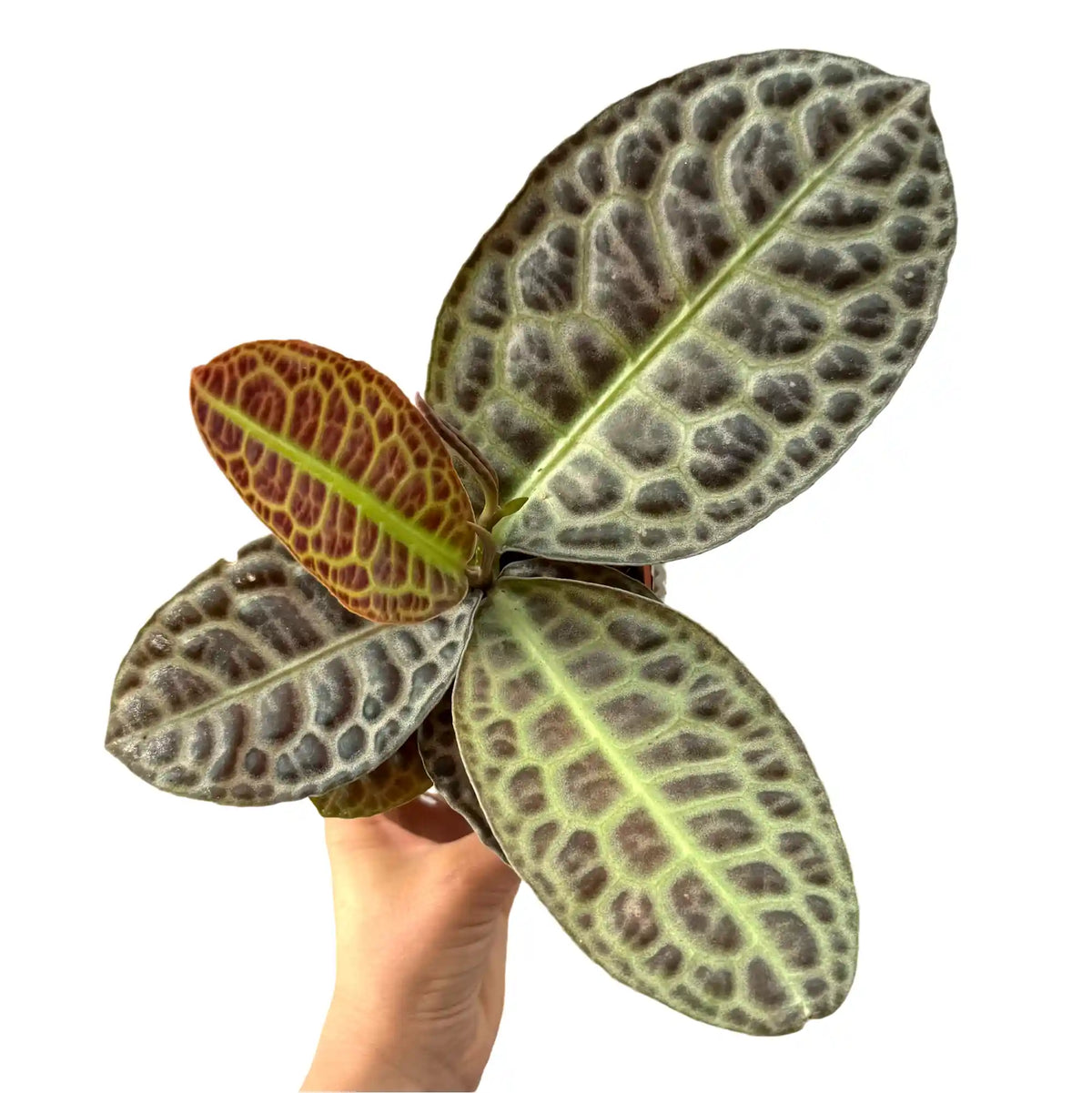
Its thick, veined leaves form a raised pattern reminiscent of a turtle's back, hence its very popular English nickname. The foliage features deep green tones with a slight pearlescent sheen on top, enhanced by prominent raised light-colored veins that capture the ambient light with rare elegance. This low, compact plant develops a slowly spreading rosette of leaves, creating a discreet and refined presence in any interior.

Order your Labisia 'Turtle Back' today and receive this botanical gem directly at your home, carefully packaged for a safe journey.

Description

Maintenance tips

Guarantee

Commandez en toute sérénité 💚

Nos plantes d'intérieur, nos plantes d'extérieur et nos bulbes sont garantis 30 jours à compter de la réception.
Nos plantes sont rigoureusement sélectionnées, en pleine santé, acclimatées et expédiées dans un emballage pensé pour leur protection. Si un aléa survient pendant le transport, notre équipe est là pour vous accompagner.

  1. 💌 Comment bénéficier de la garantie ?
    1. À la réception, sous 48 h : envoyez une photo de votre plante entière à sav@plantandstories.com, avec votre numéro de commande. Même si elle est en parfait état, cette photo est obligatoire : elle active votre garantie de 30 jours et nous permet de vous conseiller dès l'arrivée. Si la plante est abîmée, ajoutez une photo du dégât.
    2. Pendant 30 jours : si votre plante dépérit, écrivez-nous à la même adresse avec des photos et votre numéro de commande.
    3. Nous étudions votre situation et convenons avec vous d'une solution : plante équivalente, avoir, remboursement partiel ou total 💚

Conditions : la plante n'a pas été rempotée et se trouve dans son pot d'origine ; son exposition et son arrosage ont respecté sa fiche d'entretien. Les plantes livrées dans une consigne ou un casier automatique ne sont pas couvertes.

Plantes d'extérieur et bulbes : la garantie s'applique jusqu'à leur plantation. Une fois plantés en pleine terre ou dans un autre contenant, ils ne sont plus couverts. Envoyez-nous votre photo de réception avant de planter.

🧺 Un accessoire défectueux ou non conforme ?
Envoyez une photo et votre numéro de commande à la même adresse. Vous choisissez le remplacement ou la réparation ; si ce n'est pas possible, nous vous remboursons. Tous les frais sont à notre charge.

Cette garantie s'ajoute aux garanties légales. Tous les détails sont dans notre politique « Garantie, retours et remboursements ».

Shipping

Vos plantes et accessoires livrés avec soin 🌿

📦 Quand votre commande part-elle ?
Plantes : expédiées du lundi au mercredi, pour ne pas rester bloquées en transit le week-end.
Accessoires : expédiés du lundi au vendredi.
Plantes et accessoires commandés ensemble : un seul colis, expédié du lundi au mercredi.
Par grand froid ou forte chaleur, nous pouvons décaler l'envoi des plantes de quelques jours pour les protéger. Nous vous prévenons alors par e-mail.

🚚 Qui livre votre colis ?
Commandes préparées par notre équipe : UPS.
Produits « direct producteur » : DPD, puis livraison chez vous par Chronopost, qui vous propose la veille plusieurs options (dont le point relais). Pour une plante, évitez les consignes automatiques (Pickup Station), où notre garantie de 30 jours ne s'applique pas.
Votre numéro de suivi vous est envoyé par e-mail. Vous le retrouvez aussi dans votre espace client, sur la page de votre commande.

⏱ En combien de temps ?
Une fois le colis remis au transporteur :
France continentale : 1 à 2 jours ouvrés
Corse : 3 à 5 jours ouvrés
Union européenne : 24 à 48 h à domicile, 24 à 72 h en point relais
Suisse : 3 à 5 jours ouvrés

💶 Combien ça coûte ?
France continentale : point relais 7,50 €, offert dès 100 € d'achat ; domicile 9,99 €.
Produits « direct producteur » : livraison offerte, à domicile, en France continentale (hors Corse), en Belgique, en Allemagne et aux Pays-Bas.
Autres destinations : tous les tarifs sont dans notre politique d'expédition. Le montant exact s'affiche au moment du paiement.

📸 À la réception
Envoyez sous 48 h une photo de votre plante à sav@plantandstories.com, avec votre numéro de commande : elle active votre garantie.

🌱 Plantes calées sur mesure, emballages recyclables.

🤝 Une question ?
sav@plantandstories.com ou 01 89 48 03 62, du lundi au vendredi de 9 h à 17 h.

View full details
  • Order prepared with love

  • Optimal protection

  • Quality plants

  • A team that is always attentive

Simple & reassuring

From the greenhouse to your living room

Ordering plants online is completely risk-free with us. Here is your worry-free journey.

1

You are ordering

100% secure payment, in full or in 3 interest-free installments with Klarna.

Risk-free
2

We prepare it by hand

Each plant is selected, inspected, and secured in suitable packaging.

Expert treatment
3

Ships within 24–48 hours

Ship at the beginning of the week to avoid having it stuck in transit over the weekend.

Fast delivery
4

Arrival guarantee

A problem with your delivery? Photos are all we need: we’ll replace it or refund you.

No stress
★★★★★9.99/10 from over 2,880 verified reviews

Already over 87,000 plants delivered with a smile

Labisia 'Turtle Back'

Propriétés des plantes

Labisia 'Turtle Back'


Luminosité
Dim lighting
Arrosage
Keep the substrate slightly moist
Difficulté de culture
Confirmed
Température idéale
20 to 28 °C
Hauteur à maturité
20 to 40 cm
Emplacement conseillé
Terrarium or humid tropical display case
Humidité
High (misting)
Substrat
Peat moss and bark-based drainage substrate
Rempotage
Every 2 years
Fertilisation
Fertilize every 2–3 weeks from March to October
Croissance
Slow
Nom latin
Labisia sp. 'Turtle Back'
Noms communs
Labisia
Famille botanique
Primulaceae
Feuillage
Persistent
Parfumé
No
Dépolluante
No

Your satisfaction is our priority

If you have any questions about the delivery of your package, or if anything is wrong upon its arrival, our team is here for you.

Feel free to contact us Monday through Friday, from 9 a.m. to 5 p.m., by phone at 01 89 48 03 62 or by email at sav@plantandstories.com.

We will do our utmost to find a solution quickly. 🌱

Help and solutions:

Everything you need to know Labisia 'Turtle Back'

What light exposure is best for my Labisia 'Turtle Back'?

The Labisia 'Turtle Back' prefers low to moderate indirect light, with no exposure to direct sunlight.

In its natural habitat in the forests of Malaysia and Borneo, it grows under a dense canopy that almost completely filters direct light. It is therefore perfectly suited to low-light rooms or positions far from windows.

Indoors, a north-facing orientation or a position 1.5 to 2 meters from an east or west-facing window is very suitable. In summer, shade the window if the light becomes too intense. In winter, you can move it slightly closer to compensate for the drop in natural light.

Important tip 🌿The foliage of the Labisia 'Turtle Back' burns easily: even direct morning sun can cause irreversible light patches on the leaves.For low-light rooms, our full-spectrum horticultural lamp for indoor plants faithfully mimics natural light, without harmful UV rays.

Is Labisia 'Turtle Back' toxic to animals and children?

Labisia 'Turtle Back' is not listed as a highly toxic plant in recognized veterinary and medical databases, but comprehensive data on its toxicity remain limited due to its relative rarity in cultivation.

As a precaution, and as with any houseplant whose complete toxicological profile is not fully documented, it is recommended to place it out of reach of pets and young children who may be tempted to chew its leaves.

What precautions should be taken on a daily basis?

Prefer placing it at a height or in a room that is less accessible to pets and young children. A shelf or bookcase with good indirect lighting is an ideal location.

In the event of accidental ingestion by a pet, consult a veterinarian promptly. Caution always remains the best approach when dealing with rare plants whose chemical composition is still poorly studied.

Why are the leaves of my Labisia 'Turtle Back' turning yellow?

The leaves of the Labisia 'Turtle Back' most often turn yellow due to overwatering, a lack of light, or a nutrient deficiency.

  • If the leaves turn yellow and become limp, the problem is generally caused by too much water, which leads to the beginning of root rot.
  • If the leaves gradually turn yellow while remaining firm and dry, the plant is often lacking light or fertilizer.
  • If the yellowing is accompanied by small light-colored spots, a dull appearance, or fine webbing, it may be a spider mite infestation, which is common indoors, especially in dry conditions.

The Labisia 'Turtle Back' is particularly sensitive to yellowing when the ambient humidity drops below 50%, which weakens the thick foliage and promotes mineral deficiencies.

Important tip 🌿One or two old leaves turning yellow from time to time is completely normal.However, you should be concerned if several leaves turn yellow quickly or if the phenomenon spreads to the young leaves.

In the event of a spider mite infestation, choose our biological spider mite control solutions, which are effective and plant-friendly.

When and how should I repot my Labisia 'Turtle Back'?

The Labisia 'Turtle Back' is ideally repotted in spring, between March and May, when growth actively resumes.

Repotting is necessary when:

  • roots emerge from the drainage holes,
  • growth slows down,
  • or the substrate compacts too quickly after watering.

As a general rule, repotting every 2 years is sufficient for an adult plant.

After receiving your Labisia 'Turtle Back', wait 2 to 3 weeks for it to acclimate before considering any repotting, so as not to add additional stress to the plant during its adaptation period.

The Labisia 'Turtle Back' develops a compact and shallow root system: choose a wide pot rather than a deep one, 2 to 3 cm wider than the old one, and it must have drainage holes. Our clear pots with holes for observing the roots after repotting are ideal: their transparency allows you to easily monitor root recovery without disturbing the plant.

We recommend our premium substrates made in France, designed for drainage, oxygenation, and healthy growth.

  1. Gently remove the plant from its pot, tapping the pot if necessary.
  2. Gently untangle the roots if they are very compacted, without breaking them.
  3. Place a layer of substrate, position the plant upright, and fill in without burying the crown.

Important tip 🌿After repotting, water to help the substrate settle. Repotting every two years is sufficient.

When and how should I fertilize my Labisia 'Turtle Back'?

The Labisia 'Turtle Back' should be fertilized every 2 to 3 weeks from March to October, using a liquid fertilizer diluted in the watering water.

From November to February, reduce fertilization significantly or stop it altogether. This is the plant's vegetative resting period.

Properly dosed fertilization promotes:

  • denser, more vibrant foliage,
  • steady growth,
  • and improved plant resilience.

The Labisia 'Turtle Back' is a slow-growing plant that reacts quickly to over-fertilization: always use half the recommended dose to prevent root burn.

👉 For best results, we recommend our concentrated liquid fertilizer for tropical plants, which is easy to dose and delivers quickly visible results.

Important tip 🌿Never fertilize a dry growing medium: this could burn the roots. Water first, then apply the fertilizer 2 to 3 days later.

How to properly water my Labisia 'Turtle Back'?

Water the Labisia 'Turtle Back' when the substrate has dried out on the surface in the top few centimeters, which is approximately every 7 to 10 days in summer and every 10 to 15 days in winter. Use room-temperature water.

How do you know when to water?

The finger test remains the most reliable method: insert your index finger 2 to 3 cm into the substrate. If the substrate is dry, it is time to water.

The Labisia 'Turtle Back' tolerates a slight temporary dryness better than a constantly waterlogged substrate: its compact and shallow roots quickly suffocate in the event of prolonged excess moisture.

Important tip: If in doubt, wait rather than watering. Plants tolerate a lack of water better than an excess, which rots the roots.

How do I propagate my Labisia 'Turtle Back'?

Labisia 'Turtle Back' can be propagated by division or stem cuttings, ideally in spring when growth is active.

Propagation by divisionThis method is the most reliable for Labisia: when repotting, carefully separate well-formed rosettes, making sure each division retains some roots. Use our straight-tip stainless steel pruning shears to cut the stems cleanly without crushing the tissue.

  1. Carefully remove the plant from its pot and identify well-developed rosettes with roots.
  2. Separate each division and place it in one of our clear propagation pots so you can monitor root development, filled with a lightly moistened, lightweight growing medium.
  3. Place the cutting in a warm, bright location away from direct sunlight, with high ambient humidity, ideally under a bell jar or in a propagator.

For rootless stem cuttings, wrap the base in live sphagnum moss and keep it moist to encourage rooting, then transplant into our all-purpose growing medium enriched with essential components once roots have formed.

Important tip 🌿Rooting usually takes 3 to 6 weeks. Success is confirmed when new leaves begin to develop. Maintain high ambient humidity throughout this period to maximize the chances of success.

Une Labisia 'Turtle Back' aux feuilles texturées et nervurées, avec des nuances vertes et rougeâtres

The essentials regarding Labisia 'Turtle Back'

Labisia 'Turtle Back': identity and origin

Labisia 'Turtle Back', with its Latin name Labisia pumila 'Turtle Back', is a tropical understory plant belonging to the Primulaceae family, native to the humid forests of Malaysia and Borneo. It grows naturally at ground level, in low-light and high-humidity areas. Its turtle plant nickname comes from its thick leaves with prominent veins forming a characteristic relief evoking the back of a turtle.

Labisia care: light, watering and substrate

Labisia appreciates low to moderate indirect light, never direct sun. Water it when the substrate starts to dry on the surface, with reduced frequency in winter. To promote its growth, use our universal substrate enriched with biostimulants, light and well-draining, ideal for its compact roots.

Where to place your Labisia to preserve its graphic foliage?

  • Filtered light: north window or recessed position
  • Temperature: between 18 and 26°C all year round
  • Ambient humidity: maintain between 60 and 80%
  • To avoid: cold drafts and radiators
  • Dark rooms: our full-spectrum grow light compensates for the lack of natural light, and our Complete Care Pack maintains the ideal humidity

Frequently asked questions: why do my Labisia leaves lose their relief?

Labisia 'Turtle Back' can lose the relief of its leaves when the ambient humidity is insufficient or when the plant lacks essential nutrients. A humidity level below 50% gradually weakens the thick foliage and dulls the prominent veins. Regular fertilization with a concentrated liquid fertilizer for tropical plants and watering with filtered water help maintain the natural beauty of the foliage. Wait 2 to 3 weeks after receipt before any repotting.

Buy Labisia 'Turtle Back' at Plant and Stories

Our Labisia 'Turtle Back' is available for delivery, carefully packaged to travel safely to your home. Each plant is carefully selected to guarantee you healthy and well-developed foliage. To complete your setup, our drainage pots to monitor root health perfectly adapt to the needs of the Labisia. Order your Labisia 'Turtle Back' today and add this botanical rarity to your collection.

Show moreShow less
👉 To learn more