

St. John’s Wort (Hypericum): Planting, Pruning and Garden Care

To grow St. John’s wort successfully in the garden, plant it in sun or partial shade in well-drained soil, water it during the first year, then prune according to its type: cut back the ground cover in spring, but leave the shrub ‘Hidcote’ almost untouched.
Several plants in the genus Hypericum are in fact known as St. John’s wort: the golden carpet of Hypericum calycinum, the ‘Hidcote’ shrub with its large yellow cups, and Hypericum × inodorum, grown for its berries. One clarification is needed from the outset: this guide is about gardening, not health.
Common St. John’s wort (Hypericum perforatum), the species used in capsules and herbal teas, is a different plant, discussed below only from a safety perspective. To see where St. John’s wort fits among other flowering shrubs, also consult our guide to flowering shrubs.
🌿 Why plant St. John’s wort in the garden
St. John’s wort flowers when many shrubs have finished blooming. According to the RHS (Royal Horticultural Society) profile for Hypericum calycinum, Hypericum calycinum is a fast-growing ground-cover shrub with evergreen to semi-evergreen foliage. Its five-petalled yellow flowers open throughout summer and into autumn.
It tolerates chalk, clay, loam and sand, in acidic, neutral or alkaline soil, and grows in all aspects. NC State Extension adds that it is suitable for steep banks and sandy soils, and tolerates deep shade and drought.
| Benefit | What it means for your garden |
|---|---|
| Long flowering season | Yellow flowers from summer into autumn, depending on the species |
| Effective ground cover | H. calycinum covers banks and the base of hedges, helping to limit weeding |
| Low-maintenance | All well-drained soil types, including chalky soils; sun or partial shade |
| Decorative berries | Hypericum × inodorum produces red, yellow or black fruits in autumn |
🔎 St. John’s wort at a glance
According to Plants of the World Online (POWO) at the Royal Botanic Gardens, Kew, the genus Hypericum comprises 521 accepted species in the family Hypericaceae, found on almost every continent.
The most widely planted ground-cover St. John’s wort, Hypericum calycinum L., is native from southeastern Bulgaria to northwestern and northern Turkey; the POWO profile for Hypericum calycinum lists it as introduced in France, Germany and Great Britain, among other places.
The famous ‘Hidcote’ is classified by POWO as Hypericum × hidcoteense, an artificial hybrid between H. addingtonii, H. calycinum and H. hookerianum. It is therefore not simply Hypericum patulum, as is often stated.
According to NC State Extension, calycinum flowers are about 2.5 to 7.5 cm (1 to 3 inches) across, with a very prominent tuft of stamens.
| Feature | Verified details |
|---|---|
| 🏷️ Botanical name | Hypericum (genus); garden species: H. calycinum, H. × hidcoteense ‘Hidcote’, H. × inodorum |
| 🧬 Family | Hypericaceae |
| 🌳 Type | Shrub or ground-cover subshrub, evergreen to semi-evergreen |
| 🌍 Origin | Genus found worldwide; H. calycinum: Bulgaria and Turkey (POWO) |
| ❄️ Hardiness | H5 according to the RHS: -10 to -15°C (calycinum, ‘Hidcote’, ‘Rheingold’) |
| 🍃 Foliage | Opposite, dark green leaves; turns purplish in autumn on calycinum (NC State) |
| 🌸 Flowering | Summer to early autumn, with yellow flowers and prominent stamens |
| 📏 Mature size | 0.5 to 1 m (calycinum); 1 to 1.5 m (‘Hidcote’, ‘Rheingold’), according to the RHS |
📋 Quick growing guide
Essential growing information at a glance.
| Factor | Guideline |
|---|---|
| Aspect | Sun or partial shade; calycinum tolerates deeper shade |
| Soil | Chalk, clay, loam or sand; moist but well-drained; acidic to alkaline pH |
| Hardiness | H5 (RHS): -10 to -15°C; calycinum may die back to ground level and regrow |
| Watering | Water regularly in the first year, then only during prolonged dry spells |
| Planting | Autumn or spring, avoiding frost and waterlogged soil |
| Pruning | Cut back calycinum in spring; prune inodorum in early spring; prune ‘Hidcote’ very lightly |
| Flowering | Summer to early autumn; inodorum produces berries in autumn |
| Care | Easy; watch for rust and keep ground cover in check |
| Toxicity | Fruits are inedible; gloves are recommended (RHS); sap can irritate (NC State) |
📍 Where and when to plant St. John’s wort
Plant St. John’s wort in sun or partial shade: the RHS recommends both aspects for ‘Rheingold’ and ‘Tricolor’, and says calycinum tolerates all aspects, including north-facing sites. For ‘Hidcote’, the RHS recommends south-, east- or west-facing sites. Ground-cover calycinum is the most tolerant and, according to NC State Extension, can cope with deep shade and dry soils.
Plant in autumn or spring, avoiding frosts and waterlogged soil: container-grown plants can establish at these times without stress.
☀️ Ideal: Sunny bank, border, base of a hedge, well-drained soil, even if poor
⛅ Acceptable: Partial shade or light woodland for calycinum, though flowering may be less abundant
🚫 Avoid: Waterlogged soil in winter, or a bed of small perennials that calycinum could smother
🪴 Planting St. John’s wort in the ground or in a pot
Planting is straightforward because St. John’s wort has no particular soil pH requirements. According to the RHS profile for ‘Hidcote’, ‘Hidcote’ grows in chalky, clay, loamy or sandy soil that is moist but well-drained, with an acidic, neutral or alkaline pH. It reaches 1 to 1.5 m in height and spread in 5 to 10 years.
For ground cover, allow for calycinum’s spread of 1 to 1.5 m in 2 to 5 years, according to the RHS, and plant more closely if you want it to form a carpet quickly. In pots, choose compact forms such as ‘Tricolor’ (10 to 50 cm according to the RHS) and a container with adequate drainage holes.
| Step | What to do |
|---|---|
| 1. Choose a site | Sun or partial shade, with soil that does not stay waterlogged in winter |
| 2. Prepare the soil | Loosen the soil to a spade’s depth and remove the roots of invasive perennials |
| 3. Set the root ball | Rehydrate the root ball, position it at the same depth as in the container, backfill and firm lightly |
| 4. Water | Water thoroughly at planting, then during dry weather throughout the first year |
| 5. Mulch | Apply organic mulch between young ground-cover plants until the carpet fills in |
columns: 4
columns_mobile: 2
-


St. John's Wort (Hypericum) - flowering groundcover shrub - 11 cm pot - Height 25 cm
Regular price From 39,95 €Regular price39,95 €From 31,96 €Livraison offerte -


'Emerald 'n' Gold' Euonymus (Euonymus fortunei) - ornamental-foliage euonymus - 19 cm pot - Height 90 cm
Regular price 69,95 €Regular price69,95 €55,96 €Livraison offerte -


'Harlequin' Creeping Spindle (Euonymus fortunei) - spindle with decorative foliage - 19 cm pot - Height 90 cm
Regular price 69,95 €Regular price69,95 €55,96 €Livraison offerte -


St. John's Wort 'Hidcote' (Hypericum × hidcoteense) - shrub with large golden-yellow flowers from summer to autumn
Regular price From 39,95 €Regular price39,95 €From 31,96 €Livraison offerte -


Dwarf St. John's Wort 'Peter Dummer' (Hypericum × dummeri) - low groundcover with large yellow flowers all summer
Regular price From 39,95 €Regular price39,95 €From 31,96 €Livraison offerte -

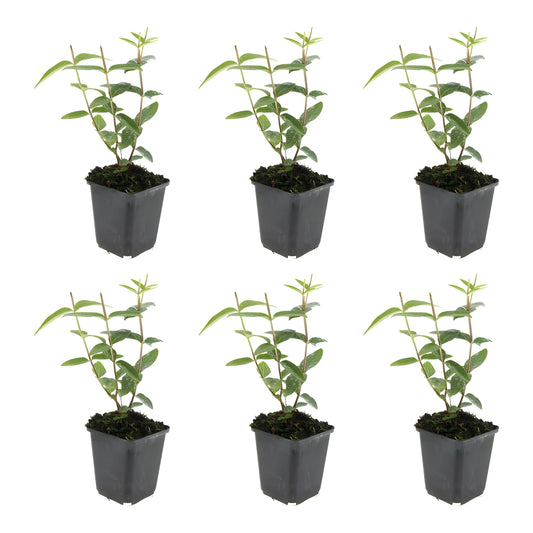
St. John's Wort 'Rheingold' (Hypericum × inodorum) - shrub with yellow flowers and red berries
Regular price From 39,95 €Regular price39,95 €From 31,96 €Livraison offerte -

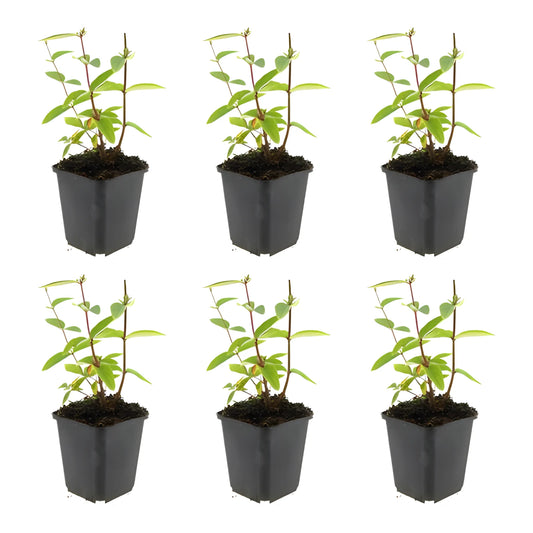
St. John's wort 'Annebel' (Hypericum × inodorum) - shrub with yellow flowers and burgundy red berries
Regular price From 39,95 €Regular price39,95 €From 31,96 €Livraison offerte -

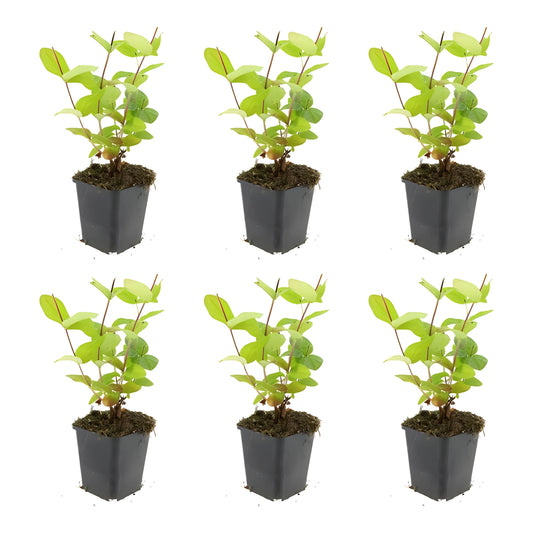
St. John's Wort 'Beauty' (Hypericum × inodorum) - shrub with yellow flowers and decorative berries
Regular price From 39,95 €Regular price39,95 €From 31,96 €Livraison offerte


✂️ Caring for St. John’s wort: watering, pruning and control
Once established, St. John’s wort needs little care, but pruning depends on the species.
The RHS profiles for ‘Hidcote’, calycinum and ‘Tricolor’ place them in Group 8, as defined in the RHS pruning groups: leave them almost unpruned, removing only unsightly shoots and faded flowers. ‘Rheingold’ and tutsan are in Group 6: prune them in early to mid-spring, once the worst cold has passed and the buds are swelling.
For dense ground cover, NC State Extension says calycinum can be cut back to ground level in spring, as it flowers on the current year’s growth.
💧 Watering: Water regularly in the first year; thereafter, only during prolonged dry spells, especially in pots
✂️ Pruning ground cover: Cut calycinum back to ground level in spring (NC State) for a dense, flowering carpet
✂️ Pruning shrubs: ‘Hidcote’: remove only unsightly shoots; inodorum: prune in early spring (RHS Groups 8 and 6)
🔹 Control: Cut back calycinum rhizomes with a spade when they spread beyond their allotted area
👀 Watch for: Rust on leaves; armillaria is rare (RHS)
🍂 St. John’s wort through the seasons
St. John’s wort takes over as spring flowers fade. The RHS places ‘Hidcote’s’ flowering period from midsummer to early autumn; it has lance-shaped leaves up to 6 cm long and large, golden-yellow, cup-shaped flowers.
On ‘Rheingold’, the flowers give way to red berries that retain their green-yellow calyx; on Magical Sunshine, the oval berries are yellow in autumn before ripening to black.
In winter, all these St. John’s wort varieties are rated H5 by the RHS hardiness scale, meaning -10 to -15°C, but their semi-evergreen foliage may thin out in severe cold.
📅 Seasonal care calendar
| Season | Key task |
|---|---|
| 🌸 Spring | Prune inodorum and cut back ground cover; plant and water young plants |
| ☀️ Summer | Yellow flowers; water potted plants during dry spells; take semi-ripe cuttings |
| 🍂 Autumn | Inodorum berries; ideal time to plant; calycinum foliage turns purplish |
| ❄️ Winter | Dormant period; ground cover may die back to ground level and regrow in spring |
🌱 Propagating St. John’s wort
Taking cuttings is the most reliable method for named varieties. The RHS recommends semi-ripe cuttings for calycinum, and softwood or semi-ripe cuttings in summer for ‘Hidcote’ and ‘Rheingold’. For ground cover, NC State Extension also mentions division and seed: in spring, lift a rooted clump from the edge of the carpet and replant it straight away.
For a named variety such as ‘Hidcote’ or ‘Rheingold’, take a cutting to reproduce the parent plant exactly.
🐛 Common problems: causes and solutions
St. John’s wort is rarely affected by disease, but it has two weak points. According to the RHS, it is generally free from pests but can be susceptible to rust and, more rarely, armillaria; NC State Extension confirms that rust is the only notable problem for calycinum.
The other issue is not a disease: calycinum spreads via underground stems and can smother small plants, according to NC State Extension. The RHS says it can become a nuisance if left unchecked.
| Symptom | Likely cause | Solution |
|---|---|---|
| Orange pustules beneath the leaves | 🍄 Rust (RHS, NC State) | Remove affected leaves, thin the clump for better airflow, and cut back calycinum in spring |
| Ground cover spreading into the border | ⚠️ Underground stems of calycinum | Cut the rhizomes with a spade or install an underground edging barrier |
| Shrub suddenly wilting | ⚠️ Armillaria, rare (RHS) | Remove the plant and its roots; do not replant a woody plant in the same spot |
| Ground cover blackened after winter | ❄️ Above-ground growth damaged by frost | Cut back to ground level in spring: it will regrow from the base (NC State) |
| Few flowers | 💧 Too much shade or shrub never rejuvenated | Move to a sunny site; prune inodorum in spring |
| Leaves falling in winter | ❄️ Semi-evergreen foliage; normal in severe cold | Wait: new growth will appear in spring |
-

Our flowering outdoor shrubs: buddleias, dogwoods, deutzias, hibiscus, mock oranges and more...
-

Cover the ground with ease: our outdoor ground cover plants blanket slopes,...


🌸 Our ornamental St. John’s wort varieties
Here are the most widely grown garden St. John’s wort varieties, with RHS details; our St. John’s wort (Hypericum) in an 11 cm pot is ideal for starting a ground-cover planting.
| Variety | What makes it special |
|---|---|
| Hypericum calycinum | Evergreen ground cover, 0.5 to 1 m, yellow flowers from summer to autumn, H5; vigorous and needs to be contained |
| Hypericum × hidcoteense ‘Hidcote’ | 1 to 1.5 m shrub with large golden-yellow cups; RHS Award of Garden Merit (AGM) |
| Hypericum × inodorum ‘Rheingold’ | Semi-evergreen shrub, 1 to 1.5 m, with red berries in autumn, H5 |
| Hypericum × inodorum Magical Sunshine | Compact, 0.5 to 1 m, with yellow berries that ripen to black |
| Hypericum × moserianum ‘Tricolor’ | Variegated green, pink and cream leaves, 10 to 50 cm, 4 cm flowers |
| Hypericum androsaemum (tutsan) | Deciduous, 0.5 to 1 m, red then black berries, pruning Group 6 |
🎨 What to plant with St. John’s wort
St. John’s wort pairs well with sun-loving plants that thrive in well-drained soil. In a dry border, its yellow flowers complement the blue of lavender and catmint, and the purple of smoke bush. A 'Hidcote' shrub also looks at home near a butterfly bush, which flowers at the same time.
For a slope, compare it with other ground covers and our selection of low-maintenance ground-cover perennials; in partial shade, periwinkle is a less aggressive alternative.
Find more ideas among our flowering shrubs, including Hypericum, our outdoor flowering plants and all our outdoor plants.
⚠️ Is St. John’s wort toxic or dangerous?
Yes, to varying degrees: no garden St. John’s wort should be eaten. For 'Hidcote', 'Rheingold' or calycinum, the RHS states that the fruits are ornamental and should not be eaten, and advises wearing gloves when handling the plant; it gives the same advice for pets.
For calycinum, NC State Extension goes further: high toxicity, potentially severe illness if the leaves or sap are ingested, and a risk of contact dermatitis. For perforate St. John’s wort (Hypericum perforatum), the ASPCA (American Society for the Prevention of Cruelty to Animals) classifies it as toxic to dogs, cats and horses, with hypericin as the toxic agent and photosensitivity as a clinical sign.
As for human health, we do not offer any advice: the leaflet for a St. John’s wort-based medicine published by the ANSM (French National Agency for the Safety of Medicines) states that St. John’s wort can reduce the effectiveness of other medicines, including contraceptives, anticoagulants and antiepileptics, and may cause photosensitivity. Similarly, the NCCIH (National Center for Complementary and Integrative Health, part of the U.S. NIH) recommends speaking with a healthcare professional before using it. Before taking any product containing St. John’s wort, ask your doctor or pharmacist for advice.
✅ Our expert tips for success
Growing St. John’s wort successfully comes down to a few simple rules: sun or partial shade, well-drained soil of any pH, water during the first year, then prune according to the species. Choose calycinum to cover a slope, keeping it contained; 'Hidcote' for a flowering shrub that needs almost no pruning; and an inodorum for its autumn berries.
Bear in mind that these are ornamental plants with inedible fruit, unrelated to the perforate St. John’s wort used in health products. To round out this border, our guide to dry gardens and drought-tolerant plants and our article on what to plant in autumn will help you choose companion plants.
Ground-cover St. John’s wort is the plant I recommend for a difficult slope, where nothing else will grow. But I always give a warning: it spreads quickly, so I plant it well away from small perennials. When a client asks if they can make tea from their garden St. John’s wort, I say no and refer them to their pharmacist. For a mixed border, I prefer 'Hidcote', which flowers all summer with hardly any attention.

Laura Bruneau
Jardinière et autrice


