Dry garden: which plants to choose and how to create one

A dry garden is designed to need no watering once established, bringing together drought-resistant plants, well-drained soil and mineral mulch. It is the most sustainable response to hot summers and water restrictions, without giving up a garden that remains beautiful and structured all year round.
This complete guide explains which plants to choose, how to prepare the ground, when to plant and how to care for your garden during its first year, so it stays green while others turn yellow.
🌿 What is a dry garden, and why create one?
A dry garden brings together plants adapted to heat and water scarcity, growing in very well-drained soil so they no longer need watering once their roots are established. It is not a lifeless gravel garden, but a water-wise garden rich in flowers.
There are three key benefits. First, water conservation: according to the ADEME (French Agency for Ecological Transition), watering can account for a significant share of a household's water use in summer, and a dry garden can greatly reduce it. Second, climate resilience, with plants that thrive even when rain is scarce. Finally, time saved, as these garden beds require very little maintenance.
The RHS (Royal Horticultural Society) confirms that choosing the right species and preparing the soil properly makes it possible to create long-lasting garden beds, even in drought-prone areas. This is a forward-looking approach, not a compromise.
Climate change is accelerating this shift. Summers increasingly exceed 35 °C and droughts are becoming more frequent, while bare soil can lose several litres of water per m² per day in extreme heat. Designing a garden that can cope with these conditions rather than fight them means greater peace of mind for the next 10 to 20 years.
| Benefit of a dry garden | What it means for your garden |
|---|---|
| Water-wise | virtually no watering once plants are established, after 2 years |
| Low maintenance | little pruning and less weeding thanks to mineral mulch |
| Climate resilience | plants that withstand summer temperatures above 30 °C |
| Year-round interest | evergreen silver foliage and ornamental grasses in winter |
🪴 Which plants should you choose for a dry garden?
Choose full-sun plants with foliage adapted to dry conditions: fine, silvery, leathery or fleshy leaves that limit evaporation. The best choices come from Mediterranean plants, ornamental grasses, rock-garden perennials and hardy succulents.
The secret to a beautiful dry garden is to combine different roles: a few structural shrubs, perennials for colour, grasses for movement and ground covers to dress the soil. Here is a reliable selection, with each link leading to its dedicated guide.
| Role in the garden | Drought-resistant plants |
|---|---|
| Structural shrubs | California lilac, rockroses, phlomis, strawberry tree, globe-shaped rosemary, olive tree |
| Flowering perennials | perennial salvia, Russian sage (Perovskia), gaura, yarrow, catmint, spurge, autumn stonecrop |
| Ornamental grasses | feather grass and blue fescue, fountain grass, Ampelodesmos for movement and light |
| Ground covers and rock-garden plants | creeping stonecrop, ice plant, houseleek (Sempervivum), creeping thyme |
| Mediterranean herbs | lavender, thyme, common sage, cotton lavender |
To explore these plant groups further, our detailed guides to Mediterranean plants, ornamental grasses and full-sun plants will help you choose plants suited to your region and soil.
Always check hardiness for your region. Olive trees and strawberry trees do not tolerate prolonged frosts below -8 to -10 °C very well: in northern France, grow them in pots and overwinter them indoors. Lavender, salvias, grasses and stonecrops, on the other hand, withstand cold without difficulty throughout the country.
columns: 4
columns_mobile: 2
-


Ceanothus Repens (Ceanothus), flowering Mediterranean shrub, light blue flowers, 19 cm pot, Height 90 cm
Regular price 69,95 €Regular price -


Ceanothus Victoria (Ceanothus), flowering Mediterranean shrub, purple flowers, 19 cm pot, Height 90 cm
Regular price 69,95 €Regular price -

 Livraison offerte Sold out
Hidcote Lavender (Lavandula angustifolia), Mediterranean perennial, 17 cm pot, Height 30 cm - Pack of 6
Regular price 84,95 €Regular price -
Olive (Olea europaea), Mediterranean ornamental shrub, 19 cm pot, Height 90 cm
Regular price 69,95 €Regular price -


Rosemary (Rosmarinus officinalis), Mediterranean perennial, purple flowers, 19 cm pot, Height 90 cm
Regular price 69,95 €Regular price -

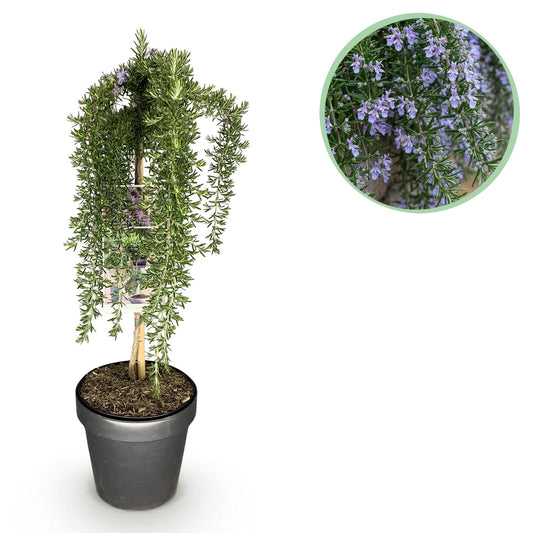
Prostrate Rosemary (Rosmarinus officinalis), Mediterranean perennial, purple flowers, 19 cm pot, Height 70–90 cm
Regular price 69,95 €Regular price -

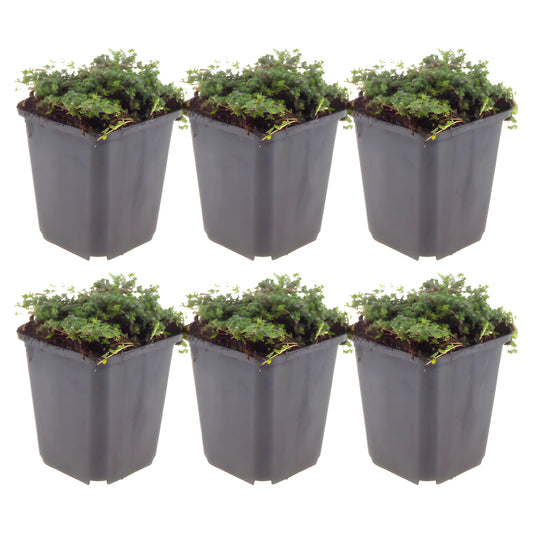
Creeping thyme 'Purple Beauty' (Thymus praecox) - aromatic purple-flowered groundcover
Regular price From 44,95 €Regular price -
Blue fescue 'Elijah Blue' (Festuca glauca) - evergreen glacier-blue cushion grass
Regular price From 44,95 €Regular price


🛠️ How do you create a dry garden, step by step?
Success comes down to preparation: well-drained soil and planting at the right time matter more than watering. Follow these steps in order to create a garden bed that establishes successfully and lasts.
Take time to prepare the ground properly, then plant in groups to minimise future work. Most failures are caused by soil that holds water in winter, which is fatal to dry-garden plants.
When planting, dig a hole twice as wide as the root ball and 30 to 40 cm deep. Space plants 40 to 50 cm apart for perennials and ground covers, but much farther apart for structural plants: allow 1 to 3 m for a shrub or olive tree. This initial spacing gives them room to spread without competing, and saves you from having to prune constantly later on.
| Step | What to do |
|---|---|
| 1. Check the exposure | choose a spot that gets at least 6 hours of sun a day |
| 2. Improve drainage | loosen heavy soil with gravel or coarse sand to a depth of 20 to 30 cm |
| 3. Choose suitable plants | group species with similar needs, from the driest conditions to the least dry |
| 4. Plant in autumn | make the most of the rain to establish roots before the following summer |
| 5. Apply mineral mulch | cover the soil with a 5 to 8 cm layer of gravel or pozzolana |
💧 Watering and mulching: getting the first year right
The paradox of a dry garden is that you need to water it during the first year so you never have to again. While the roots are growing deep into the soil, regular watering is essential.
During the first summer, water thoroughly but infrequently, whenever the soil has dried out at depth, then gradually reduce watering. From the second year on, most plants can rely on rainfall. Deep, infrequent watering encourages roots to grow downwards; light, frequent watering keeps them near the surface and weakens the plant.
Mineral mulch is your greatest ally. According to the ADEME and the OFB (French Biodiversity Agency), a layer of mulch reduces evaporation, keeps the soil cool and reduces weeding. In a dry garden, choose mineral mulch (gravel, pozzolana or slate) rather than organic mulch: it is better suited to these plants and lasts longer.
| Year | Recommended watering | Goal |
|---|---|---|
| Year 1 | water thoroughly when the soil has dried out at depth during summer | establish deep roots |
| Year 2 | only during prolonged hot spells | gradually reduce watering |
| Year 3 and beyond | almost none, except during prolonged heatwaves | complete water independence |
🗓️ A seasonal calendar for your dry garden
Plant a dry garden in autumn, then keep maintenance to a minimum for the rest of the year. Here are the key tasks for each season to help it thrive with little effort.
📅 Seasonal maintenance calendar
| Season | Key task |
|---|---|
| 🌸 Spring | Lightly prune faded perennials, divide if needed and finish planting before the heat arrives. |
| ☀️ Summer | As a rule, no watering is needed from the second year on; enjoy the lavender and gaura blooms. |
| 🍂 Autumn | The ideal planting season: the soil is still warm and rain encourages roots to establish. |
| ❄️ Winter | A time to rest: leave the grasses and evergreen foliage to give structure to the garden bed, without pruning. |
🏡 Dry gardens in pots, on patios or in small spaces
The same approach works in pots, provided they have good drainage and are filled with a lean potting mix. It is an ideal solution for a sunny balcony or patio.
Two things matter most: a pot with plenty of drainage holes and a very free-draining mix (potting soil lightened with sand and gravel), which is far more important than simply adding a layer of clay pebbles at the bottom. Herbs, small grasses and stonecrops do particularly well in pots. Water runs out faster in a pot than in the ground, so keep a closer eye on them during the first year, then gradually water less often. A pot at least 30 cm in diameter helps prevent sudden swings in moisture.
-

Our flowering outdoor shrubs: buddleias, dogwoods, deutzias, hibiscus, mock oranges and more...


⚠️ Common mistakes to avoid
Most disappointments come down to three simple mistakes that are easy to put right. Knowing what they are can save your plants during the first year.
| Mistake | Consequence | Solution |
|---|---|---|
| Soil that retains water | roots suffocate in winter and plants rot | improve drainage before planting |
| Too little watering in year 1 | shallow roots and plants that scorch the following summer | water thoroughly but infrequently |
| Thick organic mulch | excess moisture and disease in Mediterranean plants | choose mineral mulch instead |
🐝 A dry garden: a haven for biodiversity
Beyond saving water, a well-planned dry garden can become a wonderful haven for pollinators. Mediterranean plants are among the garden's best nectar sources, flowering over a long season.
Lavender, rosemary, salvias and yarrows attract bees and butterflies from May to September, when many other garden beds have been forced into dormancy by drought. By choosing Mediterranean herbs and a variety of perennials, you can feed local wildlife while saving water. Mineral mulch also provides shelter for beneficial insects that help control pests.
✅ Our expert tips for a successful dry garden
Remember the essentials: well-drained soil, full-sun plants grouped according to their needs, autumn planting, mineral mulch and watering only during the first year. Follow these guidelines and your garden will weather summers above 30 °C without missing a beat.
Start small, with a well-exposed garden bed, and observe: dry-garden plants will soon show you what suits them. This is a garden that rewards patience during the first two years with decades of peace and quiet.
📋 Dry garden quick reference
| Factor | Guideline |
|---|---|
| ☀️ Exposure | full sun, at least 6 hours; a warm spot |
| 🪨 Soil | lean, stony or sandy, perfectly drained; tolerant of chalky soil |
| 🧪 pH | not critical, including in chalky soil (6.5 to 8) |
| 🕳️ Drainage | top priority; improve heavy soil to a depth of 20 to 30 cm |
| ❄️ Hardiness | varies: lavender, rockroses and grasses are very hardy; olive trees -10 to -12 °C, oleander -5 to -8 °C |
| 💧 Watering | water thoroughly during the first year only, then very little from the second year on |
| 🌾 Mulch | mineral (gravel, pozzolana) in a 5 to 8 cm layer |
| 📏 Spacing | 40 to 50 cm between perennials; 1 to 3 m for shrubs and trees |
| 🌸 Flowering | from spring (rockroses) to autumn (gaura, salvia, Perovskia) |
| 🧰 Maintenance | light pruning in late winter; almost no weeding |
My lightbulb moment came during a summer of water restrictions: my bed of lavender, salvias and grasses didn't flinch, while the rest of the garden turned yellow. Since then, I've converted a new corner into a dry garden every year. My advice: resist the urge to water from the second year on. These plants become unstoppable when you let them seek out water for themselves.

Laura Bruneau
Jardinière & autrice