Yucca rostrata (blue yucca): planting and growing it successfully in the garden and in pots

Yucca rostrata, or blue yucca, is a tree-like yucca native to southwestern Texas and northern Mexico according to POWO (Plants of the World Online, Royal Botanic Gardens, Kew), which forms an almost spherical rosette of thin, rigid, silvery-blue leaves on a single trunk.
According to the RHS (Royal Horticultural Society), it is rated H5, hardy from -15 to -10 °C, provided it grows in well-drained soil, in full sun and in a warm, sheltered position.
In terms of cultivation, it has nothing to do with the indoor yucca (Yucca elephantipes), which does not tolerate frost.
🌟 Why plant a Yucca rostrata in the garden
Yucca rostrata brings an all-year-round graphic silhouette to the garden, a silvery-blue colour rare among evergreens and remarkable water efficiency once established, while remaining one of the hardiest trunked yuccas according to NC State Extension.
The RHS recommends it for gravel gardens, Mediterranean-style plantings, small urban gardens and coastal sites, and describes it as drought-tolerant. Its leaves are rigid near the stem and then flexible beyond their widest part, so that they move at the slightest breeze, according to the same fact sheet.
| Asset | What it changes |
|---|---|
| Rare colour | Evergreen blue-green to silvery-blue foliage, bright in winter |
| Water efficiency | Drought-tolerant (RHS), low water needs once established |
| Hardiness | Tolerates frost in dry, well-drained soil (RHS) |
| Low maintenance | No pruning required, only remove faded flower stalks (RHS) |
| Silhouette | Spherical rosette carried by a slowly forming trunk |
📊 Yucca rostrata: adult size, hardiness and flowering according to sources
The adult size, hardiness and flowering of Yucca rostrata vary according to sources, because each describes the plant in its climate: the table compares what the RHS, NC State Extension, Oregon State University and University of Arizona Campus Arboretum say.
USDA zones are converted to °C according to the 2023 USDA map legend, knowing that the USDA (United States Department of Agriculture) defines each zone by the average minimum extreme winter temperature.
Keep the RHS column for a humid climate like that of northern France.
| Reference | RHS (United Kingdom) | NC State Extension | Oregon State | University of Arizona |
|---|---|---|---|---|
| Adult height | 2.5 to 4 m | 1.5 to 4.5 m (5 to 15 feet) | Stem up to about 4 m | About 3.7 m (12 feet) |
| Width | 1.5 to 2.5 m | 1.2 to 3 m (4 to 10 feet) | Not specified | Not specified |
| Growth | Reaches adult size in 10 to 20 years | Slow | Slow | Slow |
| Leaves | 60 to 90 cm long, 1.3 to 2.5 cm wide | More than 100 per crown, about 60 cm | 25 to 60 cm, less than 2 cm wide, finely toothed yellow margin | About 60 cm, yellow edge |
| Hardiness | H5: -15 to -10 °C | Zones 5a to 12b; zone 5a = -28.9 to -26.1 °C | Zone 6 (5a possible) | Down to -12 °C (10 °F) |
| Flowering | White, summer or autumn, stalk up to 1.5 m | White, waxy, spring, panicle about 60 cm | Hanging white flowers about 5 cm | Cream, spring, panicle about 90 cm |
| Exposure | Full sun, south or west, sheltered | At least half a day of full sun | Full sun | Full sun, dry and rocky soil |
| Soil | Well-drained, alkaline, loamy or sandy | Well-drained, preferably sandy | Good drainage | Dry and rocky |
📋 Quick fact sheet
Essential facts about Yucca rostrata, according to POWO, the RHS, NC State Extension and the ASPCA.
| Reference | The rule |
|---|---|
| Accepted name | Yucca rostrata Engelm. ex Trel., published in 1902 (POWO) |
| Family | Asparagaceae according to NC State Extension |
| Origin | Southwestern Texas and Mexico (Chihuahua, Coahuila), deserts and dry scrublands (POWO) |
| Hardiness | H5: -15 to -10 °C (RHS) |
| Adult size | 2.5 to 4 m high, 1.5 to 2.5 m wide, in 10 to 20 years (RHS) |
| Exposure | Full sun, south or west, warm and sheltered position (RHS) |
| Soil | Well-drained, acidic to alkaline pH, preferably neutral to alkaline (RHS) |
| Planting | In spring (RHS yucca guide) |
| Watering | Low once established; in a pot, by touch, winter only when the substrate is dry over 5 cm |
| Toxicity | Yucca spp. toxic to dogs, cats and horses (ASPCA); skin allergen (RHS) |
How to plant a Yucca rostrata in the ground
To plant a Yucca rostrata, choose the warmest and sunniest spot in the garden in spring, in stony soil that never retains water, and plant it on a slight mound if your soil is heavy.
The RHS indicates that wet soil in winter, combined with cold, makes plants at the limit of their hardiness more vulnerable, and recommends raised beds of at least 20 cm to lift the roots out of the water. It also notes that a 25 cm mound in the center significantly improves drainage for a tree, and that adding gravel to waterlogged soil is not enough.
| Step | The right action |
|---|---|
| 1. Choose the period | In spring (RHS yucca guide), once the hard frosts have passed |
| 2. Choose the location | Full sun, south or west exposure, sheltered from cold winds, away from walkways because of the spikes |
| 3. Test the soil | If water stagnates after rain, plan for a mound or raised bed of at least 20 cm (RHS) |
| 4. Prepare the mound | Mix soil, stones and gravel to form a dome; the root ball must end above the level of the surrounding soil |
| 5. Plant | Place the root ball without burying it deeper than in the pot, tamp down lightly, water thoroughly once |
| 6. Mineral mulch | Gravel or stones at the base rather than organic mulch which retains moisture at the collar |
| 7. Water the first year | By touch, when the soil is dry over 2 to 3 cm, then almost no longer once established |
columns: 4
columns_mobile: 2
-

 Livraison offerte
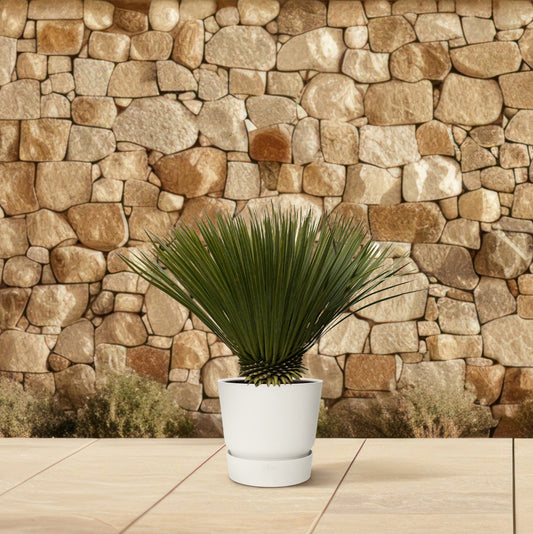
Blue yucca (Yucca rostrata) - hardy evergreen yucca
Regular price From 94,95 €Regular price -

 Livraison offerte
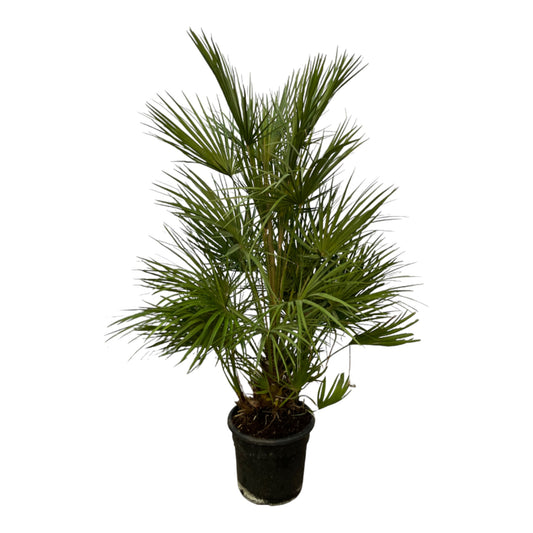
Mediterranean dwarf palm (Chamaerops humilis) - evergreen palm
Regular price From 49,95 €Regular price -

 Livraison offerte
Chinese Windmill Palm (Trachycarpus fortunei) - hardy palm
Regular price From 49,95 €Regular price -

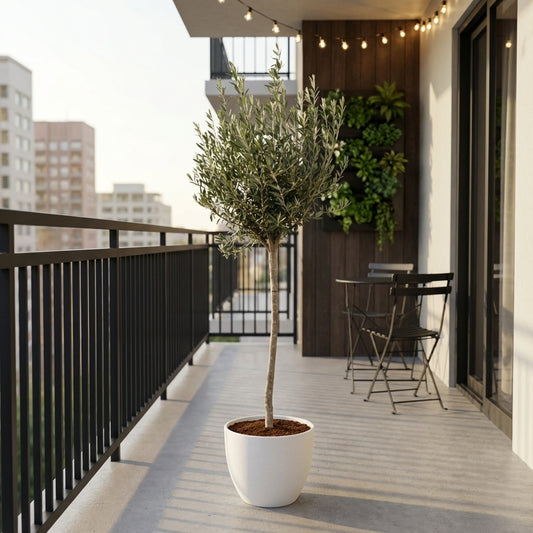
Standard Olive Tree (Olea europaea) large evergreen specimen - 24cm pot - Height 160cm
Regular price 89,95 €Regular price -

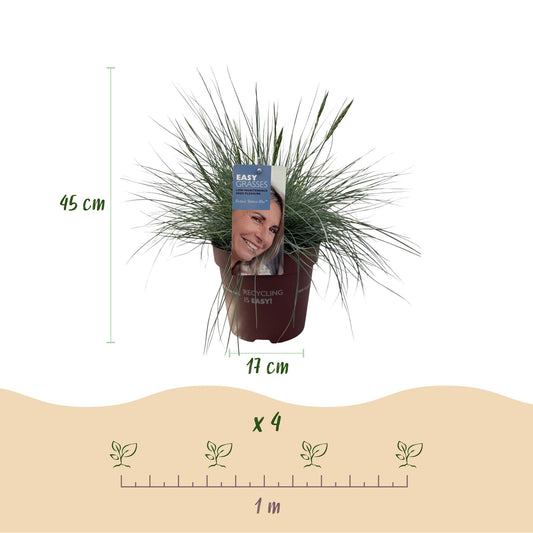
Blue fescue 'Intense Blue' (Festuca glauca) - grass with blue-tinted foliage - 17 cm pot - Height 50 cm
Regular price From 49,95 €Regular price -

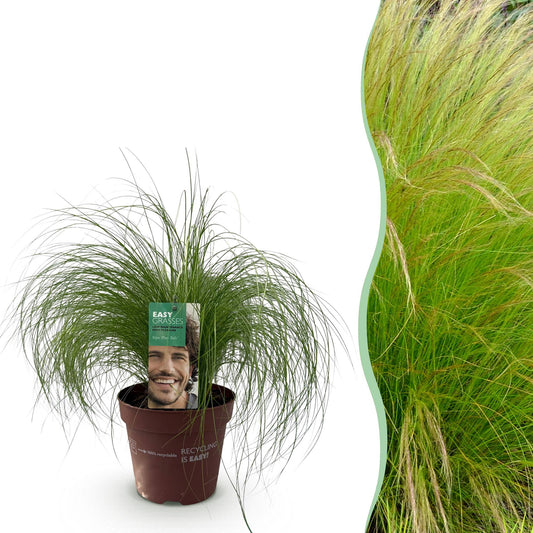
Angel's hair 'Pony Tails' (Stipa tenuissima) - ornamental grass - 17 cm pot - Height 50 cm
Regular price From 39,95 €Regular price -

 Livraison offerte Sold out
Hidcote Lavender (Lavandula angustifolia), Mediterranean perennial, 17 cm pot, Height 30 cm - Pack of 6
Regular price 84,95 €Regular price -


Rosemary (Rosmarinus officinalis), Mediterranean perennial, purple flowers, 19 cm pot, Height 90 cm
Regular price 69,95 €Regular price


🧭 Yucca rostrata, gloriosa, filamentosa or elephantipes: which one to choose
The right choice depends on your climate and use: Yucca rostrata is the trunked species with blue foliage for a dry garden, but other hardy yuccas can also be planted outdoors, while Yucca elephantipes remains an indoor plant.
The RHS rates Yucca gloriosa and Yucca filamentosa as H5, like rostrata. Yucca elephantipes is rated H2 by the RHS, i.e. 1 to 5 °C: it does not survive frost.
| Species | Use and references (RHS, unless stated) |
|---|---|
| Yucca rostrata (blue yucca) | Dry garden, gravel, large terrace pot; single trunk, silvery-blue leaves 60 to 90 cm; 2.5 to 4 m; H5 |
| Yucca gloriosa | Sunny bed; upright and prickly glaucous green leaves up to 60 cm; 1.5 to 2.5 m; cream flowering in late summer; H5 |
| Yucca filamentosa | Border, small garden, exposed site; no trunk, 0.5 to 1 m, dark green leaves with curly filaments; H5 |
| Yucca rostrata 'Sapphire Skies' | More compact and silvery version, up to 1.5 m (5 feet) according to NC State Extension |
| Yucca elephantipes (syn. of Yucca gigantea) | Indoor plant, H2 (1 to 5 °C); see our Yucca elephantipes fact sheet |
| Any garden yucca in a very humid climate | Prefer growing in a large pot, brought indoors away from rain in winter |
❄️ Is Yucca rostrata frost-hardy? The real threat is water
Yucca rostrata tolerates frost in dry soil: the RHS rates it H5, from -15 to -10 °C, and NC State Extension describes it as one of the hardiest trunked yuccas, up to zone 5.
These figures do not contradict each other, they describe the plant in two contexts: USDA zone 5a (-28.9 to -26.1 °C) is given by NC State Extension for the United States, the H5 rating by the RHS for UK winters. Conversely, the University of Arizona Arboretum rates it hardy down to -12 °C (10 °F).
In France, the main risk is the combination of cold and waterlogged soil, which the RHS summarizes in its fact sheet on wet winters and dry summers: wet soil plus cold makes plants more vulnerable. NC State Extension also reminds that excess water causes root rot.
Hence the three rules: full sun, perfect drainage, mound if the soil is heavy. For a young plant or a pot during a cold snap, the RHS page on winter damage indicates that a thick winter fleece provides about 2 °C of protection.
All winterizing steps are in our guide to protect plants from frost.
🪴 Growing Yucca rostrata in a pot on a terrace
Yucca rostrata grows very well in a large pot, provided with a container with drainage holes, a very well-drained substrate and watering by touch, reduced to a minimum in winter. For potted yuccas, the RHS yucca growing guide recommends a potting mix based on loam with 20 to 30% gravel by volume.
From April to September, water thoroughly when the substrate has dried, allowing the excess to drain, and apply a balanced liquid fertilizer, never in winter. In winter, the RHS recommends watering only when the top 5 cm are dry. Drainage comes from the pot with holes and the mineral substrate, not from a layer at the bottom.
Repot in spring, only when the roots fill the pot, in a container just wider and heavier, so that the plant does not tip over. The RHS reminds that evergreen plants and potted plants are particularly exposed in winter: keep the pot in a dry and sheltered place, and surround it with bubble wrap or straw to protect the roots from frost.
To choose the container, see our comparison of terracotta or plastic pots.
📈 Growth, trunk and skirt of dry leaves of Yucca rostrata
Yucca rostrata grows slowly, all consulted sources say so, and its trunk takes years to form. It rises below the rosette, as the old leaves dry out. According to NC State Extension, these dry leaves often remain attached and form grey fibers that give the trunk a silvery halo. The University of Arizona notes that they often fall, leaving a grey fibrous stem.
Keeping or removing this skirt is therefore a question of aesthetics: no source makes it mandatory. The RHS specifies that no pruning is necessary, except for faded flower stalks. For flowering, the RHS describes white flowers in summer or autumn on a stalk up to 1.5 m, NC State a white panicle in spring. None of the consulted sources give the age of the first flowering.
Despite its nickname palm tree, Yucca rostrata is not one: it belongs to the Asparagaceae family, as indicated by NC State Extension. None of our sources describe a dwarf form, but the 'Sapphire Skies' cultivar remains under 1.5 m according to the same source.
🐾 Yucca rostrata, animals and children: toxicity and pointed leaves
Yucca rostrata requires two precautions, its pointed leaves and the toxicity of the genus for animals. The ASPCA (American Society for the Prevention of Cruelty to Animals) fact sheet covers the entire genus (Yucca spp.) and rates it Toxic to Dogs, Toxic to Cats, Toxic to Horses, due to saponins.
The indicated clinical signs are "Dogs, cats: Vomiting; Horses: liver disease, dermatitis". The RHS lists it as a skin allergen and harmful to dogs and cats if ingested: wear gloves to handle it. The University of Arizona advises planting it away from walkways and places of passage, because of the leaf spikes.
NC State notes however that its leaves are more flexible than those of many other yuccas.
🗓️ The Yucca rostrata maintenance calendar
The Yucca rostrata is planted in spring, requires only occasional watering in summer once established, needs no pruning, and above all must stay dry in winter. The University of Arizona recommends supplemental watering only during the hottest and driest months. In a pot, always water by feel, never on a fixed schedule.
📅 Seasonal Care Calendar
| Season | Key Action |
|---|---|
| 🌸 Spring | Planting and repotting; resume watering by feel and liquid fertilizer for potted plants |
| ☀️ Summer | Supplemental watering only during hot, dry weather; cut off faded flower stalks after flowering (RHS) |
| 🍂 Autumn | Stop fertilizing; check drainage and the mound before rains |
| ❄️ Winter | Keep soil and substrate dry; keep the pot sheltered from rain, surround the base; use winter protection during severe cold |
🐛 Mistakes That Rot a Yucca rostrata
Almost all failures with the Yucca rostrata are due to water: heavy soil, regular watering, or a pot that does not drain, much more than the cold itself. Here is how to avoid them.
| Mistake | Why It Is a Problem | The Solution |
|---|---|---|
| Planting Flat in Clay Soil | Damp, colder soil: makes the plant more vulnerable (RHS) | A mound or raised bed at least 20 cm high |
| Watering on a Fixed Schedule | Excess water and root rot (NC State Extension) | Water by feel, almost never once established |
| Thick Organic Mulch at the Base | Retains moisture around the crown | Mineral mulch: gravel or stones |
| Pot Without a Hole or in a Full Saucer | Water stagnates around the roots | Pot with drainage holes, substrate with 20 to 30% gravel (RHS) |
| Placing It in Partial Shade | It needs full sun, south or west (RHS) | The hottest spot in the garden |
| Planting It at the Edge of a Path | Pointed leaves (University of Arizona) | Place it away from walkways |
| Confusing It with Yucca elephantipes | Rated H2, this one does not survive frost (RHS) | Check the Latin name before planting outdoors |


🌿 Our Yucca rostrata and Plants to Pair With It
To create a successful dry garden bed, pair the Yucca rostrata with plants that have the same sun and drainage requirements: here is our product page, with its sizes and price, and its best companions among our Mediterranean plants.
| Our Selection | Why Choose It |
|---|---|
| Blue Yucca (Yucca rostrata) | Two sizes on the product page: in a 30 cm pot (70 cm tall) or with a trunk in a 27 cm pot (70 cm) |
| Dwarf Palm (Chamaerops humilis) | Another hardy evergreen for dry gardens: our dwarf palm |
| Hemp Palm (Trachycarpus fortunei) | For a taller exotic backdrop: our Chinese palm |
| Canary Island Palm (Phoenix canariensis) | In a large pot on a sheltered terrace: our Canary Island palm |
| Olive Tree (Olea europaea) | The classic Mediterranean companion: our olive tree on trunk |
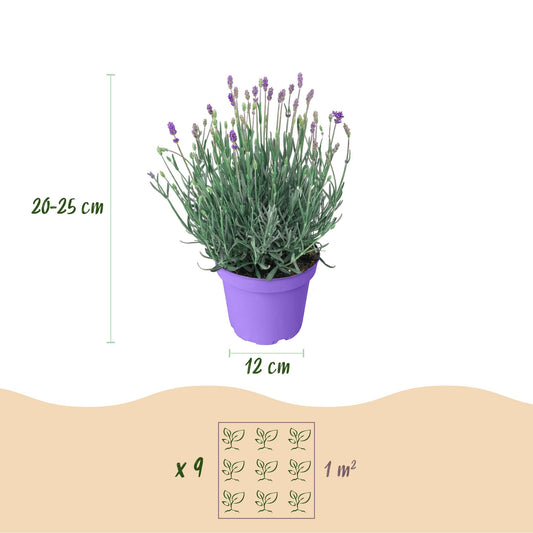
| Lavender | At the base, in a purple carpet: our lavender 'Hidcote' and our rosemary |
| Blue and Blonde Grasses | Our blue fescue 'Intense Blue' and our pony tails grass (Stipa tenuissima), among our bamboo and grasses |
🔑 What to Pair with a Yucca rostrata in a Dry Garden Bed
A bed with Yucca rostrata is composed around it as a focal point: low dry garden plants, with the same sun and drainage requirements, which highlight its silhouette without shading it. The RHS lists it for gravel gardens and Mediterranean-style plantings.
At the base, opt for silvery or blue foliage, such as blue fescue, and sun-loving herbs, lavender, and rosemary. Light grasses like pony tails grass add movement in front of its rigid rosette. In the background, a dwarf palm or olive tree completes the scene.
To learn more, see how to create a dry garden, design a Mediterranean garden, choose ornamental grasses and other hardy exotic plants.
Our full sun plants and our frost-resistant plants share the same requirements.
✅ Our Tips for a Successful Yucca rostrata
To succeed with a Yucca rostrata, give it the hottest full sun in your garden, stony soil that never retains water, a mound if the soil is heavy, and almost forget the watering can once established. In a pot, choose a highly mineral substrate and keep it dry in winter. Then, give it time: its slow growth is part of its charm.
Find our Yucca rostrata and its companions among our Mediterranean plants.
For me, the Yucca rostrata is one of the most beautiful structural plants for a dry garden: its blue ball remains impeccable in the middle of winter, when almost everything else is dormant. I always advise thinking about drainage before thinking about the cold, and never hesitating to build a mound, even a modest one. As for the skirt of dry leaves, I keep it: it tells the age of the plant and gives it its look of a little desert tree.

Laura Bruneau
Jardinière & autrice