Houseleek (Sempervivum): planting, care and rock gardens

To grow houseleeks successfully, plant them in full sun in poor, very free-draining soil (a rock garden, crevice in a wall, gravel, roof or pot with drainage holes). Water only during dry summer weather, and never feed them: cold will not kill them, but standing water will.
Houseleek is the common name for the genus Sempervivum, Latin for “always alive”: each rosette dies after flowering, but leaves behind a crown of offsets.
This guide covers hardiness by species, flowering and transplanting offsets, and complements our guide to dry gardens and drought-tolerant plants, as well as our selection of ground-cover perennials for a low-maintenance border.
It draws on the RHS, Kew botanists and NC State Extension.
🌿 Why plant houseleeks in the garden
Houseleeks grow in places where almost nothing else takes hold: cracks in stone, paving slabs, roof edges and troughs.
According to the RHS (Royal Horticultural Society), these geometric rosettes, in bright green, grey or purplish red, are well suited to temperature extremes and drought. They are ideal for rock gardens, gravel gardens, green roofs, containers and dry-stone walls.
According to NC State Extension, the genus tolerates drought, dry and poor soils, heat and atmospheric humidity. A single rosette becomes a dense cushion within a few years.
| Benefit | What it means for your garden |
|---|---|
| Drought and poor soils | Fleshy leaves store water: little or no watering once established |
| Evergreen ground cover | The rosettes stay in place over winter and spread to at least 30 cm, according to the RHS |
| Year-round colour | Green, grey, purplish red, or a veil of white hairs on cobweb houseleek |
| Small spaces | Rarely more than 15 cm tall (RHS): wall crevices, troughs, roofs and planters |
🔎 Houseleek at a glance
According to Plants of the World Online (POWO), the database of the Royal Botanic Gardens, Kew, the genus Sempervivum L., described by Linnaeus in 1753, belongs to the Crassulaceae family and comprises 51 accepted species, native from Europe to Iran and Morocco, including France and Corsica.
The genus Jovibarba, still sold separately as prickly houseleek, is now classified within it as a synonym.
Common houseleek, Sempervivum tectorum L., is native from the Pyrenees to the western Balkans, according to its POWO profile, which also records it as introduced in Great Britain, Ireland, Belgium, Denmark, Norway, Sweden and several US states, among other places. Among its many English names, the RHS lists “Jupiter’s beard” and “thunder plant”.
| Feature | Verified details |
|---|---|
| 🏷️ Botanical name | Sempervivum L.; garden type species: Sempervivum tectorum L. (common houseleek); Jovibarba is a synonym (POWO) |
| 🧬 Family | Crassulaceae, like stonecrops (Sedum) |
| 🌳 Type | Evergreen succulent perennial, with monocarpic rosettes renewed by offsets |
| 🌍 Origin | Europe to Iran and Morocco; S. tectorum: from the Pyrenees to the western Balkans (POWO) |
| ❄️ Hardiness | H7, tolerating temperatures below -20°C, for S. tectorum and S. arachnoideum (RHS); USDA zones 4a to 8b for the genus (NC State) |
| 🍃 Foliage | Fleshy rosettes: up to 10 cm across in S. tectorum; 1 to 3 cm across, with white cobweb-like hairs, in S. arachnoideum (RHS) |
| 🌸 Flowering | Summer; purple stars (S. tectorum) or pink (S. arachnoideum), also white, red or yellow in other species (RHS) |
| 📏 Mature size | Rosettes up to 10 cm across (S. tectorum), rarely over 15 cm tall, with flower stems 12 to 20 cm high; spread of 10 to 50 cm (RHS) |
📋 Quick growing guide
Essential growing information at a glance.
| Factor | Guideline |
|---|---|
| Position | Full sun; NC State recommends at least 6 hours of sunlight for S. tectorum, with afternoon shade in very hot locations |
| Soil | Well-drained sandy, stony or loamy soil, from acidic to alkaline; never heavy clay (RHS) |
| Hardiness | H7 (tolerating temperatures below -20°C) for S. tectorum and S. arachnoideum; hybrid cultivars have not been assessed individually |
| Watering | At planting, then only in dry weather in spring and summer; no winter watering outdoors (RHS) |
| Planting | Ideally in spring; possible year-round except when the ground is frozen or waterlogged (RHS) |
| Pruning | None; remove dead rosettes after flowering |
| Flowering | Summer, after 2 to 3 growing seasons; the flowering rosette dies |
| Care | Very easy in well-drained soil; difficult in heavy, damp soil |
| Toxicity | Low severity according to NC State; sap may irritate the skin; do not eat |
📍 Where and when to plant houseleeks
Plant your houseleeks in the sunniest spot in the garden, in soil where water never stands. The RHS growing guide recommends a rock garden, scree bed or gravel garden, or a container, and advises against heavy soils such as clay, which drain poorly.
All aspects suit S. tectorum, according to the RHS profile for Sempervivum tectorum, provided the plant gets full sun; the same profile recommends it for wall crevices, troughs and cold alpine houses. Plant preferably in spring, so the plant can establish during the warm season.
☀️ Ideal: Rock garden, wall crevice, edge of paving, green roof, stone trough, or a pot with drainage holes in a sunny spot
🪴 Also suitable: South-facing balcony planter, growing table, gravel garden in light partial shade
🚫 Avoid: Shade, waterlogged clay in winter, the base of a downspout, a water-filled saucer, indoor rooms
🪴 Planting houseleeks in a rock garden, wall or pot
Drainage is everything. In the ground, improve the soil with gravel or coarse sand; NC State Extension recommends up to 50% sand or gritty material.
For pots, the RHS growing guide suggests equal parts soilless potting mix, loam-based compost (such as John Innes No. 1 or 2) and coarse sand, or half grit and half John Innes No. 2 compost.
A terracotta or plastic pot with drainage holes is suitable, but do not leave it standing in water.
To get started, our ‘Big Sam’ houseleek, 14 cm pot and ‘Big Sam’ houseleek, 7 cm pot can be planted straight into a rock garden or planter.
| Step | What to do |
|---|---|
| 1. Choose a spot | Full sun, soil that never stays waterlogged, and a crevice or slope where water can run off |
| 2. Prepare the soil | Remove weeds, loosen the soil and mix in gravel and coarse sand; no manure or rich compost |
| 3. Plant the rosette | Keep the crown at soil level, never buried; gently firm the soil around the root ball |
| 4. Apply mineral mulch | Spread gravel around the rosettes; never use organic mulch that holds moisture |
| 5. Water | Water once at planting, then only when the growing medium has dried out while the plant establishes |
columns: 4
columns_mobile: 2
-

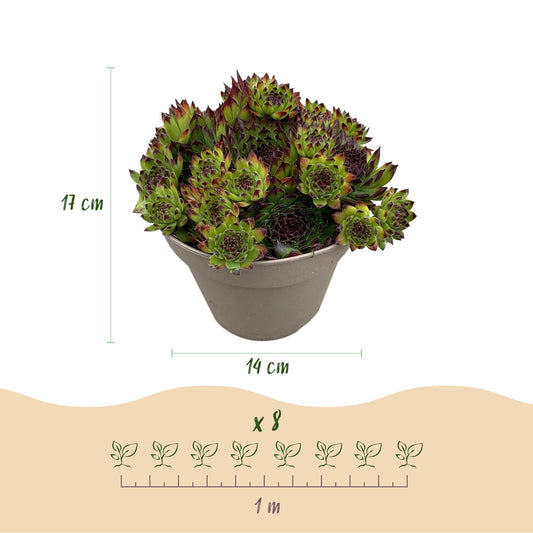
Sempervivum 'Big Sam' (Houseleek) - evergreen groundcover - 14 cm pot - Height 17 cm
Regular price From 49,95 €Regular price49,95 €From 39,96 €Livraison offerte -

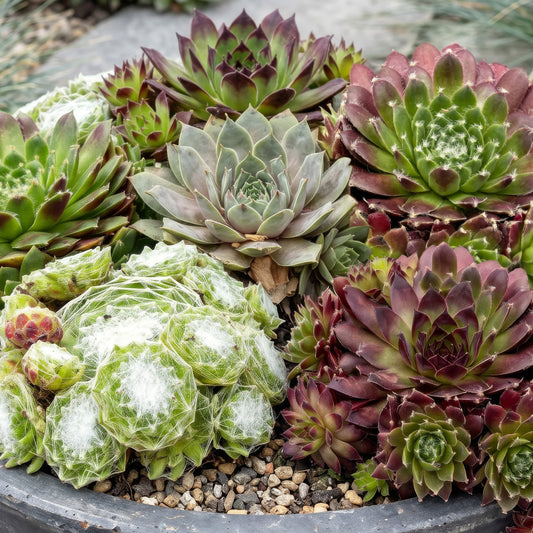
Cobweb Houseleek ‘Big Sam’ (Sempervivum) – evergreen succulent ground cover – 7 cm pot – height 10–12 cm
Regular price From 44,95 €Regular price44,95 €From 35,96 €Livraison offerte -

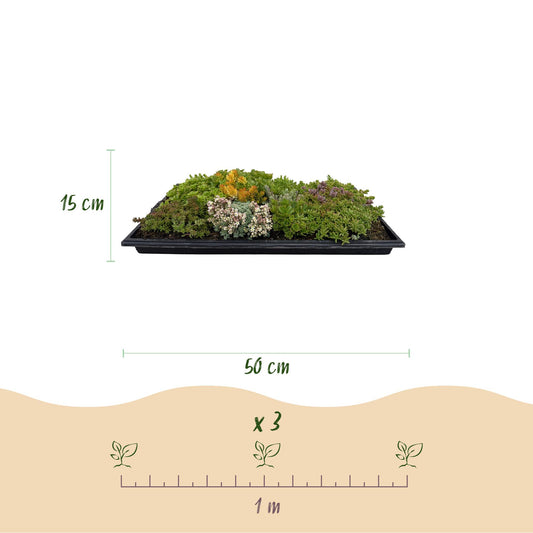
Sedum Mat (10 species) – Perennial succulent ground cover – Pack of 2 – Height: 20 cm
Regular price 69,95 €Regular price69,95 €55,96 €Livraison offerte -

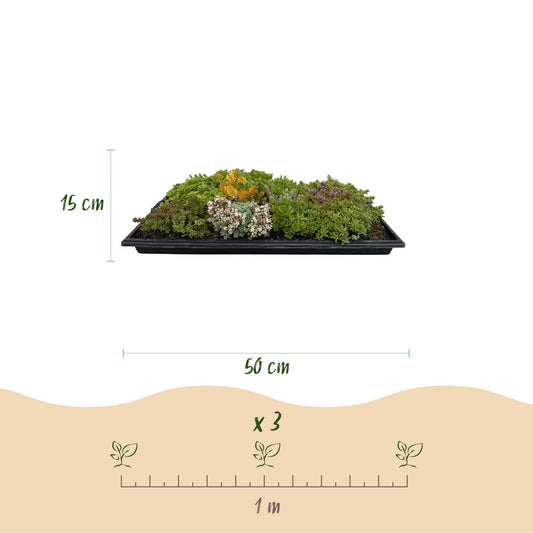
Sedum Mat (10 species) – perennial succulent ground cover – Set of 4 – Height: 20 cm
Regular price 129,95 €Regular price129,95 €103,96 €Livraison offerte -


Perennial ice plant (Delosperma) – flowering ground cover in a mix of colours – 7 cm pot – height 10–12 cm
Regular price From 44,95 €Regular price44,95 €From 35,96 €Livraison offerte -

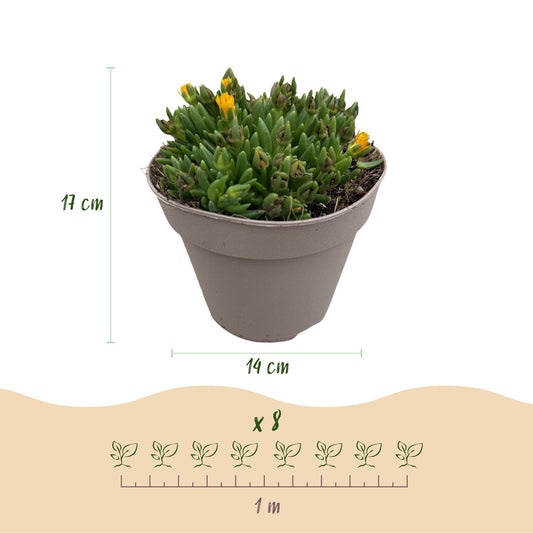
Perennial ice plant (Delosperma) – flowering ground cover – 14 cm pot – height 17 cm
Regular price From 49,95 €Regular price49,95 €From 39,96 €Livraison offerte -
‘Red Carpet’ Thyme (Thymus) – aromatic perennial – 11 cm pot – height 25 cm
Regular price From 39,95 €Regular price39,95 €From 31,96 €Livraison offerte -

 Livraison offerte
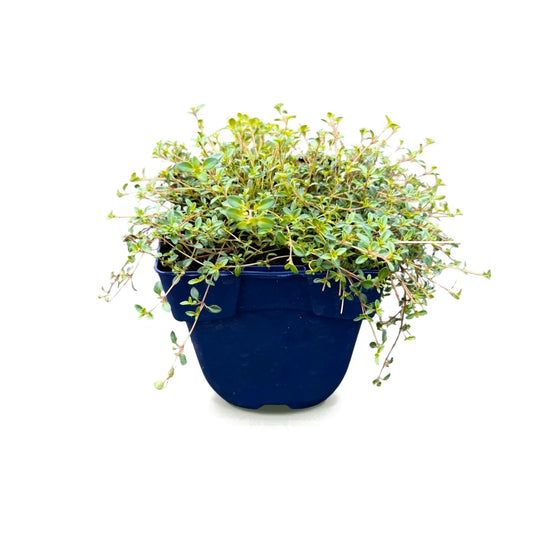
‘Minor’ Thyme (Thymus) – aromatic perennial – 11 cm pot – 25 cm tall
Regular price From 39,95 €Regular price39,95 €From 31,96 €Livraison offerte


✂️ Houseleek care: watering, fertiliser and maintenance
When caring for a houseleek, the main thing is not to overdo it. The RHS growing guide recommends watering in dry weather in spring and summer, says no watering is needed outdoors in winter, and notes that plants in the ground rarely need fertiliser.
For pots, the RHS recommends applying liquid fertiliser monthly during the growing season, once any slow-release fertiliser has been used up. No pruning is needed, according to the RHS profile for S. tectorum. According to NC State’s profile for common houseleek, overwatering causes crown rot: allow the soil to dry out between waterings.
💧 Watering: Only in dry weather in spring and summer; none outdoors in winter; in pots, when the growing medium is dry
🌱 Fertiliser: Not needed in the ground; in pots, apply liquid fertiliser monthly during the growing season (RHS)
🧹 Tidying: Remove dead rosettes and dry flower stems; fill the gap with an offset
🧣 Winter rain: In very rainy regions, use a cold frame or place a transparent cover over the pots (RHS)
💧 Birds: Replant rosettes pulled out by birds and secure them with gravel
🍂 Are houseleeks frost-hardy? Hardiness and the seasons
No, not for the documented species: the RHS rates S. tectorum and, according to the RHS profile for Sempervivum arachnoideum, S. arachnoideum as H7. According to the RHS hardiness rating scale, H7 means tolerating temperatures below -20°C.
NC State Extension places the genus in USDA zones 4a to 8b, and S. tectorum in zones 3a to 8b. The many garden-centre hybrids, such as ‘Big Sam’, have not been assessed individually. The real danger is a wet winter: the RHS advises protecting plants from excessive winter rain, and suggests a cold frame or transparent cover in very rainy regions.
For other garden plants, find out how to protect your plants from frost.
📅 Seasonal care calendar
| Season | Key task |
|---|---|
| 🌸 Spring | Ideal time to plant, transplant offsets and divide overcrowded cushions; water moderately if spring is dry |
| ☀️ Summer | Older rosettes flower in star-shaped blooms; water in dry weather, especially in pots; remove faded rosettes |
| 🍂 Autumn | Planting is still possible in drained soil; clear dead leaves that have fallen onto the cushions |
| ❄️ Winter | Dormant period; do not water outdoors; shelter pots from driving rain and never leave them in a water-filled saucer |
🌱 Propagating houseleeks: offsets and seeds
Houseleeks almost propagate themselves. The RHS explains that they spread by stolons, horizontal stems that bear small rosettes: by the time the central rosette dies after flowering, plenty of offsets are ready to replace it.
In spring, detach these offsets and replant them in a gritty, free-draining growing medium: they establish in 4 to 6 weeks, according to the RHS growing guide. NC State Extension says offsets are easy to separate and also mentions seed sowing, which the RHS recommends from spring to autumn.
Note: seedlings from hybrids do not grow true to type; only offsets are exact copies of the parent plant.
🐛 Common problems: causes and solutions
Houseleeks cause few problems as long as their roots stay dry. Almost all failures are due to too much water, too little sun or overly rich soil. Here’s how to interpret the signs.
| Symptom | Likely cause | Solution |
|---|---|---|
| Rosette soft, brown or black at the centre | 🍄 Crown or root rot caused by excess water (NC State, RHS) | Remove affected rosettes, save healthy offsets, improve drainage or replant on a mound |
| Rosette stretches, flowers, then dies | ⚠️ Normal flowering: the rosette is monocarpic (RHS, NC State) | Cut off the dry flower stem and rosette, then replant an offset |
| Rosettes elongate and turn pale | ☀️ Not enough sun | Move into full sun; avoid keeping indoors |
| Plant wilts for no apparent reason | 🐛 Vine weevil larvae feeding on the roots (RHS) | Check the roots, repot in fresh growing medium, and use beneficial nematodes in pots |
| Orange or brown pustules on the leaves | 🍄 Rust (RHS) | Remove affected rosettes, improve air circulation around the cushion and avoid wetting the foliage |
| Young rosettes pulled out, or leaves riddled with tunnels | 💧 Birds disturbing recent plantings, or houseleek leaf miner (RHS) | Replant and secure with gravel; remove rosettes mined by larvae |
-

Cover the ground with ease: our outdoor ground cover plants blanket slopes,...


🌸 Our houseleek varieties
Here are the houseleeks we have available and the species best documented by the RHS (plant profiles and Sempervivum guide); descriptions and hardiness ratings are from the RHS.
| Variety | What makes it special |
|---|---|
| Houseleek 'Big Sam', 14 cm pot | Garden hybrid with green rosettes tipped in red, in a 14 cm pot for instant impact in a rock garden or container |
| Houseleek 'Big Sam', 7 cm pot | The same hybrid in a 7 cm nursery pot, ideal for tucking into a crevice in a wall or propagating from its offsets |
| Sempervivum tectorum (common houseleek) | Rosettes up to 10 cm across, blue-green flushed with purplish red; purple flowers on 20 cm stems; H7, awarded the RHS AGM |
| Sempervivum arachnoideum (cobweb houseleek) | Rosettes 1–3 cm across, veiled with white hairs; 1 cm pink flowers on 12 cm stems; H7, awarded the RHS AGM |
| Sempervivum calcareum 'Guillaumes' | Limestone houseleek, cited by the RHS as an example of a variety with decorative rosettes |
| Sempervivum ciliosum | A species with ciliate rosettes, listed by the RHS among the houseleeks to grow |
🎨 Which plants to pair with houseleek
Pair houseleeks with plants that share their love of sunshine and poor soils. In a rock garden, their rosettes contrast with mats of stonecrops: our Sedum (stonecrop) profile covers these relatives from the same family, which can be distinguished by their leafy stems rather than tight rosettes.
Delosperma (hardy ice plant) adds bright flowers to the same dry soil, while lamb's ear (Stachys byzantina) brings silvery foliage to the border. At the foot of lavender or among meadow grasses, they fill in the gaps.
For non-hardy succulents, see our indoor cacti and succulents guide.
Browse our Sempervivum and other ground covers, our full-sun plants, our plants for balconies and patios, and all our outdoor plants.
⚠️ Is houseleek toxic to people, cats, and dogs?
Sources describe its toxicity as low, but do not rule it out. NC State Extension classifies the genus Sempervivum as having low severity: effects if ingested are unknown; sap from the cells may irritate the skin; leaves contain alkaloids; contact dermatitis is possible.
As for pets, no Sempervivum profile was found on the ASPCA website. Be careful with the English name “hens and chicks,” because the ASPCA's “Hens and Chickens” profile actually refers to Echeveria elegans, a different member of the Crassulaceae family, which is considered non-toxic to dogs, cats, and horses.
We do not recommend using houseleek for food or medicinal purposes: wear gloves if you have sensitive skin, and discourage pets from chewing on the rosettes.
✅ Our expert tips for success
Growing houseleek successfully comes down to four things: full sun, poor and very free-draining soil, no fertiliser in the ground, and no standing water in winter. Accept that the rosette that flowers will die: this is the normal life cycle of Sempervivum, and its offsets will quickly fill the gap.
Choose the species to suit the look you want: common houseleek for large rosettes, cobweb houseleek for small silvery cushions. Keep a few offsets in reserve in a pot of gravel, and your cushions will last for years.
Houseleek is the plant I tuck in anywhere nothing else will grow: a crack in a step, an old cracked pot, the rim of a trough. I love watching its colour change through the seasons and seeing it fill with little offsets. The first time one of my rosettes flowered, I thought I had lost it; now I look forward to that moment, because it means a new generation is on the way. I almost never water it when it's planted in the ground.

Laura Bruneau
Jardinière et autrice