Which hydrangea should you choose? A comparison of the varieties

With such a wide variety of hydrangeas (large colorful mopheads, white cone-shaped panicles, climbing varieties), it can be hard to know which one to plant. The good news: choosing comes down to three simple questions. Which type of hydrangea? What kind of exposure? And what color? This guide will help you choose the ideal hydrangea for your garden, patio and soil, then prune it at the right time: the mistake that deprives so many gardeners of blooms.
Which hydrangea should you choose? The main types
To make the right choice, start with the type. The mophead hydrangea (Hydrangea macrophylla) brings color to partial shade; the panicle hydrangea (paniculata) is the most sun-loving and robust; the smooth hydrangea (arborescens, such as 'Annabelle') bears large white heads; and the climbing hydrangea covers a shady wall. Each has its preferred growing conditions.
| Hydrangea type | Flowers & size | Ideal for |
|---|---|---|
| Mophead (macrophylla) | Large pink, blue or white flower heads; 1 to 1.5 m | Part-shade borders, colorful containers |
| Panicle (paniculata) | White-to-pink conical panicles; 1.5 to 3 m | Full sun, flowering hedges, beginners |
| Smooth (arborescens) | Large round white heads ('Annabelle'); 1 to 1.5 m | Bright borders, rich and moist soil |
| Climbing (petiolaris) | Flat white flowers; climbs up to 10 m | Shady walls and tree trunks |
| Mountain (serrata) | Delicate lacecap flowers; 0.8 to 1.2 m | Small gardens, pots, cold climates |
| Reblooming (macrophylla type 'Endless Summer') | Blue or pink flower heads on both old and new wood; 0.9 to 1.5 m ('The Original,' according to Clemson) | Gardeners worried about pruning incorrectly or losing early buds to frost |
This first step narrows down most of the options. If you want vivid blue or pink flowers, choose macrophylla or serrata. If you're looking for an easy-care, robust plant, panicle hydrangea is hard to beat. And if you have a bare north-facing wall, only climbing hydrangea will cover it. The rest comes down to exposure, color and space.
Choosing by exposure: partial shade or full sun?
Exposure quickly narrows the field. The RHS recommends planting shrub hydrangeas in dappled light (partial shade), while noting that they can be placed somewhere sunnier if the soil doesn't dry out in summer. In practice, macrophylla prefers partial shade, panicle hydrangea tolerates full sun, and climbing hydrangea can handle deep shade.
| Exposure | Suitable types |
|---|---|
| Partial shade (ideal) | Most hydrangeas, especially macrophylla and serrata |
| Full sun, moist soil | Panicle hydrangea, the most heat-tolerant |
| Bright shade | Climbing hydrangea, perfect on a north-facing wall |
| Hot, dry sun | Avoid: wilted foliage and scorched flowers |
Keep in mind one common concern for all hydrangeas: they dislike dry afternoon sun combined with soil that dries out. A macrophylla planted in full southern exposure without watering will have its flowers scorched during a heatwave. An east- or west-facing spot, or one with a little shade, along with moist, mulched soil, suits the vast majority of varieties.
Choosing a color: the secret is soil pH
Here's the feature that surprises gardeners most: in mophead hydrangeas (macrophylla) and mountain hydrangeas (serrata), flower color depends on the soil, not just the variety. In acidic soil, the flowers turn blue; in alkaline soil, they take on pink tones. Other types don't change color.
The RHS explains that the availability of aluminum in the soil, which is linked to pH, determines the color. In acidic soil (pH 4.5 to 5.5), aluminum is available to the plant and the flowers turn blue; in neutral soil they turn mauve, and in alkaline soil they turn pink. White varieties, on the other hand, stay white whatever the pH.
| Desired color | Soil (pH) | What to do |
|---|---|---|
| Blue | Acidic, pH 4.5 to 5.5 | Ensure aluminum is available; water with rainwater |
| Pink / red | Neutral to alkaline, pH > 6.5 | Naturally alkaline soil, or add lime |
| Mauve, variable | Slightly acidic, pH ≈ 6 | An intermediate color, often changing |
| White or green | Unaffected by pH | Panicle, smooth and white varieties remain consistent |
In practice, don't expect to turn a pink hydrangea blue overnight: this requires permanently acidifying the soil, which takes months. The simplest option is to choose a hydrangea in your preferred color when you buy it, making sure it suits your soil. And if color isn't important to you, note that in late summer, blue and pink flowers naturally develop into beautiful green and purple hues.
columns: 4
columns_mobile: 2
-

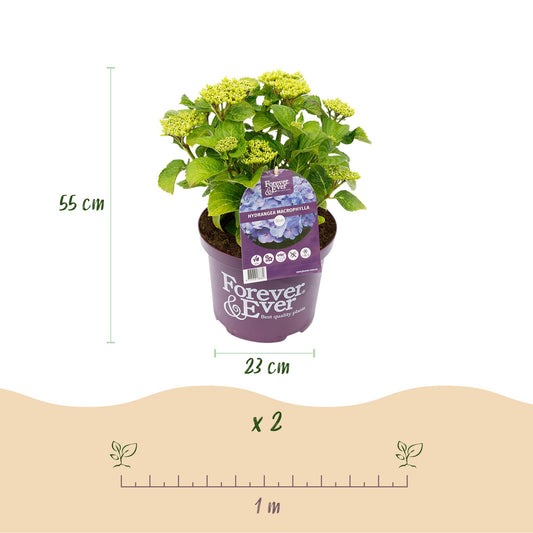
Forever Ever Hydrangea (Hydrangea macrophylla), hardy flowering shrub, 23 cm pot, Height 55 cm
Regular price From 69,95 €Regular price69,95 €From 55,96 €Livraison offerte -

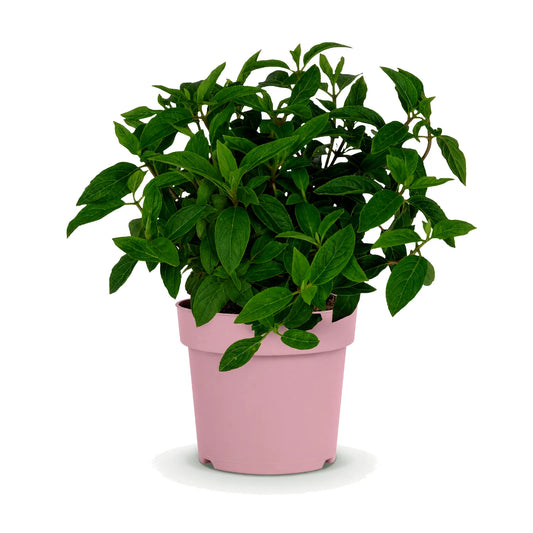
Hydrangea paniculata ‘Groundbreaker’ Blush, hardy flowering shrub, 14 cm pot, Height 20–25 cm
Regular price From 44,95 €Regular price44,95 €From 35,96 €Livraison offerte -

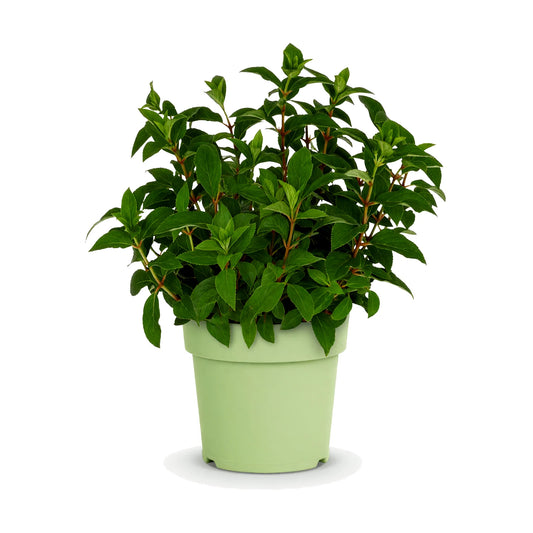
Groundbreaker Greeny Hydrangea (Hydrangea paniculata), hardy flowering shrub, 14 cm pot, Height 20–25 cm
Regular price From 44,95 €Regular price44,95 €From 35,96 €Livraison offerte -

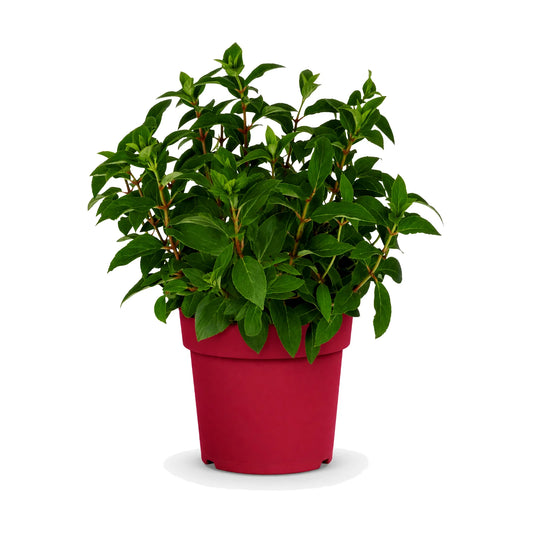
Groundbreaker Ruby Hydrangea (Hydrangea paniculata), hardy flowering shrub, 14 cm pot, Height 20–25 cm
Regular price From 44,95 €Regular price44,95 €From 35,96 €Livraison offerte -


Magical Green Fire Hydrangea (Hydrangea macrophylla), hardy flowering shrub, pink and green flowers, 23 cm pot, Height 55 cm
Regular price From 69,95 €Regular price69,95 €From 55,96 €Livraison offerte Sold out -

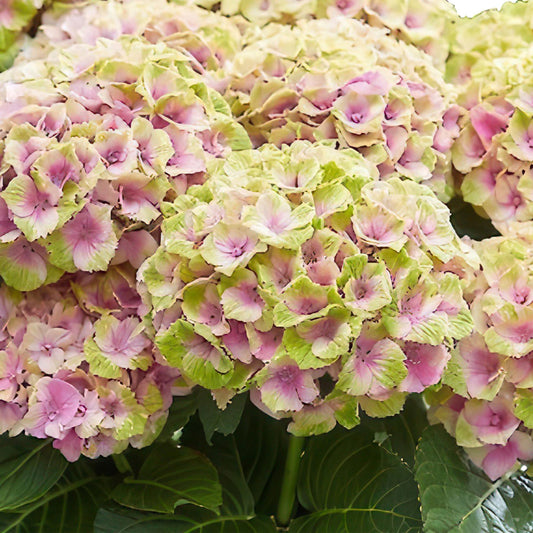
Magical Jewel Hydrangea (Hydrangea macrophylla), hardy flowering shrub, 23 cm pot, Height 55 cm
Regular price From 69,95 €Regular price69,95 €From 55,96 €Livraison offerte -

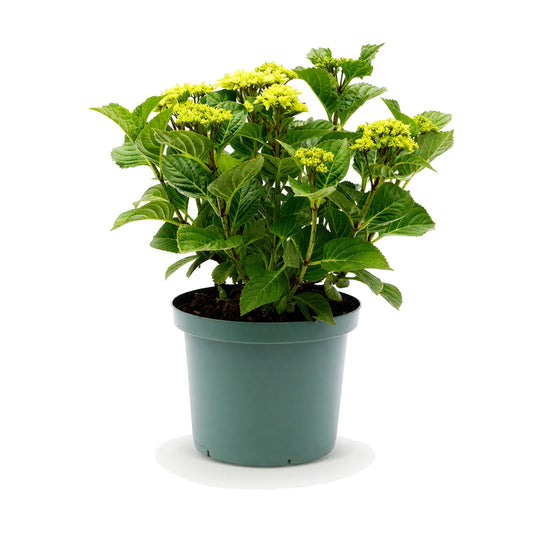
Magical Noblesse Hydrangea (Hydrangea macrophylla), hardy flowering shrub, white flowers, 23 cm pot, Height 55 cm
Regular price From 69,95 €Regular price69,95 €From 55,96 €Livraison offerte -

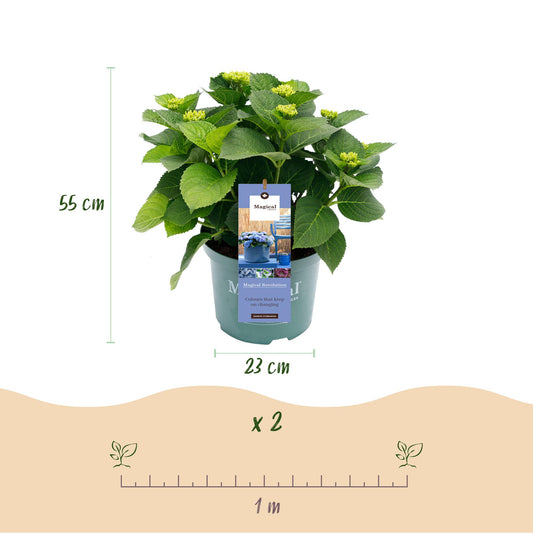
Magical Revolution Hydrangea (Hydrangea macrophylla), hardy flowering shrub, 23 cm pot, Height 55 cm
Regular price From 69,95 €Regular price69,95 €From 55,96 €Livraison offerte


Choosing by available space: border, pot or small garden
The mature size and intended use will guide your final choice. For a large border or flowering hedge, choose panicle hydrangea, which grows up to 3 m; for a pot or balcony, a compact macrophylla or a serrata; for a shady wall, climbing hydrangea. Each setting has a type that's particularly well suited to it.
| Location | Recommended type |
|---|---|
| Large border, flowering hedge | Panicle hydrangea (1.5 to 3 m) |
| Pot, balcony, patio | Compact macrophylla or serrata (0.8 to 1.2 m) |
| Small urban garden | Serrata or dwarf macrophylla |
| Shady wall or tree trunk | Climbing hydrangea |


Panicle hydrangea, the easiest choice for beginners
If you're still unsure, panicle hydrangea is the safest choice for a first shrub. Hardy, it flowers in full sun, grows well in ordinary soil and produces large panicles every year, even after a hard prune—unlike macrophylla, which is more particular about exposure and pruning.
Its greatest strength is that it flowers on new growth: you can cut it back hard at the end of every winter, and it will grow back vigorously and flower reliably the following summer. Its RHS profile confirms its hardiness and tolerance of full sun, two advantages that make it the most forgiving hydrangea for busy or beginner gardeners.
Its panicles open pure white and often turn pink as they age, regardless of pH: you get a guaranteed decorative color gradient, whatever your soil type. It's the perfect hydrangea for a low flowering hedge, a sunny border or a large container on an exposed patio.
Pruning at the right time: the number-one mistake
Pruning is the main reason hydrangeas fail to flower. The rule can be summed up in one sentence: prune macrophylla lightly; cut back panicle and smooth hydrangeas hard. For macrophylla, the RHS recommends simply removing faded flowers in late winter, cutting just above a pair of healthy buds; for panicle and smooth hydrangeas, cut back the previous year's stems to a low framework.
| Type | When to prune | How |
|---|---|---|
| Macrophylla (mophead) | Late winter / early spring | Light pruning: remove faded flowers and take out 1 to 2 old stems at the base |
| Panicle (paniculata) | Late winter | Cut back hard to a low framework (~25 cm) for large flowers |
| Smooth ('Annabelle') | Late winter | Cut back to a framework 25 to 60 cm high |
| Climbing (petiolaris) | After flowering, in summer | Only shorten shoots that have grown too long |
The reason is simple: macrophylla and serrata form their flower buds on the previous year's wood. Cutting them back hard in fall or winter means cutting off next year's blooms. Panicle and smooth hydrangeas, on the other hand, flower on new growth: hard pruning in late winter stimulates them and produces larger flowers.
Reblooming macrophylla, such as the 'Endless Summer' series, partly escape this problem: according to the University of Minnesota Extension, they flower on both last year's wood and new growth, whether or not you prune them. And if a severe winter destroys the first buds, only the early flowering is lost, notes Clemson University Extension: the plant flowers again on new wood, provided it is well watered in summer.
How to plant your hydrangea successfully
Hydrangeas are easy to grow if you get two things right: moist soil that doesn't dry out, and a position sheltered from dry sun. Ideally, plant in fall, so the roots can establish before summer heat arrives. Here are the essentials.
📋 Quick facts
The essential facts about hydrangeas, at a glance.
| Feature | Guideline |
|---|---|
| Type | Deciduous flowering shrub (genus Hydrangea) |
| Mature height | 0.8 to 3 m, depending on type |
| Exposure | Partial shade is ideal; full sun for panicle hydrangeas if the soil stays moist |
| Soil | Moist, rich and well-drained; tolerates clay well |
| pH & color | Acidic (4.5-5.5) = blue; alkaline (> 6.5) = pink, for macrophylla and serrata |
| Hardiness | Hardy (around -15 °C); buds are sensitive to late frosts |
| Planting distance | 80 cm to 1.50 m, depending on type |
| Planting time | Fall (ideal) or spring |
| Watering | Regularly, especially in pots and in hot weather; use rainwater for blue flowers |
| Pruning | Light (macrophylla) or hard in late winter (panicle, smooth) |
The only real thing to watch is water. Its very name, from the Greek “hydro” (water), is a reminder: hydrangeas drink a lot. A thick layer of mulch around the base, replenished each spring, keeps the soil moist and reduces the need for watering. In very hot weather, foliage that droops in the middle of the day is a warning sign: water generously that evening, and the plant will generally perk up overnight.
Seasonal care calendar
Hydrangeas don't need much: water in summer, pruning at the right time and regular mulching. Here's a guide to help you keep track throughout the year.
📅 Seasonal care calendar
| Season | Key task |
|---|---|
| 🌸 Spring | Prune according to type, mulch around the base and add compost; remove faded flowers from macrophylla. |
| ☀️ Summer | Water generously, especially in pots and during hot weather; use rainwater to preserve blue flowers. |
| 🍂 Fall | Ideal planting season; leave faded macrophylla flowers in place to protect its buds. |
| ❄️ Winter | Don't prune macrophylla; protect young buds from late frosts. |
If someone asks me to recommend just one hydrangea that won't disappoint, I answer without hesitation: panicle hydrangea. It flowers in the sun, withstands the cold and forgives pruning mistakes: you can cut it back hard every winter, and it will flower even more profusely. I reserve macrophylla, which is more demanding, for gardeners willing to give it a light prune and partial shade: that's the price of its incomparable blues—but what a show.
Our recommendation: where to start
For a first hydrangea that's hard to go wrong with, choose a panicle hydrangea for a sunny spot or a compact macrophylla for partial shade: both are easy to grow, in pots or in the ground, and flower from their first season. You can add other varieties later, as inspiration strikes.
To learn more about the species before making a decision, take a look at our complete hydrangea guide. And if you're putting together a flowering shrub border, Hibiscus syriacus and magnolia extend the flowering season at other times of year, for a colorful garden from spring to fall.
Finally, to choose a variety based on your garden's color, size and exposure, browse our hydrangea collection: you'll find the colorful macrophylla, robust panicle hydrangeas and compact varieties for small spaces featured in this guide, all in one place.

Laura Bruneau
Jardinière et autrice