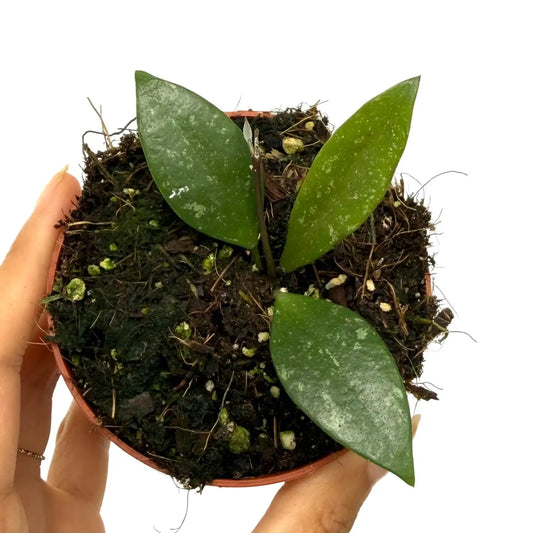
Hoya bella: caring for the miniature porcelain flower

Miniature, trailing, and divinely fragrant, Hoya bella is the porcelain flower for small spaces. Its slender stems bear small leaves and dangling clusters of white flowers with rose-magenta centers, releasing an intense, sweet fragrance in the evening. A little more delicate than its cousin Hoya carnosa, it is ideal for a hanging planter. Here’s how to pamper it, backed by botanical sources.
Why choose Hoya bella?
Hoya bella captures all the charm of Hoyas in a compact form: delicate foliage, a generous summer bloom, and a powerful fragrance. An award-winning horticultural plant, it turns a small hanging planter into a fragrant feature as soon as the warmer days arrive.
| Benefit | What it means day to day |
|---|---|
| Compact | Miniature trailing form, perfect for a small hanging planter. |
| Highly fragrant | Flowers with an intense, sweet fragrance, especially in the evening. |
| Award-winning | Awarded the RHS Award of Garden Merit (AGM). |
| Pet-safe | Hoya genus is non-toxic to cats and dogs (ASPCA). |
Hoya bella at a glance: botanical profile
Hoya bella — also classified by several sources as Hoya lanceolata subsp. bella, with both names referring to the same plant — is an epiphytic subshrub in the Apocynaceae family, listed by Kew POWO (Plants of the World Online). Native to the Himalayan region, from Assam to Myanmar, it has a miniature trailing habit that makes it a natural choice for a hanging planter.
| Feature | Verified details |
|---|---|
| Botanical name | Hoya bella Hook. (syn. Hoya lanceolata subsp. bella) |
| Common names | Miniature porcelain flower, beautiful Hoya |
| Origin | Himalayas, from Assam to Myanmar; epiphytic |
| Growth habit | Miniature and trailing, with stems 30–45 cm long |
| Award | RHS Award of Garden Merit (AGM) |
| Growth rate | Matures in 2 to 5 years |
📋 Quick care guide
Essential growing guidelines, all in one place.
| Factor | Guideline |
|---|---|
| Light | Bright, indirect light; filtered sun; avoid harsh direct sunlight |
| Ideal temperature | 15 to 27 °C; more cold-sensitive than Hoya carnosa |
| Minimum temperature | Do not let temperatures drop below 10 °C |
| Watering | Water thoroughly while growing; keep just moist in winter |
| Humidity | Moderate to high: it appreciates humid air |
| Potting mix | Very free-draining, epiphyte-style mix: bark and light potting soil |
| pH | Tolerant: acidic, neutral, or alkaline |
| Repotting | Infrequent; choose a pot only slightly larger than the root ball |
| Flowering | In summer, dangling clusters of 7 to 8 fragrant flowers |
| Toxicity | Non-toxic to cats and dogs (Hoya genus, ASPCA) |
What light and location should you provide?
Hoya bella needs light to flower, but too much direct sun will scorch its delicate leaves. The RHS (Royal Horticultural Society) profile, which awards it the Award of Garden Merit, recommends bright, filtered light. Hang it near a bright window, protected from the harsh afternoon sun: its trailing habit lets you admire the flower clusters from below.
Watering and humidity: finding the right balance
More delicate than Hoya carnosa, Hoya bella appreciates humid air but is vulnerable to waterlogged roots. Water thoroughly during active growth, allowing excess water to drain away, then keep the potting mix just moist in winter. Excellent drainage is essential for this miniature epiphyte.
| Situation | What to do |
|---|---|
| Spring–summer | Water thoroughly and let excess drain away; don’t let the mix become waterlogged |
| Autumn–winter | Keep the mix just moist and water less often |
| Air humidity | Appreciated: mist the plant or place it in a humid room |
| Mistake to avoid | Leaving the roots in water: this miniature plant can quickly develop root rot |
columns: 4
columns_mobile: 2
-
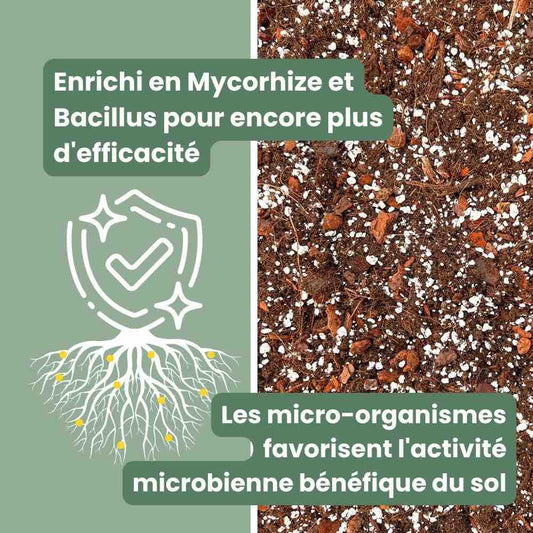
Hoya Premium Potting Soil - Enriched with Mycorrhizae and Bacillus - Made in France
Regular price 11,99 €Regular price11,99 €Sale price 11,99 € -


Hoya Fertilizer - 250ml Liquid Fertilizer - Root and Foliar Fertilizer + Free Graduated Pipette!
Regular price 18,00 €Regular price20,00 €Sale price 18,00 €Sale -
Hoya Plant Support - Arch Support for Hoya - Transparent Acrylic Plant Support - Support for Climbing Plants
Regular price From 3,95 €Regular price3,95 €Sale price From 3,95 € -
Transparent plant clips - Transparent plant support clips - Support clips - Plant support clips
Regular price From 4,00 €Regular price4,00 €Sale price From 4,00 €



Potting mix, repotting, and fertilizing
As an epiphyte, Hoya bella needs an airy potting mix that dries quickly. An orchid-style mix amended with light potting soil works well. Repot infrequently and choose a modest-sized container: this compact plant flowers better when it isn’t lost in a large pot full of heavy potting mix.
| Factor | Recommendation |
|---|---|
| Ideal mix | Orchid bark and light potting soil, with excellent drainage |
| Pot | Small and well-draining, suited to its compact growth habit |
| Repotting | Infrequently, in spring; avoid choosing an oversized pot |
| Fertilizer | Diluted, every 2 to 4 weeks in summer |
| Dormancy | Do not fertilize in winter, when the plant is resting |
How to take cuttings and propagate Hoya bella
Hoya bella is more delicate and roots best in warm conditions, so maintain good humidity around the cutting. The method is simple: in spring or summer, take a stem cutting with at least 2 nodes (the small bumps where leaves and roots emerge) and one or two leaves. Let the cut end dry for 2 to 3 hours, then place the cutting in water, moist sphagnum moss, or a very free-draining potting mix, at 20–25 °C and in indirect light: roots will appear in 3 to 6 weeks. One key point applies to all porcelain flowers: a leaf on its own, without a node, will never produce a new plant, because the meristem is located at the node. Once the roots are 2 to 3 cm long, carefully pot the young cutting in a free-draining mix and keep it in gentle light, avoiding overwatering while it settles in and produces its first new leaves. Find every step, with both water and potting-mix methods, in our complete guide to propagating Hoyas.
Flowering: colors, fragrance, and what triggers it
In summer, Hoya bella is covered in dangling clusters, each with an average of 7 to 8 small, waxy white flowers whose central corona is a beautiful rose-magenta, reminiscent of amethyst. Their sweet fragrance is especially intense in the evening. The flowers form on spurs that should never be cut, as with all Hoyas, to preserve future blooms.
📅 Seasonal care calendar
| Season | Key task |
|---|---|
| 🌸 Spring | Growth resumes: move it back into bright light and resume watering and diluted fertilizer. |
| ☀️ Summer | Peak summer bloom: water thoroughly, maintain air humidity, and don’t move the buds. |
| 🍂 Autumn | Flowering ends: reduce watering and stop fertilizing. |
| ❄️ Winter | Let it rest somewhere warm and drier (> 10 °C): water minimally. |
Common mistakes and how to fix them
Hoya bella can be a little fussy: it dislikes the cold and is sensitive to overwatering. Here are common problems and how to solve them.
| Symptom | Likely cause | Solution |
|---|---|---|
| Blackened, soft leaves | Cold or overwatering | Move it somewhere warmer, let the mix dry, and improve drainage |
| Leaf drop | Cold shock or a draft | Move it away from cold windows and keep the temperature stable |
| Wrinkled leaves | Air too dry or not enough water | Increase humidity and adjust watering |
| No flowers | Insufficient light or cut spurs | Provide more filtered light and don’t cut the spurs |


Keeping Hoya bella healthy: pests and prevention
Hoya bella’s small, delicate leaves call for regular checks to stop mealybugs from settling in among the foliage. Mealybugs, either cottony or armored, are the main pest, especially when the air is dry. Check the undersides of the leaves and the stem joints: at the first sign of a white, cottony cluster, isolate the plant and dab the affected areas with a cotton swab soaked in 70% alcohol once a week for 3 weeks. Adequate humidity also discourages spider mites, which are common in hot, dry air. Remember to quarantine any new plant for a few days before placing it near your other Hoyas, to avoid introducing pests to your collection. Prevention is the best defense: a plant with good light, appropriate watering, and no overfertilizing is much more resilient. Don’t let water sit in the saucer, as this can lead to root disease.
Is Hoya bella toxic to pets?
Hoya bella belongs to the Hoya genus, listed as non-toxic to cats and dogs by the ASPCA (under “Wax Plant”). No listing names bella specifically, but the entire genus is considered safe: a fragrant hanging plant you can place above the sofa without worry, even if you have a cat.
Where should you place it, and how can you show it off?
Miniature and trailing, Hoya bella is made for a small hanging planter at eye level, where you can admire its dangling clusters and evening fragrance, in a warm, bright spot protected from drafts. Group several porcelain flowers with contrasting foliage: they’ll share a more humid environment and create a striking little plant collection. It only needs repotting every 2 to 3 years and the occasional gentle leaf cleaning: in the right spot, this plant requires very little attention throughout the year. To expand your selection and find varieties that suit you, explore our full Hoya collection.
Our expert tips for successful growing
With a little attention, Hoya bella rewards you with an unforgettable fragrance. Give it warmth, filtered light, humid air, and a potting mix that dries quickly: its summer blooms will perfume the whole room.
This is my “pleasure” Hoya: more delicate than the others, but its evening fragrance in summer is worth every effort. The secret is not to treat it like an indestructible Hoya carnosa: it hates the cold and waterlogged soil. In a hanging planter, somewhere warm and in filtered light, it gives its very best.

Laura Bruneau
Jardinière & autrice