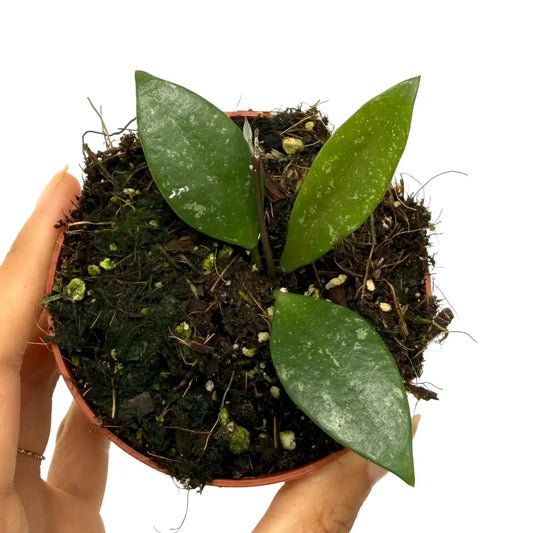
Hoya: everything you need to know about waxy flowering plants (varieties and care)

If you love plants with unusual foliage, graphic shapes, and delicate porcelain flowers, Hoyas will quickly become your new favorites. Often called wax flowers, these climbing or trailing plants fascinate many. They are easy to care for, capable of producing spectacular blooms, and perfectly suited to a bright indoor environment. However, with the numerous varieties, light requirements, watering, staking, potting mix, and propagation techniques, it's not always easy to know where to begin.
This guide aims to support you step by step, with practical advice, cultivation tips, and an overview of the most remarkable varieties. You'll have everything you need to welcome your first Hoya or expand your collection.
Discovering the Hoya

Before discovering how to cultivate them properly, let's start by getting to know Hoyas better and what makes them special.
Origin and characteristics of the species
Hoyas originate from Southeast Asia, Australia, and tropical areas where they grow as epiphytes, clinging to trees. They live in a warm, slightly humid, and very bright environment, but always sheltered from the scorching sun.
Several traits characterize the species. These include:
- flexible stems, often climbing;
- thick leaves, sometimes speckled, often bright green;
- umbels of waxy flowers, white, pink or red;
- a star-shaped bloom, fragrant in the evening;
- a relatively slow, but steady growth.
Hoyas are hardy, but they require a delicate balance: little water, plenty of bright, indirect light, and well-draining soil. Once you understand their needs, you'll realize they're among the easiest houseplants to care for.
Popular varieties and their specific characteristics
There are over 200 varieties of Hoya, each with its own unique personality: different shapes, textures, and flower colors. This diversity makes it a true family of plants for collectors. Among them, some are particularly prized by enthusiasts.
Hoya carnosa
With its thick, dark green leaves and pale pink flowers edged in waxy white, it's one of the most popular varieties. It's very easy to grow and an excellent choice for beginners.
Hoya pubicalyx
It is known for its rapid growth and elongated leaves, sometimes speckled with silver. Its flowers, darker than those of the carnosa, often take on a purplish-red hue. It is an excellent option for those who want a fast-growing plant.
Hoya kerrii
Famous for its heart-shaped leaves, it is often sold as a single leaf. However, it reveals its full appeal when it has a stem. It is an adorable and very decorative plant, even if its growth is slow.
Hoya compacta
It is recognizable by its curled and twisted leaves, which give it a beautiful sculptural appearance. Its highly fragrant flowers make it a lovely addition to any collection. They are hardy, decorative, and undemanding.
Hoya linearis
With its long, cascading stems and fine, downy leaves, it immediately catches the eye. More sensitive to excess moisture than other varieties, it looks superb in hanging baskets, but it requires a little more care.

Optimal Hoya Care
To keep your Hoya in top condition, there are a few key points to master.
Light and space conditions required
Hoyas need plenty of light to grow and flower well. A few simple principles will help you position them correctly:
- opt for bright, indirect lighting;
- accept the gentle morning sun;
- avoid the scorching afternoon sun;
- Place your Hoya near an East- or West-facing window.
On the other hand, if light becomes scarce, certain signs are unmistakable:
- little or no flowering;
- pale leaves;
- slowed growth.
Also, make sure to give it an open space where its stems can climb or cascade without being hindered. Many varieties become magnificent when they can develop freely.
Watering and choosing the right substrate
One of the most common mistakes with Hoyas is overwatering. Although their flowers have a delicate appearance, they are actually semi-succulent plants. They store water in their leaves and therefore easily tolerate drier periods.
To water your Hoya correctly, keep the following points in mind:
- wait until half of the potting soil is dry;
- avoid leaving water in the saucer;
- Water more in spring and summer;
- Significantly reduce watering in winter.
If your Hoya receives too much water, you will see the following:
- soft leaves;
- black spots;
- a sudden yellowing;
- roots that are beginning to rot.
During the growth period, a light application of houseplant fertilizer once a month is more than enough.
For the substrate, you should aim for a mixture that is airy, well-draining, and doesn't retain much water. A good combination is to use half potting soil, then supplement with a little perlite and pine bark. This type of soil allows the roots to breathe well and reduces the risk of rot.
Repotting and staking needs
Repotting should be done every 2 to 3 years maximum, in order to ensure good growth year after year.
To complete this step, proceed as follows:
- choose a pot with good drainage;
- leave only 1 to 2 cm of margin;
- use a very well-draining substrate;
- Handle the roots gently, they are thin and fragile.
Most Hoyas also appreciate support: hoops, trellises, or metal or bamboo supports. This guides their growth and enhances their shape. Some varieties become truly stunning when trained on a structure.
Hoya propagation techniques
Propagating Hoya is within everyone's reach, provided you follow a few simple steps.
Effective cutting methods
Hoya plants multiply easily as long as a few key steps are followed. The most reliable method is to use a stem placed in water.
To do this:
- choose a stem with 2 or 3 nodes;
- remove the bottom leaves;
- immerse only the nodes;
- Change the water every week;
- Wait for the first white roots to appear.
Once the roots are well formed:
- plant the cutting in a small pot;
- use a light soil;
- Keep the substrate slightly moist at first.
Other methods also exist:
- the cutting directly in the ground;
- Sphagnum moss cuttings are ideal for the most sensitive varieties, as they provide both moisture and aeration.
Root care and growth monitoring
Once the cutting has rooted:
- avoid pots that are too large;
- allow the soil to dry slightly between waterings;
- maintain a bright environment;
- Add a stake if the shape of your Hoya requires it.
Growth may be slow at first, as the Hoya develops its roots before producing new stems and leaves. With patience and regular care, it will eventually grow more steadily and flower.

Common problems and solutions
Several situations can affect the health of a Hoya.
Risks associated with excessive or insufficient watering
Hoyas express their needs very quickly. They rapidly show when a problem arises. In case of overwatering, several signs appear:
- the leaves become soft;
- dark spots are forming;
- The roots turn brown and the plant may eventually lose its leaves.
Conversely, a lack of water results in wrinkled leaves, stems that begin to dry out, and the absence of new shoots.
If you spot excess water in time, you can still save your Hoya. Proceed as follows:
- remove the plant from its pot;
- cut off the damaged roots;
- replace all the substrate;
- allow the roots to dry for a few hours;
- Repot in better-draining soil.
Common diseases and parasites, prevention and treatment
Hoyas are generally hardy, but some pests can appear, especially if the plant lacks light or if the air is too dry. The main pests to watch out for are:
- cochineal insects;
- aphids;
- thrips;
- mites.
Several warning signs should raise a red flag:
- sticky sheets;
- small white or brown spots;
- or even a gradual yellowing of the foliage.
To take action, opt for gentle treatments:
- cleaning with diluted black soap;
- manual removal of scale insects;
- an increase in humidity to counteract mites or quarantining the plant if necessary.
Diseases often stem from overwatering, poor ventilation, or insufficient light. A well-positioned and properly watered plant rarely gets sick.

Laura Bruneau
Jardinière & autrice