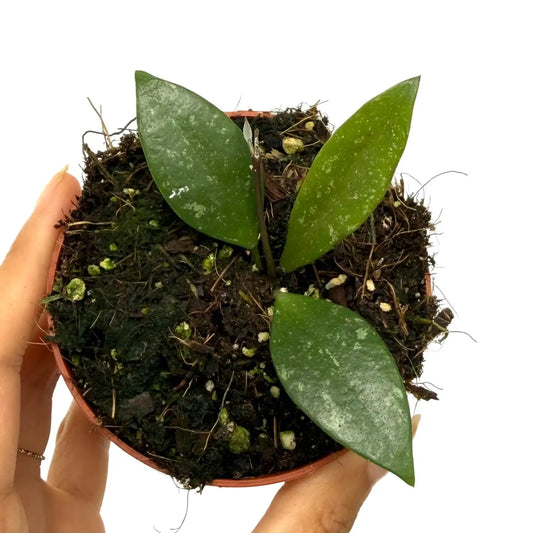
Hoya heuschkeliana: the Hoya with a caramel scent

Here’s the Hoya grown first and foremost for its fragrance: Hoya heuschkeliana bears tiny urn-shaped flowers, pink or yellow, with a caramel scent that has earned it the nickname “Caramel Hoya.” Compact, small-leaved, and easy to get to bloom, it’s an ideal sensory treat for a shelf. Here’s how to grow it successfully, with botanical sources to back it up.
Why choose Hoya heuschkeliana?
Hoya heuschkeliana stands out for its urn-shaped flowers, unlike the usual star-shaped ones, and above all for its delicious caramel fragrance. Compact and fast-growing, it blooms easily and repeatedly—a bundle of joy in a small package.
| Benefit | What it means day to day |
|---|---|
| Delicious fragrance | Flowers with a caramel scent, hence its nickname, Caramel Hoya. |
| Unusual flowers | Tiny urn-shaped bells, unlike the star-shaped flowers of other Hoyas. |
| Compact and fast-growing | Small leaves and rapid growth; ideal for a shelf. |
| Pet-safe | The Hoya genus is non-toxic to cats and dogs (ASPCA). |
Hoya heuschkeliana: botanical profile
According to Kew POWO (Plants of the World Online), Hoya heuschkeliana Kloppenb. is a climbing epiphyte in the Apocynaceae family, native to the Philippines. It comes in pink- and yellow-flowered forms, as well as a cream-variegated version (‘Variegata’) that is highly prized by collectors.
| Characteristic | Verified details |
|---|---|
| Botanical name | Hoya heuschkeliana Kloppenb. (Apocynaceae) |
| Common names | Caramel Hoya, Fragrant Hoya |
| Origin | Philippines; climbing epiphyte |
| Foliage | Small oval leaves, often under 2.5 cm |
| Flowers | Tiny urn-shaped bells, pink or yellow |
| Forms | Standard form, yellow-flowered form, and cream-variegated ‘Variegata’ |
📋 Quick care guide
Essential growing guidelines, at a glance.
| Requirement | Guideline |
|---|---|
| Light | Bright, indirect light; avoid harsh direct sun |
| Ideal temperature | 18–32°C; sensitive to cold |
| Minimum temperature | Do not let it drop below 15°C |
| Watering | 1–3 times a week during the growing season; let the mix dry between waterings |
| Humidity | Ideally above 60%; tolerates 30–50% |
| pH | Slightly acidic, between 5.5 and 6.5 |
| Potting mix | Well-draining and airy, such as an orchid mix |
| Repotting | In spring; can stay in the same pot for several years |
| Flowering | Repeated blooms, almost year-round; umbels with up to 12 flowers |
| Toxicity | Non-toxic to cats and dogs (Hoya genus, ASPCA) |
What light and location should you provide?
Hoya heuschkeliana needs bright, indirect light to flower abundantly, away from harsh sun that can damage its small leaves. The Hoya genus, described by the RHS (Royal Horticultural Society), benefits from good filtered light. A spot in front of a bright window, perhaps behind a sheer curtain, works well for this compact plant, which fits easily on a shelf.
Watering and humidity: finding the right balance
Hoya heuschkeliana likes regular watering during the growing season, while allowing the potting mix to dry out between waterings. As a fast-growing plant, it readily takes up water in spring and summer. Good humidity encourages larger leaves and flowers, but drainage remains essential.
| Situation | What to do |
|---|---|
| Spring–summer | Water 1–3 times a week, letting the mix dry between waterings |
| Fall–winter | Water once or twice a week, depending on the room temperature |
| Air humidity | Aim for over 60% for better flowers |
| Mistake to avoid | Keeping the potting mix constantly waterlogged: roots will rot |
columns: 4
columns_mobile: 2
-
Hoya Premium Potting Soil - Enriched with Mycorrhizae and Bacillus - Made in France
Regular price 11,99 €Regular price11,99 €Sale price 11,99 € -


Hoya Fertilizer - 250ml Liquid Fertilizer - Root and Foliar Fertilizer + Free Graduated Pipette!
Regular price 18,00 €Regular price20,00 €Sale price 18,00 €Sale -
Hoya Plant Support - Arch Support for Hoya - Transparent Acrylic Plant Support - Support for Climbing Plants
Regular price From 3,95 €Regular price3,95 €Sale price From 3,95 € -
Transparent plant clips - Transparent plant support clips - Support clips - Plant support clips
Regular price From 4,00 €Regular price4,00 €Sale price From 4,00 €

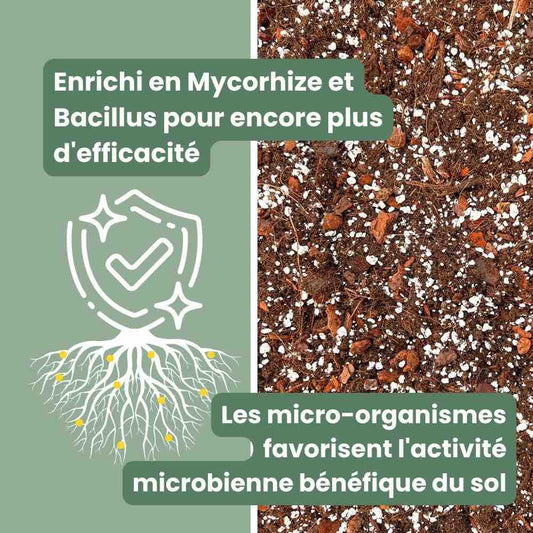


Potting mix, repotting, and fertilizing
As an epiphyte, Hoya heuschkeliana needs an airy, well-draining, slightly acidic potting mix (pH 5.5–6.5). An orchid-style mix works well. It can stay in a small pot for a long time and flowers all the better when it isn’t buried in potting soil. Fertilize lightly during the warmer months.
| Requirement | Recommendation |
|---|---|
| Ideal mix | Bark, perlite, and light potting soil; slightly acidic |
| pH | Aim for 5.5–6.5 |
| Pot | Small and well-draining; it likes to be slightly pot-bound |
| Fertilizer | About twice a month in summer, diluted |
| Dormancy | Reduce or stop fertilizing in winter |
How to propagate Hoya heuschkeliana from cuttings
Fast-growing Hoya heuschkeliana roots easily in warm conditions and quickly grows into a lovely little plant. The method is simple: in spring or summer, take a stem cutting with at least two nodes (the small bumps where leaves and roots emerge) and one or two leaves. Let the cut end dry for 2–3 hours, then place the cutting in water, moist sphagnum moss, or a very well-draining potting mix, at 20–25°C in indirect light; roots should appear in 3–6 weeks. The key point, true of all wax plants, is that a leaf by itself, without a node, will never produce a new plant, because the node contains the meristem. Once the roots are 2–3 cm long, carefully pot the young cutting in a well-draining mix and keep it in gentle light, without overwatering, while it settles in and produces its first new leaves. Find every step, for both water and potting-mix propagation, in our complete guide to propagating Hoyas.
Flowering: colors, fragrance, and what triggers it
Flowering is the real highlight of this Hoya: tiny urn-shaped (urceolate) flowers, pink or butter-yellow depending on the form, clustered in umbels of up to a dozen bells. Their sweet scent evokes caramel or buttered popcorn and is often stronger during the day. It is known to flower easily and repeatedly, almost year-round in good conditions. As with all Hoyas, don’t cut off the spurs.
📅 Seasonal care calendar
| Season | Key task |
|---|---|
| 🌸 Spring | Growth resumes: provide more light, resume regular watering and fertilizing. |
| ☀️ Summer | Peak growth and flowering: bright light, humid air, regular watering. |
| 🍂 Fall | Flowering often continues: enjoy the fragrance and don’t cut off the spurs. |
| ❄️ Winter | Keep warm (> 15°C) and on the drier side; water less often. |
Common mistakes and how to fix them
Hoya heuschkeliana is easy to grow, as long as you meet its need for warmth. Here are common problems and their solutions.
| Symptom | Likely cause | Solution |
|---|---|---|
| Soft, blackened leaves | Cold damage (below 15°C) | Warm it up and move it away from cold windows |
| Yellow leaves | Overwatering and suffocated roots | Let the mix dry and improve drainage |
| Few flowers | Insufficient light or air that is too dry | Provide more light and increase humidity |
| Small, pale leaves | Air that is too dry | Raise humidity above 60% |


Keeping Hoya heuschkeliana healthy: pests and prevention
Hoya heuschkeliana’s tiny leaves need close inspection to spot pests before they spread. The main culprit is mealybugs or scale insects, especially when the air is dry. Check the undersides of the leaves and the stem joints: at the first sign of white, cottony clusters, isolate the plant and dab the affected areas with a cotton swab soaked in 70% alcohol, once a week for 3 weeks. Proper humidity also discourages spider mites, which are common in hot, dry air. Remember to quarantine any new plant for a few days before placing it near your other Hoyas, to avoid introducing pests to your collection. The best defense is prevention: the plant is much more resilient when it has good light, proper watering, and isn’t overfertilized. Don’t let water sit in the saucer, as this can lead to root diseases.
Is Hoya heuschkeliana toxic to pets?
Hoya heuschkeliana belongs to the Hoya genus, which the ASPCA classifies as non-toxic to cats and dogs (listed as “Wax Plant”). The entire genus is considered safe: a fragrant plant you can place on a shelf within a cat’s reach without any concern.
Where to place it and how to show it off
Compact Hoya heuschkeliana fits on a shelf or console table, ideally at nose height so you can enjoy its caramel fragrance; you can let it trail or train it on a small support, depending on the look you want. Group several wax plants with contrasting foliage: they’ll benefit from the more humid environment and create a striking collection display. Repot only every 2–3 years, and gently clean the leaves from time to time: in the right spot, this plant needs very little attention throughout the year. To expand your collection and find varieties that suit your style, explore our full Hoya collection.
Our expert tips for growing it successfully
Hoya heuschkeliana is a small plant with a big fragrance: easy to grow, compact, and floriferous. Give it warmth, bright light, and humid air, and it will fill your home with a caramel note almost all year long.
This is the Hoya that makes everyone smile: “It smells like caramel!” Its flowers are tiny, but the fragrance is incredible. The one thing you shouldn’t overlook is warmth: it’s sensitive to the cold. Keep it warm and in bright light, and it will bloom over and over, quickly becoming a favorite.
Here’s the Hoya grown first and foremost for its fragrance: Hoya heuschkeliana bears tiny urn-shaped flowers, pink or yellow, with a caramel scent that has earned it the nickname “Caramel Hoya.” Compact, small-leaved, and easy to get to bloom, it’s an ideal sensory treat for a shelf. Here’s how to grow it successfully, with botanical sources to back it up.
Why choose Hoya heuschkeliana?
Hoya heuschkeliana stands out for its urn-shaped flowers, unlike the usual star-shaped ones, and above all for its delicious caramel fragrance. Compact and fast-growing, it blooms easily and repeatedly—a bundle of joy in a small package.
| Benefit | What it means day to day |
|---|---|
| Delicious fragrance | Flowers with a caramel scent, hence its nickname, Caramel Hoya. |
| Unusual flowers | Tiny urn-shaped bells, unlike the star-shaped flowers of other Hoyas. |
| Compact and fast-growing | Small leaves and rapid growth; ideal for a shelf. |
| Pet-safe | The Hoya genus is non-toxic to cats and dogs (ASPCA). |
Hoya heuschkeliana: botanical profile
According to Kew POWO (Plants of the World Online), Hoya heuschkeliana Kloppenb. is a climbing epiphyte in the Apocynaceae family, native to the Philippines. It comes in pink- and yellow-flowered forms, as well as a cream-variegated version (‘Variegata’) that is highly prized by collectors.
| Characteristic | Verified details |
|---|---|
| Botanical name | Hoya heuschkeliana Kloppenb. (Apocynaceae) |
| Common names | Caramel Hoya, Fragrant Hoya |
| Origin | Philippines; climbing epiphyte |
| Foliage | Small oval leaves, often under 2.5 cm |
| Flowers | Tiny urn-shaped bells, pink or yellow |
| Forms | Standard form, yellow-flowered form, and cream-variegated ‘Variegata’ |
📋 Quick care guide
Essential growing guidelines, at a glance.
| Requirement | Guideline |
|---|---|
| Light | Bright, indirect light; avoid harsh direct sun |
| Ideal temperature | 18–32°C; sensitive to cold |
| Minimum temperature | Do not let it drop below 15°C |
| Watering | 1–3 times a week during the growing season; let the mix dry between waterings |
| Humidity | Ideally above 60%; tolerates 30–50% |
| pH | Slightly acidic, between 5.5 and 6.5 |
| Potting mix | Well-draining and airy, such as an orchid mix |
| Repotting | In spring; can stay in the same pot for several years |
| Flowering | Repeated blooms, almost year-round; umbels with up to 12 flowers |
| Toxicity | Non-toxic to cats and dogs (Hoya genus, ASPCA) |
What light and location should you provide?
Hoya heuschkeliana needs bright, indirect light to flower abundantly, away from harsh sun that can damage its small leaves. The Hoya genus, described by the RHS (Royal Horticultural Society), benefits from good filtered light. A spot in front of a bright window, perhaps behind a sheer curtain, works well for this compact plant, which fits easily on a shelf.
Watering and humidity: finding the right balance
Hoya heuschkeliana likes regular watering during the growing season, while allowing the potting mix to dry out between waterings. As a fast-growing plant, it readily takes up water in spring and summer. Good humidity encourages larger leaves and flowers, but drainage remains essential.
| Situation | What to do |
|---|---|
| Spring–summer | Water 1–3 times a week, letting the mix dry between waterings |
| Fall–winter | Water once or twice a week, depending on the room temperature |
| Air humidity | Aim for over 60% for better flowers |
| Mistake to avoid | Keeping the potting mix constantly waterlogged: roots will rot |
columns: 4
columns_mobile: 2
-
Hoya Premium Potting Soil - Enriched with Mycorrhizae and Bacillus - Made in France
Regular price 11,99 €Regular price11,99 €Sale price 11,99 € -
Hoya Fertilizer - 250ml Liquid Fertilizer - Root and Foliar Fertilizer + Free Graduated Pipette!
Regular price 18,00 €Regular price20,00 €Sale price 18,00 €Sale -
Hoya Plant Support - Arch Support for Hoya - Transparent Acrylic Plant Support - Support for Climbing Plants
Regular price From 3,95 €Regular price3,95 €Sale price From 3,95 € -
Transparent plant clips - Transparent plant support clips - Support clips - Plant support clips
Regular price From 4,00 €Regular price4,00 €Sale price From 4,00 €
Potting mix, repotting, and fertilizing
As an epiphyte, Hoya heuschkeliana needs an airy, well-draining, slightly acidic potting mix (pH 5.5–6.5). An orchid-style mix works well. It can stay in a small pot for a long time and flowers all the better when it isn’t buried in potting soil. Fertilize lightly during the warmer months.
| Requirement | Recommendation |
|---|---|
| Ideal mix | Bark, perlite, and light potting soil; slightly acidic |
| pH | Aim for 5.5–6.5 |
| Pot | Small and well-draining; it likes to be slightly pot-bound |
| Fertilizer | About twice a month in summer, diluted |
| Dormancy | Reduce or stop fertilizing in winter |
How to propagate Hoya heuschkeliana from cuttings
Fast-growing Hoya heuschkeliana roots easily in warm conditions and quickly grows into a lovely little plant. The method is simple: in spring or summer, take a stem cutting with at least two nodes (the small bumps where leaves and roots emerge) and one or two leaves. Let the cut end dry for 2–3 hours, then place the cutting in water, moist sphagnum moss, or a very well-draining potting mix, at 20–25°C in indirect light; roots should appear in 3–6 weeks. The key point, true of all wax plants, is that a leaf by itself, without a node, will never produce a new plant, because the node contains the meristem. Once the roots are 2–3 cm long, carefully pot the young cutting in a well-draining mix and keep it in gentle light, without overwatering, while it settles in and produces its first new leaves. Find every step, for both water and potting-mix propagation, in our complete guide to propagating Hoyas.
Flowering: colors, fragrance, and what triggers it
Flowering is the real highlight of this Hoya: tiny urn-shaped (urceolate) flowers, pink or butter-yellow depending on the form, clustered in umbels of up to a dozen bells. Their sweet scent evokes caramel or buttered popcorn and is often stronger during the day. It is known to flower easily and repeatedly, almost year-round in good conditions. As with all Hoyas, don’t cut off the spurs.
📅 Seasonal care calendar
| Season | Key task |
|---|---|
| 🌸 Spring | Growth resumes: provide more light, resume regular watering and fertilizing. |
| ☀️ Summer | Peak growth and flowering: bright light, humid air, regular watering. |
| 🍂 Fall | Flowering often continues: enjoy the fragrance and don’t cut off the spurs. |
| ❄️ Winter | Keep warm (> 15°C) and on the drier side; water less often. |
Common mistakes and how to fix them
Hoya heuschkeliana is easy to grow, as long as you meet its need for warmth. Here are common problems and their solutions.
| Symptom | Likely cause | Solution |
|---|---|---|
| Soft, blackened leaves | Cold damage (below 15°C) | Warm it up and move it away from cold windows |
| Yellow leaves | Overwatering and suffocated roots | Let the mix dry and improve drainage |
| Few flowers | Insufficient light or air that is too dry | Provide more light and increase humidity |
| Small, pale leaves | Air that is too dry | Raise humidity above 60% |
Keeping Hoya heuschkeliana healthy: pests and prevention
Hoya heuschkeliana’s tiny leaves need close inspection to spot pests before they spread. The main culprits are mealybugs and scale insects, especially when the air is dry. Check the undersides of the leaves and the stem joints: at the first sign of white, cottony clusters, isolate the plant and dab the affected areas with a cotton swab soaked in 70% alcohol, once a week for 3 weeks. Proper humidity also discourages spider mites, which are common in hot, dry air. Remember to quarantine any new plant for a few days before placing it near your other Hoyas, to avoid introducing pests to your collection. The best defense is prevention: the plant is much more resilient when it has good light, proper watering, and isn’t overfertilized. Don’t let water sit in the saucer, as this can lead to root diseases.
Is Hoya heuschkeliana toxic to pets?
Hoya heuschkeliana belongs to the Hoya genus, which the ASPCA classifies as non-toxic to cats and dogs (listed as “Wax Plant”). The entire genus is considered safe: a fragrant plant you can place on a shelf within a cat’s reach without any concern.
Where to place it and how to show it off
Compact Hoya heuschkeliana fits on a shelf or console table, ideally at nose height so you can enjoy its caramel fragrance; you can let it trail or train it on a small support, depending on the look you want. Group several wax plants with contrasting foliage: they’ll benefit from the more humid environment and create a striking collection display. Repot only every 2–3 years, and gently clean the leaves from time to time: in the right spot, this plant needs very little attention throughout the year. To expand your collection and find varieties that suit your style, explore our full Hoya collection.
Our expert tips for growing it successfully
Hoya heuschkeliana is a small plant with a big fragrance: easy to grow, compact, and floriferous. Give it warmth, bright light, and humid air, and it will fill your home with a caramel note almost all year long.
This is the Hoya that makes everyone smile: “It smells like caramel!” Its flowers are tiny, but the fragrance is incredible. The one thing you shouldn’t overlook is warmth: it’s sensitive to the cold. Keep it warm and in bright light, and it will bloom over and over, quickly becoming a favorite.

Laura Bruneau
Jardinière & autrice