Large leafy green plants: how to choose them, place them and take care of them

Impossible to miss. Large-leafed houseplants catch your eye as soon as you walk into a room. Monstera, Ficus, Strelitzia… they set the tone all on their own, bringing a touch of urban jungle and tropical elegance. But beyond their style, they’re also great allies for purifying the air and bringing any space to life.
Their secret? Natural volume, striking shapes, and the ability to turn an ordinary room into a bona fide nature nook. And contrary to popular belief, they’re not necessarily fussy, as long as you take the time to understand them.
They’re often easier to care for than you might think. Just choose the right plant, find its ideal spot, and adopt a few good habits to help it thrive... and turn your room into a stylish nature nook.
Why do these plants make such an impact indoors?
There’s a good reason large-leafed plants are so popular. They make a visual statement and instantly change the feel of a room, even without much decorating effort.
They have the power to:
- Give structure to an empty space: a single plant can fill a sad-looking corner or break up an overly white wall.
- Add movement: large leaves sway, catch the light, and bring rhythm to your room.
- And above all, make your home feel fresher: they evoke nature, the exotic, and freshness—all without taking up too much space.
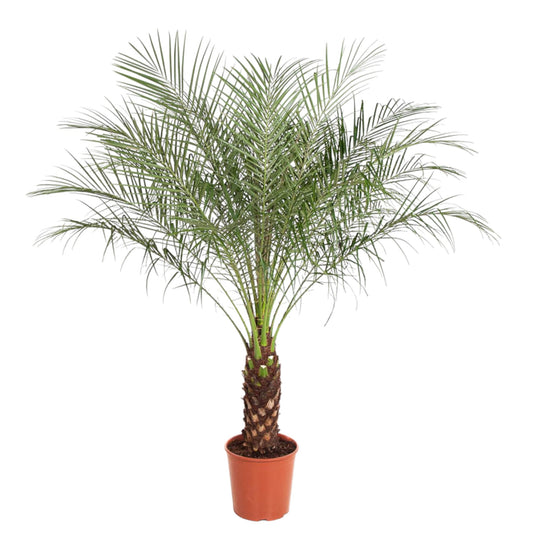
And when you add their air-purifying properties (hello, Monstera and Areca palm), it’s easy to see why they’ve become must-haves, even in small spaces.
Before you choose: 3 questions to ask yourself
Before buying a large-leafed houseplant just because it looks amazing on Instagram, ask yourself these three questions. They’ll help you avoid a few surprises… and some sad-looking leaves after just two weeks.
How much light does your room get?
These plants generally like light. But indirect light ≠ full sun.
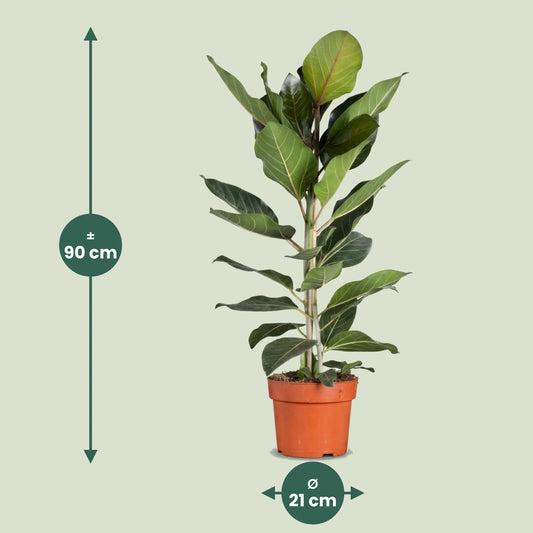
A Ficus lyrata loves being near a large window, while a Calathea prefers a shadier spot.
Take a moment to check which way your room faces: south, north, east, or west—it makes all the difference.
Do you really have enough space?
An Alocasia or Strelitzia will grow. Sometimes very quickly. Before you give in, check the floor space, ceiling height, and… how far it’ll be from the sofa or radiator.
These plants like having room to breathe, not being squeezed between two pieces of furniture.
And when it comes to watering, are you diligent or forgetful?
Some plants, like Monstera, are quite forgiving. Others, like Alocasia, are a little more particular.
If you tend to forget to water (or overdo it), it’s best to know upfront and choose a plant that can cope either way.
How do you care for a large-leafed plant?
They’re not the most demanding plants, but they do have a few specific needs. And given their size, even a little neglect is easy to spot. Here are the basics to master to keep your plant healthy (and its leaves looking their best).
Watering and humidity: find the right balance
Their size doesn’t mean they need liters of water every day. In fact, these plants often like moist soil, but never waterlogged.
Here’s a tip: feel the soil. If it’s dry on top but cool underneath, wait a little longer.
And for some plants, like Alocasia or Calathea, misting the leaves or placing a small humidifier nearby can make all the difference.
Cleaning the leaves isn’t just for the photos
Large leaves collect dust. And that dust slows down photosynthesis.
A quick wipe with a soft, damp cloth (no cleaning products) every two weeks is all it takes. It also makes the foliage shine and gives your plant that healthy look we love.
Fertilizer and potting mix: the fuel behind the scenes
XXL leaves need energy. A gentle liquid fertilizer, like this one, applied every two to three weeks during the growing season, helps support the foliage and new growth.
For the potting mix, choose a well-draining blend that’s neither too dense nor too sandy. Ideally, use enriched all-purpose potting soil combined with a little perlite to strike the right balance between aeration and water retention.
How to style a large-leafed plant in your home: tips and ideas
These plants are meant to make a statement, so you might as well show them off to their full potential. And you don’t need to be an interior designer to make it work—it just takes a few good habits.
Create a natural focal point
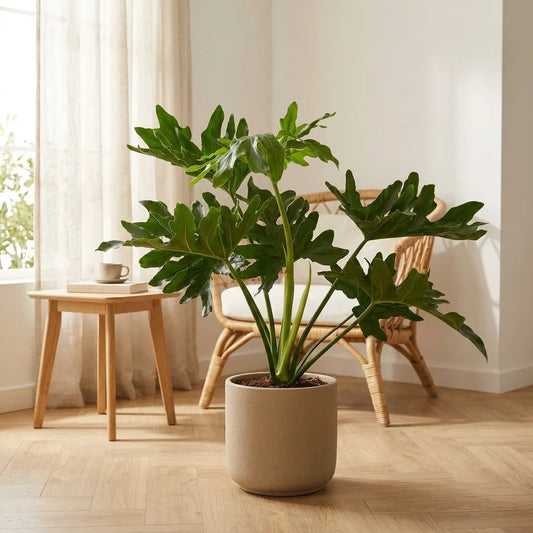
A large-leafed plant naturally draws the eye. Use it to balance a room, fill an empty corner, or break up an overly straight line.
Here are a few ideas that always work:
- In a corner of the living room, next to the sofa or a low bookcase
- Near a window (but beware of direct sunlight), where it can soak up the light without scorching its leaves
- Pair it with a small armchair to create a jungle reading nook
And for a wow factor without visual clutter, don’t push the plant up against a wall: give it some space and it’ll reward you.
Choose the right pot to show off your plant
Big foliage in a pot that’s too small or too flashy is like wearing a beautiful dress with neon sneakers. Not ideal.
Go for:
- Simple pots in ceramic, terracotta, or concrete
- Textured cachepots to add depth
- Raised plant stands if your ceilings are low
And above all, remember the drainage hole! Even when it comes to decor, plant care comes first. You may not see it, but your roots will thank you.
Group several plants together for a well-balanced jungle look
A plant on its own already makes a statement. But a well-thought-out arrangement is downright magical. Pair your large plant with:
- A trailing plant (like Epipremnum) placed higher up
- A low-growing plant with denser foliage (Peperomia, Calathea, etc.)
- A pop of color or a flower (Anthurium or Oxalis) to create contrast
The idea is to create a dynamic mix of shapes and textures for a lively, harmonious look that doesn’t feel cluttered.
Bonus: small steps for big plants
Even when styling them, keep care basics in mind:
- Turn the plant a quarter turn every two weeks for even growth
- Avoid drafts (especially for Ficus plants, which can be a little sensitive)
- Keep an eye on the leaves: if they turn yellow, it’s often due to overwatering or not enough light
A well-placed, well-cared-for plant is the key to a stylish, lively home that truly breathes.
Conclusion
Large-leafed plants are more than just an aesthetic choice: they’re a statement of intent. You’re saying that you love greenery, want a space that feels open and fresh, and aren’t afraid to bring a touch of jungle into your everyday life.
Whether you choose an elegant Philodendron or a majestic Strelitzia, what matters is that you do it because you want to, without any pressure. You don’t need to be an expert: a little light, some attention… and the right fertilizer now and then are enough to make all the difference.
Take care of your plants, and they’ll transform your home, one leaf at a time.

Laura Bruneau
Jardinière & autrice